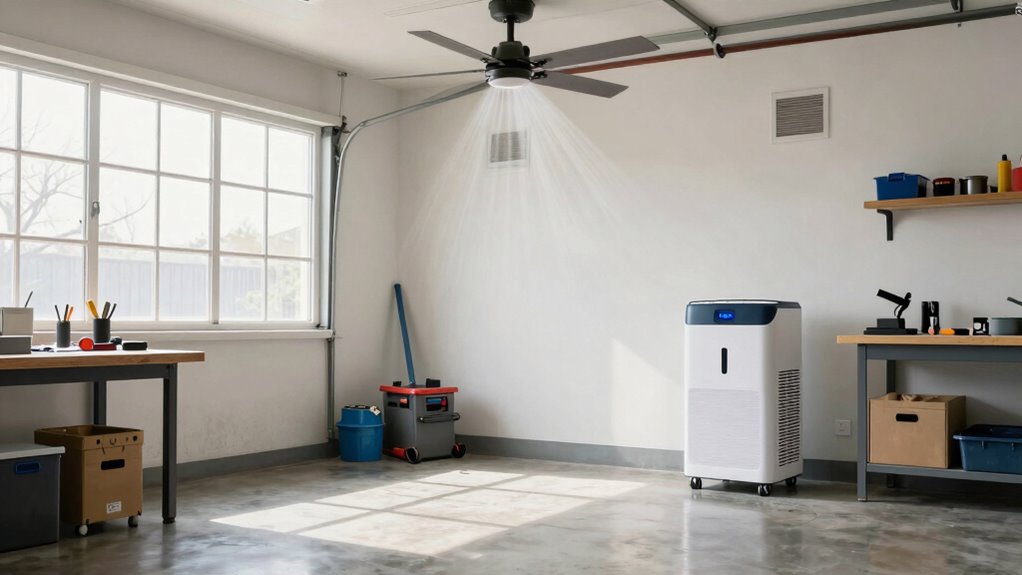

To keep your garage workshop dry, you should improve air management by installing vents, exhaust fans, or small windows to allow airflow. Use dehumidifiers and moisture barriers on floors and behind walls to prevent ground moisture and condensation. Regularly check and maintain your ventilation systems, seal gaps, and keep the space organized to avoid trapping moisture. Proper air circulation and moisture control are key—continue exploring ways to optimize your workspace for a safer, drier environment.

Get business pricing on tools and workshop supplies
- Business-only prices and quantity discounts
- Tax-exempt purchasing
- Multiple users, one account, clear invoices
Key Takeaways
- Install proper ventilation systems like vents, exhaust fans, or windows to improve airflow and reduce humidity.
- Use vapor barriers and moisture-resistant mats on floors and walls to prevent ground moisture infiltration.
- Maintain optimal humidity levels with dehumidifiers and monitor with humidity meters.
- Seal cracks, gaps, and leaks around doors, windows, and insulation to prevent moisture intrusion.
- Keep the workspace organized and regularly inspect ventilation and moisture barriers for damage or blockages.
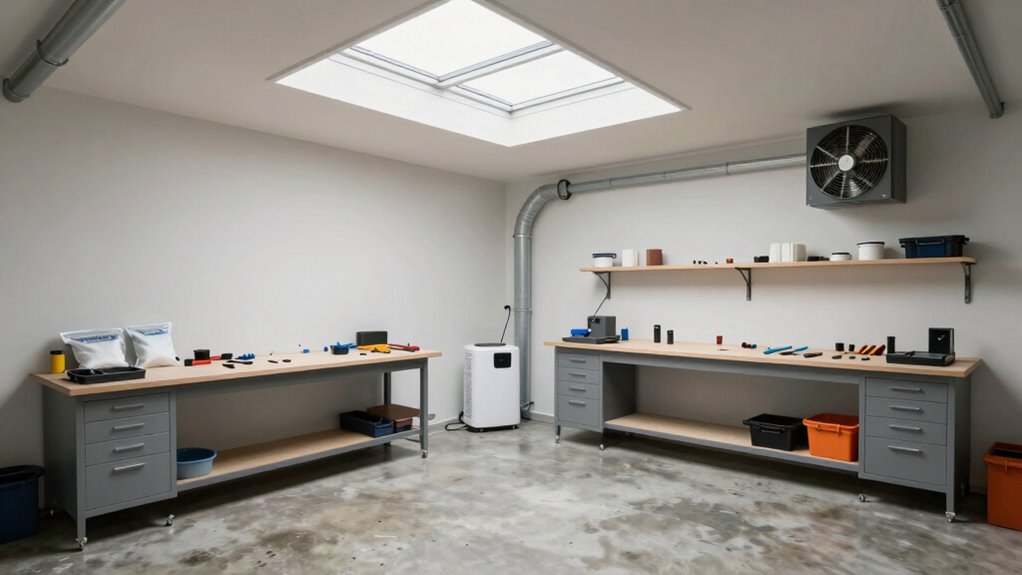
A dry garage workshop is essential for protecting your tools and materials from damage and ensuring a safe working environment. When your space stays dry, you prevent rust, mold, and decay, which can compromise both your tools and your safety. To achieve this, you need to focus on effective air management, starting with proper ventilation techniques. Good airflow helps carry away excess moisture and reduces humidity levels inside the garage. Installing vents, exhaust fans, or even small windows that can be opened during humid days can significantly improve air circulation. Make sure your ventilation system is appropriately sized for your space; too small, and it won’t be effective, too large, and it might cause drafts or uneven temperature changes. Regularly running exhaust fans or cracking open a window during humid weather allows moist air to escape, replacing it with drier outdoor air.
Alongside ventilation, incorporating moisture barriers is crucial. Moisture barriers act as a shield, preventing ground moisture from seeping into your workshop and raising humidity levels. Use vapor barriers on concrete floors or install moisture-resistant mats in high-traffic or work areas. These barriers are simple but highly effective, especially in areas prone to dampness. If your garage is poorly insulated or has walls that allow cold to penetrate, consider adding vapor barriers behind drywall or insulation. This prevents condensation from forming on surfaces, which can lead to mold and damage. Proper sealing of cracks and gaps around doors and windows is another vital step. These openings act as entry points for humid air, so sealing them with weatherstripping or caulking keeps outdoor moisture out and helps maintain a stable, dry environment inside. Additionally, proper air circulation is essential for dispersing moisture and preventing stagnant, damp air from accumulating. Incorporating humidity control devices like dehumidifiers can further optimize the environment, especially in naturally humid climates. Regularly checking and maintaining your ventilation system ensures it functions efficiently and continues to protect your workspace from excess moisture. Using humidity meters can help you monitor moisture levels and make adjustments as needed. Regular maintenance of your ventilation system and moisture barriers ensures they stay effective. Check vents and fans for blockages, and inspect barriers for tears or gaps. Keeping your garage well-organized, avoiding clutter that can trap moisture or obstruct airflow, also contributes to better air management. Properly managing airflow and moisture creates a healthier and more durable workspace. By combining strategic ventilation techniques with well-placed moisture barriers, you create an environment that’s resistant to humidity and dampness. This not only preserves your equipment but also makes your workshop a safer, more comfortable space to work in. Staying proactive with air management makes a noticeable difference in maintaining a dry, durable, and efficient garage workshop.
As an affiliate, we earn on qualifying purchases.
Frequently Asked Questions
What Are the Best Dehumidifiers for Garages?
The best dehumidifiers for garages have a suitable capacity to handle the space size and moisture level. You should choose one with enough dehumidifier capacity to prevent dampness effectively. Regular air filter maintenance is also key; it keeps the unit running efficiently and prevents dust buildup. Look for units with adjustable humidity settings and easy-to-clean filters to maintain a dry, comfortable workshop environment.
How Often Should I Maintenance My Air Management System?
Ever wondered how often you should maintain your air management system? You should check your humidity sensors and ventilation fans every 3 to 6 months. Replace or calibrate sensors as needed, and clean or service ventilation fans to guarantee ideal airflow. Regular maintenance keeps humidity levels in check, preventing mold and rust. Skipping these steps can compromise your garage’s climate control, so stay proactive to keep your workspace dry and safe.
Can Plants Help Control Humidity in a Garage?
Yes, plants can help control humidity in your garage. They absorb excess moisture through their leaves and roots, reducing plant humidity levels and improving overall air quality. Incorporating plants with high transpiration rates can enhance garden ventilation naturally. Just make certain your garage still has proper ventilation, as plants alone can’t fully regulate humidity, but they’re a great supplementary method to maintain a balanced environment.
Are There Eco-Friendly Options for Moisture Control?
Imagine your garage as a sponge that soaks up excess moisture. Eco-friendly desiccants like silica gel or clay absorb humidity naturally, making them a sustainable choice. Pair these with sustainable ventilation methods, such as solar-powered exhaust fans, to keep the air fresh and dry without harming the environment. These options work together to create a greener, more efficient way to control moisture, protecting your workspace sustainably.
How Does Insulation Affect Garage Humidity Levels?
Insulation types like foam or fiberglass help regulate humidity by reducing temperature fluctuations that cause condensation. Properly installed moisture barriers behind insulation prevent moisture from seeping in, keeping your garage dry. When you choose the right insulation and add moisture barriers, you create a more consistent environment, lowering humidity levels. This combination helps prevent mold and corrosion, ensuring your workshop stays dry and comfortable for all your projects.
ventilation exhaust fan for garage
As an affiliate, we earn on qualifying purchases.
As an affiliate, we earn on qualifying purchases.
Conclusion
By taking these simple steps, you’ll keep your garage workshop dry and comfortable, whether you’re building a steam-powered robot or just fixing a leaky faucet. Regularly check for leaks, improve ventilation, and insulate where needed. Think of it as your own personal Ark—protecting your tools and projects from the elements. With a little effort, you’ll turn your garage into a dry, cozy haven that even the most discerning Victorian inventor would envy.
moisture barrier for concrete floors
As an affiliate, we earn on qualifying purchases.
As an affiliate, we earn on qualifying purchases.
As an affiliate, we earn on qualifying purchases.
Fall yard work Picks
leaf blowers
As an affiliate, we earn on qualifying purchases.