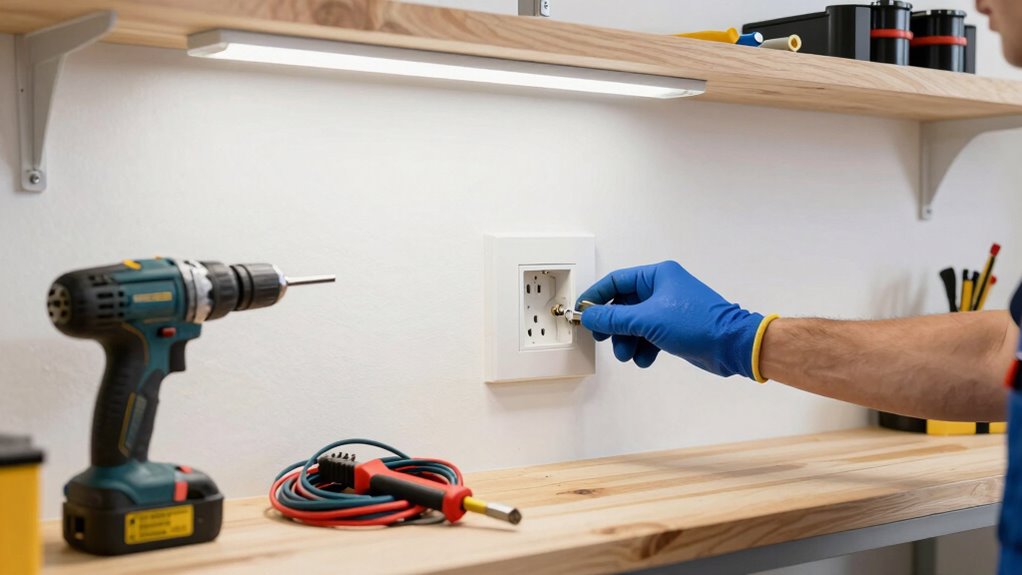

To add more outlets safely in your workshop, start by turning off the power and evaluating your circuit’s capacity to avoid overloads. Plan outlet placement around your equipment, making certain each is properly grounded and installed according to local codes. Use GFCI outlets in moist areas and consider upgrading wiring or adding dedicated circuits for high-power tools. Proper tools, techniques, and possibly hiring a licensed electrician will help guarantee a safe, efficient setup—keep going to learn more essential tips.

Get tools and workshop supplies delivered free — and shop member deals
- Fast, free delivery on millions of items
- Access to Prime Big Deal Days deals on October 6–7
- Prime Video, Amazon Music and more included
Key Takeaways
- Turn off power at the breaker box before starting any wiring work.
- Assess existing circuit capacity and avoid overloading by using dedicated circuits if needed.
- Use properly grounded outlets with correct wiring techniques following electrical codes.
- Consider installing GFCI outlets in moisture-prone areas for added safety.
- Hire a licensed electrician to ensure safe, compliant installation and proper grounding.
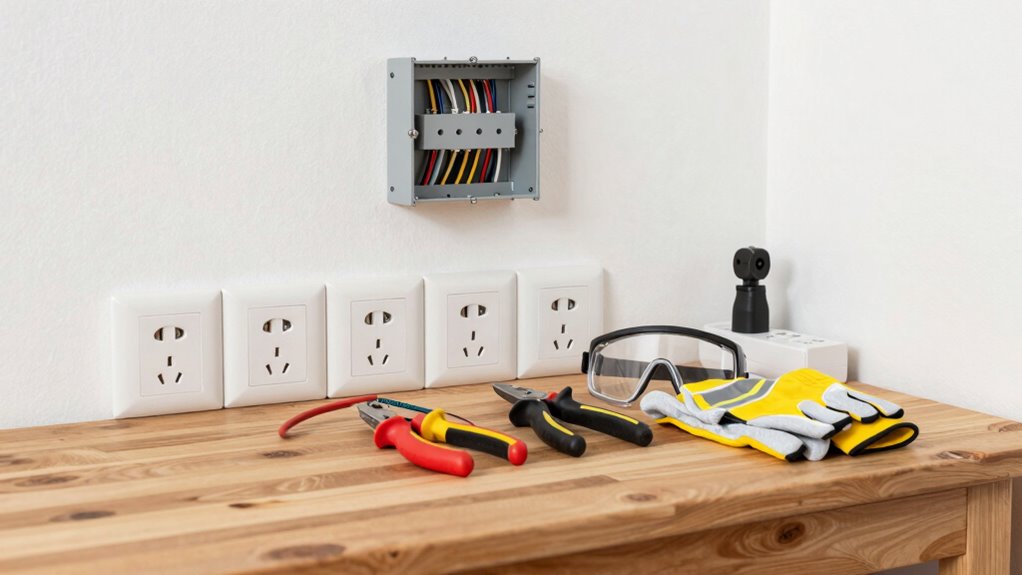
Have you ever thought about how adding outlets to your workshop can improve your work efficiency and safety? Installing more outlets makes it easier to power your tools without constantly unplugging and replugging, which reduces frustration and the risk of accidents. But before you start, it’s essential to prioritize grounding safety and consider circuit capacity. Proper grounding ensures that if a tool develops a fault, any stray electrical current safely travels to the ground, protecting you from electric shocks. Neglecting grounding safety can lead to dangerous electrical shocks, fires, or damage to your tools. When adding new outlets, make sure they are properly grounded according to local electrical codes, and use outlets with grounding prongs. This simple safety measure is vital for preventing electrical hazards in your workshop.
Next, you need to assess your circuit capacity. Your existing wiring can only handle a certain amount of current, and overloads can cause tripped breakers or, worse, electrical fires. Before installing additional outlets, determine the capacity of your current circuits. If you’re unsure, consult a professional electrician or use a circuit tester to measure the load on existing circuits. If your workshop has multiple high-power tools, you may need to upgrade your wiring or add dedicated circuits for certain areas. Avoid daisy-chaining multiple extension cords or power strips from a single outlet, as this can easily overload a circuit and create unsafe conditions. Instead, plan your outlet placement around a proper electrical layout that considers circuit capacity, guaranteeing each circuit stays within safe limits. Additionally, understanding the importance of circuit capacity can help prevent overloads and ensure your workshop remains safe and efficient. Knowing the electrical load your setup can handle is crucial for avoiding potential hazards. A thorough understanding of electrical safety practices is also essential for a secure workspace. Regularly inspecting your electrical system and staying updated on electrical codes can further enhance your workshop’s safety standards.
Furthermore, using correctly rated breakers and wiring ensures you stay within safe electrical limits, which is essential for a reliable and safe workshop environment. When installing new outlets, always turn off the power at the breaker box before working on any wiring. Use the correct tools and wiring techniques, following electrical codes and manufacturer instructions. If you’re not comfortable working with electricity, hiring a licensed electrician is the safest choice. They can ensure your outlets are properly grounded, the wiring is correct, and the circuit capacity is adequate for your needs. Also, consider using GFCI (Ground Fault Circuit Interrupter) outlets in areas prone to moisture, such as near sinks or outdoor sections of your workshop, to further enhance grounding safety. Properly installed outlets, with attention to grounding safety and circuit capacity, not only keep you safe but also make your workflow smoother and more reliable. Remember, taking the time to do it right now saves you from costly repairs or dangerous accidents later.
As an affiliate, we earn on qualifying purchases.
Frequently Asked Questions
Can I Install Outlets Myself Without an Electrician?
You can install outlets yourself, but beware of DIY risks like electrocution or fire hazards. It’s vital to follow electrical codes to guarantee safety and compliance. If you’re inexperienced, consider consulting a professional or thoroughly researching local regulations before starting. Proper knowledge and tools are necessary, and never bypass safety procedures. When in doubt, hiring a licensed electrician is the safest choice to prevent potential hazards and make sure your workshop remains safe.
What Safety Precautions Should I Take During Installation?
Did you know that electrical fires account for about 13% of home fires? To stay safe during outlet installation, always turn off the power at the circuit breaker, wear insulated gloves, and use proper tools. Follow electrical codes to prevent hazards, and make sure your workspace is clear of clutter. Checking for proper grounding and avoiding overloads also protects you and your workshop from potential fire safety risks.
Are There Any Permits Required for Adding Outlets?
Yes, you’ll likely need permits for adding outlets, especially if it involves new circuits or significant wiring changes. You should check local building codes for compliance and guarantee your work passes inspection requirements. Permits ensure that your installation meets safety standards, preventing future issues. Always contact your local building department before starting, and consider hiring a licensed electrician to handle the process efficiently and correctly.
How Do I Determine the Correct Outlet Placement?
Did you know that improper outlet placement is a leading cause of electrical hazards? To determine correct outlet placement, focus on electrical zoning—divide your workshop into zones based on usage and power needs. Place outlets along walls, near workbenches, and in high-traffic areas, guaranteeing accessibility and safety. Measure distances carefully, follow code guidelines, and consider future needs to prevent overloading and ensure efficient, safe electrical access throughout your workspace.
What Should I Do if I Encounter Existing Wiring Issues?
If you encounter wiring issues, start with wiring troubleshooting to identify problems like loose connections or damaged wires. Turn off the power before inspecting, then use circuit testing tools to verify if the circuit is live or faulty. If you find issues beyond your expertise, it’s safest to call a licensed electrician. Proper testing and troubleshooting guarantee safe, reliable outlet additions without risking electrical hazards or code violations.
dedicated circuit breaker for power tools
As an affiliate, we earn on qualifying purchases.
As an affiliate, we earn on qualifying purchases.
Conclusion
By following these safety tips, you’ll easily expand your workshop’s outlets without risking electrical mishaps. Remember, neglecting proper procedures could turn your workspace into a disaster zone faster than you can say “short circuit.” Always double-check your work, use quality materials, and consult a professional if you’re unsure. With careful planning, you’ll keep your workshop powered up and safe—so safe, it’s practically invincible against electrical hazards!
As an affiliate, we earn on qualifying purchases.
circuit tester for electrical load
As an affiliate, we earn on qualifying purchases.
As an affiliate, we earn on qualifying purchases.
Fall yard work Picks
leaf blowers
As an affiliate, we earn on qualifying purchases.