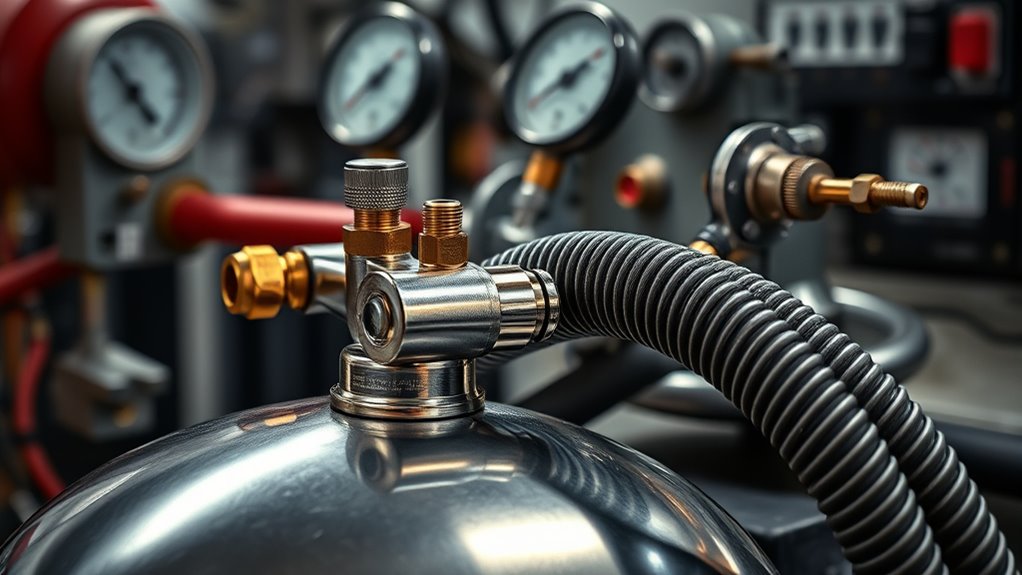

An air compressor transforms power into stored energy by compressing air, which then powers tools and equipment. It works by drawing in air, increasing its pressure, and storing it in high-pressure tanks. When needed, the compressed air is released to do work. To choose the right one, consider factors like CFM, PSI, noise levels, and maintenance needs. If you keep exploring, you’ll discover more tips to select and maintain the best compressor for your needs.
Key Takeaways
- An air compressor converts power into stored energy by compressing air using mechanisms like pistons or rotary screws.
- Understanding PSI and CFM ratings helps match the compressor to your specific tool and workload requirements.
- Key components include the pump, safety features, and storage tanks, which influence efficiency and safety.
- Regular maintenance—oil checks, filter replacements, and moisture drainage—ensures optimal performance and longevity.
- Choose a compressor based on application needs, considering factors like noise levels, portability, and safety features.
What Is an Air Compressor and How Does It Work?
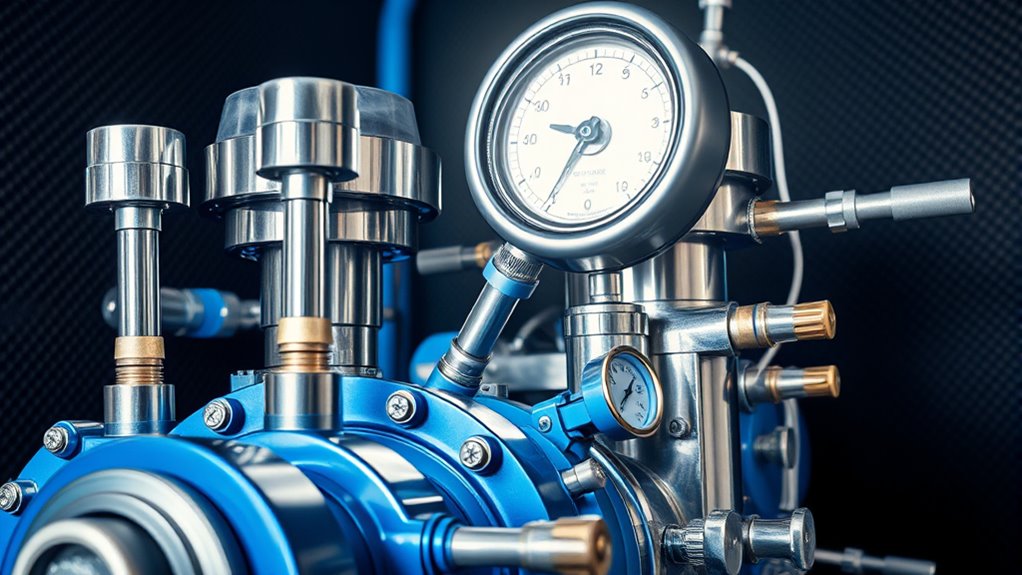
An air compressor is a device that converts power into stored potential energy in the form of compressed air. It works by drawing in air and increasing its pressure through a mechanical process, such as a piston or rotary screw. As the air is compressed, the air pressure rises, enabling it to do work when released. You’ll notice that different compressors produce varying sound levels, depending on their design and size. Some operate quietly, while others generate louder noise, which may be a consideration for your workspace. When choosing an air compressor, pay attention to the maximum air pressure it can generate and its sound levels to ensure it suits your needs. Proper understanding of these factors helps you select the right compressor for your tasks. Additionally, the compression process directly influences the efficiency and longevity of the machine. Selecting an appropriate compression method is crucial for optimizing performance and durability. Furthermore, understanding the regulation of airflow can help in maintaining consistent pressure during operation, enhancing overall efficiency. Modern compressors often feature airflow control systems that improve precision and reduce energy consumption. Recognizing the importance of proper maintenance can also extend the lifespan of your compressor and ensure reliable operation.
Key Components of an Air Compressor
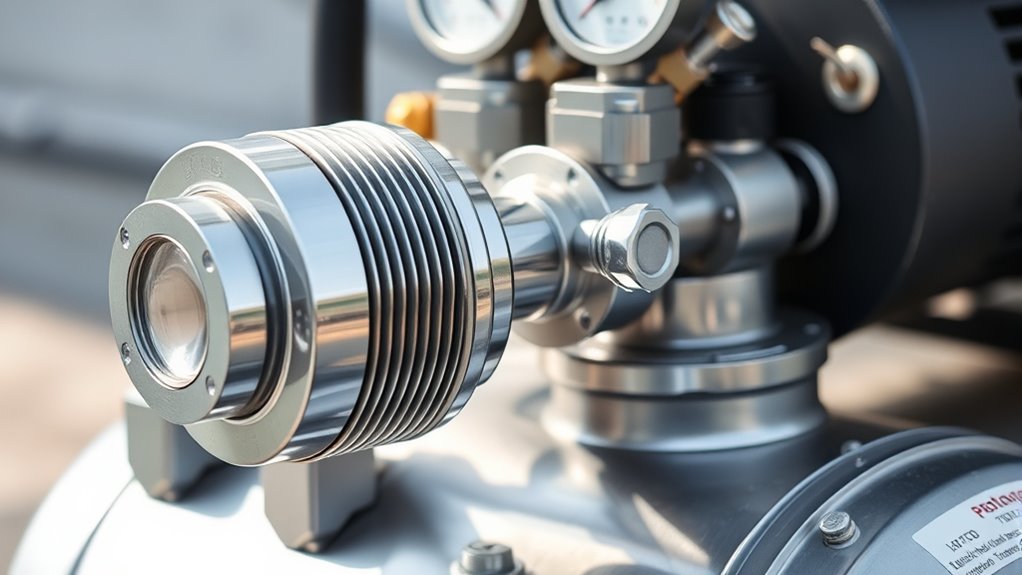
Understanding the key components of an air compressor helps you grasp how it functions and how to maintain it effectively. The pump mechanisms are central, as they compress air by drawing it in, then reducing its volume to increase pressure. Different types of pump mechanisms, like reciprocating or rotary, influence performance and maintenance needs. The type of pump used can determine the compressor’s efficiency and suitability for specific tasks. Safety features are equally important—they protect you from potential hazards, such as overpressure or overheating. These include pressure relief valves, thermal overload protectors, and automatic shut-offs. Knowing how these components work together ensures your compressor operates efficiently and safely. Regular inspection and maintenance of the pump mechanisms and safety features can extend your compressor’s lifespan and prevent accidents, keeping your work environment safe and productive. Additionally, selecting the appropriate oil and ensuring proper filtration can improve performance and prolong equipment life. Proper lubrication also helps reduce wear and tear on moving parts, ensuring reliable operation over time. Maintaining correct air quality by using filters and dryers can further enhance the longevity and efficiency of your compressor. Being aware of performance factors can help you troubleshoot issues and optimize operation for different applications.
Different Types of Air Compressors Explained

Different types of air compressors are designed to suit various applications and operational needs. For example, reciprocating compressors use pistons to deliver high-pressure air, making them ideal for heavy-duty tasks and pneumatic tools. Rotary screw compressors are popular in industrial applications because they provide continuous airflow with less maintenance. Centrifugal compressors use impellers to generate high volume, suitable for large-scale operations. Scroll compressors offer quiet, efficient performance for small to medium tasks. Each type varies in complexity, size, and efficiency, so choosing the right one depends on your specific requirements. Understanding the fundamental differences between compressor types helps users select the most appropriate equipment for their tasks. Selecting the correct compressor can also depend on the operational environment, ensuring optimal performance and longevity. Whether you’re powering pneumatic tools or supporting industrial processes, understanding these differences helps you select the best compressor for your needs. Additionally, some Soul Sanctuaries emphasize the importance of proper maintenance to extend the lifespan and efficiency of your compressor. Proper maintenance practices are vital for ensuring reliable operation and maximizing the investment in your equipment.
How Air Is Compressed and Stored
Air is compressed by forcing it into a smaller space, increasing its pressure and density. This process involves reducing the volume of air, which raises its air pressure. Once compressed, the air is stored in tanks designed to handle high pressure safely. These storage tanks maintain a steady supply of compressed air, ready for use whenever needed. Properly designed tank construction is essential to withstand the high internal pressures and prevent failures. To optimize this process, consider these key points:
Compressing air increases its pressure and density, storing it safely for reliable use.
- Air pressure is carefully regulated to prevent tank over-pressurization.
- Storage tanks act as a reservoir, ensuring consistent air flow.
- Proper maintenance of tanks prevents leaks and maintains safety standards.
- Understanding affiliate disclosure can help users make informed decisions regarding products and services associated with air compressor systems.
- Additionally, the material and construction quality of the tanks are crucial for tank durability and safety under high-pressure conditions.
- Regular inspection and adherence to pressure regulation guidelines are essential for safe operation.
- Incorporating industry standards ensures compliance and enhances the safety and reliability of the air compression system.
Important Features to Consider When Buying

When choosing an air compressor, it is vital to evaluate features that impact performance, durability, and safety. Noise levels are important because quieter models reduce workplace disturbance and improve comfort. Look for compressors with noise-reduction features or lower decibel ratings. Portability features also matter if you need to move the unit frequently or work in different locations. Check for wheels, handles, or lightweight designs that make transportation easier. Additionally, consider the build quality and safety features like automatic shut-off or thermal overload protection to guarantee reliable operation. Properly assessing cost of ownership can help you select a compressor that’s not only efficient but also safe and convenient to use over time. Incorporating Support Breakfast ideas such as portable breakfast options or quick-to-prepare meals can also inspire you to create a more enjoyable and functional workspace outside. Staying informed about automotive repair basics can help ensure your compressor setup remains effective for maintenance tasks.
Understanding CFM and PSI Ratings

Have you ever wondered how to guarantee your air compressor can handle your tasks efficiently? Understanding CFM (cubic feet per minute) and PSI (pounds per square inch) ratings is key. These measurements tell you about the air pressure and airflow capacity the compressor provides. Higher PSI means more force, ideal for tough jobs, while CFM indicates how much air it can deliver at that pressure. To choose the right compressor, consider:
Understanding CFM and PSI helps you select the right air compressor for your tasks.
- The PSI your tools require for maximum performance
- The CFM needed to sustain airflow during continuous use
- How these ratings match your specific tasks or projects
Matching your air pressure and airflow capacity ensures your compressor can handle your workload without underperforming or overworking. Proper understanding of these ratings helps you avoid buying a unit that’s either too weak or unnecessarily powerful.
Maintenance Tips to Keep Your Compressor Running Smoothly
To maintain your compressor running smoothly, you need to stay on top of regular oil checks and change the filter according to the schedule. Don’t forget to drain moisture frequently to prevent corrosion and damage. Consistent maintenance ensures your compressor stays efficient and lasts longer.
Regular Oil Checks
Regular oil checks are essential for keeping your air compressor running smoothly and efficiently. Regularly inspecting the oil level ensures your compressor stays properly lubricated, preventing overheating and wear. You should also assess oil quality; dirty or degraded oil can cause damage and reduce performance.
Remember to:
- Check the oil level daily or as recommended by the manufacturer
- Use the correct type of oil specified for your compressor
- Replace oil when it appears dark, cloudy, or gritty
Maintaining proper oil levels and quality helps extend your compressor’s lifespan and guarantees peak operation. Neglecting these checks can lead to costly repairs and downtime. Make oil inspections a key part of your routine maintenance.
Filter Replacement Schedule
How often you replace your compressor’s filters plays a crucial role in maintaining ideal performance. Proper scheduling ensures filters don’t clog, which can reduce efficiency and damage the system. Typically, filters have a lifespan of 3 to 6 months, but this varies based on usage and air quality. Following recommended replacement intervals helps prevent dust and debris buildup. Check your filter regularly for dirt and wear. If it appears dirty before the scheduled date, replace it sooner. Use the table below as a guideline:
| Filter Type | Replacement Interval |
|---|---|
| Air Intake Filter | Every 3-6 months |
| Oil Filter | Every 6-12 months |
| Separator Filter | Every 6-12 months |
Adhering to these intervals keeps your compressor running smoothly.
Drain Moisture Frequently
Moisture buildup inside your compressor can lead to rust, corrosion, and system damage if not drained frequently. Proper moisture management is essential to prevent these issues and keep your equipment running smoothly. Regular drain maintenance allows you to remove accumulated water before it causes harm. To ensure effective moisture management, consider these tips:
- Check and drain moisture daily, especially after heavy use
- Use automatic drains if your compressor has them for convenience
- Inspect drain valves regularly for leaks or clogs
Common Applications of Air Compressors

Air compressors are versatile tools found in many industries and workplaces, where they power a wide range of equipment and processes. In industrial applications, you’ll find them driving manufacturing machinery, powering pneumatic tools, and aiding in material handling. They’re essential for tasks like spray painting, assembly lines, and even automation systems. In household uses, air compressors help with tasks such as inflating tires, cleaning dust from hard-to-reach areas, and powering small pneumatic tools for DIY projects. Their portability and ability to generate high-pressure air make them indispensable in both settings. Whether you’re running a factory or tackling home repairs, understanding these common applications helps you appreciate the importance of choosing the right compressor for your specific needs.
Tips for Choosing the Right Air Compressor for Your Needs
Choosing the right air compressor starts with matching its size to your tasks, ensuring it can handle your workload. You also need to assess your power requirements so the compressor can operate efficiently without overloading your system. Paying attention to these points helps you select a model that delivers reliable performance and avoids unnecessary costs.
Match Compressor Size
Wondering how to select the right air compressor size? The key is proper size matching to ensure your compressor meets your needs without wasting energy. Start by evaluating your typical airflow requirements, which involves capacity planning for your tools and projects.
To choose the right size, consider:
- The CFM (cubic feet per minute) needed for your tools
- The compressor’s tank size for continuous operation
- Your workspace’s power and space limitations
Matching your compressor size to your demands prevents underperformance and reduces energy costs. Remember, oversizing can lead to unnecessary expenses, while undersizing hampers productivity. Focus on understanding your capacity needs and selecting a compressor that aligns perfectly for efficient, reliable operation.
Assess Power Requirements
To guarantee your air compressor can handle your tasks efficiently, you need to accurately assess its power requirements. Start by examining the tool’s power consumption, which indicates how much energy it uses during operation. This helps you determine if your power source can support it without overloading. Check the voltage requirements, ensuring your electrical system matches the compressor’s needs. If you choose a compressor with higher voltage needs than your outlet supplies, you’ll need an appropriate converter or dedicated circuit. Also, consider the compressor’s horsepower and runtime demands. Selecting a model with suitable power consumption and voltage requirements prevents electrical issues, reduces energy waste, and ensures smooth, reliable performance for your projects.
Frequently Asked Questions
How Do I Determine the Right Size of Air Compressor for My Projects?
To determine the right size of air compressor for your projects, consider your tools’ tank capacity and power requirements. If you use high-demand tools or run multiple devices simultaneously, opt for a larger tank and higher horsepower. Smaller projects need less capacity, so a compact compressor with lower power suffices. Always match the compressor’s specifications to your project needs to guarantee efficiency and avoid overworking the equipment.
What Safety Precautions Should I Take When Operating an Air Compressor?
Did you know improper use guarantees over 10,000 injuries annually? Always wear protective gear like goggles and ear protection when operating your air compressor. Before starting, review emergency procedures to handle potential hazards. Make sure to check for leaks, secure hoses, and never bypass safety valves. Keep your workspace clean and stay alert. These precautions help prevent accidents and ensure safe, efficient operation every time you use your compressor.
How Often Should I Perform Maintenance on My Air Compressor?
You should perform regular maintenance on your air compressor based on its maintenance schedule, typically every 1 to 3 months. Check for wear and tear on parts like belts, hoses, and filters, and replace them as needed. Regular inspections help prevent breakdowns and guarantee peak performance. Keep a maintenance log to track tasks and stay ahead of potential issues, extending your compressor’s lifespan and maintaining safety.
Can Portable Air Compressors Handle Industrial Tasks?
Back in the day, folks thought a Swiss Army knife could do everything, but today, you know better. Portable air compressors, with their versatility, are great for light to moderate jobs. However, for heavy-duty industrial tasks, you need equipment with industrial capacity. While some portable units might handle small tasks, they usually can’t match the power and durability of stationary compressors designed for demanding industrial applications.
What Are the Environmental Impacts of Using Air Compressors?
Using air compressors can increase your carbon footprint due to their energy consumption, especially if powered by non-renewable sources. They also contribute to noise pollution, which affects nearby communities and wildlife. To minimize these impacts, choose energy-efficient models and operate them responsibly. Proper maintenance reduces unnecessary emissions, and using quieter compressors helps lessen noise pollution, making your operations more environmentally friendly.
Conclusion
Remember, choosing the right air compressor is like planting a seed—you’ll see it grow and serve your needs if you nurture it with care. Pay attention to its key features, maintenance, and applications, and you’ll cultivate a reliable tool that works as hard as you do. With the right choice, your compressor becomes a steady heartbeat in your projects—silent yet powerful, ready to breathe life into your endeavors whenever you need it.