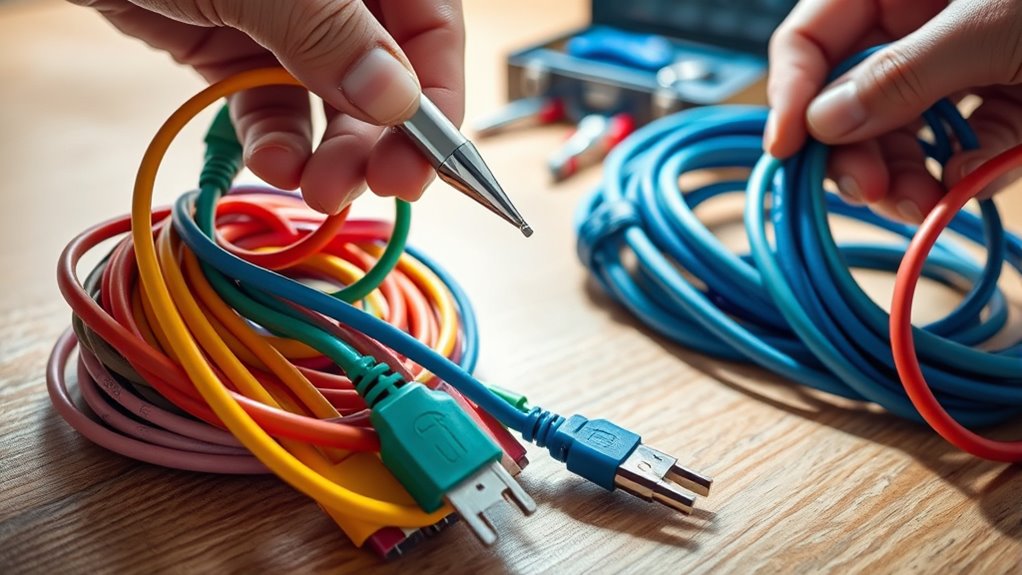

To care for your power cords, store them neatly using Velcro straps or cable clips to prevent tangling and damage. When untangling, do so gently to avoid internal breaks and never yank on the cords. Regularly inspect for cracks or fraying, and repair or replace damaged cables promptly. Proper storage, gentle handling, and maintenance keep your cords safe and long-lasting—discover more tips for safest and best cord care if you continue exploring.
Key Takeaways
- Coil extension cords loosely and use cable organizers to prevent internal stress and tangling.
- Store cords in a cool, dry place away from heat and water to extend lifespan.
- Untangle knots gently with fingers and avoid sharp objects to prevent insulation damage.
- Regularly inspect cords for cracks, fraying, or exposed wires, and replace damaged extensions promptly.
- Unplug cords when not in use, and handle them carefully to prevent internal breakage and ensure safety.
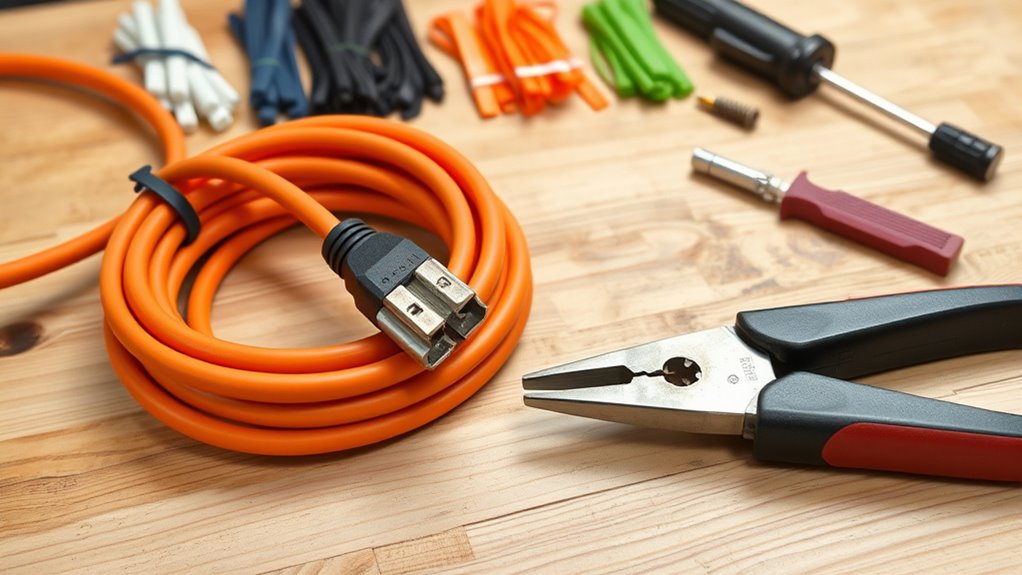
Power cords are vital for keeping your devices running, but they can easily become damaged if not cared for properly. One of the best ways to extend their lifespan and guarantee safety is through effective cord organization. When cords are tangled or cluttered, they’re more prone to damage from bending, kinks, or accidental yanks. To prevent this, use simple storage solutions like cable clips, Velcro straps, or cable organizers to keep cords neat and prevent tangling. Not only does this make your space look tidier, but it also reduces the risk of tripping hazards and electrical shorts. Proper cord organization helps you identify cables quickly and reduces unnecessary wear and tear, ultimately saving you money and hassle in the long run.
Along with organizing, practicing safety tips is vital. Always unplug cords when not in use or when you notice visible damage, such as fraying or exposed wires. Avoid forcing cords into tight spaces or bending them sharply, as this can weaken their insulation and internal wiring. When storing extension cords, coil them loosely to prevent stress on the internal wires—tight coils can cause internal damage over time. Keep cords away from heat sources, water, or areas prone to physical damage. Use surge protectors where possible and never overload outlets, which can cause overheating and increase the risk of fire. Regularly inspecting your cords for cracks or signs of wear is key to catching potential hazards early. Remember, a damaged cord isn’t just a nuisance; it’s a safety hazard.
If you need to untangle cords, do so gently. Pulling or yanking can cause internal breakage or weaken the connection points. Use your fingers to carefully unravel knots, and avoid using sharp objects that might cut or damage the outer insulation. When repairing a damaged extension cord, consider replacing it altogether—especially if the damage is severe. If you’re not experienced with electrical repairs, it’s safer to seek professional help or replace the cord to avoid potential hazards. Additionally, understanding proper cord maintenance techniques can significantly prolong the life of your cords and enhance safety. Proper storage, careful handling, and routine inspections are your best tools to keep cords safe and functional. Remember, well-maintained cords not only last longer but also help keep your home or workspace safe from electrical mishaps.
Frequently Asked Questions
How Often Should I Replace Damaged Power Cords?
You should replace damaged power cords as soon as you notice signs of cord deterioration, such as fraying, exposed wires, or sparks. There’s no fixed cord replacement frequency since damage varies, but regular inspection helps you catch issues early. If any damage is visible or the cord isn’t functioning properly, replace it immediately to ensure safety and prevent electrical hazards. Don’t delay if you spot any signs of deterioration.
Are There Eco-Friendly Ways to Dispose of Old Cords?
Think of your old cords as ancient scrolls needing respectful retirement. You can participate in recycling programs or find local e-waste centers that offer eco-friendly disposal. These options guarantee your cords are repurposed, reducing environmental harm. By choosing eco-friendly disposal methods, you’re helping to preserve the planet, much like passing treasured knowledge to future generations, and ensuring your old cords don’t end up in landfills.
Can Using Extension Cords Cause Electrical Fires?
Yes, using extension cords can cause fire hazards if you ignore cord safety. Overloading a cord, using damaged or frayed wires, or placing cords under rugs increases the risk of electrical fires. Always inspect cords regularly, avoid overloading outlets, and keep cords away from water and heat sources. Properly using and maintaining your extension cords helps prevent fire hazards and keeps your home safe.
What Safety Precautions Are Recommended When Repairing Cords?
A stitch in time saves nine, so always prioritize safety. When repairing cords, unplug them first and inspect for insulation damage or connector corrosion. Use proper tools, avoid shortcuts, and replace damaged parts instead of patching. Wear insulated gloves for protection and work in a dry area. If unsure, consult a professional. Taking these precautions minimizes risks and guarantees your cords stay safe and functional.
How Do I Identify a Faulty Power Cord?
You can identify a faulty power cord by inspecting the insulation for cracks, fraying, or burns, which indicate damage. Check the plug prongs for corrosion, bending, or looseness, as these can cause poor connections. If the cord feels hot during use or if you notice sparks or a burning smell, stop using it immediately. A damaged insulation or compromised plug prong suggests the cord is unsafe and needs replacement.
Conclusion
Think of your power cords as the veins of your home’s energy flow. When you store, untangle, and repair them with care, you keep this essential system healthy and strong. Treat them with respect, like tending to a delicate garden, and they’ll serve you reliably for years to come. A little attention now prevents major breakdowns later, ensuring your devices stay powered and your home stays connected. Keep your cords happy, and they’ll keep you going.