
Choosing between a portable and standby generator depends on your home’s power needs, budget, and lifestyle. Portable units are affordable, easy to move, and good for temporary or emergency power, but they require manual setup and produce more noise. Standby generators are more expensive but provide automatic, quiet, and continuous backup for your entire home. To make the best choice, think about your energy requirements and long-term plans—there’s more to consider if you continue through this guide.
Key Takeaways
- Portable generators are suitable for temporary, emergency power needs and outdoor activities, while standby generators provide automatic, whole-home backup.
- Standby units offer seamless power restoration within seconds and operate quietly, ideal for continuous, reliable home backup.
- Portable generators are budget-friendly, easy to install, and mobile, but have limited capacity and runtime compared to permanent standby systems.
- Standby generators have higher initial costs and require professional installation but provide larger capacity and longer runtime.
- Choose portable if flexibility and cost are priorities; opt for standby if you need reliable, automatic, and extensive home backup.
Understanding the Basics of Portable and Standby Generators
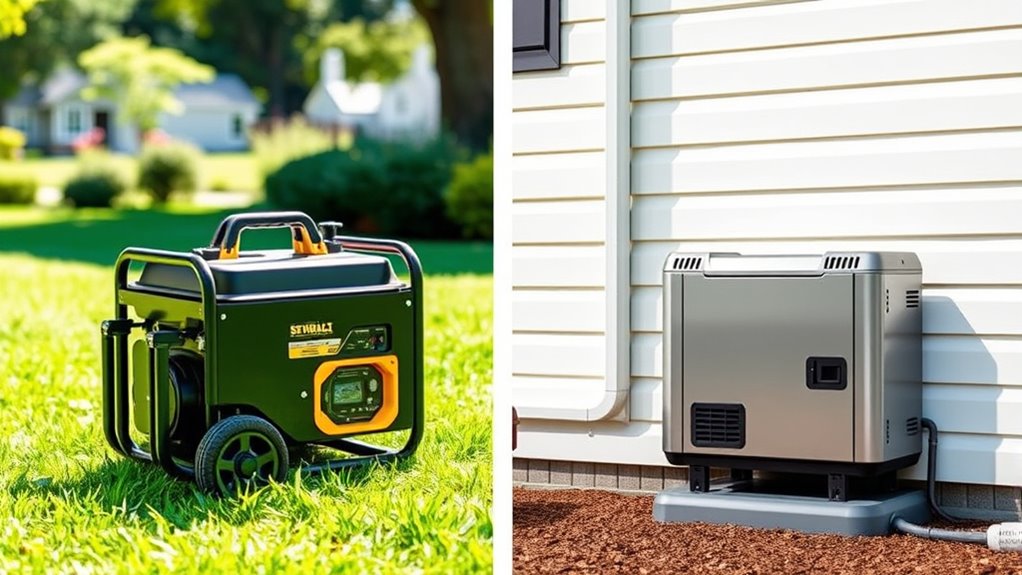
To understand the differences between portable and standby generators, it’s important to know what each type is designed to do. Portable generators are versatile, compact units that provide temporary power during outages or outdoor activities. They often have lower fuel efficiency but are easy to move around, making them ideal for camping or small job sites. Their noise levels can vary but tend to be higher, which might be disruptive in quiet neighborhoods. Standby generators, on the other hand, are permanently installed and automatically kick in during power failures. They’re built for continuous use, with higher fuel efficiency and quieter operation, making them suitable for whole-home backup. Additionally, European cloud innovation emphasizes energy-efficient and sustainable solutions, which can inspire the design of more eco-friendly standby generators. Understanding these basic functions helps you determine which generator fits your specific needs and environment. Energy efficiency is a key factor, especially as modern technology advances toward greener solutions that reduce environmental impact and operating costs. Moreover, advancements in smart energy management systems are making it easier to optimize generator use and reduce waste.
Key Advantages of Portable Generators for Home Use
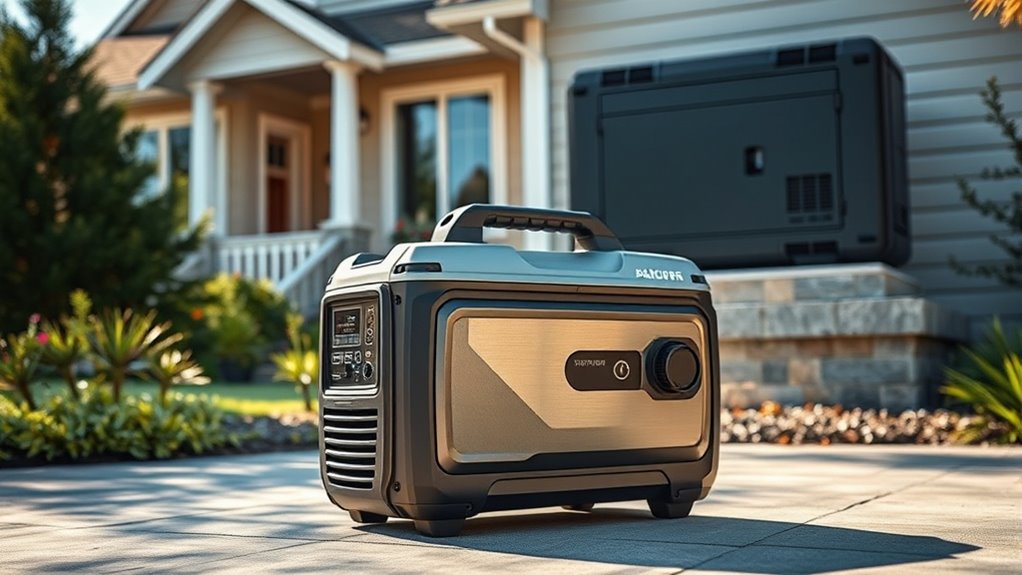
Portable generators offer unmatched mobility, making it easy to power your home wherever needed. They are a cost-effective way to guarantee backup power without breaking the bank. Plus, their simple setup allows you to start using them quickly and with minimal effort. Additionally, portable generators can be used for outdoor activities like camping or backyard gatherings, providing versatile power options. Power source options make them adaptable to various situations and energy needs. A reliable energy source ensures consistent performance during outages and outdoor use. Incorporating power management techniques can help optimize their efficiency and runtime during extended use. In addition, understanding encryption solutions can help safeguard the control systems and sensitive data of your generator, ensuring safe operation in connected smart environments.
Portability and Mobility
One of the biggest benefits of portable generators is their easy mobility, allowing you to move them wherever you need power most. This flexibility enhances your emergency preparedness by ensuring you can supply power during outages or outdoor activities. Plus, their portability minimizes environmental impact since you can position them to reduce noise and emissions near your home or campsite. Additionally, understanding the science behind generator technology helps you select the most efficient and safe options for your needs. Consider these key advantages: 1. Easy transport to remote or outdoor locations 2. Quick setup during emergencies 3. Ability to run multiple devices or appliances 4. Reduced environmental footprint through strategic placement. Exploring power generation methods can further improve your understanding of how to optimize your generator’s performance and sustainability. For example, selecting a generator with efficient energy output can help you maximize power while minimizing fuel use and emissions. Moreover, understanding lease costs and financial considerations can help you budget effectively when choosing a generator, especially if leasing options are available. Fuel efficiency plays a crucial role in reducing ongoing costs and environmental impact. With their mobility, portable generators give you peace of mind, knowing you can adapt quickly to changing needs while supporting a responsible, environmentally conscious approach.
Cost-Effective Power Solution
A portable generator offers an affordable way to keep your home powered during outages without the high costs of installing a permanent system. They’re typically more budget-friendly upfront and provide flexibility in usage. With good fuel efficiency, they run longer on less fuel, saving you money over time. Plus, modern models feature noise levels that are often quieter than older units, reducing disturbance during operation. To visualize, here’s a comparison:
| Feature | Portable Generator | Standby Generator | Cost-Effectiveness |
|---|---|---|---|
| Initial Cost | Lower | Higher | Portable is more affordable |
| Fuel Efficiency | Generally good | Varies, often less efficient | Portable saves on fuel costs |
| Noise Levels | Quieter models available | Usually louder | Portable models are quieter |
| Installation Cost | Minimal, portable setup | Higher, permanent installation | Portable is more budget-friendly |
Easy Installation and Use
Because they require minimal setup, portable generators are incredibly easy to install and use at home. You can quickly power essential appliances without complex wiring or professional installation. Their straightforward operation means you won’t need extensive technical skills. Here are key advantages:
- Simple Start-Up: Just add fuel, turn the switch, and go.
- Portability: Move the generator easily to different locations around your home.
- Fuel Efficiency: Many models are designed to maximize fuel use, reducing the need for frequent refueling.
- Quiet Operation: Lower noise levels make them less disruptive during use, ideal for residential areas.
This combination of ease, fuel efficiency, and quiet operation makes portable generators a convenient backup option for homeowners.
Benefits of Standby Generators in Household Backup Power
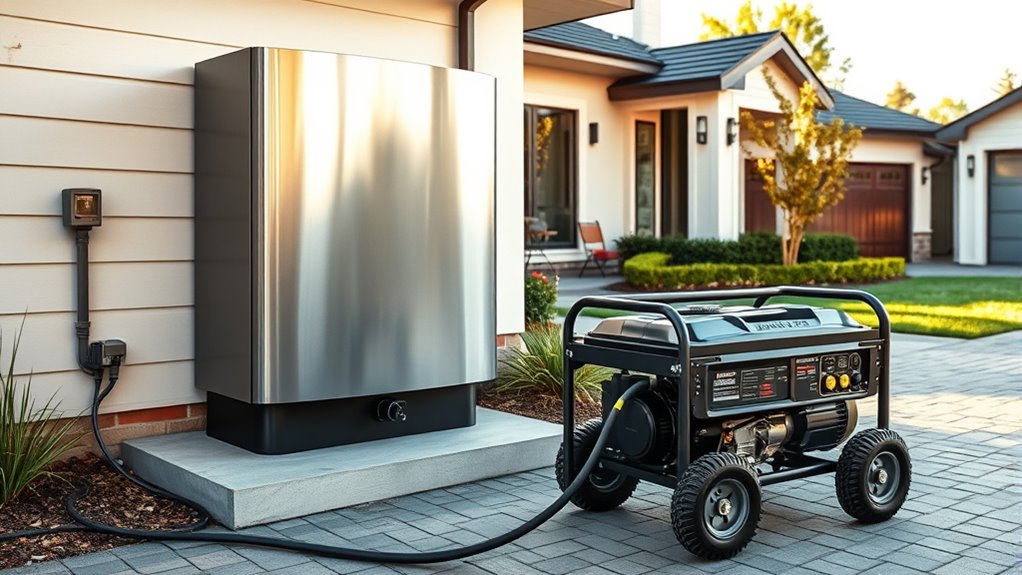
Standby generators automatically activate when the power goes out, so you don’t have to lift a finger. They provide seamless whole-home coverage, keeping all your essential appliances running smoothly. This reliability guarantees your household stays comfortable and connected during outages. Additionally, safety considerations are crucial to ensure proper installation and operation. Proper transfer switch setup is essential to prevent backfeeding risks and ensure safe operation. Proper maintenance and understanding of installation planning resources can further enhance long-term performance and safety. Consulting with qualified technicians can help ensure your system is correctly installed and maintained for optimal safety and efficiency. Regular testing and adherence to vetted guidelines can also improve ongoing safety measures.
Automatic Power Restoration
When power outages occur, standby generators automatically kick in without you needing to do a thing, ensuring your household remains powered. This seamless shift offers numerous benefits:
- Immediate power restoration, minimizing disruption
- Enhanced fuel efficiency with optimized engine operation
- Reduced noise levels compared to portable units
- Hands-free operation, freeing you from manual startup tasks
Standby generators are designed for quick response, so your home’s essential systems stay running smoothly. Their intelligent systems detect outages instantly, restoring power within seconds. Plus, their quieter operation makes them less intrusive during operation. Fuel efficiency is optimized, reducing running costs and emissions. With automatic power restoration, you gain peace of mind knowing your home stays safe and comfortable during any outage, without the hassle of manual intervention. Additionally, understanding the manipulation tactics involved in some scams can help you better protect your household during emergencies. Proper maintenance and system monitoring ensure your standby generator continues to operate reliably when needed.
Seamless Whole-Home Coverage
Automatic power restoration guarantees your home stays functional during outages, but it also provides the advantage of seamless whole-home coverage. Standby generators connect directly to your home’s electrical system, ensuring every room has power without the need for manual setup. This all-encompassing coverage means you don’t have to worry about selectively powering essential devices—it’s all handled automatically. Modern standby generators often incorporate renewable energy options, making your backup power more eco-friendly. Additionally, they’re designed with lower noise levels, so your household remains comfortable without disruptive sounds during operation. This seamless power delivery helps maintain your daily routines smoothly, whether it’s heating, lighting, or appliances. Overall, standby generators offer reliable, whole-home backup that’s efficient, quieter, and better suited for long-term household resilience.
Comparing Installation Requirements and Costs
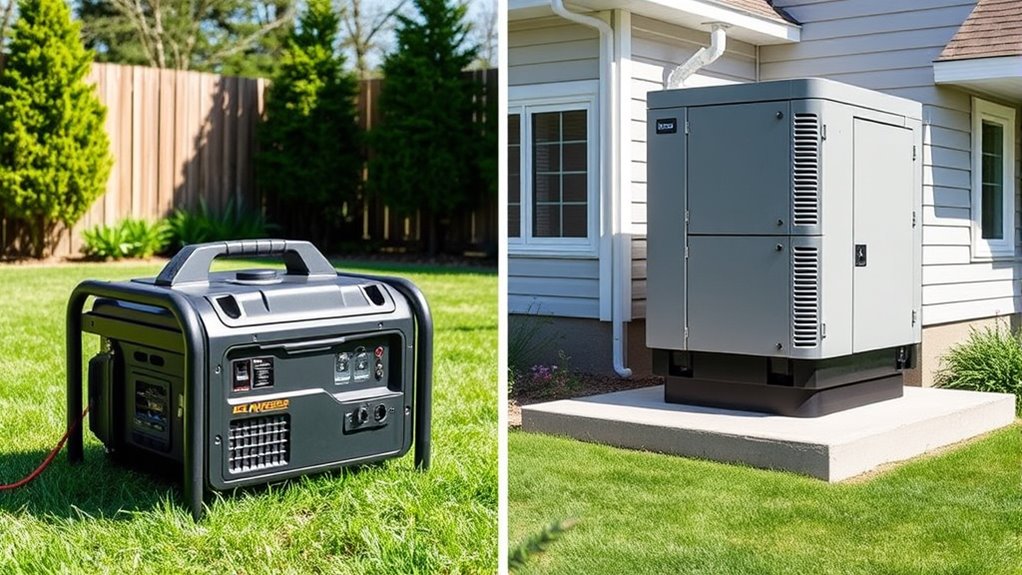
Installing a portable generator usually requires minimal preparation, often just a level surface and a nearby extension cord, making it a straightforward and inexpensive process. When comparing installation requirements and costs, you’ll find significant differences. Portable generators typically need little to no professional installation, keeping costs low. Standby generators often require complex electrical wiring, permits, and professional setup, increasing costs. The installation complexity for standby units can include gas line connection and transfer switches. Additionally, using simple tools and tests can help ensure proper setup and safety. Some models may also feature smart‑home integrations for enhanced convenience and monitoring. Proper ventilation considerations are essential to ensure safe operation of both portable and standby systems. Overall, portable generators are more budget-friendly upfront, while standby systems involve higher initial investment but offer seamless integration.
Understanding these factors helps you weigh the cost comparison against installation complexity and decide which backup option best fits your needs.
Power Capacity and Runtime Considerations
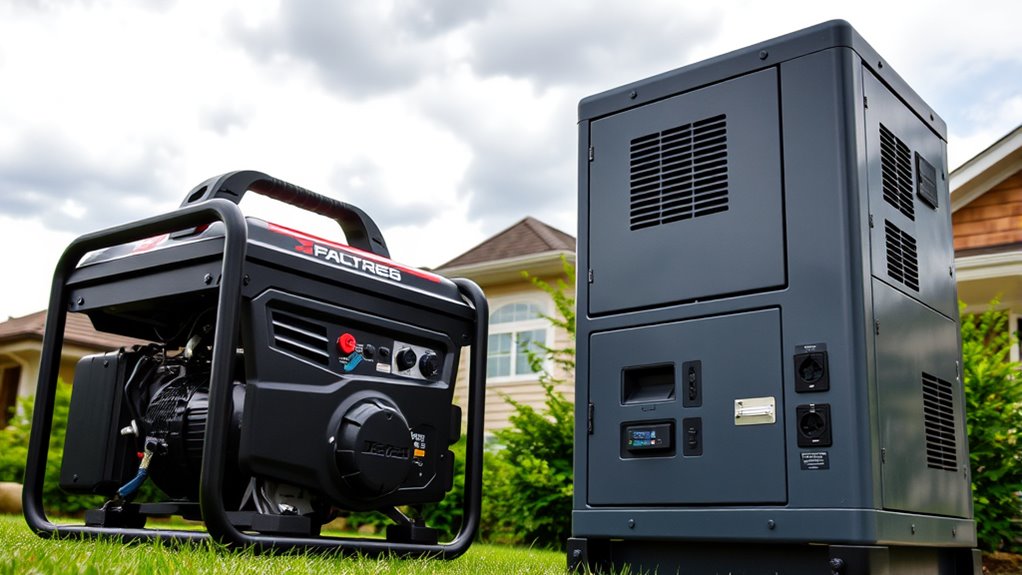
While installation ease makes portable generators appealing, their power capacity and runtime often fall short compared to standby systems. Portable models typically handle essential appliances but may struggle with larger loads or extended outages. Their fuel efficiency varies, affecting runtime and operating costs. Noise levels are usually higher, which can be disruptive. Standby generators, on the other hand, offer higher wattage output and longer runtimes, often powered by larger fuel tanks for extended backup. Consider this comparison:
| Feature | Portable Generator | Standby Generator |
|---|---|---|
| Power Capacity | Up to 10kW | 10kW to 150kW or more |
| Runtime | 4-12 hours, depending on load | 12-48 hours or more |
| Fuel Efficiency | Varies, generally lower | Optimized for longer use |
| Noise Levels | Higher, often loud | Quieter, more consistent noise |
Choose based on your power needs and runtime expectations.
Ease of Use and Portability Factors
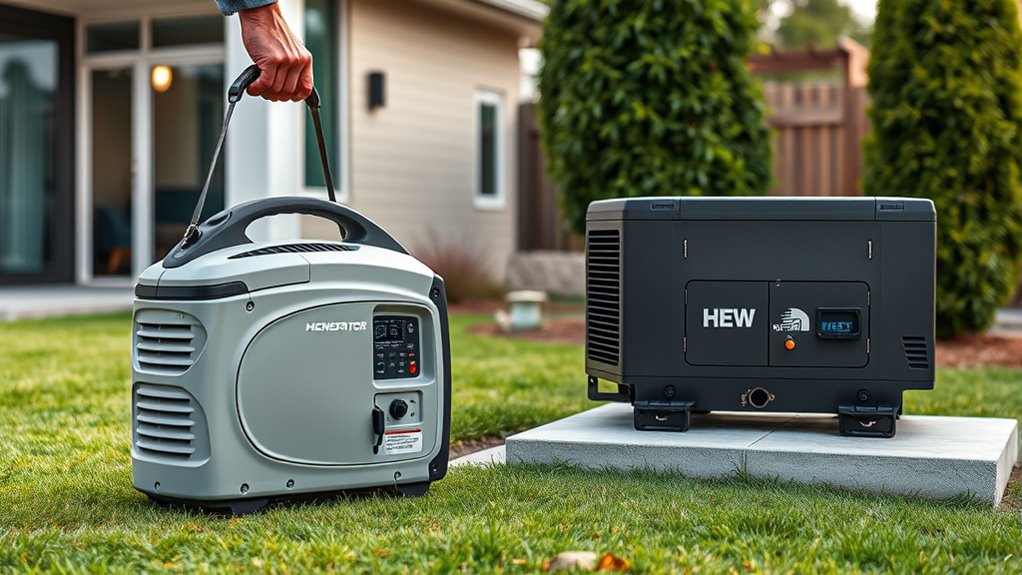
When it comes to ease of use and portability, portable generators excel because they are designed for quick setup and effortless transportation. You can move them easily to different locations, making them ideal for outdoor activities or emergencies. They typically have user-friendly controls, so you don’t need technical expertise to operate them. Consider these factors:
- Lightweight design for easy carrying
- Handles and wheels for mobility
- Quick startup with simple controls
- Fuel efficiency to extend runtime without frequent refueling
While portable models tend to have higher noise levels, advances are reducing this issue. Their compact size and portability make them perfect for temporary backup needs. However, keep in mind that their fuel efficiency varies depending on load, impacting overall convenience.
Safety and Maintenance Aspects
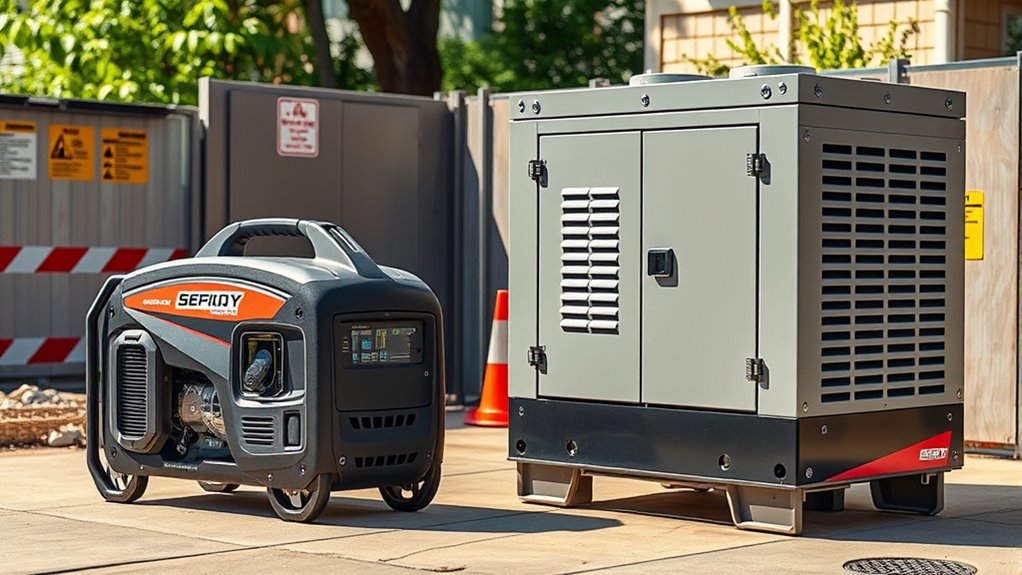
Safety and maintenance are critical considerations when choosing between portable and standby generators, as improper handling can lead to hazards like carbon monoxide poisoning, electrical shocks, or fires. You must always operate generators outdoors in well-ventilated areas to prevent deadly carbon monoxide buildup. Regular maintenance, such as checking fuel options and changing oil, guarantees safe operation and longevity. Portable generators often have higher noise levels, so you should use them away from living areas to avoid disturbances and health risks. Standby generators typically run quietly and require less frequent maintenance, but you need to schedule professional inspections. Proper handling of fuel, whether gasoline, propane, or natural gas, is essential to prevent leaks or explosions. Staying vigilant with safety and maintenance protects your home and loved ones.
Cost Analysis: Initial Investment and Long-Term Expenses
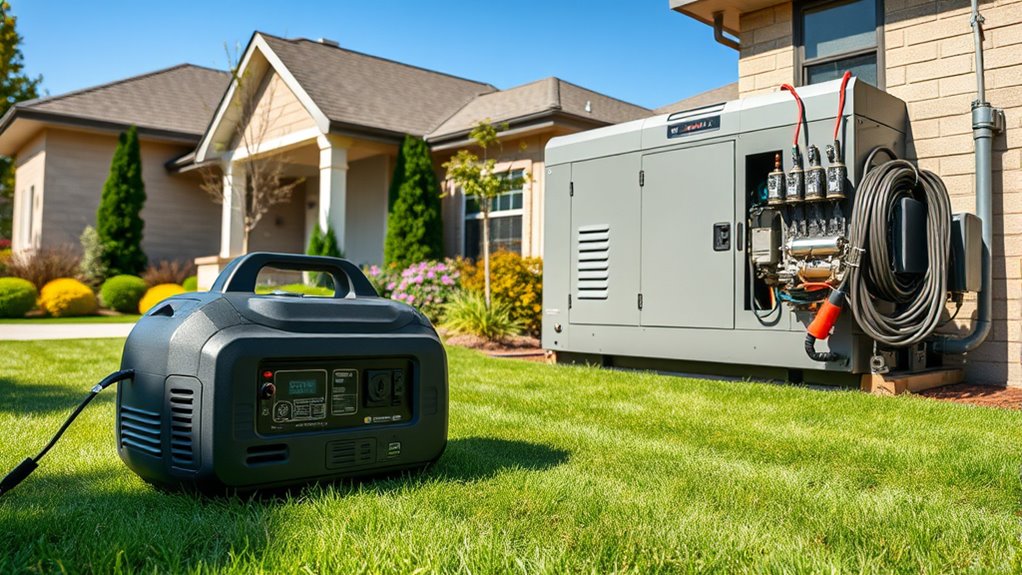
Choosing between portable and standby generators involves considering both the upfront costs and ongoing expenses. Portable models are generally more affordable initially but can lead to higher long-term costs due to fuel consumption and maintenance. Standby generators require a significant upfront investment but often deliver better fuel efficiency and lower noise levels, saving money over time. To help you evaluate, consider these factors:
- Initial purchase price
- Fuel efficiency and ongoing fuel costs
- Maintenance and service expenses
- Noise levels affecting your comfort and neighborhood
While portable units might seem budget-friendly initially, the long-term savings and convenience of standby generators could outweigh the initial cost, especially if you prioritize quiet operation and fuel efficiency for reliable home backup.
Making the Right Choice for Your Home Needs
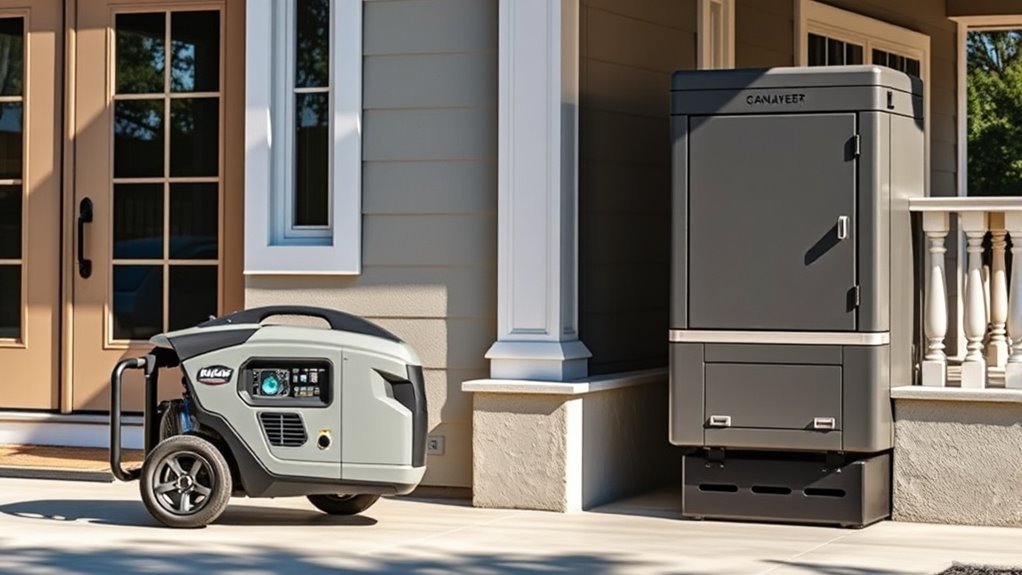
Deciding between a portable and a standby generator depends on your specific home needs and lifestyle. If you prioritize flexibility and easy mobility, a portable generator might suit you best. On the other hand, if you want automatic backup during outages, a standby generator is ideal. Consider fuel types: portable units often use gasoline, while standby models may run on propane or natural gas. Noise levels also matter; portable generators tend to be louder, which can be disruptive. Use this comparison to help your decision:
| Feature | Portable Generator | Standby Generator |
|---|---|---|
| Fuel Types | Gasoline | Propane or Natural Gas |
| Noise Levels | Louder, portable operation | Quieter, permanent setup |
| Power Capacity | Lower, suitable for essentials | Higher, whole-home backup |
Choose based on your power needs, convenience, and lifestyle.
Frequently Asked Questions
How Do Maintenance Routines Differ Between Portable and Standby Generators?
You’ll find that maintenance routines differ between portable and standby generators mainly in maintenance frequency and fuel efficiency checks. Portable units require more frequent inspections, oil changes, and fuel system checks since you move them often. Standby generators, however, need less frequent maintenance because they’re built for continuous operation and have automatic systems. Regularly check fuel levels and perform scheduled maintenance to keep both types running efficiently and reliably.
Can Portable Generators Power an Entire House During an Outage?
You can power an entire house during an outage with a portable generator, but it’s not always practical. For example, if you run multiple appliances or HVAC systems, a portable might struggle, risking home safety and power stability. Consider cost factors—portable generators are cheaper upfront but may require extension cords and manual setup. For whole-house backup, a standby generator offers seamless, reliable power, ensuring safety and comfort during outages.
What Are the Noise Level Differences Between Portable and Standby Models?
You’ll notice that standby generators are generally quieter than portable models, thanks to soundproof enclosures and advanced mufflers. Portable generators tend to produce more noise, often exceeding sound level regulations for residential areas, which can be disruptive. If noise levels matter to you, consider a standby generator with sound control features, as they’re designed to meet sound level regulations, ensuring minimal disturbance during outages.
Are There Specific Permits Required for Installing Standby Generators?
Like a knight preparing for battle, you need the right permits before installing a standby generator. You’ll likely need local permits, especially if the installation affects your property or involves electrical codes. Check with your city or county’s building department for specific permit requirements and installation regulations. Making certain of compliance helps you avoid fines and ensures safe, legal operation of your backup power system, giving you peace of mind during outages.
How Do Fuel Consumption Rates Compare for Each Generator Type?
You’ll find that standby generators generally have better fuel efficiency because they’re designed to run automatically during outages and operate at a consistent, optimized speed. Portable generators tend to have higher consumption rates since they’re less efficient and often run at variable speeds. If you want to save on fuel costs and reduce consumption rates, a standby generator is usually the better choice, especially for long-term use.
Conclusion
Choosing between a portable and standby generator is like selecting your own lighthouse in a storm—each offers guidance and security, but at different costs and commitments. Consider your home’s needs, budget, and how much peace of mind matters to you. Remember, the right choice isn’t just about power; it’s about knowing you’re prepared for whatever storm may come, illuminating your path through darkness with confidence and resilience.