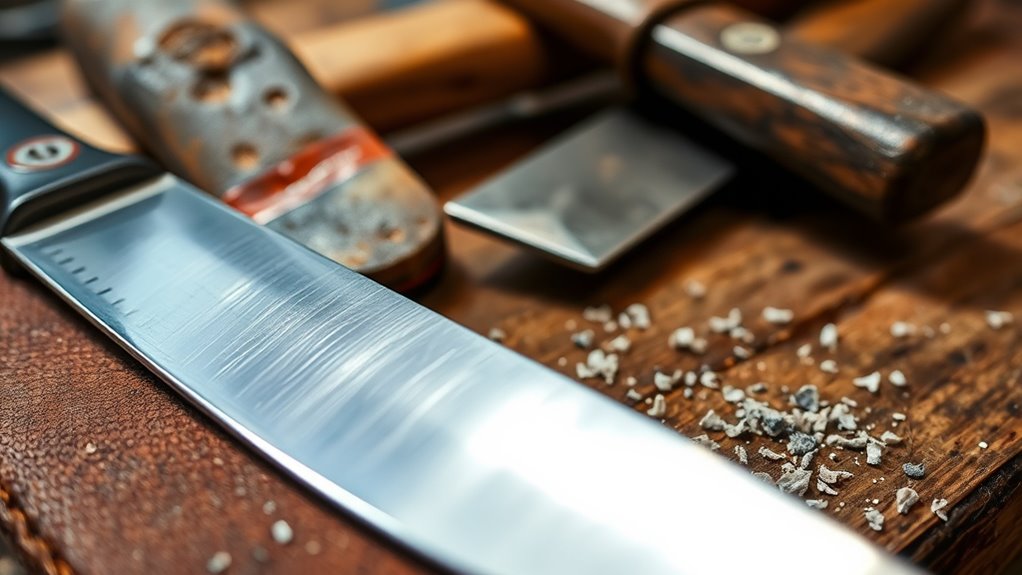

To keep your knives, axes, and chisels razor-sharp, you need to understand their specific needs and use the right tools. Use sharpening stones, honing rods, and strops carefully, maintaining consistent angles and smooth strokes. Prepare your workspace with safety in mind, wear protective gear, and organize your tools for efficiency. Regular maintenance, correct technique, and avoiding common mistakes make certain your blades stay sharp longer. Keep exploring to master these essential steps and enjoy safer, better cuts.
Key Takeaways
- Use appropriate sharpening tools such as stones, honing rods, and strops based on blade material and type.
- Maintain a consistent angle (around 15-20°) and even strokes for a sharp, uniform edge.
- Regularly clean, dry, and lightly oil blades to prevent rust and preserve sharpness.
- Follow a routine of honing for realignment and sharpening for material removal to prolong blade life.
- Work in a clean, well-lit environment, wearing safety gear and securing tools to ensure safety and efficiency.
Understanding Different Types of Blades and Their Needs

To keep your blades sharp and effective, understanding the different types and their specific needs is essential. Blade materials vary widely, from high-carbon steels to stainless steels, each offering different levels of durability and ease of sharpening. Knowing the right material helps you choose appropriate sharpening techniques. Edge angles also play a key role; for example, kitchen knives typically have a 20-degree angle for precision, while axes often feature a more robust 25-30 degrees for strength. Some blades require gentle, fine sharpening, whereas others need more aggressive honing. By recognizing the material and critical edge angles for each blade, you guarantee they stay sharp longer and perform better, saving you time and effort in maintenance.
Essential Tools for Sharpening Your Blades
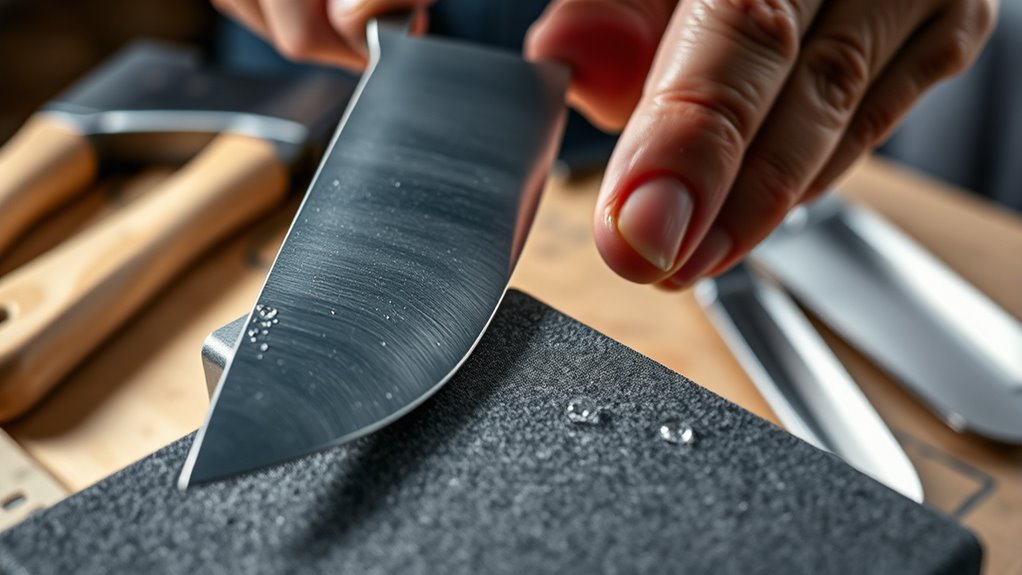
Choosing the right tools is the first step toward maintaining a sharp, effective blade. Your selection depends on blade materials—high-carbon steel, stainless steel, or softer metals—each requiring specific sharpening tools. Avoid common sharpening myths that suggest one tool fits all; instead, match your tools to your blade’s needs. Essential tools include sharpening stones, honing rods, and strops, which provide control and precision. Use a sharpening stone for coarse material removal, a honing rod for realignment, and a strop for polishing. Here’s a quick overview:
| Tool | Purpose |
|---|---|
| Sharpening Stone | Material removal and shaping |
| Honing Rod | Realignment and edge maintenance |
| Strop | Polishing and finishing |
Choosing the right combination ensures longevity and sharpness. Additionally, understanding the appropriate maintenance techniques helps preserve your blades’ effectiveness over time, especially when dealing with different blade materials. Proper blade material selection and care can significantly extend the lifespan of your blades and maintain their cutting performance. Incorporating these sharpening methods into your routine will help keep your blades performing at their best.
Preparing Your Workspace and Tools for Safe Sharpening

Before you begin sharpening, it’s essential to set up a clean, well-lit workspace free of clutter. Clear your area to prevent accidents and make sure you have enough space to work safely. Organize your tools and sharpening stones so they’re easily accessible, reducing the risk of misplacing or knocking something over. Wearing protective gear, like safety glasses and gloves, is crucial to shield yourself from sparks, metal shards, or slips. Keep a stable, non-slip mat under your workspace to prevent knives or tools from slipping. Good workspace organization helps you focus and work efficiently while minimizing hazards. Taking these precautions creates a safe environment, so you can sharpen confidently and avoid injuries. Proper preparation is the foundation for safe, effective sharpening. Additionally, using the right tools and accessories can enhance your sharpening process and safety. When selecting sharpening equipment, consider your experience level to choose the most suitable tools for your skill and project complexity.
Step-by-Step Guide to Sharpening Knives, Axes, and Chisels
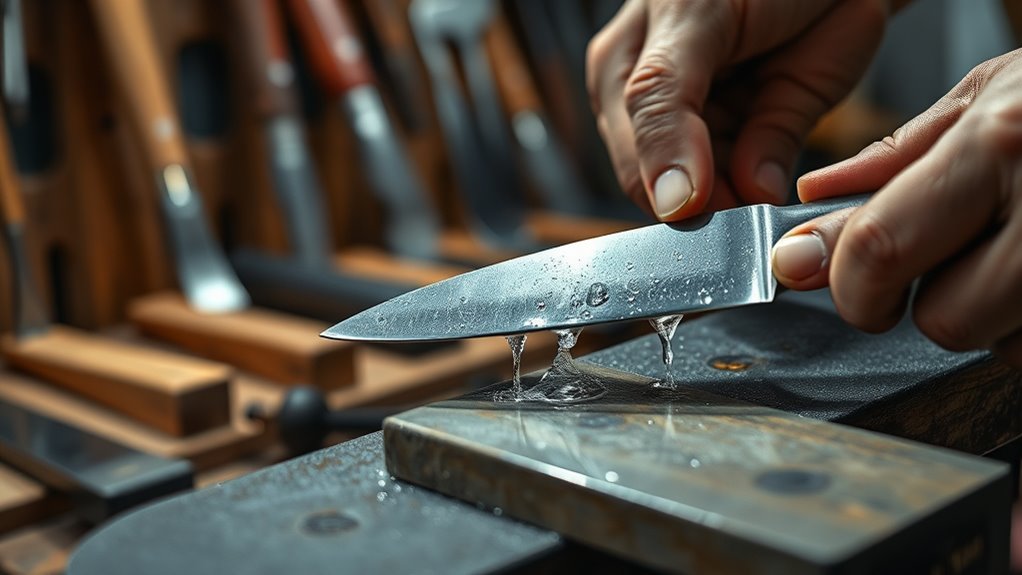
To sharpen your tools effectively, you need to master proper techniques that guarantee a sharp edge without damage. Safety measures are essential to prevent injuries and keep your workspace secure. By following the right steps, you’ll achieve precise results while staying safe throughout the process. Incorporating simple systems into your sharpening routine can help maintain your tools more consistently and with less effort. Regular tool maintenance is crucial for long-term effectiveness and helps prevent unnecessary wear. Understanding power tools and heavy-duty equipment can enhance your overall approach to tool care and sharpening techniques.
Proper Sharpening Techniques
Mastering proper sharpening techniques is essential to keeping your knives, axes, and chisels performing at their best. Start by understanding that blade coatings can sometimes hide dull edges, so don’t rely solely on visual cues. Instead, use consistent angles and steady pressure when sharpening. Avoid common sharpening myths, such as the idea that more pressure speeds up the process; it actually risks damaging the edge. Instead, focus on maintaining a uniform angle throughout each stroke to ensure a sharp, durable edge. Use a sharpening stone or tool suitable for your blade type and keep it lubricated. With patience and proper technique, you’ll achieve a razor-sharp edge that enhances your tools’ performance and longevity. Regular sharpening can also improve the overall cutting efficiency of your blades, making your tasks easier and more effective.
Essential Safety Measures
Ensuring safety while sharpening your tools is essential to prevent accidents and injuries. Always wear protective gear, such as gloves and safety glasses, to guard against slips and flying debris. Keep your workspace clean and well-lit to avoid mishaps. Before starting, familiarize yourself with emergency preparedness by having a first aid kit nearby and knowing how to respond to cuts or injuries. Use clamps or a stable surface to secure tools, minimizing movement during sharpening. Never rush the process—patience reduces the risk of slips. Focus on proper technique and stay alert. Being aware of AI-powered safety features can also enhance your protective measures. Additionally, understanding the proper sharpening angles helps maintain tool integrity and safety during use. Incorporating ergonomic sharpening techniques can reduce fatigue and improve control, making the process safer. Paying attention to workplace safety protocols ensures you follow best practices and avoid potential hazards. Being mindful of tool maintenance and inspection can prevent unexpected failures or accidents. By following these safety measures, you protect yourself and ensure a safer, more effective sharpening experience. Safety always comes first when handling sharp tools.
Tips for Achieving a Sharp and Durable Edge
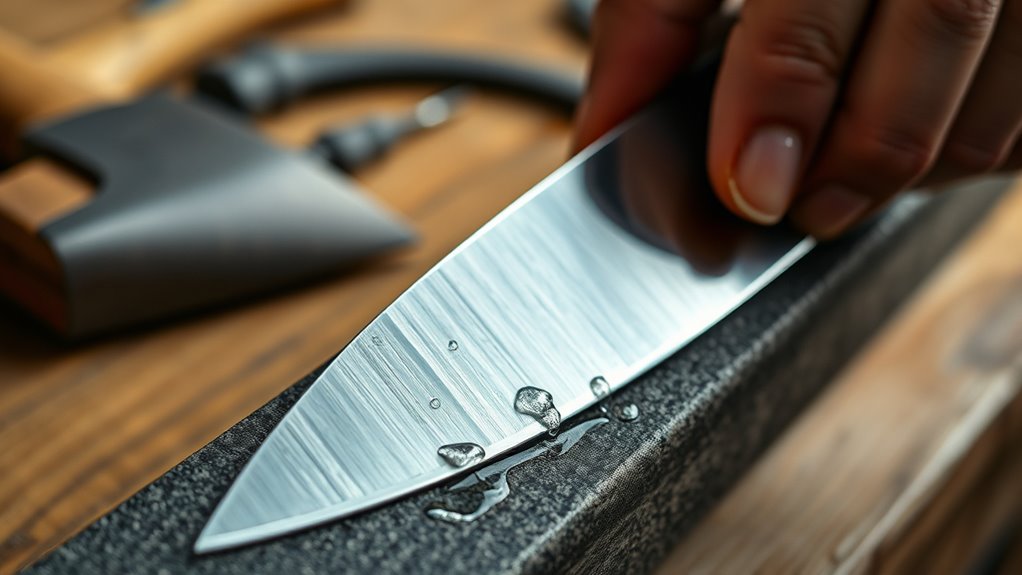
To keep your tools sharp and long-lasting, using proper sharpening techniques is essential. Incorporate regular maintenance practices, like honing and cleaning, into your routine. By doing so, you’ll guarantee your blades stay effective and durable with less effort. Additionally, understanding firewood preparation can help you select the right tools and techniques for safe and efficient woodworking. Paying attention to water-based maintenance, such as cleaning with water or using aquatic-friendly lubricants, can also extend the lifespan of your blades.
Proper Sharpening Techniques
Achieving a sharp and durable edge requires more than just passing a blade over a stone; it demands proper technique and attention to detail. Start by maintaining consistent angle—usually 15 to 20 degrees—throughout the sharpening process. Keep your strokes even and controlled, ensuring you cover the entire edge. As you sharpen, notice how the blade aesthetics improve, revealing a clean, polished edge. Understanding your sharpening history helps you identify the right grit to use and prevents over-sharpening. Remember, patience is key; rushing can dull the edge or cause damage. Focus on smooth, deliberate movements, and regularly check your progress by feeling for a burr or edge sharpness. Mastering these techniques ensures a razor-sharp, long-lasting edge every time.
Regular Maintenance Practices
Regular maintenance is essential for keeping your blades sharp and ready for use. To prevent blade corrosion, clean and dry your tools after each use, especially if they’ve been exposed to moisture. Regularly inspect your blades and sharpen them at the appropriate sharpening frequency—don’t wait until they’re dull. Consistent sharpening not only maintains a sharp edge but also reduces the risk of damage and extends the tool’s life. Store your blades properly, ideally in a dry place or with protective covers, to minimize exposure to humidity. Applying a light coat of oil can help prevent rust and corrosion. Additionally, understanding blade maintenance techniques can further enhance your ability to keep tools in optimal condition. Proper blade care routines are crucial for ensuring longevity and performance. By sticking to a routine of cleaning, proper storage, and timely sharpening, you ensure your blades stay durable, effective, and razor-sharp. Incorporating blade sharpening tools can also make the process more efficient and precise.
Maintaining Your Sharpened Tools for Longevity

Proper maintenance is essential to guarantee your tools stay sharp and perform at their best over time. Regular blade maintenance, like cleaning and oiling, prevents rust and keeps edges intact. Understand the difference between honing and sharpening: honing realigns the blade’s edge and should be done frequently to maintain sharpness, while sharpening removes material to restore a dull edge. Honing helps prolong the time between full sharpenings, which are more intensive. To ensure longevity, develop a routine that includes both honing your blades regularly and sharpening when needed. This approach minimizes wear and tear, keeping your tools in top shape. Consistent care not only extends their lifespan but also ensures precise, safe cuts every time you use them.
Common Mistakes to Avoid When Sharpening

One common mistake to avoid when sharpening your tools is applying uneven pressure, which can lead to an inconsistent edge or gouges in the blade. Using incorrect technique often results in a dull or damaged tool. Rushing the process is another mistake that hampers achieving a sharp edge, causing uneven wear and frustration. To sharpen effectively, focus on steady, controlled movements instead of hurried strokes. Avoid pressing too hard or inconsistent angles. Keep your grit progression smooth and deliberate. Remember, patience and proper technique are key to a razor-sharp edge. Additionally, understanding the importance of proper tool maintenance ensures your blades stay sharp longer and perform more effectively. A methodical approach in sharpening helps maintain optimal edge geometry and prevents common errors.
Frequently Asked Questions
How Often Should I Sharpen My Blades for Optimal Performance?
You should sharpen your blades every few weeks or whenever you notice a decline in cutting performance. Regular blade maintenance, including sharpening frequency, depends on how often you use your tools and the material you’re cutting. For frequent or heavy-duty use, sharpen more often to keep your blades in top shape. Stay attentive to performance, and don’t wait until blades become dull—regular maintenance keeps them sharp and effective.
Can Different Blade Materials Require Unique Sharpening Techniques?
Different blade materials are like different musical instruments; each demands its own tuning. You’ll find that softer steels may need gentle honing, while harder materials require precise sharpening methods to avoid damage. For example, ceramic blades need a diamond or silicon carbide sharpener, unlike traditional steel blades. By understanding your blade material, you can choose the right sharpening techniques, ensuring your tools stay razor sharp and perform like a symphony every time you use them.
What Are the Signs That My Tool Needs Sharpening?
You’ll notice your blade dullness when it struggles to cut smoothly or requires more force. If your tool tears or frays material instead of slicing cleanly, it’s a clear sign it needs sharpening. Declining cutting performance, such as uneven cuts or sticking, also indicates dullness. Regularly check your blades, and sharpen them when you notice these signs to maintain peak sharpness and effortless cutting.
Is It Safe to Sharpen Blades Without Professional Training?
It’s generally safe to sharpen blades without professional training if you follow proper blade safety and use the right tools. You should, however, prioritize sharpening training to learn correct techniques, avoid accidents, and guarantee a sharp, effective edge. Always wear safety gear, work on stable surfaces, and focus on control. With practice and attention to safety, you can sharpen your blades confidently and safely at home.
How Do I Store Sharpening Tools to Prevent Damage?
To prevent damage, you should store your sharpening tools with storage safety in mind. Use a dedicated toolbox or a protective case, keeping blades separate from other tools to avoid nicks or dulling. Proper organization is key—place sharpening stones and strops in soft pouches or compartments. Keep everything dry and clean, and avoid stacking tools directly on each other, ensuring they stay sharp and safe to use whenever you need them.
Conclusion
With the right techniques and tools, you hold the power to keep your blades razor-sharp and ready for any task. Think of sharpening as nurturing your tools—each careful stroke extends their life and enhances your work. Embrace the process, stay attentive, and you’ll turn dull edges into gleaming swords of precision. Remember, a sharp tool isn’t just safer; it’s your trusted companion in every cut, carve, and chop.