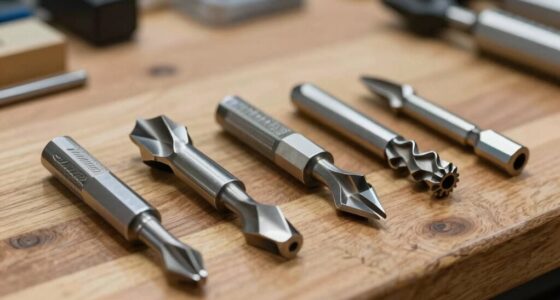
A miter saw blade’s tooth count helps you decide whether to make quick or smooth cuts. Fewer teeth, around 24, cut faster but with a rough finish, ideal for framing or thick wood. More teeth, 60 or more, produce cleaner, smoother cuts perfect for fine work. The right tooth count depends on your project’s needs and material. Keep exploring to discover how to choose the best blade for any situation and improve your cuts.

Get business pricing on tools and workshop supplies
- Business-only prices and quantity discounts
- Tax-exempt purchasing
- Multiple users, one account, clear invoices
Key Takeaways
- A higher tooth count (e.g., 60+) creates smoother, finer cuts, ideal for finishing work.
- A lower tooth count (e.g., 24-40) cuts faster and is better for rough, quick cuts.
- Tooth count affects the balance between cutting speed and the quality of the cut surface.
- More teeth mean a cleaner cut with less splintering but slower progress.
- Choose the tooth count based on your project needs for optimal cutting performance.
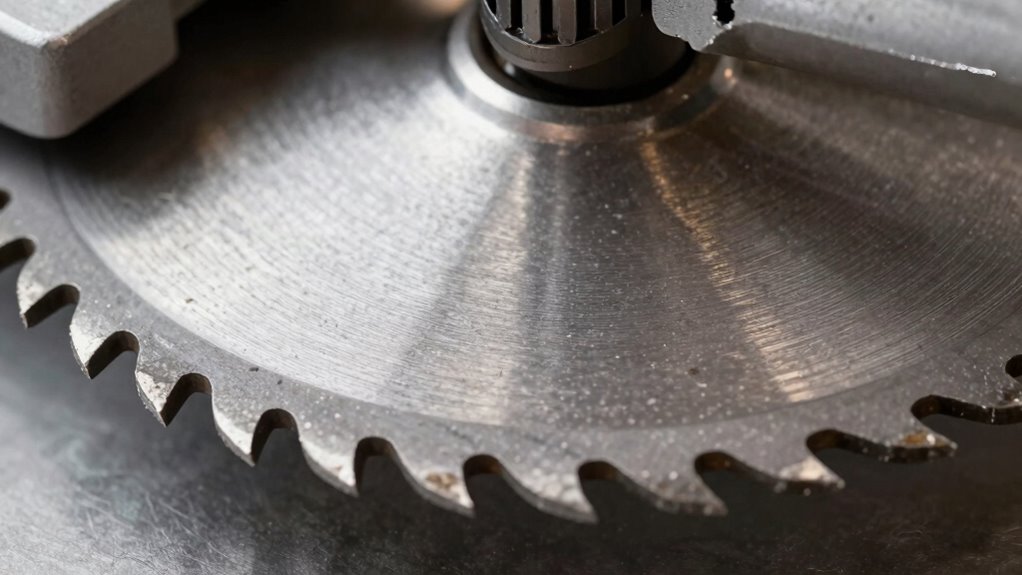
Choosing the right miter saw blade tooth count is vital for achieving clean, accurate cuts in your projects. The tooth count directly impacts the quality of your cut, how much material is removed, and the overall efficiency of your work. When selecting a blade, you’ll want to contemplate the blade material, as it determines durability and cutting performance. For example, carbide-tipped blades are popular because they stay sharp longer and handle harder woods or composite materials well. Steel blades, on the other hand, are more affordable but tend to dull faster and are best suited for softer woods. Keep in mind that the tooth count pairs with blade material to influence your cut quality; a high tooth count with a durable blade results in smooth, fine cuts, while a lower tooth count is better for quick, rough cuts. Always consider the blade material to ensure optimal performance and safety. Your safety should always be a priority when working with miter saws. Proper safety precautions involve wearing eye protection, hearing protection, and avoiding loose clothing that could get caught in moving parts. It’s equally important to verify your blade is properly installed and sharp before each use. A dull or poorly mounted blade can cause kickback or uneven cuts, which increases the risk of injury. Always verify that the blade is compatible with your saw model and that all safety guards are in place. When changing blades, disconnect the saw from power to prevent accidental activation. Properly handling blades—using gloves if recommended—also reduces the risk of cuts. Remember, maintaining a clean workspace free of sawdust buildup can prevent slips and other accidents. Additionally, understanding the relationship between tooth count and material type helps you make smarter choices, as it guides you in selecting the right blade for specific tasks. Blades with fewer teeth, typically around 24, are ideal for rough cuts and framing work because they remove material quickly. They’re suited for softer woods and thicker stock where speed is more important than finish quality. Conversely, blades with a higher tooth count, such as 60 or more, produce cleaner, finer cuts that are perfect for finish work or delicate materials like veneer or plywood. These blades cut more slowly but leave less splintering and require less sanding afterward. When choosing a blade, also consider the cutting speed which can influence the efficiency of your work depending on the project requirements. As you select a blade, keep in mind that a higher tooth count generally means a slower cut, but a more precise one, which is vital for detailed work. Balancing tooth count and blade material along with your safety precautions ensures you get the best performance out of your miter saw while keeping yourself safe during every cut.
As an affiliate, we earn on qualifying purchases.
Frequently Asked Questions
How Does Tooth Count Affect Blade Lifespan?
A higher tooth count generally means a longer blade lifespan because the teeth share the cutting workload more evenly, reducing wear. However, your choice of blade material also impacts durability—premium materials last longer. Remember safety considerations: dull blades with fewer teeth can cause more kickback and require more force, risking injury. So, select a blade with the right tooth count and quality for your project to guarantee both longevity and safety.
Are Higher Tooth Counts Better for Precision Cuts?
Yes, higher tooth counts generally offer better precision cuts because they provide a smoother finish with less tear-out. When choosing a blade, consider the blade material, which impacts durability, and note that higher tooth counts may produce a higher noise level during operation. If you prioritize a clean, accurate cut, opt for a blade with more teeth, but be aware it might be louder.
What’s the Ideal Tooth Count for Cutting Hardwood?
For cutting hardwood, a blade with around 40-60 teeth works best. Imagine you’re crafting a hardwood table and want clean edges—using a blade with this tooth count guarantees precision. Choose a carbide-tipped blade for durability, and always follow safety precautions like wearing goggles and keeping hands clear. This combination gives you smooth cuts without chipping, making your project safer and more professional.
Does Tooth Count Influence Cutting Speed?
Yes, tooth count influences cutting speed. A higher tooth count typically means a smoother cut but slower progress because it removes less material with each pass. Blade material and cutting angle also play roles; for example, carbide-tipped blades cut faster and last longer, while a steeper cutting angle can increase cutting efficiency. Your choice depends on the material you’re working with and the desired finish, balancing speed and quality.
Can Changing Tooth Count Improve Cut Quality?
Changing the tooth count can improve your cut quality, especially if you choose the right blade material for your project. A higher tooth count provides a smoother finish, ideal for fine cuts, while a lower count cuts faster but with rougher edges. Always consider safety considerations—wear protective gear and verify your blade is suitable for your material. Properly matching blade material and tooth count results in cleaner, safer cuts.
high tooth count miter saw blade 60+ teeth
As an affiliate, we earn on qualifying purchases.
As an affiliate, we earn on qualifying purchases.
Conclusion
So, next time you choose a miter saw blade, remember that tooth count isn’t just a number—it’s your secret weapon for perfect cuts. Some say more teeth mean finer cuts, but that’s not always true; it depends on your project. Test different blades and see what works best. The real truth? Match the tooth count to your task, and you’ll cut smarter, not harder. Happy sawing!
As an affiliate, we earn on qualifying purchases.
best blades for fine woodworking
As an affiliate, we earn on qualifying purchases.
As an affiliate, we earn on qualifying purchases.
Halloween Picks
halloween
As an affiliate, we earn on qualifying purchases.