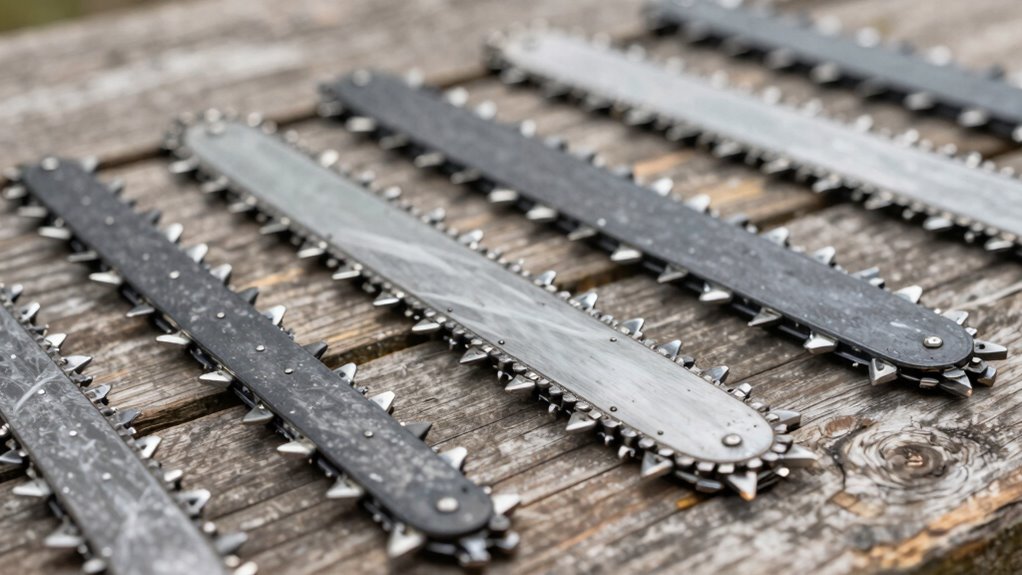

Different chainsaw chains are designed for specific tasks, which is why they feel so different when you use them. Factors like tooth design, pitch, and gauge influence how aggressively they cut and how smooth or rough they feel. Ripping chains provide straight, clean cuts, while others prioritize safety or precision. Proper maintenance and familiarization help you recognize these differences, making your cuts more effective. Keep exploring to discover how understanding these variations can improve your chainsaw work even more.
Key Takeaways
- Different chain designs, such as ripping or performance chains, have unique tooth shapes and pitches affecting cutting feel.
- Variations in chain construction, like tooth sharpness and pitch, influence bite, aggressiveness, and vibration during cutting.
- Proper maintenance, including sharpening and tensioning, directly impacts how smooth or aggressive a chain feels.
- Chain gauge and material build determine friction and responsiveness, altering overall handling and comfort.
- The intended task (e.g., fast cutting vs. precision) shapes the chain’s design, leading to different handling sensations.
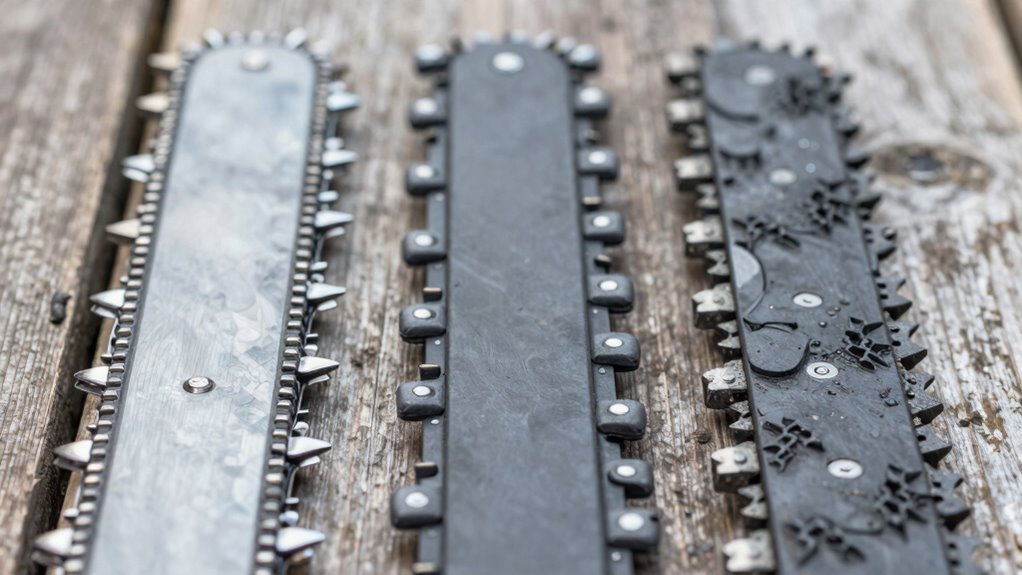
Are you wondering which chainsaw chain is best suited for your needs? The type of chain you choose can considerably impact your cutting experience, and understanding the differences can help you work more efficiently and safely. Chainsaw chains come in various designs, each tailored for specific tasks, and feeling the difference in performance often comes down to the chain’s construction and your familiarity with its use. When handling any chainsaw, always prioritize safety gear—such as gloves, eye protection, and earplugs—to prevent injuries. Proper safety measures are essential, especially when switching between different chain types or performing maintenance tips to keep your equipment running smoothly. Recognizing chain performance differences can help you select the right chain for your project. Different chainsaw chains are designed for specific purposes: some excel at fast, aggressive cutting, while others prioritize precision or reduced kickback. For instance, a ripping chain is ideal for making smooth, straight cuts in lumber, offering a different feel compared to a standard all-purpose chain. The way these chains feel when cutting depends heavily on their tooth design, pitch, and gauge. When you handle each type, you notice distinct differences in how they bite into wood, how much vibration you experience, and how smoothly they run through the material. These nuances affect your overall confidence and comfort, especially during prolonged use. Additionally, understanding chain tensioning is crucial for optimal performance and safety, as it directly influences how the chain feels during operation.
Feeling the difference isn’t just about the chain’s sharpness—it’s also about how well you maintain it. Regular maintenance tips include sharpening the chain correctly, adjusting tension properly, and lubricating it to prevent overheating. A well-maintained chain will feel sharper and more responsive, making your cuts cleaner and less tiring. Conversely, a dull or improperly tensioned chain can cause increased vibration, making the work seem rougher and more strenuous. You’ll notice that a properly maintained chain offers a smoother, more predictable cut, which translates into better control and less fatigue. Proper lubrication, in particular, helps reduce friction and prevents overheating, which can dramatically alter the chain’s feel and effectiveness during cutting. Choosing the right chain type also means respecting your saw’s specifications and your project’s demands. Different chains feel different because of their tooth configuration and the chain’s overall design, which directly affects how you handle the saw. With some experience, you’ll start to recognize what feels best for your tasks and become more confident in switching between chains. Remember, safety gear is your best friend when experimenting with different chain types or performing maintenance tips. Proper safety practices ensure that even when a chain feels unfamiliar or more aggressive, you stay protected while honing your skills and making your work more enjoyable and efficient.
chainsaw chain sharpening kit
As an affiliate, we earn on qualifying purchases.
As an affiliate, we earn on qualifying purchases.
Frequently Asked Questions
How Do I Choose the Right Chain for My Saw?
To choose the right chain for your saw, first check your saw’s bar length and match it with a chain that fits properly. Consider the type of work you do; for example, a sharper chain is better for detailed cutting. Always guarantee your chain sharpening skills are up to date, and select a chain designed for your specific saw model. Proper compatibility and sharpness make cutting smoother and safer.
Are Some Chains Better for Specific Cutting Tasks?
Yes, some chains are better for specific tasks. For example, a rough-cutting chain offers high durability for heavy-duty work, while a precision chain provides cleaner cuts for detailed tasks. Choosing the right chain relies on your needs; a durable chain guarantees longer use, and a precision chain improves cutting accuracy. By matching the chain type to your task, you’ll get better results and extend your saw’s lifespan.
What Safety Features Do Different Chain Types Have?
Different chain types include safety features like low kickback designs, which reduce the risk of injury. You should always wear safety gear such as gloves and eye protection, especially when handling chains with aggressive teeth. Proper chain lubrication is essential to prevent overheating and guarantee smooth operation, reducing the chance of accidents. These safety features help protect you during cutting, making your work safer and more efficient.
How Often Should I Replace My Chainsaw Chain?
You should replace your chainsaw chain when it becomes dull, damaged, or after 8-12 sharpenings, as this affects safety and cutting efficiency. Regularly check for proper chain lubrication, which prevents overheating and wear. If sharpening no longer restores sharpness or the chain shows signs of excessive wear, it’s time to replace it. Maintaining your chain guarantees maximum performance and safety during your cutting tasks.
Can I Switch Between Chain Types Easily?
Can you switch between chain types easily? It’s possible, but you’ll need to take into account chain sharpening and chain lubrication. Different chains have varying tooth designs and sizes, so swapping them isn’t as simple as changing a blade. You’ll want to make certain the new chain is properly sharpened for ideal cutting and that chain lubrication is appropriate to prevent wear. Do a quick check to see if the new chain fits your saw’s specifications first.
chainsaw chain tensioning tool
As an affiliate, we earn on qualifying purchases.
As an affiliate, we earn on qualifying purchases.
Conclusion
Choosing the right chainsaw chain makes all the difference—whether it’s for precision cuts, heavy-duty work, or everyday tasks. Understanding the different types, their features, and how they feel under your hand helps you work smarter, not harder. With the right chain, you’ll cut faster, safer, and more efficiently. So, select wisely, match your needs, and enjoy the smooth, confident cut every time—because the right chain transforms your cutting experience from struggle to satisfaction.
ripping chainsaw chain for lumber
As an affiliate, we earn on qualifying purchases.
As an affiliate, we earn on qualifying purchases.
chainsaw chain safety gloves
As an affiliate, we earn on qualifying purchases.
As an affiliate, we earn on qualifying purchases.