Before cutting concrete in your backyard, you should prioritize safety by wearing protective gear and inspecting your equipment beforehand. Use water-based dust suppression to reduce airborne particles and protect surrounding vegetation. Make certain to plan your cuts carefully, check local regulations, and obtain permits if needed. Proper disposal and recycling of broken concrete help the environment. Following these steps ensures your project remains smooth and responsible—keep going to learn more essential tips and tricks.

Get tools and workshop supplies delivered free — and shop member deals
- Fast, free delivery on millions of items
- Access to Prime Big Deal Days deals on October 6–7
- Prime Video, Amazon Music and more included
Key Takeaways
- Use the right equipment, like a concrete saw with a diamond blade, and wear proper safety gear.
- Plan the cut carefully, marking lines accurately to prevent unnecessary damage and waste.
- Employ wet-cut techniques and dust suppression to minimize airborne particles and environmental impact.
- Check local regulations and permits to ensure legal compliance before starting the project.
- Properly dispose of or recycle concrete waste to reduce environmental harm and support sustainability.
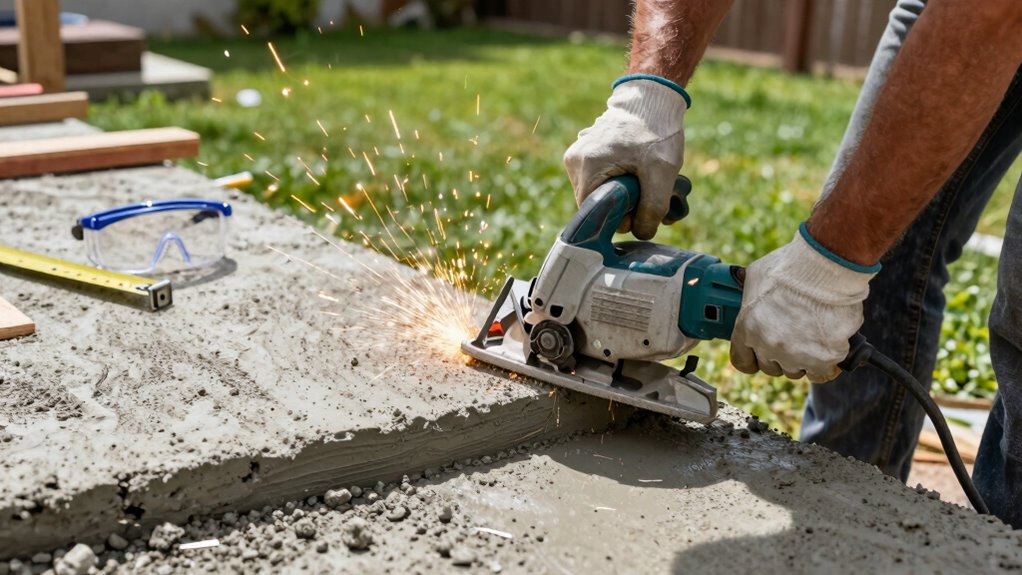
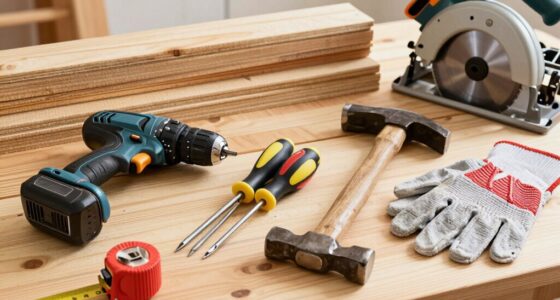
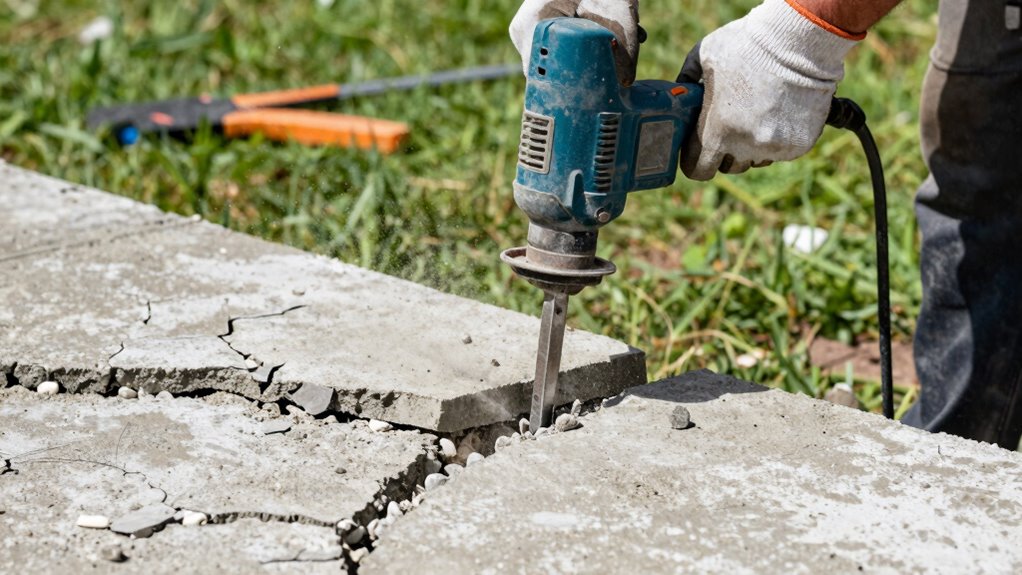
Cutting concrete in your backyard can be a straightforward task, but it’s important to understand what’s involved before you start. One of the first considerations is guaranteeing equipment safety. Using the right tools—such as a concrete saw with a diamond blade—is essential, but so is wearing proper protective gear. Safety glasses shield your eyes from flying debris, while gloves protect your hands from sharp edges and heat. Hearing protection is also vital, as concrete cutting can generate loud noise that damages your hearing over time. Before you begin, inspect your equipment thoroughly. Check cords, blades, and safety features to prevent malfunctions that could cause accidents. Proper setup and maintenance reduce risk and make your work more efficient.
Ensure equipment safety with proper tools, protective gear, and thorough inspection before starting concrete cutting.
Another key aspect is understanding the environmental impact of your project. Concrete cutting produces dust and debris that can harm nearby plants, animals, and even your own respiratory health if inhaled. To minimize this, consider using wet-cut methods, which use water to suppress dust and reduce airborne particles. Covering surrounding vegetation and nearby structures can also help protect them from dust and debris. Additionally, be mindful of the noise generated during cutting, especially if you live in a neighborhood with quiet hours or noise ordinances. Scheduling work during appropriate times and informing neighbors can prevent disputes and maintain good community relations. Using dust suppression techniques is crucial for minimizing environmental and health risks associated with concrete cutting. Employing environmentally friendly practices can further reduce your project’s ecological footprint.
Before you start cutting, plan your approach carefully. Mark the area precisely to avoid unnecessary damage and to confirm you’re cutting along the desired lines. This planning helps you reduce waste and the environmental impact of your project. It’s also wise to check local regulations or permits required for concrete removal or modifications, as neglecting these could lead to fines or project delays. Knowing how to properly dispose of concrete waste** can save you time and prevent environmental harm, especially since concrete waste can be heavy and cumbersome. Being aware of local disposal regulations** can help you stay compliant and avoid potential fines.
Lastly, think about disposal and recycling. Concrete waste can be heavy and cumbersome, but many recyclers accept broken concrete, turning it into aggregate for new construction projects. Proper disposal minimizes environmental harm and might even save you money. Always verify local disposal regulations and consider renting a dumpster or arranging for pickup in advance. By paying attention to equipment safety, being environmentally conscious, and planning thoroughly, you’ll assure your backyard concrete project proceeds smoothly, safely, and responsibly.
As an affiliate, we earn on qualifying purchases.
Frequently Asked Questions
What Safety Gear Is Essential for Cutting Concrete?
When cutting concrete, you need essential safety gear like protective goggles to shield your eyes from debris and dust. Don’t forget respiratory masks to prevent inhaling harmful concrete dust particles, which can cause respiratory issues. Wearing durable gloves and sturdy ear protection also helps. Always make certain your safety gear fits well and covers all vulnerable areas, so you stay protected throughout the project and avoid unnecessary injuries.
How Long Does It Take for Concrete to Cure After Cutting?
After cutting, concrete typically takes about 28 days to fully cure, but it can be walked on sooner. During this period, avoid disturbing the concrete to prevent cracks. Be mindful of concrete dust generated during cutting, which can affect curing. Use proper cutting techniques to minimize dust and guarantee a cleaner cut. Remember, patience is key; proper curing ensures strength and durability, so don’t rush the process.
Can I Cut Concrete With a Standard Circular Saw?
You can cut concrete with a standard circular saw, but it’s not ideal. Use a diamond blade designed for cutting concrete, as standard blades won’t handle the hardness well. Employ proper cutting techniques, such as steady, even pressure and slow speed, to avoid damaging the blade or concrete. Make certain you wear safety gear, like goggles and a dust mask, since cutting creates a lot of dust and debris.
What Are the Environmental Impacts of Concrete Cutting?
Concrete cutting can impact the environment through dust and noise pollution. You should follow environmental regulations to minimize these effects, like using dust suppression methods and noise barriers. Recycling options are available for the concrete debris, which reduces landfill waste and conserves resources. By responsibly managing waste and adhering to regulations, you help lessen the environmental footprint of your project and promote sustainable construction practices.
How Do I Dispose of Old Concrete Debris Properly?
Think of disposing of old concrete debris as turning trash into treasure. To do this, you should take your concrete debris to a recycling facility specializing in concrete recycling. Avoid dumping it in regular trash or on the ground. Proper debris disposal guarantees environmental safety and complies with local regulations. By recycling, you help reduce waste and give your old concrete a new life in future projects.
As an affiliate, we earn on qualifying purchases.
Conclusion
Before you cut concrete in your backyard project, remember to plan thoroughly, gather the right tools, and prioritize safety. Know your material, understand your cuts, and prepare your workspace. By doing so, you’ll guarantee precision, avoid accidents, and complete your project with confidence. Prepare wisely, work carefully, and finish strong—your backyard transformation depends on it. With the right knowledge and mindset, you’ll cut, carve, and create your ideal outdoor space effortlessly.
dust suppression for concrete cutting
As an affiliate, we earn on qualifying purchases.
As an affiliate, we earn on qualifying purchases.
personal protective equipment for concrete cutting
As an affiliate, we earn on qualifying purchases.
As an affiliate, we earn on qualifying purchases.
Fall yard work Picks
leaf blowers
As an affiliate, we earn on qualifying purchases.