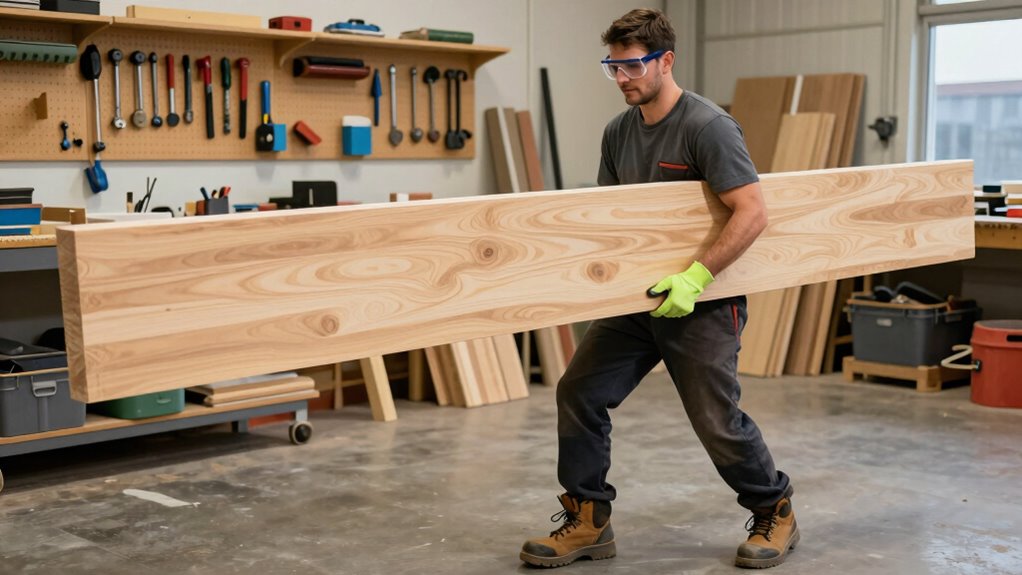

When handling heavy materials solo, plan ahead by evaluating the load’s size and weight, and use proper equipment like dollies, straps, or hand trucks to help with control and safety. Keep your back straight, bend at your hips and knees, and hold the load close to your body to reduce strain. Maintain good posture and move smoothly without twisting. If you follow these tips, you’ll improve your safety—exploring further will give you even more effective techniques.

Get business pricing on tools and workshop supplies
- Business-only prices and quantity discounts
- Tax-exempt purchasing
- Multiple users, one account, clear invoices
Key Takeaways
- Assess the weight and size of the material before lifting to determine if assistance or equipment is needed.
- Use appropriate tools like dollies, hand trucks, or lifting straps to distribute weight and improve control.
- Apply proper lifting techniques: keep feet shoulder-width apart, bend at hips and knees, and lift smoothly with the core engaged.
- Maintain proper body mechanics by avoiding twisting and pivoting feet to reduce injury risk.
- Ensure all equipment is in good condition and suitable for the load to enhance safety and efficiency.
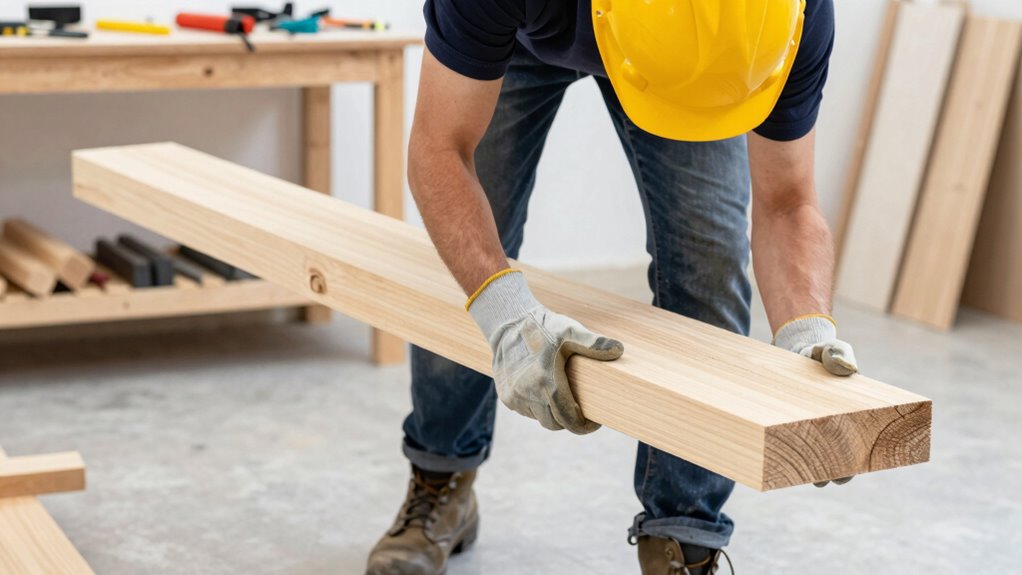
Handling heavy materials safely is essential to prevent injuries and guarantee your DIY projects go smoothly. When you’re working alone, managing heavy loads can be risky if you don’t use the right techniques and equipment. The key is to plan ahead by understanding proper lifting techniques and ensuring you have the proper equipment ready before you start. This approach minimizes strain on your body and reduces the chance of accidents.
Proper planning and the right equipment are key to lifting heavy materials safely and avoiding injuries.
Start by evaluating the weight and size of the material. If it’s too heavy or awkward to lift comfortably, don’t try to handle it alone. Instead, look for equipment that can make the task easier—such as dollies, hand trucks, or lifting straps. Proper equipment is vital because it redistributes weight, gives you better control, and lessens the physical effort needed. Always verify that the tools are in good condition and suitable for the load you’re handling. Using the right equipment not only makes lifting safer but also helps prevent damage to the material and your workspace.
When it comes to lifting techniques, your goal is to protect your back and avoid unnecessary strain. Keep your feet shoulder-width apart for stability, and bend at your hips and knees, not your waist. Engage your core muscles as you lift, and hold the material close to your body. This position reduces the leverage on your spine and distributes the weight more evenly across your muscles. Avoid twisting your torso while lifting; instead, pivot your feet to turn if you need to change direction. Make sure to lift smoothly, avoiding jerky motions that could cause muscle strain or loss of control. Additionally, understanding proper lifting techniques can significantly improve your safety when handling heavy objects on your own. Being aware of body mechanics can help you lift more efficiently and reduce the risk of injury. Remember that ergonomic principles are crucial for minimizing physical stress during lifting tasks.
heavy duty dolly for DIY projects
As an affiliate, we earn on qualifying purchases.
As an affiliate, we earn on qualifying purchases.
Frequently Asked Questions
What Personal Protective Equipment Is Essential for Handling Heavy Materials?
You should wear proper footwear with slip-resistant soles to prevent falls and provide stability when handling heavy materials. Hand protection is essential; use durable gloves to shield your hands from abrasions, cuts, and splinters. Always inspect your protective gear before use to verify it’s in good condition. Combining proper footwear and hand protection helps minimize injury risk, allowing you to work safely and confidently with heavy materials on your own.
How Do I Assess the Weight of a Material Before Lifting?
Imagine gauging a storm’s strength before it hits. You assess a material’s weight by checking its storage location—heavier items are often stored lower or closer to the ground. Use your body as a scale by testing liftability with a small portion first. Apply proper lifting techniques—bend your knees, keep your back straight—and avoid sudden moves. This approach guarantees you know the weight and handle it safely, preventing injury.
Are There Specific Tools Recommended for Moving Heavy Items Alone?
Yes, using proper equipment like dollies, hand trucks, or lifting straps makes moving heavy items solo much easier. Combine this with correct lifting techniques—bend your knees, keep your back straight, and lift with your legs—to prevent injury. Always make certain your tools are in good condition and suitable for the weight you’re handling. These strategies help you move heavy materials safely and efficiently on your own.
What Signs Indicate I Should Get Help Instead of Lifting Alone?
You should seek team assistance if you feel strain, pain, or fatigue during lifting, or if the weight exceeds your comfort level. Signs include difficulty maintaining proper lifting techniques, such as keeping your back straight and knees bent, or if the load feels unstable. Trust your instincts—if it seems too heavy or awkward, don’t risk injury. Use proper lifting techniques and ask for help to stay safe and prevent accidents.
How Can I Prevent Back Injuries During Heavy Lifting?
Think of your back as a delicate bridge—careful steps keep it strong. To prevent injuries, use proper lifting techniques like bending your knees and keeping your back straight. Incorporate ergonomic strategies, such as positioning yourself close to the load and avoiding twisting. Engage your core muscles to support your spine. These mindful practices turn a risky task into a steady, safe journey, protecting your back’s strength for the long haul.
As an affiliate, we earn on qualifying purchases.
Conclusion
Handling heavy materials safely isn’t just about following rules—it’s about protecting yourself and ensuring your project’s success. Always plan your lifts, use the right tools, and ask for help when needed. Imagine trying to carry a heavy load alone—would you risk injury or damage? By staying cautious and prepared, you turn a potentially dangerous task into a manageable, safe DIY adventure. After all, isn’t safety the best tool in your kit?
hand truck for moving heavy materials
As an affiliate, we earn on qualifying purchases.
As an affiliate, we earn on qualifying purchases.
As an affiliate, we earn on qualifying purchases.
Fall Picks
fall essentials
As an affiliate, we earn on qualifying purchases.