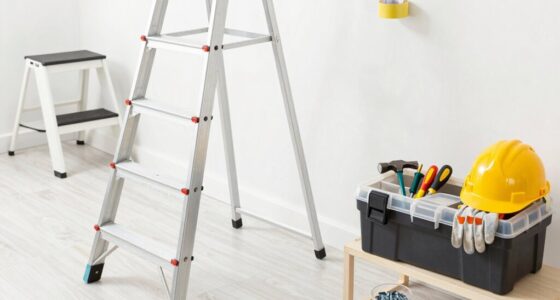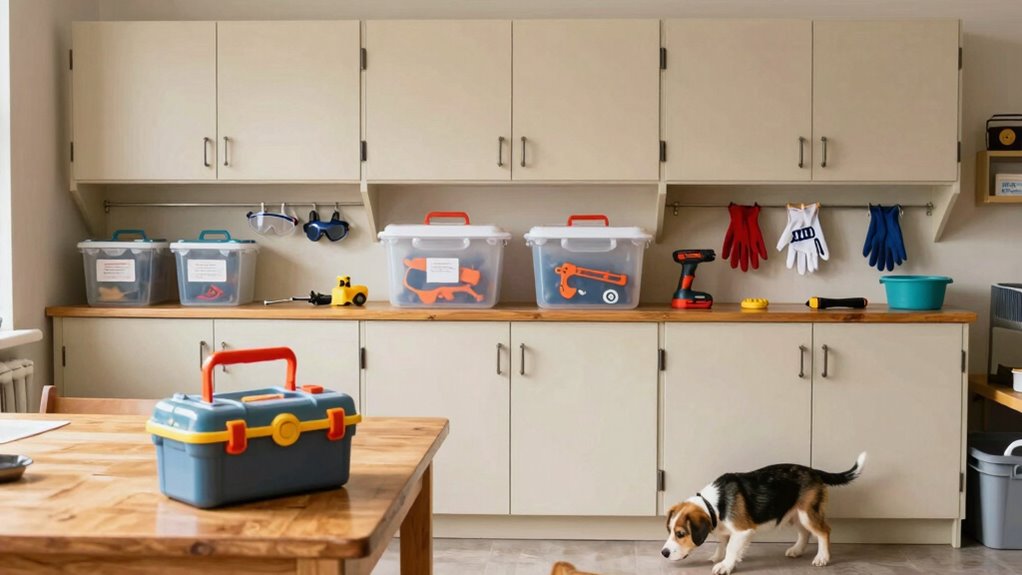

To keep your workshop safer around kids and pets, always wear protective gear and scan your workspace for hazards before starting. Store dangerous tools, chemicals, and sharp objects securely out of reach, using child-proof locks and barriers. Keep floors clear of clutter to prevent trips, and unplug power tools when not in use. Regularly check for hidden dangers and implement safety protocols. Staying proactive is key—there’s much more to learn to create a truly safe environment.

Get business pricing on tools and workshop supplies
- Business-only prices and quantity discounts
- Tax-exempt purchasing
- Multiple users, one account, clear invoices
Key Takeaways
- Store hazardous materials securely out of children’s and pets’ reach, preferably in locked cabinets or high shelves.
- Use safety gates and barriers to restrict access to work areas and prevent accidental entry.
- Keep tools and equipment organized and confined to designated zones to avoid clutter and potential hazards.
- Always supervise children and pets around the workshop, and unplug power tools when not in use.
- Implement safety protocols, including hazard awareness, to identify and mitigate risks proactively.
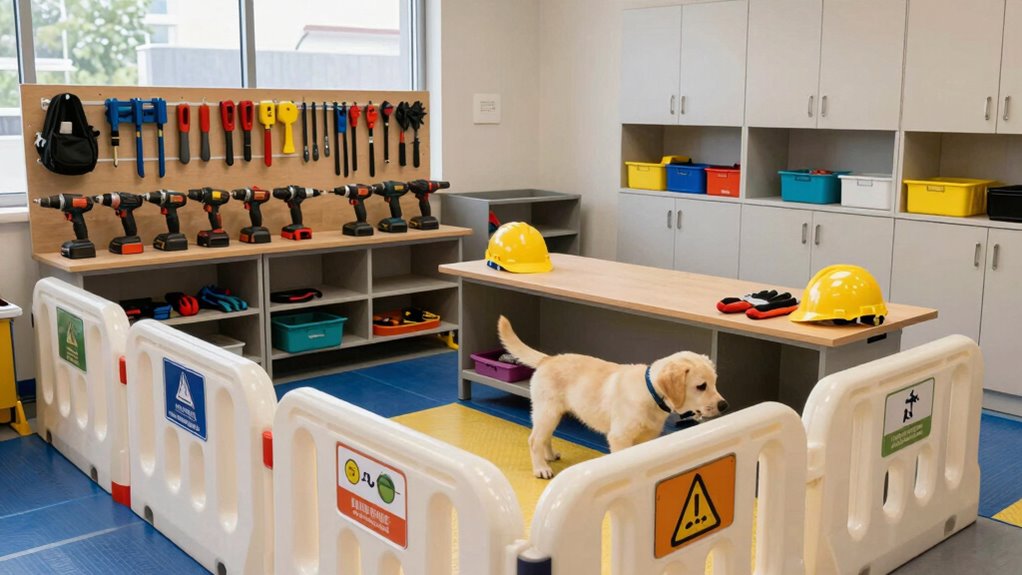
Working in your workshop can be rewarding, but it also comes with safety responsibilities—especially when kids and pets are nearby. One of the most important steps you can take is ensuring you always wear proper safety gear. Safety glasses, gloves, and hearing protection are essential, even if you’re only working on a quick project. These items act as your first line of defense against flying debris, sharp tools, or loud noise. When kids are around, it’s crucial to remember that accidents happen fast, so maintaining a habit of wearing safety gear can prevent minor injuries from becoming major ones.
Always wear safety gear to protect yourself from debris, sharp tools, and noise, especially with kids and pets nearby.
Hazard awareness is your best tool for keeping your workshop safe for everyone. Before you start, take a moment to scan your workspace. Are there tools left out that little hands could grab? Is the floor clear of clutter or anything that might cause a trip? Kids and pets are naturally curious, so it’s your job to anticipate what might attract their attention. Secure power tools when not in use, and always unplug or switch them off before leaving your work area. Keep hazardous materials, like paints, solvents, and chemicals, out of reach or in locked cabinets. Being aware of potential hazards allows you to proactively reduce risks, instead of reacting to accidents after they happen. Incorporating hazard identification into your routine can further enhance your safety measures. Additionally, understanding safety protocols can help you respond effectively in case of emergencies. Implementing these safety protocols and risk mitigation strategies can significantly reduce the likelihood of accidents.
In addition to wearing safety gear and practicing hazard awareness, you should create designated zones for work and play. Keep your tools and materials confined to a specific area, ideally behind safety gates or barriers that children and pets can’t access. When you’re not actively working, store sharp tools, power tools, and small parts in drawers or cabinets with child-proof locks. This way, even if a curious kid sneaks into the workshop, they won’t easily access dangerous items. Also, consider installing safety covers on outlets and using non-slip mats to prevent slips and falls. Implementing safety measures aligned with biodiversity principles can also help create a more environmentally conscious workspace that minimizes hazards related to chemical use and waste. Regularly checking for potential hazards and addressing them promptly is essential in maintaining a safe environment for all. Remember, a clean and organized workspace not only improves safety but also efficiency during your projects.
childproof workshop storage cabinet
As an affiliate, we earn on qualifying purchases.
As an affiliate, we earn on qualifying purchases.
Frequently Asked Questions
What Are the Best Storage Solutions for Dangerous Tools?
The best storage solutions for dangerous tools focus on tool organization and secure storage containers. Use sturdy, lockable cabinets or heavy-duty storage containers to keep sharp or hazardous tools out of kids’ and pets’ reach. Label each container clearly to prevent accidental misuse. Incorporate wall-mounted racks or pegboards for easy access, but always guarantee tools are stored securely after use. Proper organization minimizes risks and keeps your workspace safer.
How Should I Train Kids and Pets to Stay Away?
You should prioritize constant child supervision and establish clear boundaries with pet barriers to keep kids and pets away from dangerous areas. Teach children about workshop hazards, setting rules for safe behavior. Use pet barriers to block access when you’re not supervising. Consistently reinforce safety rules, and always keep an eye on both kids and pets to prevent accidents, ensuring everyone stays safe while in your workshop.
Are There Specific Safety Gear Recommendations for Workshops?
You should definitely prioritize safety by wearing proper personal protective gear and safety apparel. Think of it as a shield that keeps you safe while working. Invest in sturdy gloves, eye protection, earplugs, and dust masks, especially when handling power tools or chemicals. Bright safety vests and durable clothing also help increase visibility and protect your skin. These safety essentials create a safer environment, giving you peace of mind around kids and pets.
How Often Should I Inspect Safety Equipment?
You should inspect your safety equipment regularly, ideally before each work session and at least monthly for thorough maintenance. Personal protective equipment (PPE) like gloves, goggles, and masks need routine checks for tears, cracks, or wear that could compromise safety. Proper equipment maintenance guarantees your gear functions correctly, reducing injury risks. If you notice any damage or deterioration, replace or repair your safety gear immediately to maintain a safe working environment.
What Emergency Procedures Should I Have in Place?
You should establish clear emergency procedures, including well-defined emergency plans and accessible first aid kits. Make certain everyone knows how to respond to fires, injuries, or chemical spills. Practice drills regularly so you and your family are prepared. Keep first aid supplies stocked and accessible, and guarantee emergency contact information is visible. This way, you’ll minimize risks and respond swiftly if an accident occurs around kids and pets.
As an affiliate, we earn on qualifying purchases.
Conclusion
By following these simple safety tips, you can create a workshop environment that’s safer for kids and pets. Keep tools organized, store hazardous materials securely, and set clear boundaries to prevent accidents. Remember, a stitch in time saves nine—taking precautions now prevents bigger problems later. When you prioritize safety, everyone can enjoy the space without worry, turning your workshop into a place of productivity and peace of mind.
As an affiliate, we earn on qualifying purchases.
As an affiliate, we earn on qualifying purchases.
Fall yard work Picks
leaf blowers
As an affiliate, we earn on qualifying purchases.