Winter is the perfect time to tune up your shop tools because you have safer, indoor conditions that make maintenance easier and more thorough. Cold weather prevents outdoor work issues, and downtime allows you to focus on inspections, sharpening blades, and fixing worn parts. Proper upkeep now helps prevent costly breakdowns during busy seasons and guarantees your tools stay in top shape. Keep going, and you’ll discover even more benefits of winter tool maintenance.
Key Takeaways
- Indoor winter conditions make tool maintenance safer, more thorough, and easier without outdoor hazards.
- Increased downtime during winter allows focused inspection, rust removal, and lubrication for longevity.
- Winter is ideal for organizing and upgrading tools, preventing delays during busy seasons.
- Regular winter maintenance enhances safety by testing electrical cords and safety features.
- Performing upkeep in winter prolongs tool lifespan, reduces repair costs, and ensures readiness for spring projects.
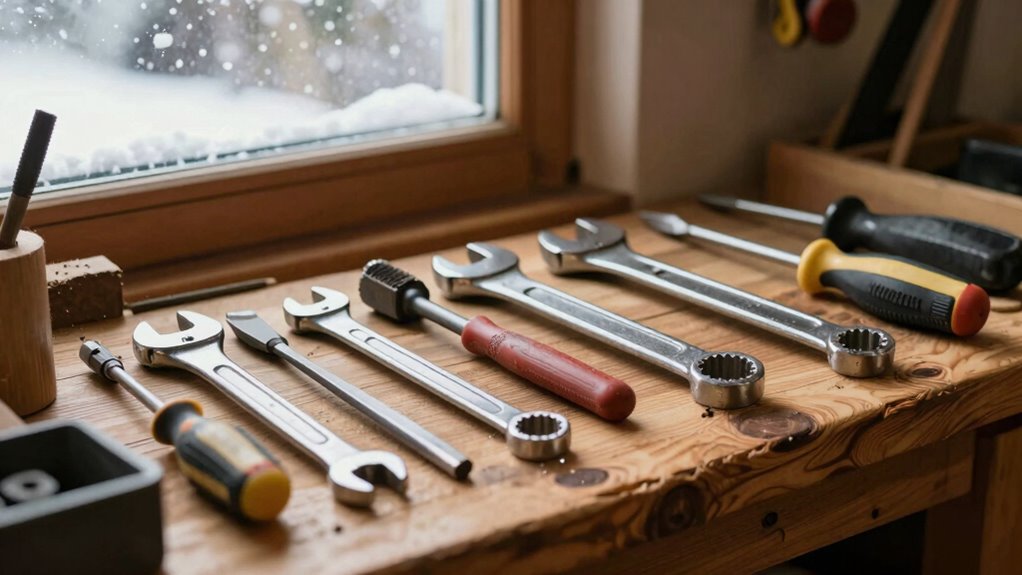
Have you ever considered that winter might be the best time to give your shop tools a much-needed tune-up? When the temperatures drop and outdoor projects slow down, it’s the perfect opportunity to focus on tool maintenance. Instead of letting your equipment sit idle, you can use the winter months to get everything in top shape for the busy seasons ahead. This kind of seasonal preparation not only extends the lifespan of your tools but also guarantees they operate safely and efficiently when you need them most.
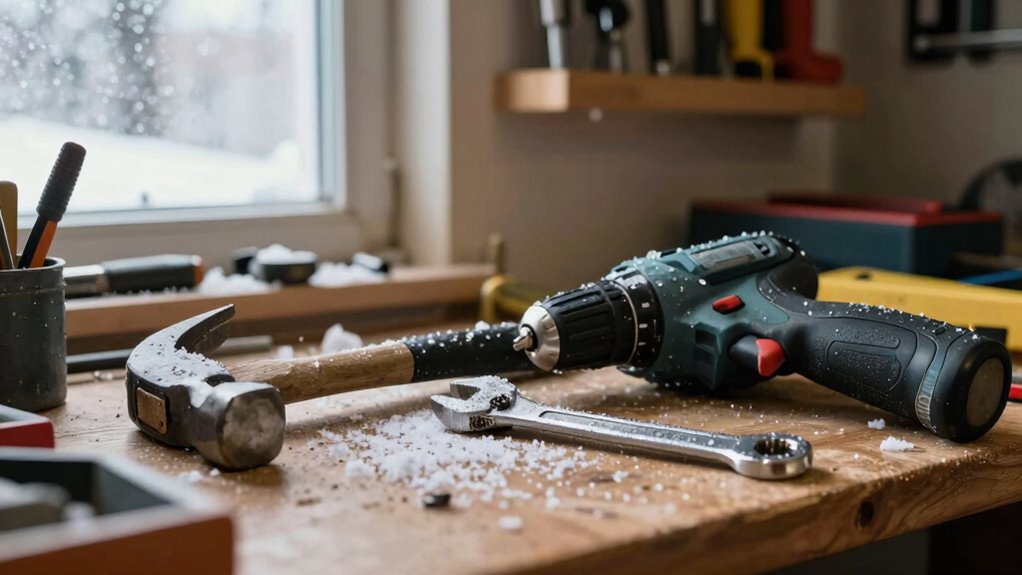
During winter, you tend to have more downtime, which makes it easier to dedicate time to inspecting and maintaining your tools. You can clean out rust, sharpen blades, replace worn parts, and lubricate moving components. These small but vital steps prevent issues from escalating, saving you money and frustration later. Additionally, performing tool maintenance in a controlled indoor environment helps you avoid the hazards of working outside in freezing weather. You’ll find that these routine checks and fixes become easier and more thorough when you’re not battling snow or cold winds. Incorporating preventative maintenance into your winter routine can further ensure your tools stay in optimal condition.
Winter’s indoor atmosphere makes tool maintenance easier and safer, preventing issues before busy seasons.
Moreover, winter’s slower pace allows you to think ahead about your upcoming projects. Proper seasonal preparation means organizing your tools so they’re ready to go when spring arrives. You can also identify what needs replacing or upgrading, ensuring you’re not caught off guard in the middle of a project. This proactive approach minimizes delays and helps you start the new season with confidence. Plus, maintaining your tools during colder months keeps them in good condition, reducing the risk of breakdowns when you’re under pressure to finish a job. Additionally, implementing sustainable maintenance practices can help you reduce waste and support environmental conservation. Adopting eco-friendly techniques during maintenance can contribute to a greener workflow.
Another benefit of tackling tool maintenance in winter is that it gives you a chance to review safety features. For example, inspecting electrical cords, checking safety guards, and testing power tools guarantees everything functions correctly. This not only prolongs the life of your equipment but also keeps you safe while working. When your tools are well-maintained, you’re less likely to experience accidents caused by faulty or worn parts, which is especially important during busy seasons. Ensuring your storage solutions are secure and organized can also prevent accidental damage or mishandling of delicate tools.
As an affiliate, we earn on qualifying purchases.
Frequently Asked Questions
How Often Should I Perform Maintenance on My Shop Tools?
You should perform maintenance on your shop tools at least once a year, but more frequently if you use them heavily. Regularly check tool calibration to guarantee accuracy and safety, and conduct safety inspections to spot any wear or damage. In winter, it’s an ideal time to do these tasks, because indoor conditions make maintenance easier and help prevent costly repairs or accidents down the line.
Are There Specific Tools That Need More Frequent Tuning?
A stitch in time saves nine, so pay extra attention to tools that require precise tool calibration, like measuring instruments and cutting tools. These need more frequent tuning to guarantee accuracy. Follow your lubrication schedule diligently, especially for power tools, to prevent rust and wear. Regularly checking and tuning your most-used tools keeps them in top shape, saving you time and costly repairs down the line.
Can Winter Weather Cause Damage to My Tools?
Yes, winter weather can cause damage to your tools if you’re not careful. Cold temperatures and humidity can lead to rust and corrosion, so climate protection and corrosion prevention are essential. Store your tools in a dry, sheltered space, and consider applying protective coatings or rust inhibitors. Regular maintenance during winter helps guarantee your tools stay in good condition, ready for use when spring arrives.
What Are the Best Storage Practices During Winter?
Your tools are more vulnerable than a snowflake in a blizzard, so proper storage is essential. You should organize your tools in a dry, insulated space to prevent rust and damage. Use climate protection measures like silica gel packs or dehumidifiers to control moisture. Keep tools off the floor and in labeled containers. This guarantees your tools stay in top shape through winter’s chill, ready when you need them.
How Do I Identify When a Tool Needs Repair or Replacement?
You can tell when a tool needs repair or replacement by paying attention to signs like inconsistent performance or unusual noises. Regularly perform safety inspections and check tool calibration to guarantee accuracy and safe operation. If you notice tools aren’t responding as they should, or calibration is off, it’s time to repair or replace them. Addressing issues early keeps your workspace safe and maintains your tools’ longevity.
As an affiliate, we earn on qualifying purchases.
Conclusion
Winter’s quiet lull is the ideal time to tune up your shop tools, much like a gardener tending to dormant plants. Taking care of your tools now guarantees they’re ready to perform at their best when spring arrives. Don’t let rust and wear slow you down when it’s time to get back to work. Embrace the season’s calm, and you’ll be set to hit the ground running as soon as the busy season begins.
As an affiliate, we earn on qualifying purchases.
As an affiliate, we earn on qualifying purchases.