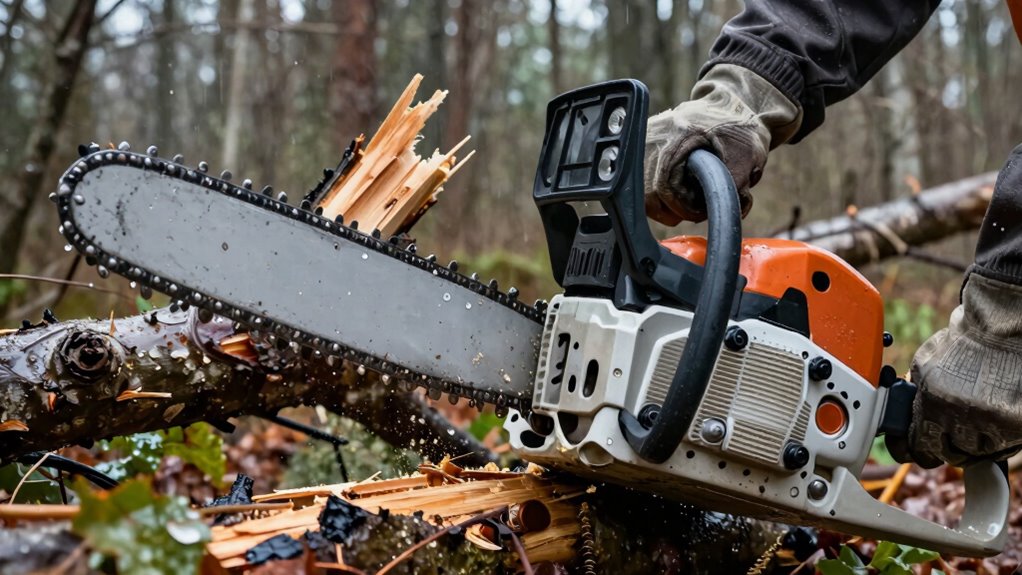

Before using a chainsaw for storm cleanup, make certain you’re wearing full safety gear, including gloves, goggles, a helmet with ear protection, and steel-toe boots. Check the saw’s maintenance—sharp chain, proper tension, and fuel levels—before starting. Practice safe techniques like maintaining a secure stance, cutting below shoulder height, and avoiding kickback zones. Stay aware of your surroundings and potential hazards, such as power lines or unstable trees. To master these safety tips and more, continue exploring essential tips for storm cleanup.

Get business pricing on tools and workshop supplies
- Business-only prices and quantity discounts
- Tax-exempt purchasing
- Multiple users, one account, clear invoices
Key Takeaways
- Ensure proper safety gear, including gloves, goggles, helmet, and steel-toe boots, before starting storm cleanup.
- Inspect and maintain the chainsaw, checking chain sharpness, tension, and safety features for reliable operation.
- Be cautious of unstable trees, power lines, and debris to avoid hazards during cutting.
- Use correct techniques, cutting below shoulder height and maintaining a secure grip for control.
- Stay alert to environmental hazards and work carefully to prevent accidents and protect surrounding wildlife.
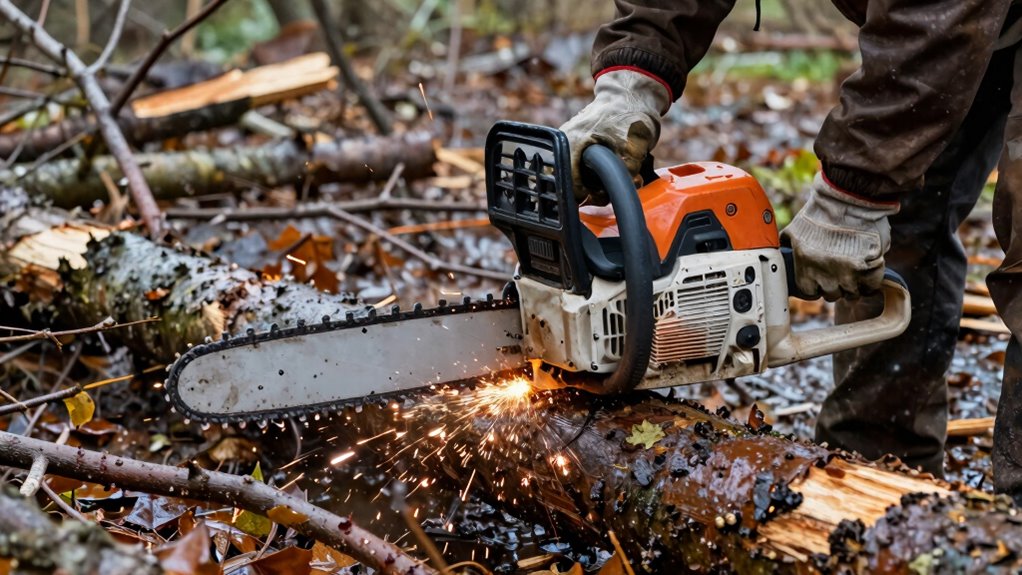
Have you ever faced a storm that left behind tangled branches and fallen trees? When you’re preparing to tackle storm cleanup with a chainsaw, safety should be your top priority. Before you even start, make sure you have the right safety gear. Wear sturdy gloves to protect your hands from splinters and sharp edges. Safety goggles or a full-face shield keep debris and sawdust out of your eyes. A helmet with ear protection is essential because chainsaws are loud and can cause hearing damage over time. Steel-toe boots provide stability and protect your feet from falling branches or accidental drops. Long pants and a long-sleeved shirt create a barrier against scratches and flying debris. Never underestimate the importance of comprehensive safety gear; it can prevent serious injuries and keep you focused on the task at hand.
Once you’re geared up, it’s crucial to understand proper maintenance tips for your chainsaw. A well-maintained saw runs smoothly and reduces the risk of accidents. Before starting, check the chain tension—if it’s too loose or too tight, your cuts won’t be precise, and the chain could derail. Keep the chain sharp; dull blades require more force and can cause kickback. Regularly inspect the bar, chain, and sprocket for signs of wear or damage, replacing parts as needed. Always ensure the chainsaw has enough fuel and oil, and check that the chain brake is functioning correctly. Proper maintenance isn’t just about efficiency; it’s about safety too. If your chainsaw isn’t in top condition, you risk losing control or causing kickbacks, which are dangerous and can lead to injuries. Additionally, understanding the importance of biodiversity and avoiding damage to surrounding plants and wildlife can make your cleanup more environmentally responsible. Remember that a well-maintained chainsaw is essential for safe and effective use during storm cleanup.
When you’re ready to start, remember that safety gear should stay on the whole time. Maintain a secure stance with both hands firmly gripping the saw, and always cut below shoulder height. Take your time—rushing can lead to mistakes or accidents. Be aware of your surroundings, especially when working near power lines or unstable trees. Pay attention to kickback zones—the top of the bar’s tip is notorious for sudden reactions. Keep your chainsaw sharp and well-maintained to prevent unnecessary strain and accidents. It’s also helpful to familiarize yourself with the safety features of your chainsaw to ensure you’re using protective mechanisms correctly. Using proper technique can significantly reduce the risk of injury and improve your efficiency. Being aware of potential hazards and chainsaw safety tips can help you work more confidently and securely. With the right safety gear and proper maintenance tips, you can approach storm cleanup confidently, reducing risks while efficiently clearing debris. Storm cleanup with a chainsaw demands focus and caution, but being prepared makes all the difference in keeping you safe and effective in restoring your property.
As an affiliate, we earn on qualifying purchases.
Frequently Asked Questions
Are Electric Chainsaws Suitable for Storm Debris Cleanup?
Electric chainsaws are suitable for storm debris cleanup, especially for smaller branches and light wood. You’ll benefit from their quiet operation and easy handling, but keep in mind battery performance can decline with extended use, limiting your runtime. If you opt for a corded model, you’ll face corded limitations, restricting mobility and reach. Choose the right type based on your debris size and workspace to guarantee effective and safe cleanup.
How Long Does a Chainsaw Chain Typically Last During Storm Cleanup?
During storm cleanup, your chainsaw chain typically lasts around 8 to 12 hours of heavy use, but this depends on debris type and chain quality. You’ll know it’s time for chain sharpening when cuts become slow or rough. If the chain’s damaged or excessively worn, chain replacement is necessary. Regularly inspect your chain, keep it sharp, and replace it when needed to guarantee safe, efficient storm debris removal.
Can I Use a Chainsaw on Wet or Icy Wood Safely?
Using a chainsaw on wet or icy wood isn’t recommended due to safety risks—slippery surfaces increase accident chances. Only proceed if you’re experienced, and always follow safety precautions like wearing gloves and eye protection. Keep your chainsaw well-maintained with sharp, properly tensioned blades, especially in harsh conditions. Did you know that improper handling accounts for over 50% of chainsaw injuries? Always prioritize safety and proper maintenance to avoid accidents.
What Personal Protective Equipment Is Essential for Storm Cleanup?
You need to wear protective gear and follow safety measures when storm cleanup. Always use sturdy gloves, eye protection, and hearing guards to shield yourself from debris and loud noise. A helmet with a face shield can prevent injuries from falling branches. Wear steel-toed boots for stability and safety. These safety measures help prevent accidents, injuries, and guarantee you handle your chainsaw confidently and securely during storm cleanup.
How Do I Prevent Chainsaw Kickback During Heavy Use?
Prevent pesky kickbacks by practicing proper stance and engaging the chain brake before cutting. Stand firmly with your feet shoulder-width apart, maintaining balance and control. Keep your hands on the saw’s handles, ready to react quickly. Always start with a clear, controlled cut, ensuring your body is positioned to avoid sudden jerks. Using a chain brake during pauses can also help stop unintended movements, keeping you safe through storm cleanup.
As an affiliate, we earn on qualifying purchases.
Conclusion
Before you fire up that chainsaw for storm cleanup, remember safety always comes first. Proper training, protective gear, and cautious handling can make the job safer and more efficient. Don’t rush through it—taking your time prevents accidents and guarantees the job gets done right. When you’re prepared and careful, you’ll prove that slow and steady wins the race. Stay vigilant, respect the equipment, and you’ll come out on the other side ready to face whatever Mother Nature throws your way.
As an affiliate, we earn on qualifying purchases.
As an affiliate, we earn on qualifying purchases.
Halloween Picks
halloween
As an affiliate, we earn on qualifying purchases.