
To stay safe when using a portable generator for DIY projects, always place it outdoors on a flat, stable surface away from windows, doors, and vents for proper ventilation. Use the right extension cords, avoid overloading the generator, and inspect equipment regularly. Handle fuel carefully, store it safely, and keep a carbon monoxide detector nearby. Proper grounding and emergency gear are essential. Following these safety tips helps make certain your project stays safe and smooth—there’s more to learn if you want to get it right.
Key Takeaways
- Always operate the generator outdoors in a well-ventilated area, away from windows and vents to prevent carbon monoxide buildup.
- Use appropriately rated, weather-resistant extension cords and avoid overloading the generator to prevent overheating and fires.
- Regularly inspect and maintain the generator, including oil levels, spark plugs, and air filters, for safe and reliable performance.
- Handle fuel with care, store in approved containers, and never refuel while the generator is hot or running.
- Ensure proper grounding and keep a carbon monoxide detector nearby during operation for added safety.

GenArmor Generator Covers While Running, 100% Waterproof Heavy Duty Tarps Generator Tent, Portable Outdoor Generator Enclosure for Most 4000w~13000w Generators, Black, Standard
100% Waterproof Protection: A patented innovation from GenArmor independent design lab, ensuring the safety of your generator covers…
As an affiliate, we earn on qualifying purchases.
As an affiliate, we earn on qualifying purchases.
Proper Placement and Ventilation
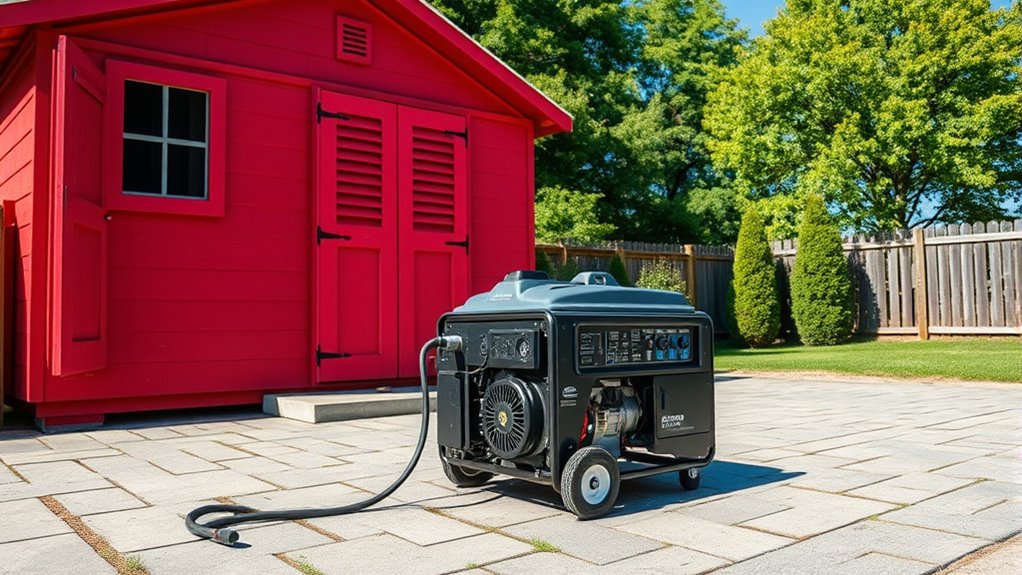
To guarantee safe operation, you need to carefully choose where to place your generator. Proper placement ensures it functions efficiently and minimizes risks. Always consider ventilation requirements; your generator must be placed outdoors in a well-ventilated area to prevent dangerous carbon monoxide buildup. Keep it away from windows, doors, and vents to avoid fumes entering your home. Make sure the generator is on a flat, stable surface to prevent tipping. Maintain clear space around the unit—at least 3 feet—so airflow isn’t obstructed. Avoid enclosed spaces or areas with poor airflow, as this can cause overheating and increase the risk of fumes. Proper placement and ventilation are crucial for safe and reliable operation, especially considering the market reputation and industry standards for safety. Additionally, regularly inspecting your generator for proper maintenance can help prevent malfunctions and ensure optimal performance. Ensuring proper airflow management around your generator can also significantly reduce potential hazards and improve efficiency. Adequate ventilation practices are essential for maintaining safe operation and protecting your household. Proper ventilation can also help dissipate heat generated during operation, reducing the risk of overheating.

Skrizcable 16/3 25 FT Outdoor Extension Cord Waterproof, Weatherproof & Flame Retardant Black 3 Prong Power Cord Outside for Lawn & Garden, 13 Amps 1625 Watts 125 VAC 16AWG SJTW, ETL Listed
ETL Listed and Trusted: 25 ft extension cord rated 13 Amps, 1625 Watts and 125 VAC; Male NEMA…
As an affiliate, we earn on qualifying purchases.
As an affiliate, we earn on qualifying purchases.
Keep the Generator Dry and Protected

Keeping your generator dry and protected is essential for safe and reliable operation. Exposure to rain or moisture can cause electrical issues or damage your equipment. To guarantee weather protection, always use waterproof covers when your generator isn’t in use. Place it in a sheltered area, away from direct rain or snow, and elevate it off the ground to prevent water contact. Additionally, considering Free Floating techniques can help in maintaining optimal positioning and safety of your generator during outdoor use. Proper moisture management is crucial to prevent corrosion and ensure longevity of your equipment. Implementing proper ventilation can also help reduce moisture buildup and protect your generator from environmental damage. Regularly inspecting and maintaining your generator’s protective enclosures will further enhance its durability and performance. Incorporating corrosion prevention methods, such as applying protective coatings, can extend the lifespan of your generator in outdoor conditions.

JJing Carbon Monoxide Alarm CO Module CO Sensor Compatible with Some Harbor Freight Predator 4375 3500 Watt Generator
This CO module is exactly the same with the existing one on your Predator 4375 (3500 running watts)…
As an affiliate, we earn on qualifying purchases.
As an affiliate, we earn on qualifying purchases.
Use Correct Extension Cords
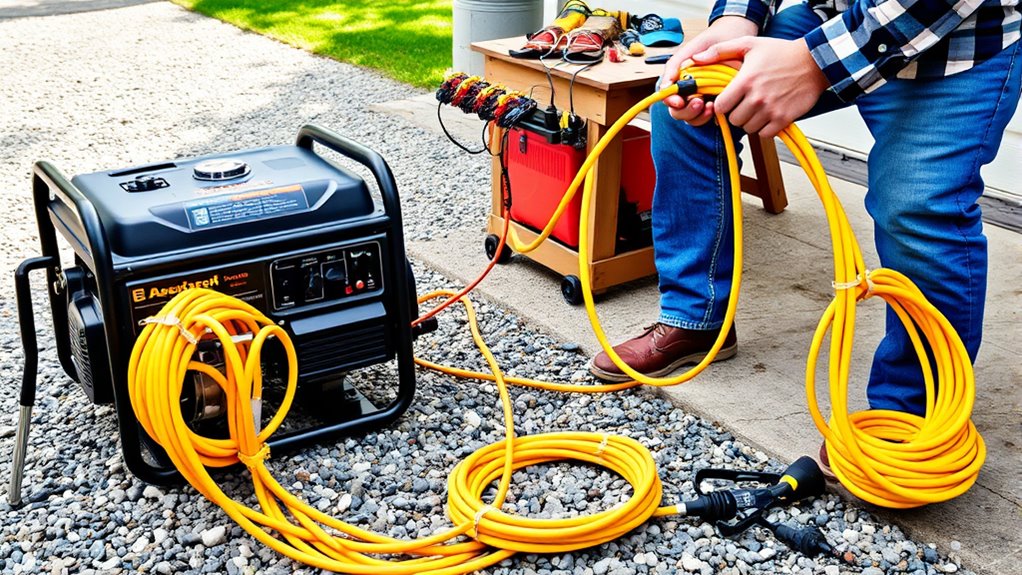
Choosing the right extension cords is essential for safe generator use. Make sure you select cords with the proper gauge to handle the power load, and avoid overloading circuits. Regularly inspect cords for damage to prevent potential hazards. Using cords with the appropriate filtration capacity helps ensure safe and efficient operation. Additionally, selecting cords that are weather-resistant can improve safety during outdoor projects. For added safety, consider using dog-proof extension cords to prevent accidental damage or chewing by pets. Ensuring your cords meet safety standards can further reduce risks associated with electrical use. Remember that choosing the correct extension cords can also support creative projects, making your DIY endeavors both safe and enjoyable.
Choose Proper Gauge Cords
Using the correct gauge extension cord is essential for safe generator operation. Proper gauge selection guarantees your cords can handle the electrical load without overheating or causing damage. Thicker cords, with a lower gauge number, can carry more current safely, while thinner cords are suitable for lighter tasks. Always check the wattage and amperage of your devices and match them to the extension cords’ specifications. Using a cord with an inadequate gauge can lead to overheating, fires, or damage to your equipment. When choosing extension cords, verify they are rated for outdoor use and are compatible with your generator’s power output. Proper gauge selection not only keeps your project safe but also prevent electrical hazards and prolongs the life of your generator and connected tools. Additionally, understanding water park safety measures can help promote a more holistic approach to safety and well-being during your DIY projects. For optimal safety, familiarize yourself with generator safety guidelines to ensure proper operation and handling. Ensuring proper electrical load management is also critical to prevent overloads and potential hazards during your work.
Avoid Overloading Circuits
Selecting the right extension cords goes beyond just matching the gauge; it also means guaranteeing you don’t overload your circuits. Using cords that are too thin or plugging in too many devices can cause a circuit overload, risking damage to your generator and equipment. When you overload a circuit, the breaker is designed to trip, cutting power to prevent fires or electrical failure. To avoid this, always check the wattage of your devices and ensure the total doesn’t exceed your generator’s capacity. Use only extension cords rated for your load, and avoid daisy-chaining cords together. Staying within safe limits helps prevent breaker tripping and keeps your DIY project running smoothly and safely. Proper cord management is key to avoiding electrical hazards. Additionally, paying attention to generator maintenance practices can prevent malfunctions that might cause additional complications during your projects.
Inspect for Damage Regularly
Regularly inspecting your extension cords for damage is essential to guarantee safe generator operation. Conduct a thorough visual inspection before each use, checking for cuts, frays, or exposed wires. Look for signs of burn marks, scorch patches, or melted insulation that could indicate overheating. Perform a damage assessment to ensure the cord’s plug, socket, and insulation remain intact and secure. Damaged cords pose serious safety risks, including electrical shocks or fires. If you notice any damage, replace the extension cord immediately. Never attempt to repair or use a compromised cord, as it can jeopardize your safety and that of others around you. Regular inspections help catch potential issues early, ensuring your generator functions safely and efficiently during your DIY projects. Additionally, understanding the importance of proper extension cord usage can prevent many common hazards associated with portable generator operation.
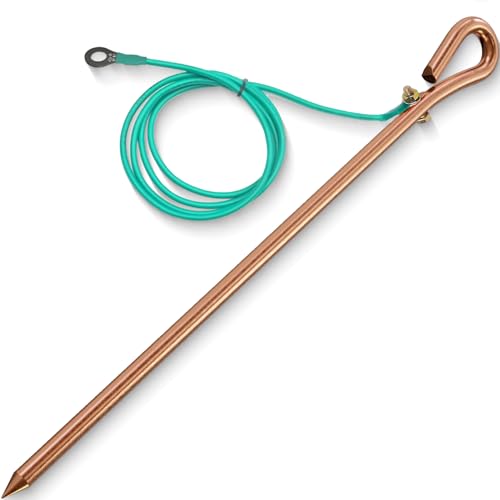
Generator grounding kit with 6ft Female Ground Cord,grounding rod for generator,Grounding Wire with Crocodile Clip for Electric Fences,Antennas (17.4 inch Ground Rod + 6.2ft Lugs Wire)
This 1/2” diameter, 17.4” long ground rod is designed for durability and precision,ensuring easy compatibility with wires up…
As an affiliate, we earn on qualifying purchases.
As an affiliate, we earn on qualifying purchases.
Avoid Overloading the Generator

Overloading your generator can cause serious damage and safety hazards. If you push the power load beyond your generator’s circuit capacity, it can lead to overheating or even failure. Always check the wattage of your appliances and equipment before plugging them in. To stay safe, don’t exceed 80% of the generator’s rated capacity, giving it room to breathe under load. Overloading can cause sudden shutdowns, damage your devices, or start a fire. Use a load tester or consult the manufacturer’s guidelines to understand your generator’s limits. Distribute your power load evenly across outlets, and avoid daisy-chaining extension cords, which can increase the risk of overload. Staying within your generator’s capacity guarantees safe, reliable operation and prevents costly repairs.
Regular Maintenance and Inspection
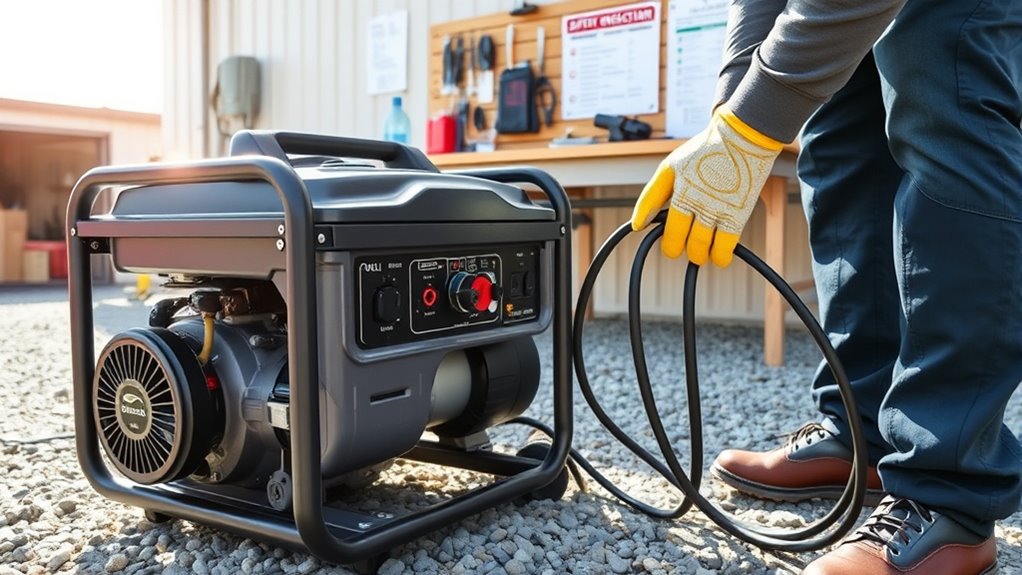
Regular maintenance keeps your generator running safely and efficiently. You should check oil levels regularly, inspect the spark plug for wear, and clean the air filter to prevent buildup. These simple steps guarantee your generator stays in good condition and reduces the risk of breakdowns.
Check Oil Levels
Checking your generator’s oil levels is a crucial step in maintaining its performance and preventing damage. An oil check ensures the engine stays properly lubricated, reducing wear and extending its lifespan. Before starting, turn off the generator and let it cool if it’s been running. Remove the oil fill cap and wipe the dipstick clean. Insert it back without screwing it in, then pull it out to check the oil level. If the oil is below the recommended mark, add the correct type of oil to maintain proper level maintenance. Regularly inspecting oil levels helps you catch leaks or low oil issues early, preventing engine failure. Keep an eye on oil condition and top off as needed to keep your generator running smoothly and safely during your DIY projects.
Inspect Spark Plug
When was the last time you inspected your generator’s spark plug? Regular spark plug inspection is crucial for keeping your ignition system running smoothly. A worn or dirty spark plug can cause starting issues, reduced efficiency, or engine misfires. To inspect it, turn off the generator and let it cool. Remove the spark plug with a spark plug socket and check for signs of wear, carbon buildup, or damage. Clean the electrode gently with a wire brush if it’s dirty or replace it if it’s worn out. Ensuring the spark plug is in good condition helps prevent engine problems and ensures reliable power during your DIY projects. Make spark plug inspection part of your routine maintenance to keep your generator performing safely and efficiently.
Clean Air Filter
After inspecting your spark plug, it’s a good idea to turn your attention to the air filter. Regular air filter maintenance is essential for your generator’s performance and safety. A dirty or clogged filter restricts airflow, causing your generator to work harder and potentially overheat. Remove the air filter and check for dirt, debris, or damage. If the filter looks dirty or worn out, it’s time for filter replacement. Cleaning a reusable filter with compressed air or washing it with soap and water can extend its lifespan, but replace disposable filters when they become too dirty. Consistent inspection and timely filter replacement help guarantee your generator runs efficiently and safely during your DIY projects.
Safe Fuel Storage and Handling
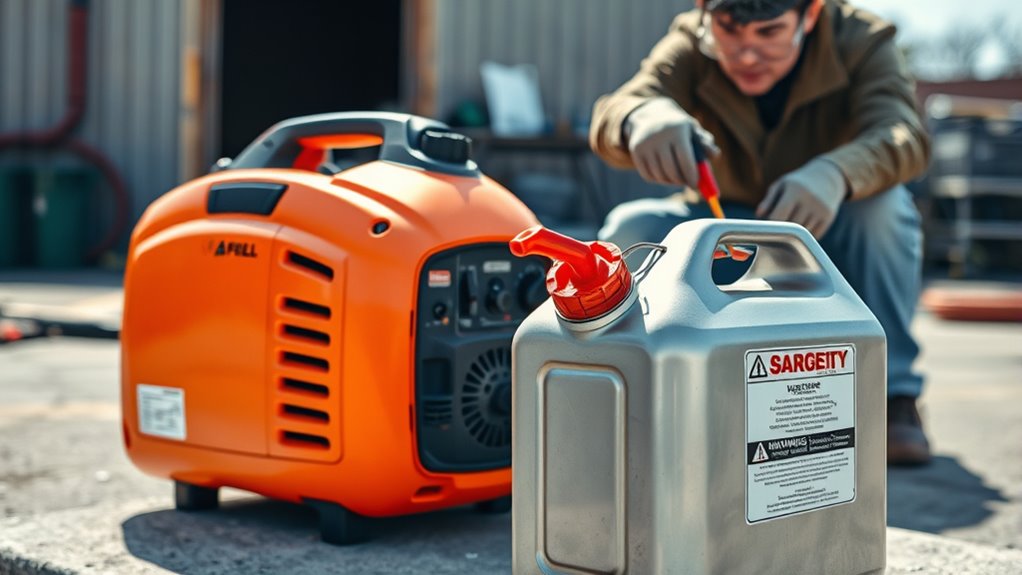
Properly storing and handling fuel is essential to prevent accidents and guarantee safe generator operation. Always use approved fuel containers designed for fuel container safety, and keep them tightly sealed when not in use. Store fuel in a cool, well-ventilated area away from heat sources, open flames, and combustible materials. Be aware of fuel vapor risks; vapors can ignite easily and pose serious hazards. Never refuel your generator while it’s running or hot, and always allow it to cool first. Use a funnel or spout to avoid spills, and clean up any fuel drips immediately. Proper handling and storage reduce the risk of leaks, fires, and explosions, ensuring your DIY project stays safe and your generator functions reliably.
Protect Against Carbon Monoxide Poisoning
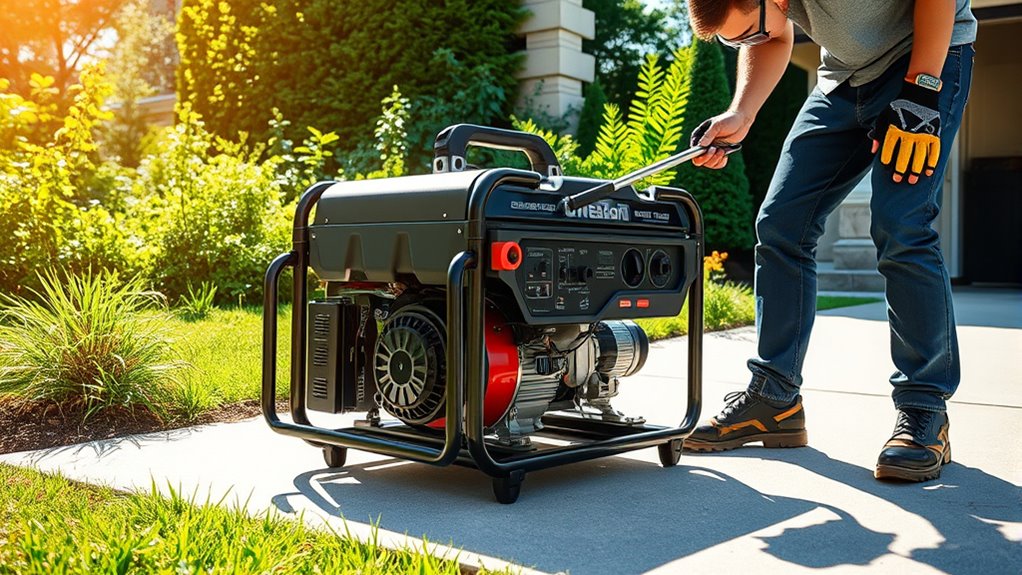
Are you aware of how quickly carbon monoxide can build up when operating a generator? This colorless, odorless gas poses serious health risks if inhaled in high concentrations. To protect yourself, always prioritize ventilation safety. Never run your generator indoors, in garages, or near open windows and vents, even if doors are open. Place it at least 20 feet away from your home and other structures to prevent carbon monoxide from seeping inside. Use a carbon monoxide detector nearby to alert you to dangerous levels. Regularly check the generator’s exhaust system for leaks, and never bypass safety features. By ensuring proper ventilation safety, you considerably reduce the risk of carbon monoxide poisoning while using your portable generator.
Proper Grounding Techniques
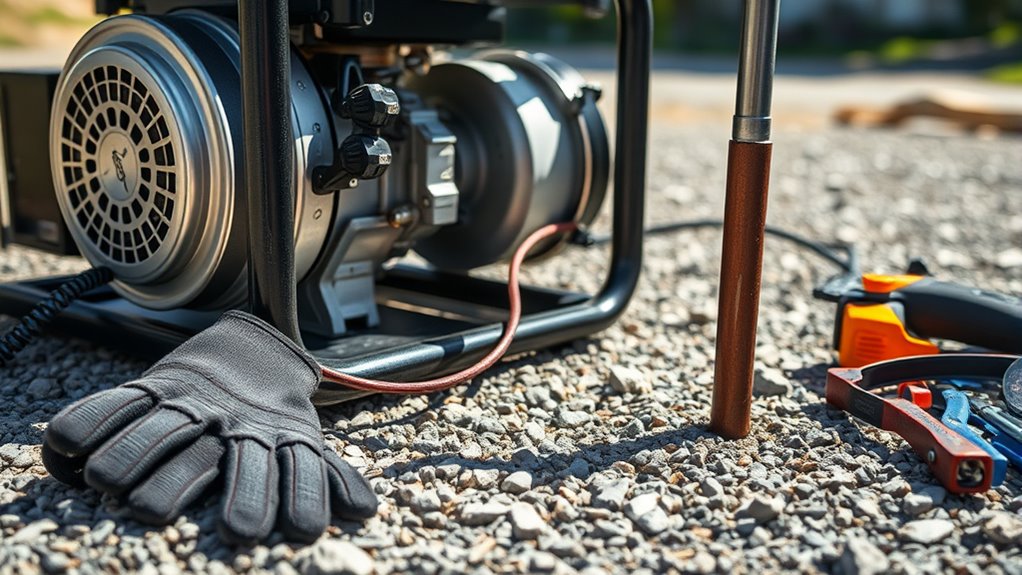
Ensuring your generator is properly grounded is essential for safe operation and to prevent electrical hazards. Proper grounding techniques help direct stray electrical currents safely into the ground, reducing the risk of shocks and fires. To achieve this, connect the generator’s grounding terminal to a grounding rod driven into moist soil using a grounding wire. Make sure the connection is secure and corrosion-free. Avoid grounding through plumbing or other conductive structures, as this can increase the risk of electrical shock. Always follow manufacturer instructions and local electrical safety codes. Proper grounding not only protects you but also ensures your generator operates reliably. Remember, thorough grounding is a critical step in maintaining safe and effective electrical safety during your DIY projects.
Emergency Preparedness and Safety Equipment
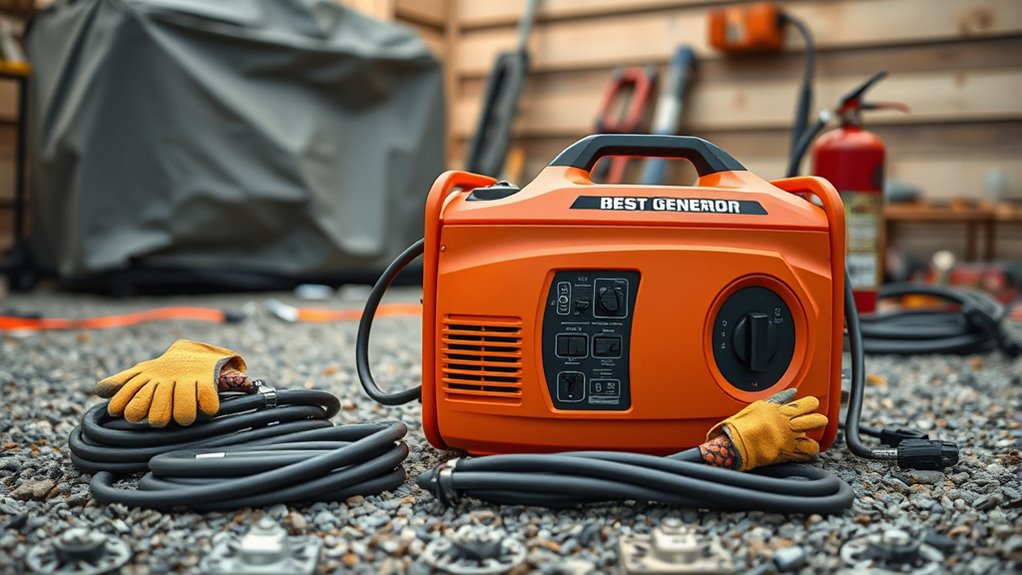
Being prepared for emergencies is essential when operating a generator, and having the right safety equipment on hand can make all the difference. Make certain you have a fire extinguisher nearby, specifically one suitable for electrical fires, to quickly address any fire safety issues. Keep a well-stocked first aid kit accessible for minor injuries or shocks. It’s also wise to have smoke and carbon monoxide detectors installed in your workspace to alert you to potential hazards. Regularly check your safety equipment to confirm it’s functional and within reach. Being proactive about emergency preparedness minimizes risks and helps you respond swiftly if something goes wrong. Remember, safety gear and awareness are your best tools for protecting yourself and others during generator use.
Frequently Asked Questions
Can I Run a Generator Indoors Safely?
You can’t run a generator indoors safely. Doing so risks carbon monoxide poisoning due to poor indoor ventilation. Always place your generator outside, away from windows and vents, to guarantee proper indoor ventilation. Keep it on a flat, dry surface, and avoid enclosed or partially enclosed areas. Remember, proper generator placement and outdoor operation are essential to prevent dangerous fumes from accumulating indoors.
What Are the Signs of Generator Overload?
Did you know that overloading a generator can cause frequent circuit tripping? If your generator struggles to handle the load, you’ll notice the power overload warning signs, such as circuit breakers constantly tripping or the generator shutting down unexpectedly. You might also see flickering lights or hear unusual noises. These signs indicate you’ve surpassed its capacity, so reduce your load immediately to prevent damage and ensure safe operation.
How Long Can I Operate a Generator Continuously?
You can operate a generator continuously for about 8 to 12 hours, but it depends on proper generator maintenance and fuel storage. Regularly check your generator’s oil and coolants, and confirm fuel is stored safely in approved containers. Avoid overloading the generator, and give it time to cool down if you plan extended use. Proper maintenance and safe fuel storage help prevent overheating and prolong your generator’s lifespan.
Is It Necessary to Have a Licensed Electrician Install Grounding?
Yes, you should have a licensed electrician handle your grounding requirements. Proper grounding is essential for safety and compliance with electrical codes, preventing shocks and equipment damage. A licensed electrician knows how to correctly install grounding systems and ensure your generator is safe to use. Don’t skip this step—professional installation guarantees your setup is properly grounded, reducing risks and ensuring reliable operation during your DIY projects.
What Should I Do if Carbon Monoxide Is Detected?
Oh, so you love living on the edge? If you detect carbon monoxide, turn off your generator immediately and get outside to fresh air—seriously, don’t ignore it. Keep your generator well-maintained and always have an emergency plan in place. Carbon monoxide is sneaky and deadly, so prioritize your safety. Proper generator maintenance and emergency preparedness save lives—don’t wait until it’s too late.
Conclusion
By following these safety tips, you’ll reduce the risk of accidents and keep your DIY projects running smoothly. Did you know that carbon monoxide poisoning claims about 50 lives annually in the U.S., often from portable generator misuse? Staying vigilant with proper placement, maintenance, and safety precautions can prevent tragedies like these. Always prioritize safety, and enjoy your projects with peace of mind—your well-being is worth it!