
To childproof your home, start by anchoring heavy furniture, bookshelves, and TVs to the wall with sturdy brackets to prevent tipping. Install childproof latches on cabinets and drawers containing hazardous items, ensuring they’re easy for adults but secure for kids. DIY safety installs, like latch systems and anchors, are affordable and customizable. Keep up with regular checks to maintain safety features. Continue exploring these tips to create a safer environment for your little ones.
Key Takeaways
- Secure heavy furniture and TVs to the wall with sturdy anchors to prevent tipping injuries.
- Install childproof latches on cabinets and drawers containing hazardous items for added safety.
- Use DIY safety installs like latch systems and anchors to customize your home’s childproofing measures.
- Regularly check and tighten all anchors and latches to ensure ongoing security.
- Keep dangerous items out of reach and securely stored to minimize risks in the home environment.

Are you prepared to keep your home safe as your little one starts exploring? The moment your child begins to crawl and walk, the potential hazards multiply. Childproofing isn’t just about installing baby gates or outlet covers; it’s about creating a thorough safety environment. One of the most critical areas to focus on is fire safety. You want to ensure smoke detectors are installed on every level and tested regularly. Keep fire extinguishers accessible and know how to use them. Avoid clutter near heat sources, and never leave cooking unattended, especially with curious kids around. Simple measures like these can prevent devastating fires and give you peace of mind.
Electrical hazards are another major concern. Your child’s curiosity extends to outlets, cords, and appliances, which can be dangerous if not properly secured. To minimize risks, use outlet covers or safety plugs on all unused outlets, and consider installing tamper-resistant outlets. Keep cords out of reach—tuck them behind furniture or use cord organizers—and never leave appliances plugged in and unattended. When using extension cords, limit their use and ensure they’re high quality. Installing safety latches on electrical panels and securing loose wires can further prevent accidental shocks or fires. By proactively addressing electrical hazards, you reduce the chance of injury or electrical fires, making your home safer for your little explorer.
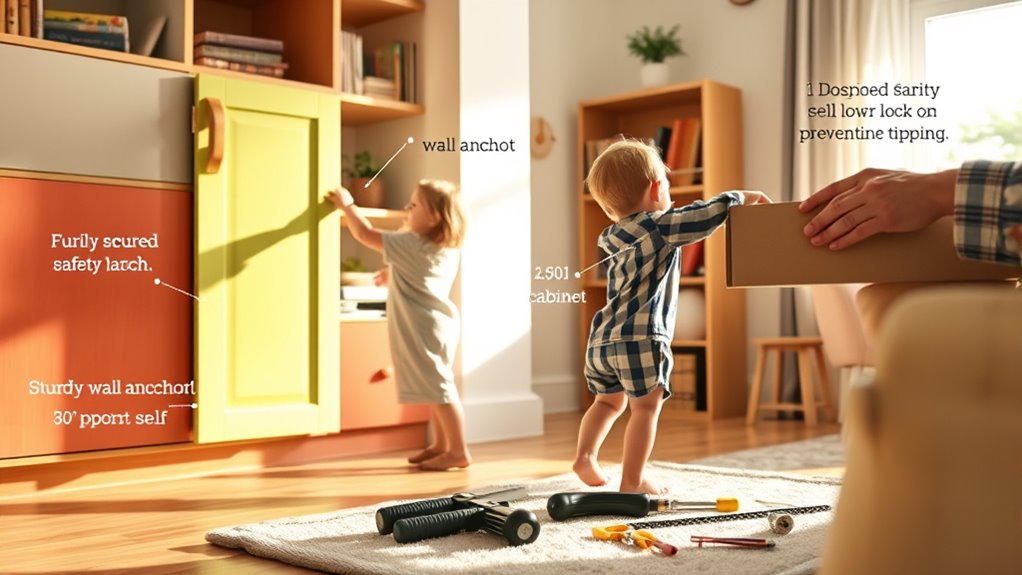
Anchoring furniture and heavy objects is essential because falls are common accidents in homes with young children. Use sturdy anchors to secure bookshelves, dressers, and TVs to the wall, preventing tip-overs that could cause serious injuries. Regularly check that these anchors remain tight and effective. For drawers and cabinets, latch systems are crucial. Install childproof latches on cabinets containing cleaning supplies, sharp objects, or other dangerous items. These latches are simple to install and provide quick access for adults but keep children from opening potentially hazardous storage. DIY safety installs like these are cost-effective and customize your home to fit your child’s safety needs.
Frequently Asked Questions
Are There Any Non-Toxic Childproofing Materials?
Yes, there are non-toxic childproofing materials available. You can choose non-toxic paints and chemical-free solutions for safety. Look for products labeled as free from harmful chemicals like VOCs, phthalates, and formaldehyde. These options guarantee your home remains safe for your child while providing effective protection. Always read labels carefully and opt for eco-friendly, non-toxic options to create a healthier environment for your little one.
How Do I Childproof Electrical Outlets Effectively?
Ever wonder how to keep your little explorer safe from electrical hazards? Simply install outlet covers or safety plugs into every accessible outlet. These devices act as a barrier, preventing curious fingers from reaching inside. Make sure they fit snugly and are tamper-resistant. Regularly check that all covers are secure and intact. With these simple steps, you create a safer environment, giving you peace of mind while your child explores freely.
What Is the Best Way to Secure Heavy Furniture?
To guarantee heavy furniture safety, you should securely anchor furniture to the wall using sturdy brackets or straps. Start by locating wall studs and attaching the straps tightly to both the furniture and the wall. For added stability, use secure anchoring tips like L-brackets or heavy-duty anchors. Regularly check these anchors to make sure they remain tight and in place, preventing tip-overs and keeping your child safe.
Can I DIY Childproofing Without Tools?
Think of DIY safety as a puzzle, but you might not need all the pieces. You can childproof without tools by using everyday items like rubber bands, clips, or furniture straps, turning household objects into safety champions. While dedicated childproofing tools make the job smoother, your resourcefulness can create a safer environment. Just be sure your makeshift solutions are sturdy and secure—your little one’s safety depends on it.
How Often Should I Check and Replace Safety Devices?
You should check your safety devices at least once a month to guarantee they meet safety standards and function properly. Regular maintenance schedules help you spot wear, damage, or loosened latches and anchors early. Replace any devices that no longer meet safety standards or show signs of wear. Staying vigilant keeps your home safe for your little ones and helps prevent accidents caused by faulty childproofing measures.
Conclusion
Childproofing your home might seem overwhelming, but taking small, deliberate steps makes a big difference. Installing anchors, latches, and DIY safety devices creates a safer environment without the need for costly renovations. Some may worry about aesthetic impacts, but many safety products now blend seamlessly with your decor. Remember, investing a little time now can prevent accidents later, giving you peace of mind and allowing your family to enjoy your home confidently and securely.