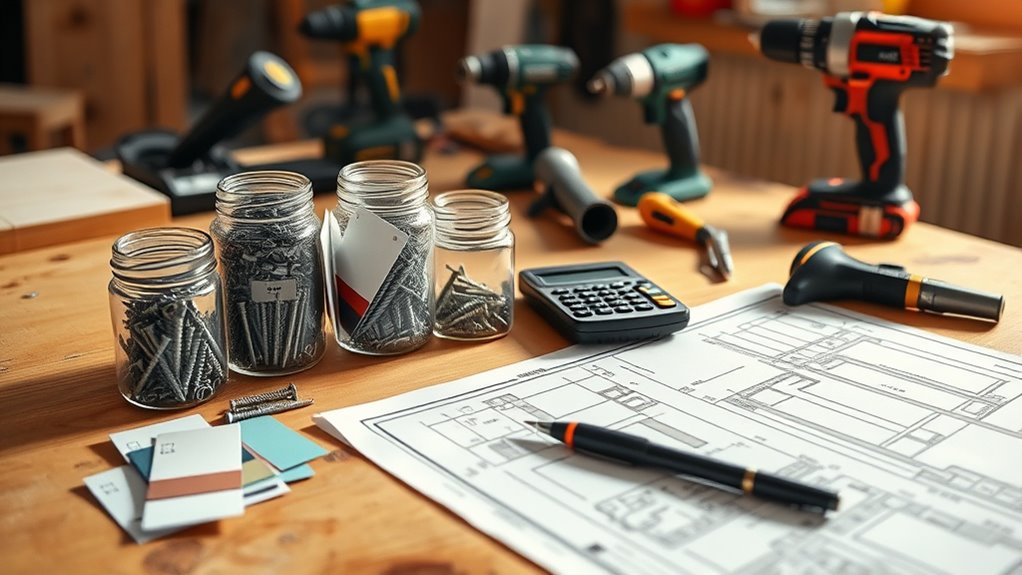

To budget for a DIY project and save money, start by defining your goals and the project scope to avoid unnecessary expenses. Create a detailed list of tools and materials you need, then research prices from different sources, comparing quality and cost. Consider borrowing or renting tools when possible and look for discounts or bulk deals online and locally. Track your expenses carefully, and if you stay flexible, you’ll discover more tips to keep costs low along the way.
Key Takeaways
- Create a detailed budget with a list of necessary tools, materials, and supplies, including estimated costs.
- Research and compare prices from online and local sources, looking for discounts, bulk deals, and affordable brands.
- Borrow or rent tools and equipment from community resources or peers to reduce purchasing expenses.
- Prioritize essential items, consider reusing or repurposing existing materials to save money and promote sustainability.
- Regularly track and adjust your spending to stay within budget and identify opportunities for cost-saving.
Set Clear Goals and Define Your Project Scope
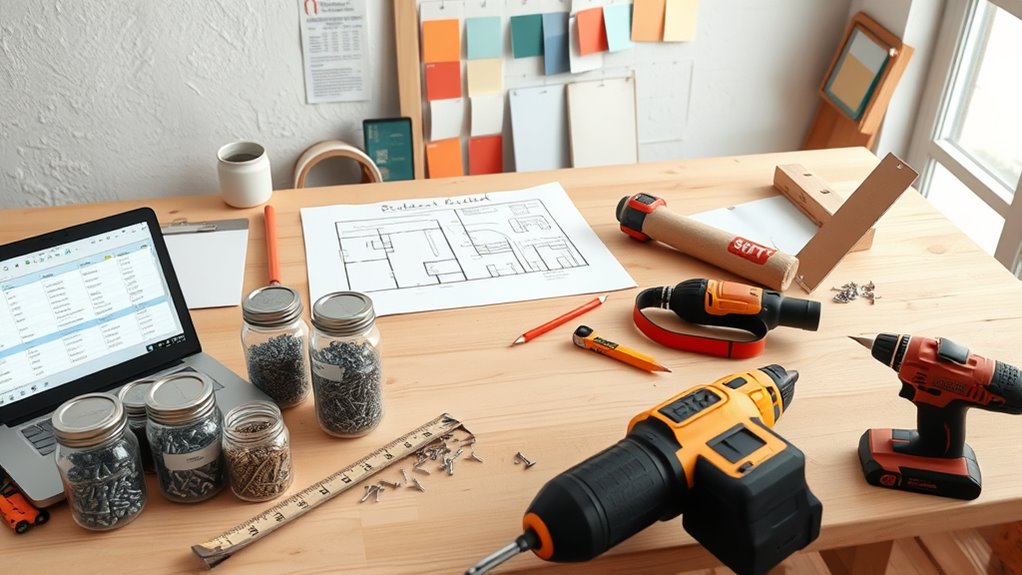
Before you start budgeting, it’s vital to clearly define what you want to accomplish with your DIY project. This is where project planning begins, and goal setting plays a fundamental role. Ask yourself what the final result should look like and what specific tasks are involved. Are you renovating a room, building furniture, or creating decor? Clarifying your goals helps you determine the scope of the project and avoid scope creep later on. Be specific about what you want to achieve and set realistic expectations. This process ensures you stay focused and avoid overspending. Well-defined goals give you a clear direction, making it easier to plan your budget accurately and prioritize necessary materials and tools. Incorporating sustainable practices into your planning can also help you select eco-friendly materials, which is increasingly important in today’s environmentally conscious world. Additionally, understanding the cost of tools and materials involved can help you allocate funds more efficiently and prevent unexpected expenses. Conducting a comprehensive assessment of your resources and potential costs will further help you stay within budget and avoid surprises. Recognizing potential cost savings opportunities during planning can also contribute to a more economical project overall.
Create a Detailed Budget and List of Needed Items

Once you’ve established your goals and defined the scope of your project, the next step is to create a detailed budget and compile a list of needed items. Focus on material selection to guarantee you choose cost-effective options without sacrificing quality. Conduct a thorough cost estimation for each item to prevent surprises later. To stay organized, consider these steps:
Establish goals, plan carefully, and budget wisely to keep your project on track and cost-effective.
- List all materials, tools, and supplies required for your project.
- Research prices to identify affordable sources and potential discounts.
- Prioritize essential items and note where you can save or repurpose materials.
- Incorporate cost-effective choices such as choosing suitable projector screens and accessories that maximize your budget’s value. Additionally, explore options like outdoor-kitchen essentials and durable covers to extend your investment’s lifespan and save money over time.
- Remember to compare options and look for quality-to-price ratio to ensure you’re making smart investments that last.
- When selecting components, consider the field-of-view and imaging‑scale examples from deep-sky imaging setups to ensure your project is both effective and budget-friendly.
Research and Compare Prices for Tools and Materials

To guarantee you stay within your budget, it’s essential to research and compare prices for tools and materials from multiple sources. Doing a thorough price comparison helps you identify the best deals and avoid overspending. Take time to explore different suppliers, both online and local stores, to see who offers the most competitive prices. Supplier research can also reveal discounts, bulk pricing, or special promotions that save you money. Keep in mind that the lowest price isn’t always the best choice; consider factors like shipping costs, return policies, and product quality. By comparing prices carefully, you ensure you’re making informed decisions, stretching your budget further, and avoiding impulse purchases that could inflate your project costs. Additionally, understanding the importance of project specifications ensures you select the right tools and materials for your DIY project. Being aware of market trends can also help you anticipate price fluctuations and plan your purchases accordingly. Recognizing product quality variations enables you to choose durable materials that may have a higher upfront cost but save money over time through increased longevity. Conducting thorough supplier research can also help you discover trusted sources and reliable products for your project, especially when considering the logistics of sourcing materials from different vendors.
Look for Alternatives and Cost-Effective Options

To save money, consider exploring budget-friendly brands or reusing materials you already have. Comparing prices online and locally can help you find the best deals and avoid overspending. Being flexible with options opens up more affordable solutions for your project. Additionally, researching cost-effective cleaning tools can provide insight into durable, budget-conscious equipment that may suit your needs. Exploring top laundry detergents can also help you choose effective and economical options for your cleaning supplies. For example, reviewing insulated jackets for winter can help you select warm, durable, and affordable outerwear for outdoor projects in cold weather. Incorporating creative storage solutions can further optimize your project space and reduce costs associated with organization and materials. Understanding the weight of pinball machines can also be useful if your DIY project involves moving or installing equipment, helping you plan and budget accordingly.
Explore Budget-Friendly Brands
Looking for budget-friendly brands can considerably cut costs on your DIY project. Choosing the right options means you get quality without overspending. First, explore lesser-known brands that offer quality tools and materials at lower prices—these are often hidden gems with great reviews. Second, consider store brands or house brands, which tend to be more cost-effective alternatives to name brands while maintaining decent quality. Third, read reviews and compare prices online to identify brands known for durability and affordability. Additionally, understanding cost-effective options can help you select the most appropriate tools and materials for your project, ensuring you make informed choices. By focus on budget-friendly brands, you ensure your project stays within budget while still getting reliable tools and materials. This approach helps you avoid unnecessary expenses and makes your DIY journey more economical and enjoyable.
Reuse and Repurpose Materials
Reusing and repurposing materials can substantially reduce your project costs while adding a personal touch. By applying upcycling techniques, you transform old or unused items into functional parts of your project, maximizing material reusability. Look around your home for items like pallets, scrap wood, or leftover paint—these can often be repurposed instead of bought new. Not only does this save money, but it also lessens waste and promotes sustainability. Before starting, evaluate what materials you already have that might serve your purpose, and think creatively about alternative uses. Using diverse and recycled materials can further enhance your project’s eco-friendliness and uniqueness. This approach allows you to keep costs down while giving your project a unique, customized look. Embracing reuse and repurposing is a smart, eco-friendly way to stay within budget. Additionally, incorporating creative storytelling into your project can make it more appealing and meaningful to others.
Compare Local and Online Options
When searching for supplies or tools for your DIY project, comparing options between local hardware stores and online marketplaces can save you a significant amount of money. Local hardware stores often offer immediate access and expert advice, but online marketplaces may have lower prices or hard-to-find items. To maximize savings, consider these strategies:
- Check local hardware stores for clearance or sale items before purchasing online.
- Use online marketplaces to compare prices and read reviews from other DIYers.
- Factor in shipping costs and delivery times to determine the most cost-effective option.
Borrow or Rent Tools When Possible
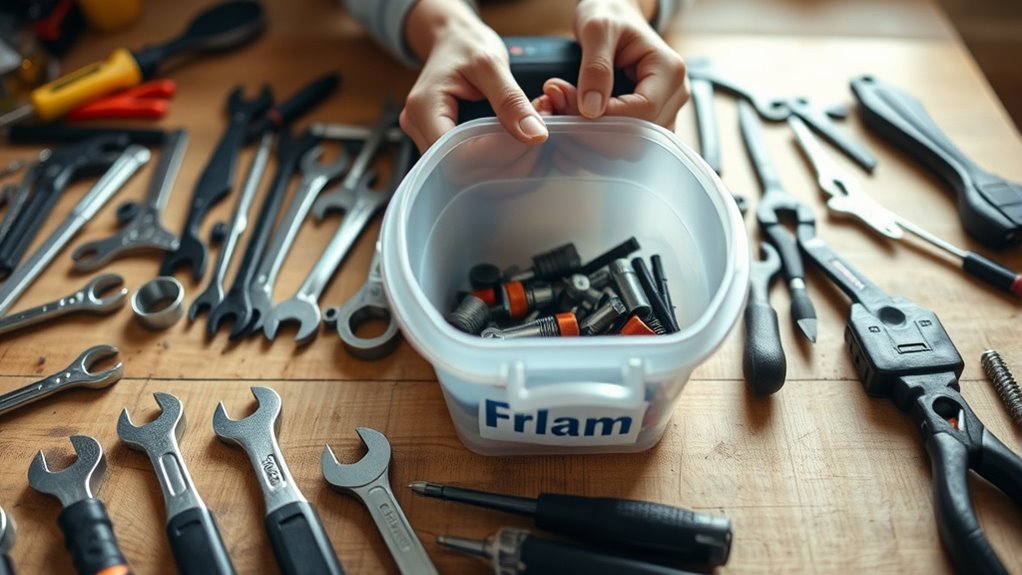
You can save money by borrowing tools from local tool libraries or friends instead of buying new ones. Renting equipment is also a smart option for one-time projects, reducing unnecessary expenses. These approaches help you access the tools you need without stretching your budget.
Local Tool Libraries
Local tool libraries offer a smart way to save money on DIY projects by borrowing or renting tools instead of buying them outright. These libraries provide access to a wide range of tools, often at a fraction of retail prices. Plus, many host community workshops that teach you safe and effective tool use, boosting your skills. To make the most of tool libraries:
- Check your local listings for availability and hours.
- Participate in community workshops to learn new techniques.
- Borrow specialized tools for one-time projects, avoiding unnecessary purchases.
Using tool libraries not only cuts costs but also fosters community connections. Take advantage of these resources to build your skills, save money, and reduce clutter in your garage or workshop.
Peer Tool Sharing
Ever considered borrowing or renting tools instead of buying them outright? Peer tool sharing and community tool exchange programs can save you money and storage space. By tapping into local networks, you avoid unnecessary purchases and get access to high-quality equipment. Check if neighbors, friends, or local groups are willing to share tools for your project. This approach increases efficiency and fosters community connections.
| Tool Type | Borrowing Tips | Cost Saving |
|---|---|---|
| Power Drill | Ask neighbors or friends | No rental fee or purchase needed |
| Lawn Equipment | Join community tool exchanges | Share expensive tools |
| Hand Tools | Use tool libraries | Borrow for short-term projects |
| Ladders | Coordinate with neighbors | Avoid buying for rare use |
| Specialty Tools | Leverage local groups | Save on expensive equipment |
Rental Equipment Options
Renting tools can substantially cut costs and reduce clutter for your DIY projects. Equipment rental offers a practical way to access high-quality tools without the hefty purchase price, making it a smart cost-saving alternative. To maximize benefits, consider these points:
- Identify needed tools—rent only what’s necessary to avoid unnecessary expenses.
- Compare rental options—look for local shops or online platforms with competitive rates.
- Plan for return—return equipment promptly to avoid late fees and extra charges.
Track Expenses and Adjust as You Go

Keeping a close eye on your expenses as you progress is essential to staying within your budget. Regular expense tracking helps you identify where your money is going and prevents overspending. Use a simple spreadsheet or budgeting app to record every purchase related to your project, including tools, materials, and supplies. If you notice costs exceeding your initial estimates, don’t hesitate to make a budget adjustment. Reassessing your spending allows you to find areas where you can cut back or reallocate funds to critical items. Staying flexible and vigilant ensures you don’t run out of money halfway through. By actively tracking expenses and making timely adjustments, you’ll maintain control over your project’s finances and avoid surprises.
Find Deals, Discounts, and Budget-Friendly Shopping Tips

Once you’ve started tracking your expenses, the next step is to find ways to economize on supplies and tools. Look out for seasonal sales, which often offer deep discounts on popular items. Sign up for store newsletters to receive exclusive coupon codes you can use at checkout. Additionally, consider shopping at local hardware outlets or online marketplaces where prices tend to be more competitive. Here are three tips to maximize savings:
- Plan your purchases around seasonal sales to snag discounts on high-priced tools and materials.
- Use coupon codes to get extra savings on already discounted items.
- Compare prices across different stores to ensure you’re getting the best deal for your budget.
Following these strategies helps you stretch your dollars further.
Frequently Asked Questions
How Do I Estimate the Total Project Cost Accurately?
Imagine your project as a puzzle coming together—start by gathering material costs to see each piece clearly. Then, add labor estimates based on the time and effort you’ll invest. Keep a detailed list of supplies and note their prices, adjusting for unexpected expenses. By breaking down each component and estimating carefully, you’ll have a realistic snapshot of total project costs, preventing surprises and ensuring your DIY masterpiece stays on budget.
What Are the Best Ways to Avoid Overspending?
To avoid overspending, practice cost-effective shopping by comparing prices and looking for discounts on tools and materials. Keep a detailed budget tracker to monitor your expenses in real-time, helping you stay within your limits. Set aside a contingency fund for unexpected costs, and prioritize essential items first. By actively managing your budget and making smart purchasing decisions, you guarantee your DIY project remains affordable and stress-free.
How Can I Identify Quality yet Affordable Tools?
Finding quality yet affordable tools is like searching for a hidden gem. You should focus on reputable tool brands known for durability and value. Look for budget shopping options online or at local stores, especially during sales or clearance events. Read reviews to guarantee the tools meet your needs without breaking the bank. Combining brand reputation with smart shopping helps you get the best tools without overspending.
When Should I Decide to Rent Versus Buy Tools?
You should decide to rent tools when the equipment is used infrequently or for a one-time project to save money on tool rental costs. If you plan to use the same tools multiple times or long-term, investing in quality tools makes sense as an equipment investment. Renting allows you to access high-quality tool rental options without cluttering your workspace. Evaluate the project scope and frequency to make the best choice.
How Do I Stay Within My Budget During Unexpected Expenses?
Your budget is your fortress, so guard it fiercely. To handle unexpected expenses, build an emergency fund specifically for your project. Practice contingency planning by setting aside 10-15% of your budget for surprises. This way, you won’t have to compromise on quality or delay progress. Staying disciplined and flexible keeps your project on track, even when surprises threaten to throw you off course.
Conclusion
With your budget in hand and tools ready, you’re the captain steering your DIY ship through a sea of possibilities. Stay vigilant for treasure troves of deals and keep your expenses anchored to your goals. Remember, every dollar saved is a gust of wind filling your sails, propelling your project forward. So, embrace the adventure with confidence—you’re crafting more than just a project; you’re building your own masterpiece, one smart choice at a time.