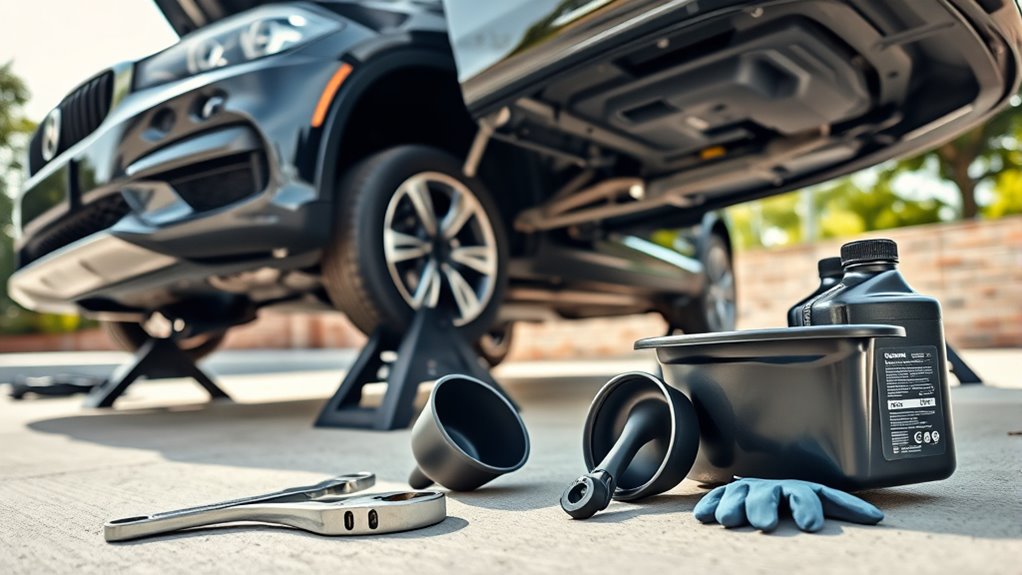

To change your car’s oil at home, gather essential tools like a new filter, motor oil, drain pan, wrench, and funnel. Start by warming up the engine, then park on a level surface, turn off the engine, and drain the old oil into the pan. Remove and replace the filter, pour in fresh oil, and check the level. Properly dispose of the old oil and make certain everything is secure—keep going for detailed tips to simplify the process.
Key Takeaways
- Gather essential tools: oil filter, motor oil, drain pan, wrench, and funnel before starting.
- Warm up the engine and securely lift the vehicle on a level surface.
- Drain old oil by removing the drain plug, then replace it tightly to prevent leaks.
- Remove and replace the oil filter, then add new oil gradually using a funnel.
- Check the oil level with a dipstick, run the engine briefly, and properly dispose of used oil.
Changing your car’s oil at home is a practical way to save money and stay on top of vehicle maintenance. Not only does it cut down on shop fees, but it also gives you a better understanding of your car’s condition. To do this effectively, you’ll need a few essential tools and supplies. First, gather a new oil filter and the correct type of motor oil specified in your owner’s manual. The oil filter is vital because it traps dirt and debris, preventing them from circulating through your engine. Using the right oil ensures your engine runs smoothly and efficiently, so double-check your vehicle’s requirements before heading to the store.
Start by warming up your engine for a few minutes. Warm oil flows more easily, making it easier to drain and ensuring you remove all old oil. Then, park your car on a level surface, engage the parking brake, and turn off the engine. Place a drain pan beneath the oil pan drain plug, which is usually located at the bottom of the engine. Before removing the plug, loosen it with a wrench, and then carefully unscrew it by hand. Allow the old motor oil to drain completely into the pan. Once drained, replace the drain plug tightly to prevent leaks.
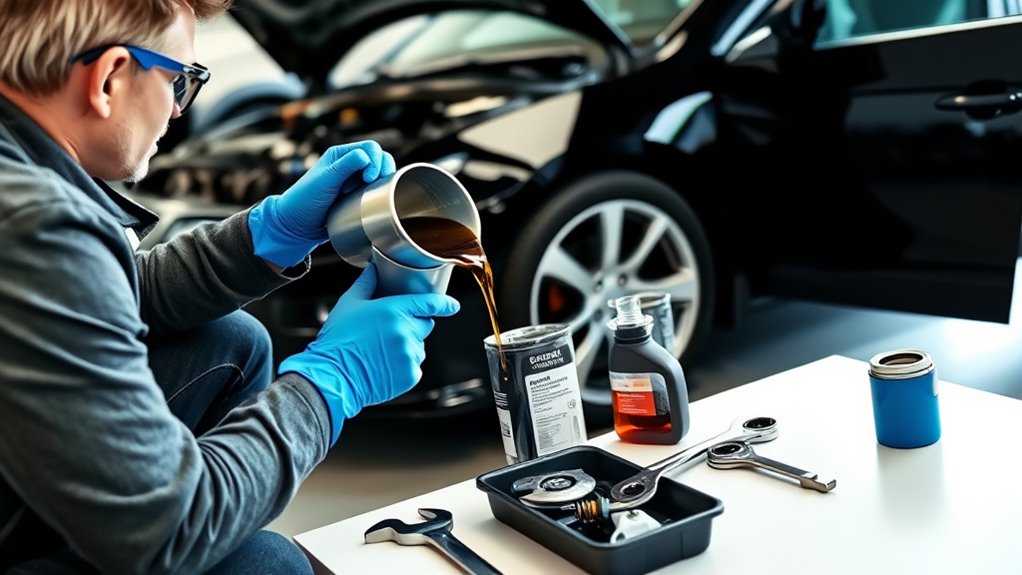
Warm up your engine, then carefully drain the old oil into a pan for a clean oil change.
Additionally, checking your vehicle’s cooling system can help prevent overheating during the oil change process. Next, locate the oil filter. It’s often a cylindrical component attached to the engine block. Use an oil filter wrench to remove the old filter, making sure to have your drain pan underneath to catch any residual oil. Before installing the new oil filter, apply a little fresh motor oil to the gasket of the new filter — this helps create a good seal. Screw it in by hand and tighten it snugly with the wrench, but avoid over-tightening, which can damage the gasket.
Now, open your vehicle’s hood and remove the oil fill cap. Pour in the new motor oil gradually, using a funnel to avoid spills. Check your owner’s manual for the exact quantity needed. After filling, replace the cap securely. Start the engine and let it run for a minute or two, then turn it off and wait a few minutes for the oil to settle. Use the dipstick to verify the oil level, adding more if necessary. Clean up any spills, dispose of the old oil and filter properly at a recycling center, and you’re done. Changing your oil at home isn’t just cost-effective; it’s empowering and straightforward with the right tools and a little attention to detail.
Frequently Asked Questions
How Often Should I Change My Car’s Oil?
You should change your car’s oil every 3,000 to 5,000 miles, but check your owner’s manual for specific oil change intervals. Using the recommended oil types guarantees peak engine performance and longevity. Keep an eye on your oil level and quality regularly, especially if you drive in harsh conditions. Sticking to these intervals and proper oil types helps prevent engine wear and keeps your car running smoothly.
Can I Use Synthetic Oil Instead of Conventional Oil?
Yes, you can use synthetic oil instead of conventional oil. Synthetic advantages include better engine protection, improved performance in extreme temperatures, and longer intervals between oil changes. Unlike conventional differences, which break down faster and may require more frequent replacements, synthetic oils are designed for durability and efficiency. Check your vehicle’s manual to confirm compatibility, and you’ll enjoy smoother engine operation and potentially extend your oil change intervals with synthetic oil.
What Are Signs My Car Needs an Oil Change?
Think of your engine as a heartbeat—when it’s tired, it shows. If your oil turns dark or gritty, it’s a sign you need a change; the color symbolizes fatigue. Smelling burning oil or a strong odor means trouble, like a warning signal. Keep an eye on oil color and smell, and don’t ignore these signs—they’re your car’s way of telling you it needs fresh oil to stay healthy.
Is It Necessary to Replace the Oil Filter?
Yes, replacing the oil filter is necessary because the oil filter significance is vital for preventing debris and contaminants from circulating in your engine. You should replace the filter during every oil change, as part of the filter replacement timing. Failing to do so can cause your engine to work harder and reduce its lifespan. Regularly changing the oil filter ensures your engine stays clean and runs smoothly.
Can I Change My Oil Without Lifting the Car?
Yes, you can change your oil without lifting the car by accessing the oil drain plug and oil pan from underneath or through the engine bay if accessible. Use a wrench to loosen the drain plug, allowing the oil to drain into a container. Make sure the car is on a level surface, and take safety precautions. While lifting makes it easier, it’s possible to do the oil drain and oil pan work without raising your vehicle.
Conclusion
Changing your car’s oil at home might seem intimidating, but it’s easier than you think. With the right tools and a little patience, you can keep your engine running smoothly like a well-oiled machine. Think of it as giving your vehicle a fresh breath of life—your car will thank you with better performance and longevity. So, grab your tools and get to it; your car’s health is worth the effort!