TL;DR
A home-improvement tip describes wrapping railings in aluminum foil before painting nearby walls to help catch drips and reduce cleanup. The method depends on covering the full surface, including undersides and decorative details, and keeping the foil in place until the paint is cured and the work is checked.
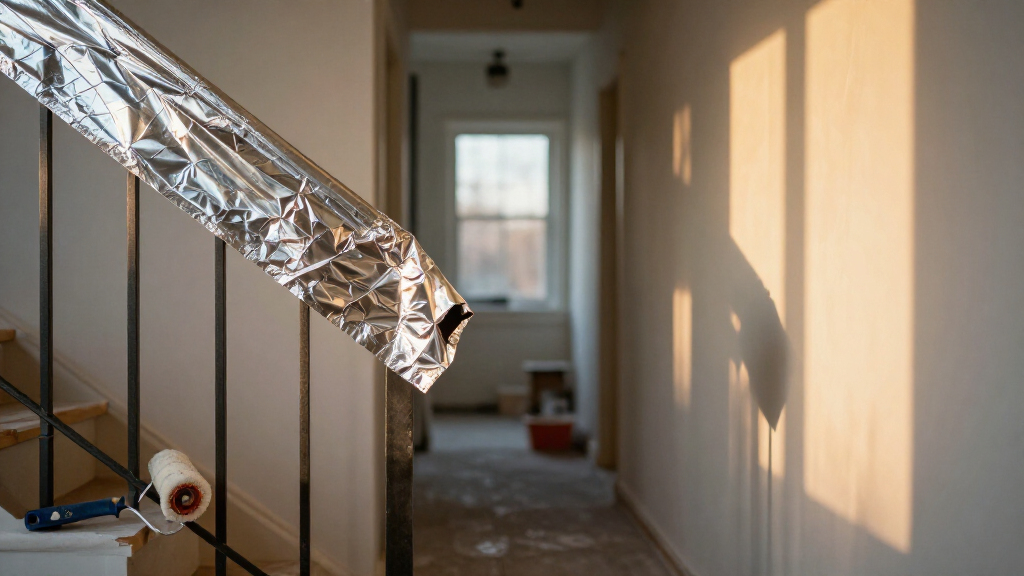
A home-improvement tip recommends wrapping stair railings in aluminum foil before painting nearby walls, offering a way to shield the banister from paint drips without removing it. The advice is aimed at painters working around fixed or detailed railings who want to avoid painstakingly taping every section or taking the handrail apart.

Get business pricing on tools and workshop supplies
- Business-only prices and quantity discounts
- Tax-exempt purchasing
- Multiple users, one account, clear invoices
The method is straightforward: tear off generously sized foil strips and wrap them around the railing, pressing the material closely against its shape. The tip stresses covering the entire rail, including the underside, and overlapping neighboring strips slightly so paint is less likely to reach gaps. Separate pieces can be shaped around decorative parts such as a spiral volute, a rounded rail cap, grooves and other details that may be difficult to clean.
Foil is suggested because it can mold around irregular surfaces and does not absorb paint, according to the published guidance. That may make it quicker to apply than wrapping painter’s tape around a banister. The article also says used strips can be wiped with an old rag and reused for another wall, if they come off cleanly; they can also be stored for a later project.
Once the railing is fully covered, painters can work on the wall without exposing the protected surface to ordinary drips. The guidance advises leaving the foil on until the paint has cured and the painter has checked that no section beneath the rail was missed. When removing it, handle the strips gently and straighten them by hand before reuse or storage.
Protect railings while painting with aluminum foil
Wrap stair railings before painting nearby walls to help catch drips and reduce cleanup. Full coverage and a final check matter.
Why use foil?
The tip offers a temporary way to shield fixed or detailed railings without removing them.
Fits detailed shapes
Foil can be pressed around curves, grooves, caps and decorative parts.
Keep the rail in place
A temporary covering may help avoid taping every detail or removing the handrail.
Wrap the full surface
Shape generous strips closely around the rail and overlap neighboring edges.
Include the underside, joints, caps and decorative grooves.
Close visible gaps and make sure the foil stays in place.
Keep tools from snagging the foil, then check beneath the rail for missed spots.
When to remove it
Let the paint cure according to its product directions before peeling the foil gently.
- Check that the wall and area beneath the rail are covered as intended.
- Wait until the paint has cured.
- Peel gently to avoid transferring wet paint or damaging the finish.
- Reuse or store strips only if clean and intact.
Limits of the tip
Coverage can fail if foil shifts or leaves gaps.
Protecting Detailed Stair Railings
Painting behind a stair railing can be awkward because the handrail and its fittings interrupt access to the wall. Removing the rail may make the surface easier to reach, but it requires tools and the ability to reinstall the hardware securely. A foil covering offers a temporary protective layer for people who prefer to leave the railing in place.
The practical value is mainly about reducing the risk of paint marks and the cleanup that follows, especially on decorative features with grooves or rounded shapes. The advice does not establish that foil is more effective than purpose-made masking products in every situation, or that it will suit every railing finish. Careful coverage and inspection remain necessary; foil that shifts or leaves gaps cannot protect the exposed areas.
Products Worth Considering

Blueair Blue Pure 211i Max Smart Air Purifier for Large Rooms

Philips Hue Play Gradient Light Tube, Large, Black

Shark Navigator Robot Vacuum with 30-Day Self-Empty Base, White (AV2110S)
As an affiliate, we earn on qualifying purchases.
A No-Removal Painting Approach
The tip addresses a familiar trade-off in stairwell painting: painters can try to work carefully around the banister, mask it with tape, or remove it to reach the wall. The first option can make it hard to get a brush into tight angles; removal adds a separate task and may be impractical for someone uncertain about reattaching the handrail. The foil approach is presented as an alternative that keeps the railing in place.
The suggested technique is not limited to stair rails. The same guidance mentions covering a doorknob with foil while painting a door. In either case, the key idea is to shape a temporary barrier around the object and check that its full surface is protected before painting begins. No test results, comparison data or independent assessment of the method are provided.
Limits of the Foil Method
The guidance does not specify how well foil adheres to different railing materials or finishes, how long it can remain in place without shifting, or whether it is suitable for every paint and surface combination. It also gives no measured comparison of time saved versus painter’s tape or other masking materials. The claimed convenience should therefore be treated as a practical tip, not a tested performance finding.
Results may depend on the railing’s shape and condition, how firmly the strips are pressed into place, and whether the painter works in a way that disturbs them. The tip calls for checking coverage and waiting until paint is cured before removal, but does not define a curing time; that depends on the paint product and its instructions.
Check Coverage Before Painting
Before starting, painters following the tip should inspect the entire railing and press down the foil, paying particular attention to the underside, joints, caps and decorative grooves. Overlapping strips can help close visible gaps. Keep paint and tools from snagging the covering, and pause to check that it remains in place while working.
After painting, leave the foil on until the paint has cured according to its product directions, then examine the wall and the area beneath the rail before removing the covering. Peel the foil gently so it does not transfer wet paint or damage the finish. Reuse or store strips only if they remain clean and intact; discard them if they are coated in paint or no longer cover securely.
Key Questions
How do you use aluminum foil to protect a railing while painting?
Tear off wide strips, wrap them around the railing and press them into its shape. Cover the underside and detailed sections, and overlap the edges so gaps are less likely to expose the rail.
Can aluminum foil replace painter’s tape?
The tip presents foil as a possible alternative for wrapping railings, where it can mold around curved or detailed parts. It does not provide test results showing that foil is better than painter’s tape in all circumstances.
When should the foil come off?
Leave it in place until the paint has cured according to the paint product’s directions and you have checked the area for missed spots. Remove the strips gently.
Can used foil strips be reused?
The guidance says they may be wiped with an old rag and reused if they peel off cleanly. Store only strips that remain clean and usable, and do not rely on damaged or paint-covered foil to protect a surface.
Source: hunker.com