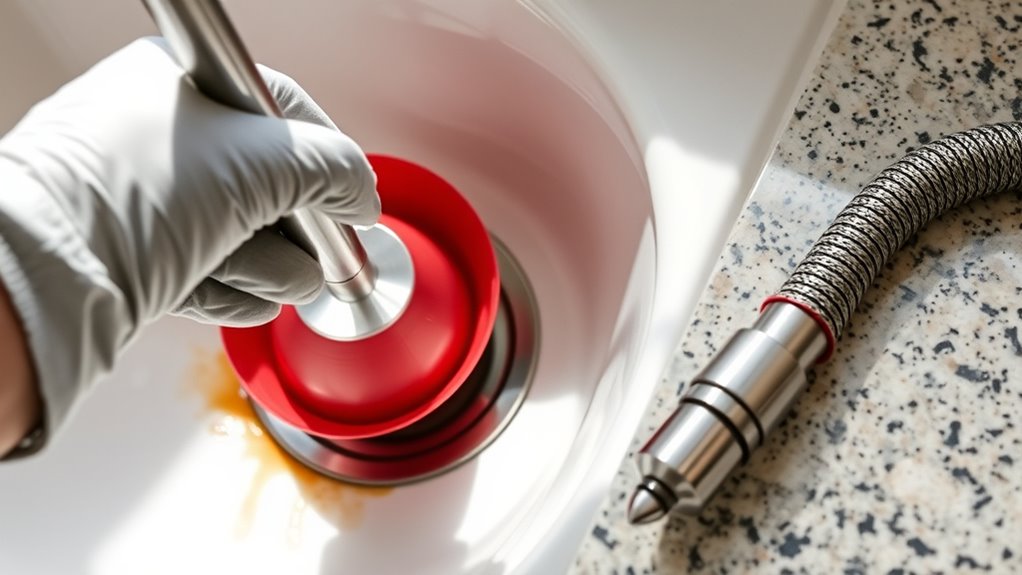

To clear minor clogs, you’ll want a few essential tools. Start with a plunger, making sure to create a good seal and use enough water for pressure. A drain snake or auger helps reach deeper blockages and break them up. Keep some rubber gloves for safety. Chemical drain cleaners can also help dissolve buildup, but use them carefully. For more tips on effective cleaning tools and techniques, keep exploring how to maintain your drains properly.
Key Takeaways
- Use a plunger with a proper seal to dislodge minor clogs effectively.
- Employ a manual drain snake or auger to reach deep and break up blockages.
- Combine hot water flushing with mechanical tools to clear grease and organic buildup.
- Regularly use enzymatic cleaners to maintain drain flow and prevent minor clogs.
- Ensure proper technique and safety measures when operating tools to avoid damage.
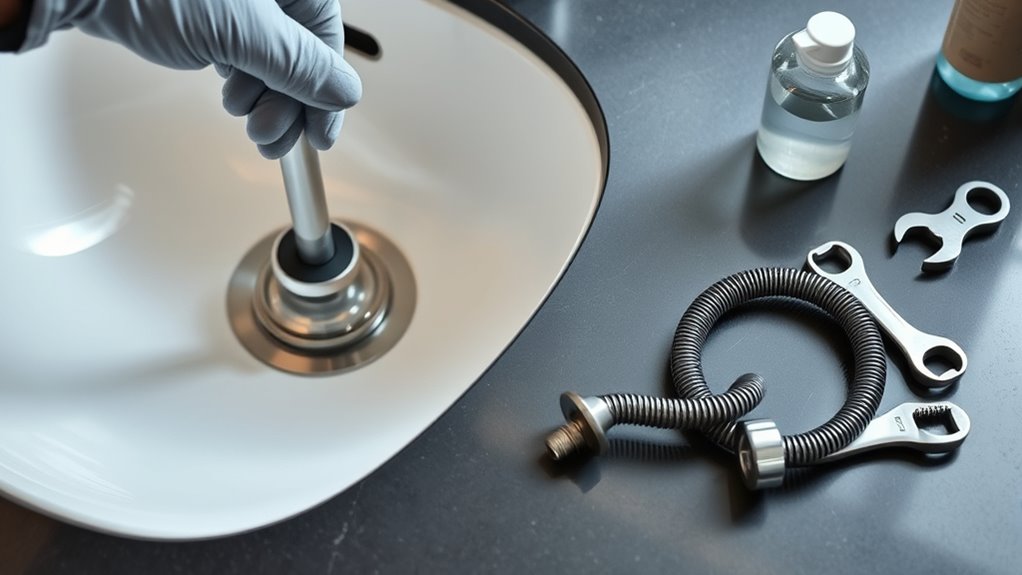
Have you ever wondered what to do when your drain suddenly slows or stops draining altogether? It can be frustrating, but the good news is that most minor clogs can be handled with some simple tools and a little know-how. The first step is understanding that regular plumbing maintenance can prevent many common drain issues, saving you both time and money. One of the easiest ways to keep drains clear is to use drain cleaning chemicals periodically—these products help dissolve build-up, grease, and soap scum that often cause slow drains. However, for minor clogs, chemical cleaners are just one part of the solution; knowing which tools to use can make the job much easier and safer.
Regular maintenance and proper tools keep drains clear and prevent costly repairs.
A plunger is probably the most familiar tool for clearing minor clogs. It creates a strong seal around the drain opening and, with a few vigorous pushes, can loosen or dislodge the blockage. Make sure you use a rubber cup designed for sinks or toilets, depending on the drain you’re working on. For best results, fill the sink with enough water to cover the plunger’s cup, then give it several quick, firm presses. You should see the water start to drain more freely once the clog moves. If a plunger doesn’t do the trick, you might consider a drain snake or auger. These tools are designed to reach deep into pipes and physically break apart or retrieve the clog. Manual drain snakes are affordable and easy to use—just insert the tip into the drain and twist the handle to work the cable through the pipe. When you feel resistance, gently pull or push to break up the blockage.
In addition to mechanical tools, chemical drain cleaning products can help maintain your drains and prevent minor clogs from becoming major problems. Use them cautiously, following the manufacturer’s instructions, and always ensure proper ventilation. These chemicals work by dissolving organic matter that causes slow drainage, but they shouldn’t be overused, as they can sometimes damage pipes or harm the environment. Incorporating regular plumbing maintenance, such as flushing drains with hot water or using enzymatic cleaners periodically, can keep your pipes clear and reduce the need for harsh chemicals.
Furthermore, understanding the types of clogs that commonly occur can help you choose the most effective method for clearing them. Finally, remember that prevention is better than cure. Avoid pouring grease, coffee grounds, or hair down the drain, and use drain guards to catch debris. Combining these habits with the right tools and cleaning chemicals will help you handle minor clogs swiftly and keep your plumbing functioning smoothly. When in doubt, don’t hesitate to call a professional—especially if your clog persists or worsens. Proper maintenance and timely intervention can save you headaches and costly repairs down the line.
Frequently Asked Questions
How Often Should I Check for Drain Clogs?
You should check for drain clogs regularly, ideally once a month, as part of your routine maintenance. Conduct visual inspections to spot any early signs of slow drainage or minor blockages. Regular maintenance helps prevent more serious clogs and keeps your plumbing flowing smoothly. By staying proactive, you can catch potential issues early and avoid costly repairs. So, make visual inspections and routine checks a habit to keep your drains clear.
Can Chemical Drain Cleaners Damage Pipes?
Chemical drain cleaners can indeed damage your pipes. For example, if you use harsh chemicals frequently, the chemical reactions can weaken pipe material over time, leading to deterioration. In some cases, these cleaners may cause more harm than good by corroding older pipes, especially if they’re made of metal. To avoid pipe damage, consider using safer, natural alternatives or mechanical methods for minor clogs.
What Safety Precautions Should I Take?
You should always wear personal protective equipment like gloves and goggles to prevent burns or splashes from chemicals. Make certain of good ventilation by opening windows or turning on exhaust fans, which helps avoid inhaling fumes. Keep a bucket or towels nearby in case of spills. Never mix chemicals, and follow the manufacturer’s instructions carefully. Taking these safety precautions keeps you protected when unclogging drains, preventing accidents and health hazards.
When Should I Call a Professional Plumber?
You should call a professional plumber when plumbing maintenance DIY remedies don’t work, or if you notice persistent clogs, foul odors, or slow drainage. Attempting to fix severe issues yourself can sometimes worsen the problem or cause damage. Trust a plumber to handle complex repairs safely and effectively, especially if you’re unsure about the plumbing system’s condition. Prompt professional help guarantees your plumbing stays in top shape and avoids costly repairs down the line.
Are There Eco-Friendly Drain Cleaning Options?
Did you know that over 60% of household cleaning products contain harmful chemicals? You can opt for eco-friendly drain cleaning options by using biodegradable solutions or natural remedies like baking soda and vinegar. These methods effectively clear minor clogs without harming the environment. Not only are they safe for your plumbing, but they also reduce chemical runoff, making your home and the planet healthier. Give natural remedies a try for a greener approach.
Conclusion
Now that you know the simple, straightforward tools to swiftly solve stubborn stoppages, you’re all set to slay sneaky clogs. With a little know-how and the right equipment, you can confidently combat common clogs anytime. Don’t delay, don’t dither—dive in and demolish those drains with determination. Remember, a little effort now prevents a messy mess later. Keep your tools handy, and you’ll always have your drains flowing freely and fuss-free!