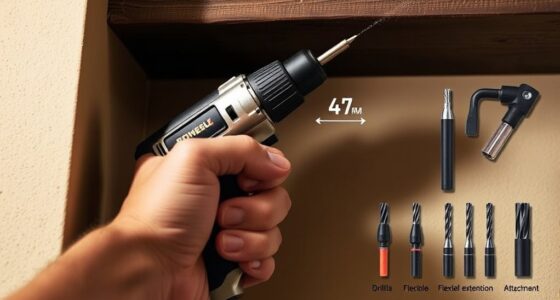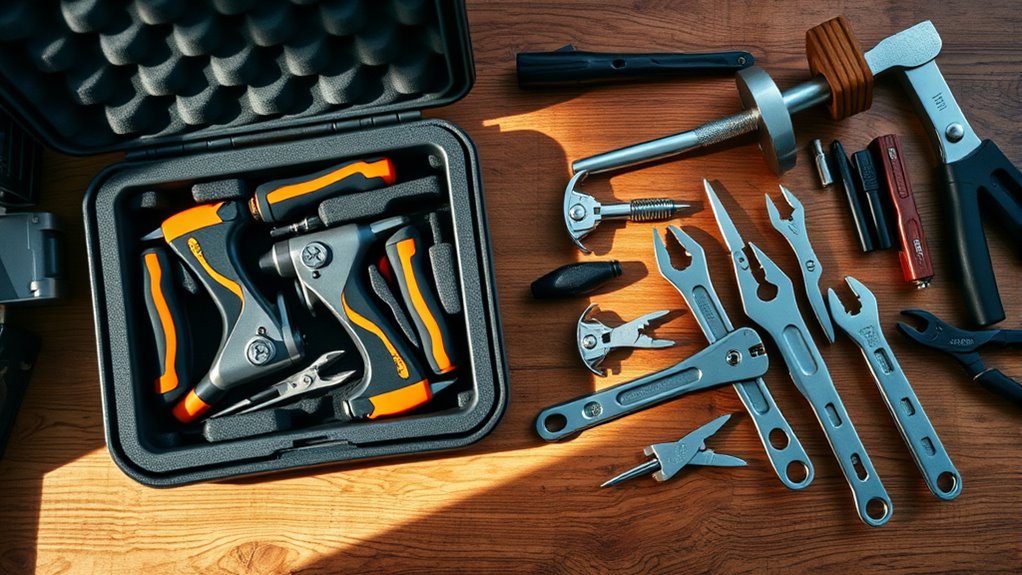

Choosing between combo kits and single tools depends on your project needs, budget, and long-term plans. If you want convenience and cost savings for multiple tasks, a set can be a good investment, especially if you’re a beginner or often switch projects. However, if you need specific tools or want to customize your collection, buying individually might preserve you money and ensure quality. To make the best choice, consider your current and future projects; more tips are coming your way.
Key Takeaways
- Combo kits offer cost savings and convenience for beginners or diverse projects, but may include unnecessary tools.
- Single tools allow targeted purchases for specific needs, often ensuring higher quality and durability.
- Well-known brands in combo kits provide better reliability and warranty support compared to lesser-known options.
- Storage and portability are easier with tool sets that include organized cases, while individual tools require separate solutions.
- Consider long-term project scope and market trends to decide if investing in a set or individual tools is more cost-effective.
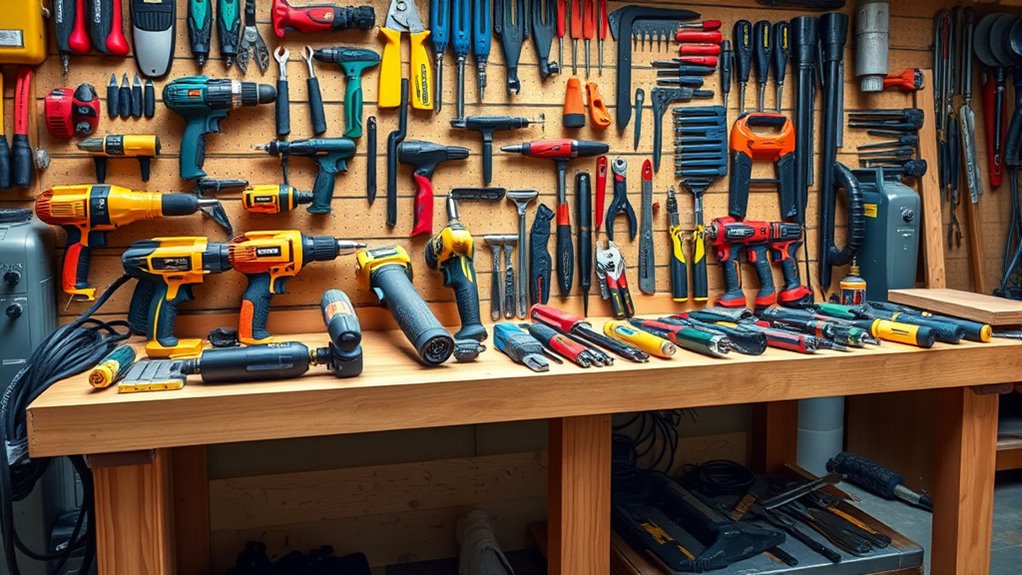
When choosing tools for a project, understanding the differences between using a set of tools and a single tool can make a significant impact on your efficiency and results. One of the first considerations is how the brand reputation influences your decision. Reputable brands often guarantee higher quality, durability, and better performance, which can save you time and money in the long run. If you’re considering a combo kit from a well-known manufacturer, you’re likely to get tools that meet professional standards, backed by customer service and warranties. Conversely, lesser-known brands might offer lower prices but could compromise on build quality or reliability, which might lead to frequent replacements or repairs.
Choosing reputable brands ensures higher quality, durability, and better performance for your projects.
Price comparison plays a vital role in this decision. When you compare the cost of a tool set versus buying individual tools, you often find that combo kits are more economical upfront. Manufacturers typically package multiple tools together at a discounted rate, making it appealing if you need a variety of tools quickly. However, it’s essential to evaluate whether all tools in the kit fit your needs. Sometimes, these sets include items you won’t use often, which could be a waste of money. Conversely, buying single tools allows you to invest in exactly what you need, ensuring each item serves a specific purpose without excess.
Another aspect to consider is adaptability. Buying a set might be beneficial if you’re just starting out or working on multiple projects that require diverse tools. The convenience of having a comprehensive kit reduces the hassle of sourcing individual pieces, especially if you’re unsure what specific tools will be necessary in the future. On the other hand, if you’re experienced and know precisely what tools you need for your projects, purchasing single tools might be more practical and cost-effective. You can select high-quality items tailored to your requirements, which might be missing from a generic set.
Furthermore, think about storage and organization. Tool sets often come with a case or storage system, which helps keep everything organized and portable. This can be advantageous if you frequently move between work sites or prefer having your tools neatly stored. With single tools, you’ll need to find or create your own storage solutions, which might add to the overall cost. Ultimately, your choice hinges on your specific needs, budget, and the importance you place on brand reputation and the quality assurance that comes with buying trusted, reputable brands. Whether opting for a set or individual tools, doing a thorough price comparison and considering your long-term use ensures you make a well-informed, efficient decision.
Additionally, understanding the market trends and how they influence tool availability can help you choose more future-proof options.
Frequently Asked Questions
Are Combo Kits More Cost-Effective Than Buying Individual Tools?
Yes, combo kits are generally more cost-effective than buying individual tools. They offer a better price comparison, giving you multiple tools at a lower total cost. Plus, with brand variety in kits, you can find reputable options that suit your needs while saving money. Buying a set also guarantees compatibility and convenience, making it a smart choice if you need multiple tools for your projects.
How Do the Quality and Durability Compare Between Set Tools and Single Tools?
Think of your tools as trusted allies—set tools often symbolize unity and reliability, but their quality can vary. Generally, single tools from reputable brands tend to be more durable, backed by better warranty coverage. While combo kits offer convenience, their quality might be inconsistent, depending on the brand. You should prioritize brand reputation and warranty coverage to guarantee your tools withstand tough jobs and last over time.
Can Combo Kits Cover All My Specific Project Needs?
Combo kits can cover most of your project needs due to their tool versatility, but they might not include every specialized tool you require. They offer the benefit of brand consistency, ensuring all tools work seamlessly together. If your projects demand diverse or specific tools, consider supplementing a kit with individual tools for complete coverage. This approach balances convenience with customization, helping you stay efficient and well-equipped.
Are There Any Disadvantages to Buying Tools in a Set?
Yes, there are some disadvantages to buying tools in a set. You might face tool compatibility issues if the set doesn’t include exactly what you need, leading to gaps in your toolkit. Additionally, large sets can take up more storage space than necessary, making it less convenient to organize. Plus, you may end up paying for tools you rarely use, which isn’t cost-effective for your specific project needs.
How Should I Choose Between a Combo Kit and Individual Tools?
You should choose based on your tool needs and preferences. If you crave tool customization and want to mix and match brands for ultimate flexibility, singles are your best bet. But if brand consistency and saving time are your goals, a combo kit offers a complete, harmonized set. Consider your projects’ scope—do you need specialized tools or a versatile starter pack? Your decision hinges on balancing variety with unity.
Conclusion
Choosing between a combo kit and single tools is like selecting your trusted team or a lone hero. A set offers the strength of unity, ready for any challenge, symbolizing preparedness. Single tools give you precision, like a sharp arrow aimed right where you need it. Think about your projects and future needs — whether you want the safety net of a full team or the focus of a sniper. Either way, your perfect tool is waiting.