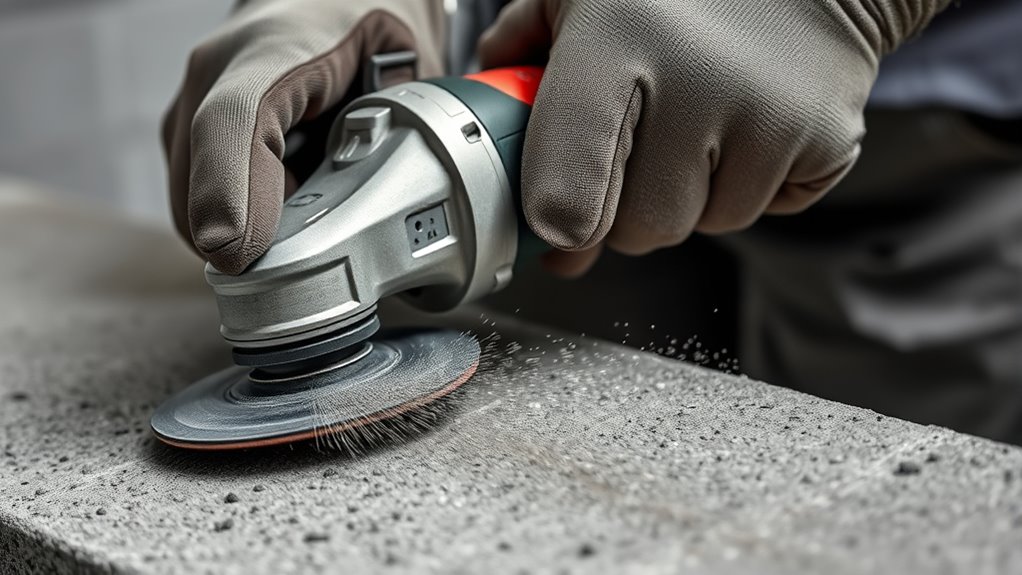

To safely grind concrete with an angle grinder, always wear safety gear like goggles, dust masks, gloves, and hearing protection. Attach a dust shroud or vacuum to contain dust, and guarantee the grinder’s guard and wheel are securely in place. Keep the tool steady, move in smooth motions, and start with the wheel off the surface. Proper setup and cautious technique help prevent injuries and dust hazards, so discover more tips to maximize safety and efficiency.

Get business pricing on tools and workshop supplies
- Business-only prices and quantity discounts
- Tax-exempt purchasing
- Multiple users, one account, clear invoices
Key Takeaways
- Wear appropriate safety gear, including goggles, mask, gloves, hearing protection, and sturdy clothing.
- Attach a dust shroud and vacuum system to contain dust and use a respirator for respiratory safety.
- Inspect the grinder’s guard and ensure the grinding wheel is securely attached and suitable for masonry.
- Start the grinder off the surface, then gradually lower the wheel while maintaining a firm grip and stable stance.
- Keep the grinder moving smoothly in controlled motions, avoiding force or gouging to prevent hazards and achieve quality results.
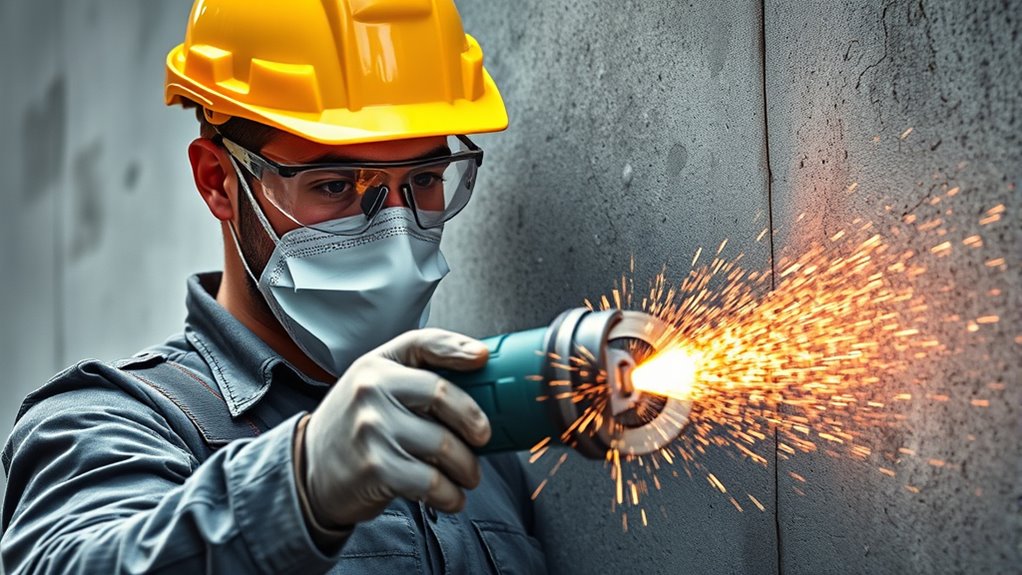
Grinding concrete can improve its appearance and surface quality, but it also comes with safety risks if not done properly. When you’re using an angle grinder on masonry, dust control becomes a top priority. Concrete grinding generates a significant amount of dust that can pose respiratory hazards and create a messy workspace. To keep dust in check, always attach a dust shroud or vacuum system to your grinder. This equipment helps contain the dust right at the source, making cleanup easier and reducing the risk of inhalation. Don’t forget to wear a high-quality dust mask or respirator to protect your lungs from fine particulate matter. Implementing effective dust control measures not only safeguards your health but also keeps your work area cleaner and safer.
Before you start grinding, guarantee you have the proper safety equipment. Safety goggles or a full-face shield are essential to protect your eyes and face from flying debris and dust. Hearing protection, like earplugs or earmuffs, is also vital because angle grinders are loud and prolonged exposure can damage your hearing. Gloves provide a better grip and protect your hands from accidental contact with the grinding wheel or rough surfaces. Consider wearing long sleeves and durable pants to shield your skin from sparks and fragments. Proper footwear, such as steel-toed boots, offers stability and protects your feet from falling objects or accidental drops. Remember, safety gear isn’t optional — it’s your first line of defense against injury. Additionally, understanding high-quality equipment features can significantly impact your safety and efficiency during the grinding process.
Always inspect your equipment before starting. Check that the grinder’s guard is in place and functioning correctly, and make sure the grinding wheel is securely attached and free of cracks. Use the correct type of wheel designed for concrete and masonry to prevent accidents. When you’re ready to begin, hold the grinder firmly with both hands, maintaining a stable stance. Start the tool before contacting the surface, and gradually lower the wheel onto the concrete to avoid kickback. Keep the grinder moving in smooth, controlled motions to prevent gouging or uneven surfaces. Never force the tool; let the grinder do the work. By adhering to these safety practices, especially dust control and proper safety equipment, you minimize hazards and guarantee a safer, more efficient grinding process.
Frequently Asked Questions
Can I Use a Standard Angle Grinder for Concrete?
You can use a standard angle grinder for concrete, but make certain it’s compatible with masonry tasks. Check the angle grinder compatibility by verifying it can handle the abrasive discs needed for concrete surface prep. Using the right grinder and disc prevents damage and ensures safety. Always wear protective gear and follow safety guidelines. With proper equipment, you can effectively grind concrete and achieve a smooth, even surface.
What Are the Best Safety Gear Options for Grinding Concrete?
You should wear proper personal protective equipment, including safety goggles to protect your eyes and hearing protection for loud noise. A dust mask is essential to avoid inhaling harmful concrete dust. Consider using gloves to prevent hand injuries and a long-sleeve shirt for added skin protection. Guarantee your workspace is well-ventilated, and always follow safety guidelines to minimize risks during concrete grinding.
How Do I Prevent Dust From Spreading During Grinding?
Imagine you’re grinding concrete in a small garage. To prevent dust from spreading, set up dust containment barriers like plastic sheeting around your work area. Use ventilation strategies such as portable fans to direct dust away and improve airflow. Connecting a dust extraction system to your angle grinder also captures dust at the source, keeping the environment cleaner and safer while you work.
Is It Necessary to Wet the Concrete Before Grinding?
You don’t always need to wet the concrete before grinding, but moisture control can help reduce dust and debris. Wetting the surface suppresses dust, making cleanup easier and improving visibility. However, verify the concrete isn’t too wet, as excess moisture can cause slipping or damage to your equipment. If you prefer dry grinding, use a dust extraction system to maintain dust suppression and keep the workspace safe.
How Long Does It Take to Grind a Typical Concrete Surface?
It typically takes about 30 minutes to a few hours to grind a standard concrete surface, depending on its size, condition, and your experience. For effective surface preparation, you should plan your time accordingly, ensuring you have the right tools and safety gear. Larger or tougher surfaces may require more time, so pace yourself and work systematically to achieve a smooth, even finish without rushing.
Conclusion
Now that you know how to safely grind concrete with an angle grinder, you’re ready to tackle your project confidently. Remember, proper safety gear and techniques are essential—over 90% of injuries occur when safety precautions are ignored. By following these steps, you can achieve a smooth finish while keeping yourself protected. Stay cautious, work methodically, and enjoy the rewarding results of your hard work. Your concrete surface will look great—and you’ll stay safe doing it.
Fall Picks
fall essentials
As an affiliate, we earn on qualifying purchases.