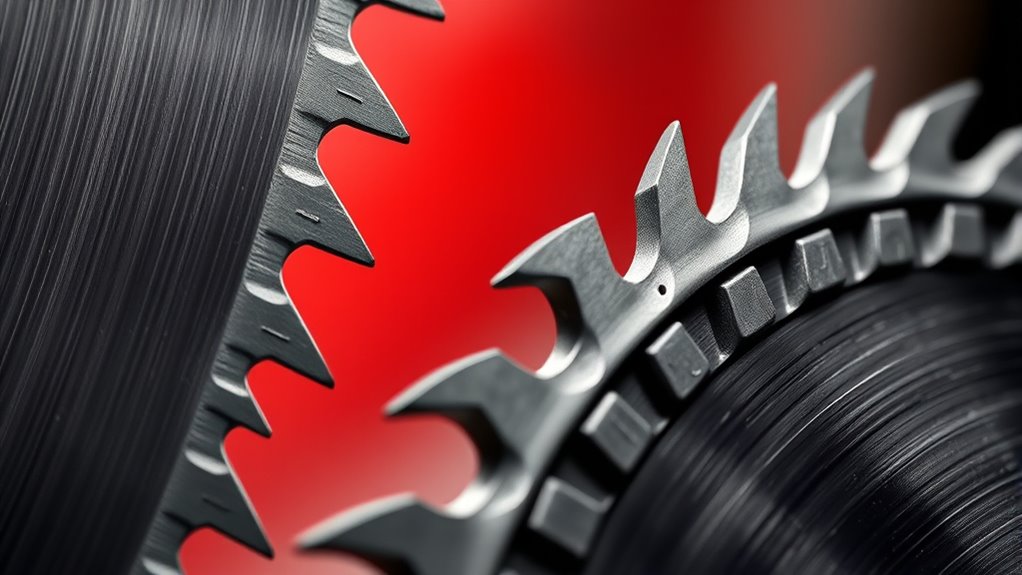

Choosing between fine and coarse teeth on your miter saw blade affects your cut quality and speed. Fine teeth give you smoother, more precise cuts, ideal for finishing work and detailed projects. Coarse teeth cut faster and are better for rough cuts, ripping, or thicker materials. The right choice depends on your project needs, material, and desired finish. Keep exploring to discover how selecting the perfect blade can improve your results even further.

Get business pricing on tools and workshop supplies
- Business-only prices and quantity discounts
- Tax-exempt purchasing
- Multiple users, one account, clear invoices
Key Takeaways
- Fine blades produce smoother, cleaner cuts ideal for finishing and detailed work.
- Coarse blades cut faster and are better suited for rough, ripping, or framing tasks.
- The tooth count determines cut quality: higher for fine cuts, lower for coarse, faster cuts.
- Blade diameter and tooth type together influence cut depth and surface finish.
- Choosing the right combination depends on project needs, balancing speed and precision.
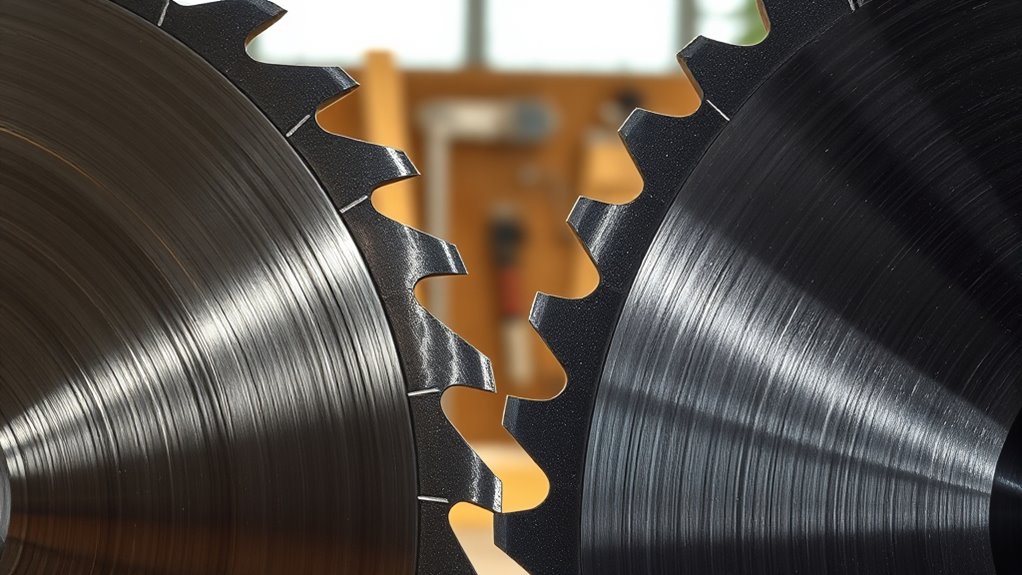
Choosing the right miter saw blade can considerably impact your cutting performance, especially when deciding between fine and coarse teeth. The first thing you should consider is the blade material. Blades are typically made from high-speed steel (HSS), carbide-tipped, or sometimes diamond-tipped for specialized cuts. Carbide-tipped blades are popular because they stay sharp longer and can handle harder materials like hardwoods or laminate. The blade material affects not only durability but also how well the teeth cut through different materials. For fine cuts, a blade with a carbide tip offers precision and smoothness, while for coarse cuts, tougher materials may require more durable blade materials to prevent dulling or chipping.
Another essential factor is blade diameter. Standard miter saw blades usually range from 8 to 12 inches in diameter. The size of the blade determines the maximum cut depth and the overall balance during operation. Larger blades, such as 12-inch models, enable you to make deeper cuts, which is essential for framing or large projects. Smaller blades, like 8-inch ones, are more maneuverable and better suited for detailed or finish work. When choosing between fine and coarse teeth, your blade diameter influences your options. For instance, a larger diameter blade with fine teeth can produce extremely smooth cuts on wide boards, while a smaller blade with coarse teeth is suitable for quick, rough cuts on smaller pieces.
The combination of blade material and diameter also impacts the type of teeth you should select. Fine teeth with a smaller diameter blade are ideal for delicate work that requires precision, such as trim or molding. Conversely, coarse teeth on a larger blade excel at ripping through rough-cut lumber or making quick crosscuts. The key is matching the blade’s characteristics to your specific project needs. For example, if you’re frequently working with hardwoods, investing in a carbide-tipped, larger diameter blade with fine teeth can save you time and produce cleaner results. On the other hand, if your work involves framing or rough cuts, a smaller diameter blade with coarse teeth will give you speed and efficiency.
As an affiliate, we earn on qualifying purchases.
Frequently Asked Questions
Can Fine Blades Cut Through Hardwoods Effectively?
Yes, fine blades can cut through hardwoods effectively, especially when your blade is properly sharpened and your saw is well-aligned. A sharp blade guarantees clean cuts, while correct saw alignment prevents binding and uneven edges. Regular blade sharpening maintains cutting efficiency, and checking your saw’s alignment helps you attain precise, smooth cuts in hardwoods. With these factors in mind, fine blades are a reliable choice for hardwood projects.
Are Coarse Blades Suitable for Detailed Woodworking?
Yes, coarse blades are suitable for detailed woodworking because their abrasive grit and blade thickness allow for faster material removal, making rough cuts more manageable. However, they may leave a rougher finish, so for fine details, a finer blade is preferable. Coarse blades excel at quickly cutting through softer woods or large pieces, but you should switch to fine blades for precision work to achieve smoother, cleaner edges.
How Do Blade Materials Influence Cut Quality?
Blade materials are the engine behind your cut’s quality, shaping every stroke like a skilled artist’s brush. Durable steels like carbide keep their edge longer, ensuring clean, precise cuts without chattering. High-quality materials boost cutting speed and maintain blade integrity, giving you smooth, consistent results. Cheaper metals wear faster, causing rough edges and uneven finishes. So, choosing the right material is like selecting the perfect tool for a masterpiece—you get what you pay for.
What Safety Precautions Are Necessary When Switching Blades?
When switching blades, you should always unplug your saw to guarantee blade safety. Follow proper switch procedures by loosening the arbor nut, carefully removing the old blade, and installing the new one securely. Wear gloves to protect your hands, and double-check that the blade is properly aligned before powering on. These steps help prevent accidents, ensuring safe and effective blade changes every time.
Do Blade Types Impact the Longevity of the Saw?
Think of your saw like a well-oiled machine; using the right blade type can make it last longer. The blade’s durability affects your saw’s longevity, and selecting the right one guarantees better cutting precision. Fine blades tend to wear out faster but offer cleaner cuts, while coarse blades last longer and handle rougher tasks. Using the appropriate blade for each job helps prevent unnecessary wear on your saw, extending its lifespan.
As an affiliate, we earn on qualifying purchases.
Conclusion
So, whether you choose fine or coarse blades, your decision shapes your cuts, your projects, your results. Fine blades provide precision, smoothness, and detail, while coarse blades offer speed, roughness, and power. Your choice affects your work’s quality, your efficiency, your satisfaction. By understanding these differences, you can select the right blade for your task, master your craft, and achieve the perfect cut every time. Your projects depend on it—make your choice wisely.
carbide-tipped miter saw blade 10 inch
As an affiliate, we earn on qualifying purchases.
As an affiliate, we earn on qualifying purchases.
hardwood cutting miter saw blade
As an affiliate, we earn on qualifying purchases.
As an affiliate, we earn on qualifying purchases.
Fall yard work Picks
leaf blowers
As an affiliate, we earn on qualifying purchases.