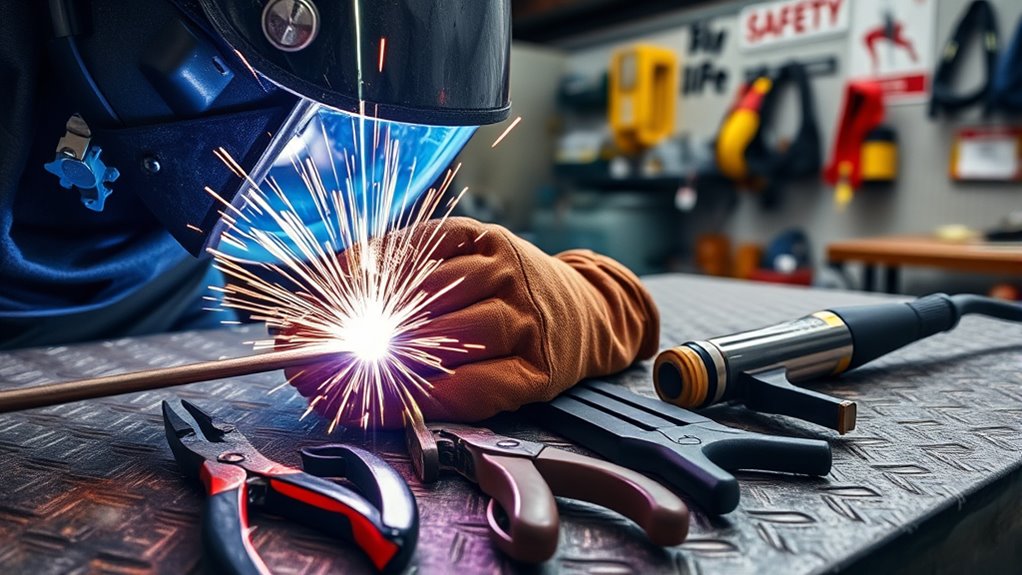

To start welding, you need essential tools like a welding machine, safety gear such as a helmet, gloves, and protective clothing. Always prioritize safety by working in a well-ventilated area, avoiding damp environments, and keeping flammable materials away. Proper setup and maintenance of your equipment are vital for good results. Knowing these basics sets a strong foundation, and exploring further will help you develop your skills and confidence in welding.
Get ready for Prime Big Deal Days — try Prime free
Exclusive member deals on October 6–7, plus fast free delivery. Cancel anytime.
As an affiliate, we earn on qualifying purchases.
Key Takeaways
- Familiarize yourself with essential welding tools like MIG, TIG, and stick welders, and understand their specific applications.
- Always wear protective gear such as a welding helmet, gloves, long sleeves, and boots to ensure safety.
- Maintain good ventilation and keep the workspace free of flammable materials to avoid inhaling fumes and fire hazards.
- Regularly check and maintain your equipment, setting appropriate voltage and wire feed speeds for safe, quality welds.
- Practice on scrap metal to develop skills, improve technique, and build confidence before working on actual projects.
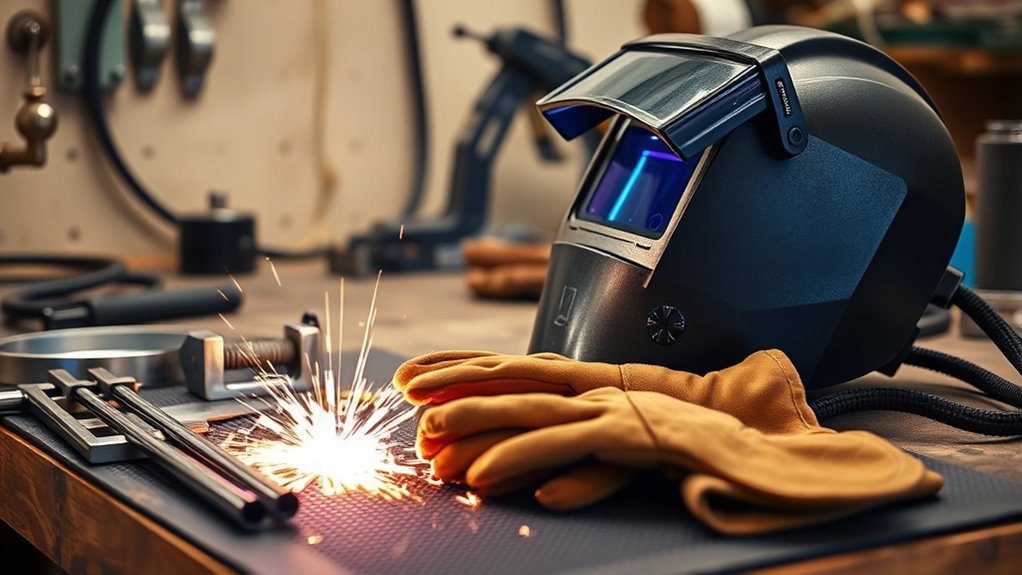
Have you ever wondered how metal parts come together to create everything from bridges to cars? The secret lies in welding—an indispensable process that joins metals securely. As a beginner, understanding welding techniques is essential. Different methods like MIG, TIG, and stick welding each have their own advantages and applications. MIG welding is user-friendly and quick, making it ideal for beginners, while TIG welding offers precision for intricate work. Stick welding, on the other hand, is versatile and effective for outdoor projects. Learning these techniques helps you choose the right method for your project, guaranteeing strong, durable joints.
Master welding techniques like MIG, TIG, and stick for strong, durable metal joints.
However, as you start practicing, it’s common to make mistakes. Common welding mistakes include poor joint preparation, improper settings on your welding machine, or incorrect welding angles. For example, neglecting to clean the metal surface before welding can lead to weak spots or porosity in the weld. Similarly, using the wrong amperage or travel speed can cause issues like excessive spatter or weak welds that easily crack. Watching out for these common errors saves you time and material, and helps produce cleaner, stronger welds. It’s a good idea to practice on scrap metal first and always double-check your settings before starting a project.
Safety should be your top priority when welding. Always wear the right protective gear, including a welding helmet with a proper shade, gloves, long sleeves, and sturdy boots. The intense light and heat produced during welding can cause serious eye damage and burns. Good ventilation is also essential to avoid inhaling harmful fumes. Keep your workspace clean and free of flammable materials, and never weld in damp or poorly ventilated areas. Remember, safety equipment and precautions aren’t just recommendations—they’re lifesavers. Taking these steps not only protects you but also ensures you can work comfortably and confidently.
In addition to safety, understanding your tools is indispensable. Familiarize yourself with your welding machine’s controls, and regularly maintain your equipment to prevent malfunctions. Properly setting your voltage and wire feed speed, especially when working with MIG welders, can make a big difference in your results. Practice consistently, and don’t rush the learning process. Welding is a skill that improves with time and experience. Developing a good understanding of welding techniques and how to set up your equipment properly will greatly enhance your results. By mastering techniques, avoiding common mistakes, and prioritizing safety, you’re setting yourself up for success in your welding journey. Whether you’re fixing a broken metal gate or creating artistic sculptures, these fundamentals will help you build confidence and produce quality welds every time.
welding helmet with auto darkening
As an affiliate, we earn on qualifying purchases.
As an affiliate, we earn on qualifying purchases.
Frequently Asked Questions
What Types of Welding Are Easiest for Beginners to Learn?
You’ll find MIG welding the easiest for beginners, as it’s a beginner-friendly method that offers straightforward welding techniques. Its automatic feed system makes it less challenging to control, allowing you to focus on perfecting your welds. TIG welding, while more precise, requires more skill and patience but can be learned with practice. Stick welding is versatile but might be harder initially. Start with MIG for a smoother learning curve.
How Do I Choose the Right Welding Helmet?
You should choose a welding helmet that offers reliable protection and suits your needs. Auto darkening helmets are ideal because they adjust quickly, providing clear visibility and reducing eye strain. Passive helmets, with fixed lenses, are simpler but less versatile. Consider comfort, budget, and the types of welding you’ll do. Ultimately, pick a helmet that keeps you safe and gives you confidence to learn and grow in your welding skills.
What Are Common Mistakes New Welders Make?
You often make welding mistakes like rushing, neglecting safety gear, or not practicing enough, which are common beginner errors. You might also forget to prepare your workspace or choose incorrect settings. To improve, take your time, double-check your equipment, and follow safety tips carefully. These small adjustments help you avoid costly errors and build confidence, making your welding projects safer and more successful.
How Much Does Basic Welding Equipment Typically Cost?
You might be surprised, but basic welding equipment can cost anywhere from $200 to over $1,000. Don’t forget to compare costs between different equipment brands and models to find the best deal. While some budget options seem tempting, investing in reliable gear guarantees safety and quality. So, be prepared to spend a bit more upfront—after all, cheap equipment often isn’t worth the risk.
Are There Specific Safety Regulations for Home Welding?
Yes, there are specific home welding regulations you should follow to ensure safety compliance. You need to check local building codes and zoning laws, as they often set rules for welding in residential areas. Make sure your workspace is well-ventilated, fire-resistant, and equipped with proper protective gear. Following these regulations helps prevent accidents, maintain safety standards, and keeps your welding activities legal and safe at home.
As an affiliate, we earn on qualifying purchases.
Conclusion
Now that you’re familiar with the essential tools and safety tips, you’re ready to start your welding journey. Remember, safety always comes first — don’t cut corners or rush in. With steady hands and the right precautions, you’ll find that practice makes perfect. Keep your eyes on the prize and don’t let setbacks get you down. Stick to these basics, and you’ll be welding like a pro before you know it.
As an affiliate, we earn on qualifying purchases.
As an affiliate, we earn on qualifying purchases.
Fall Picks
fall essentials
As an affiliate, we earn on qualifying purchases.