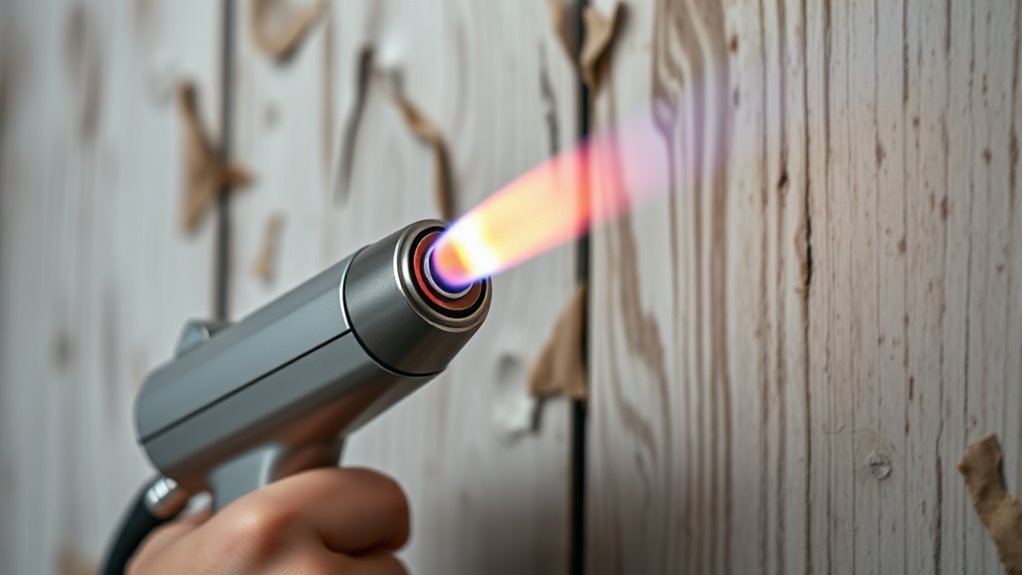
When using a heat gun for paint removal and other tasks, start with the lowest temperature setting and keep the gun moving steadily to avoid damaging surfaces or causing fires. Maintain a safe distance of 1-2 inches from the material and wear safety glasses and gloves for protection. Work in a well-ventilated area, especially when fumes are involved. Proper setup and safety precautions will help you complete your project efficiently—stay tuned for detailed tips and techniques.
Key Takeaways
- Use the lowest temperature setting initially and gradually increase to prevent surface damage.
- Keep the heat gun moving steadily and maintain a 1-2 inch distance from the surface.
- Work in a well-ventilated area and wear safety glasses and gloves for protection.
- Always read manufacturer instructions for specific surfaces and materials.
- Turn off and cool the heat gun completely before storage to ensure safety and longevity.
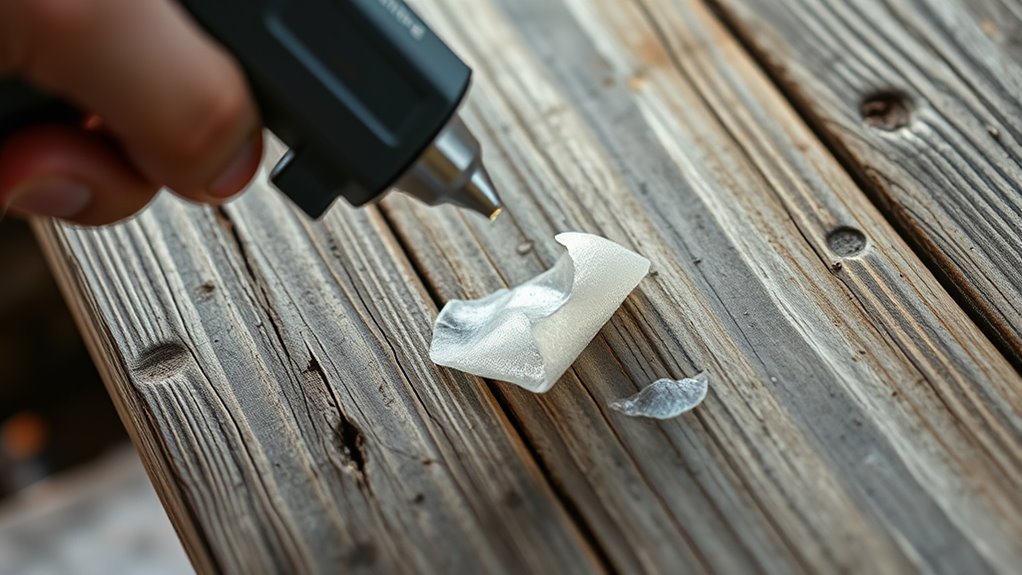
Have you ever wondered how to effectively use a heat gun for your DIY projects? If so, understanding the importance of safety precautions and the different heat gun types is essential before you start. A heat gun can be a versatile tool, perfect for tasks like paint removal, bending plastics, or thawing pipes, but mishandling it can lead to accidents or damage. First, familiarize yourself with the various heat gun types—hot air tools that range from basic models to advanced, variable-temperature units. Basic models are generally suitable for light tasks and are more affordable, while higher-end models offer adjustable temperature controls, which give you better precision and safety for delicate work. Knowing which type suits your project helps you operate it safely and efficiently.
When it comes to safety precautions, always work in a well-ventilated area, especially when removing paint or working with materials that emit fumes when heated. Wear safety glasses to shield your eyes from hot debris or splatters, and gloves to protect your hands from burns. Keep a fire extinguisher nearby, just in case, because the high temperatures can ignite combustible materials. Never point the heat gun at yourself or others, and avoid using it near flammable liquids or gases. Be cautious about the surface you’re working on; heat can cause surfaces to warp or ignite if left in one spot too long. Always keep the heat gun moving steadily to distribute heat evenly and prevent overheating. Additionally, understanding safety guidelines and how to recognize signs of overheating can significantly reduce risks during use.
Before you plug in your heat gun, inspect the cord and plug for any damage. Make sure your work area is clear of clutter that could catch fire. Start with the lowest temperature setting, especially if you’re new to using a heat gun, and gradually increase as needed. Keep the nozzle at a safe distance—usually about 1 to 2 inches from the surface—to avoid scorching or damaging the material. Remember, different heat gun types may have specific instructions for safe operation, so always read the manufacturer’s guidelines. When finished, turn off the device and allow it to cool completely before storing. Proper handling and awareness of safety precautions are key to making the most of your heat gun’s capabilities while avoiding accidents.
Frequently Asked Questions
Can a Heat Gun Be Used on Plastic Surfaces Safely?
Yes, you can use a heat gun on plastic surfaces safely if you control the heat. Keep the heat gun at a safe distance to prevent plastic deformation caused by excessive heat, and guarantee even heat distribution to avoid hot spots that could melt or warp the plastic. Use a lower temperature setting and move the gun constantly for best results, protecting the surface from damage.
What Safety Gear Is Recommended When Using a Heat Gun?
Using a heat gun is like walking a tightrope—you need the right safety gear. Always wear personal protective equipment such as heat-resistant gloves, safety goggles, and a mask to protect your skin, eyes, and lungs. Make certain good workspace ventilation to disperse fumes and prevent buildup. This combo keeps you safe while working efficiently, reducing risks of burns, inhalation, or accidents. Prioritize your safety for successful, worry-free projects.
How Do I Prevent Paint From Bubbling Excessively?
To prevent paint bubbling excessively, focus on proper surface preparation and control heat application. Make certain the surface is clean, dry, and free of grease or old loose paint. Keep the heat gun moving constantly to avoid overheating spots, which causes bubbling. Use a moderate temperature setting, and don’t stay too long in one area. This approach helps you minimize paint bubbling and achieve a smooth, professional finish.
What Temperature Settings Are Best for Different Materials?
For different materials, you should adjust the heat gun’s temperature control accordingly. For wood, set it around 300-350°F to avoid damage, while plastics usually require lower settings, around 200-300°F to prevent warping. Metal surfaces can handle higher temperatures, up to 600°F, but always consider material compatibility. Start with a lower setting and gradually increase to prevent overheating or damage, ensuring safe and effective results.
Can a Heat Gun Be Used for Soldering or Electrical Work?
You shouldn’t use a heat gun for soldering or electrical work because it can cause damage and pose safety risks. I once saw a DIYer accidentally melt wiring insulation, highlighting heat gun cautions. While heat guns are great for paint removal, they lack the precision needed for soldering. Always prioritize electrical safety, use the right tools, and avoid applying high heat near sensitive components.
Conclusion
Now that you know how to use a heat gun safely and effectively, you’re ready to tackle projects like a pro. Think of it like a chef wielding a torch—controlled, precise, and powerful. I once watched a DIYer effortlessly strip old paint from furniture, transforming it in minutes. With patience and care, your heat gun becomes your most versatile tool, turning formidable tasks into satisfying victories. Happy projects!