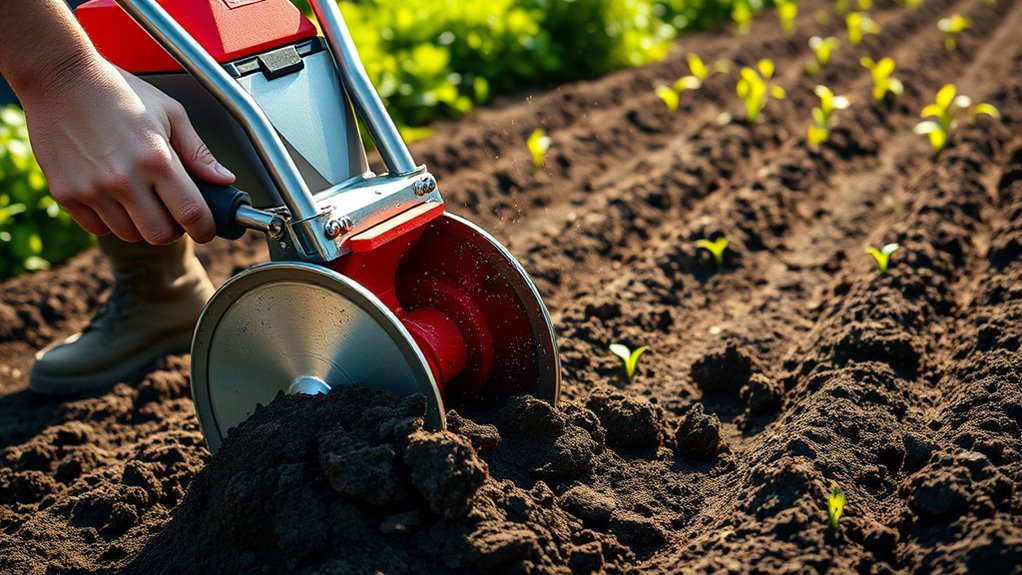

Using a tiller or cultivator makes garden prep quick and easy. It helps loosen tough, compacted soil, improves aeration, and creates a healthy environment for your plants. It also disrupts weed growth, saving you time later. Adjust the depth for your specific tasks and move steadily over your bed for even results. Proper use and moisture management guarantee the best outcome. Keep going to discover tips that make your tilling more effective.

Get business pricing on tools and workshop supplies
- Business-only prices and quantity discounts
- Tax-exempt purchasing
- Multiple users, one account, clear invoices
Key Takeaways
- A tiller simplifies garden bed prep by breaking up compacted soil and improving aeration for healthier plant growth.
- It effectively controls weeds early by uprooting or burying weed seeds before they sprout.
- Adjust tiller depth based on planting needs, such as shallow for seeds or deeper for larger plants.
- Clear debris and stones beforehand to prevent blade damage and ensure even soil loosening.
- Proper soil moisture and steady movement with overlapping passes optimize tilling efficiency and soil health.
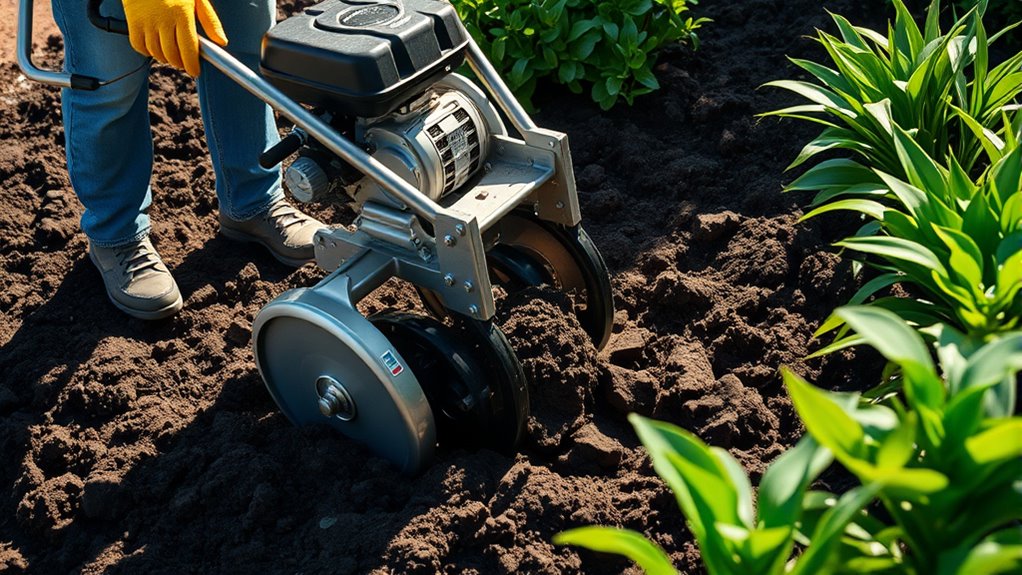
A tiller or cultivator can make preparing your garden bed much easier, especially if you’re working with tough or compacted soil. These power tools are designed to break up hardened earth, making it more manageable to work with and creating a healthier environment for your plants. One of the key benefits of using a tiller is improved soil aeration. When soil is compacted, air cannot circulate properly, which can hinder root growth and reduce nutrient uptake. By tilling, you loosen the soil, allowing air, water, and nutrients to penetrate more effectively. This process encourages strong root development and overall plant health, giving your garden a solid foundation from the start.
In addition to enhancing soil aeration, a tiller also plays an essential role in weed control. Weeds often thrive in compacted or undisturbed soil, and using a tiller disrupts their growth by uprooting or burying weed seeds before they sprout. Regular tilling can considerably reduce weed populations, saving you time and effort later on. Just be sure to till carefully; over-tilling can bring dormant weed seeds to the surface, where they can quickly germinate, so it’s best to till at the right time and depth for your garden’s needs.
Using a tiller is straightforward, but a few tips can help you get the most out of it. Before you start, clear the area of debris and large stones that could damage the blades. Adjust the tiller’s depth to match your planting plans—shallow for seedbeds and deeper for preparing soil for larger plants. As you work, move steadily across the bed, overlapping passes to ensure even soil loosening. Pay attention to the soil’s moisture level; overly wet soil can clump and make tilling difficult, while dry soil may produce dust and reduce effectiveness. Water the area lightly if needed, and wait until the soil is just moist enough for easy tilling.
A power tiller or cultivator not only simplifies garden prep but enhances soil health and reduces weed problems. It saves you physical effort and time, letting you focus more on planting and nurturing your garden. Proper use of this tool promotes better soil aeration, which benefits root growth, and helps control weeds early in the season, giving your garden a strong start. With a little practice, you’ll find that a tiller becomes an indispensable part of your gardening routine, turning tough soil into a fertile, weed-free bed ready for planting.
As an affiliate, we earn on qualifying purchases.
Frequently Asked Questions
What Safety Gear Should I Wear When Operating a Tiller?
When operating a tiller, you should wear protective clothing like sturdy gloves, long sleeves, and pants to shield your skin. Safety glasses are essential to protect your eyes from flying debris, and ear protection can prevent hearing damage. Make sure your footwear is sturdy and closed-toe. Wearing the right safety gear helps prevent injuries and keeps you safe while working in the garden.
How Deep Can a Typical Tiller Dig Into the Soil?
A typical tiller can dig about 6 to 8 inches deep, depending on its depth capacity and soil penetration ability. You can often adjust the tiller’s tilling depth to suit your needs, ensuring proper soil preparation. Keep in mind that softer soils allow for deeper penetration, while rocky or compacted soils may limit how deep your tiller can effectively work. Always follow manufacturer guidelines for ideal results.
Can a Tiller Be Used in Rocky or Hard Soil?
Sure, your tiller can handle rocky or hard soil, but don’t expect it to turn into a smooth dance partner. Rocky soil challenges even the toughest tillers, making soil preparation techniques like removing large stones or loosening soil beforehand essential. Use a heavy-duty tiller designed for tough terrain, or consider breaking up the ground with a pickaxe first. Otherwise, you’ll be fighting the landscape more than cultivating it.
How Do I Maintain and Store My Tiller Properly?
To maintain your tiller, regularly check and change the oil, clean the tines, and inspect for any damage. Always drain fuel before storing to prevent corrosion. For storage tips, keep it in a dry, sheltered area, and cover it with a protective tarp if needed. Store it upright to avoid fuel leaks and ensure it’s fully cooled down. Proper tiller maintenance and storage prolong its life and keep it ready for next season.
Is It Suitable for Use in Small or Raised Garden Beds?
This tiller is perfect for small or raised garden beds, transforming what feels like an impossible task into a breeze. Its compact size makes it ideal for tight spaces, allowing you to easily maneuver and prep your soil. Raised bed suitability is its strength, as it reaches into corners and narrow areas without damaging surrounding plants. You’ll find it’s a versatile tool that makes gardening in small spaces effortless and efficient.
garden cultivator with adjustable depth
As an affiliate, we earn on qualifying purchases.
As an affiliate, we earn on qualifying purchases.
Conclusion
Using a tiller or cultivator makes garden prep quicker and less labor-intensive. Did you know that using power tools can cut your planting time in half compared to manual methods? Whether you’re preparing a small vegetable bed or a large flower garden, these tools help you work efficiently and effectively. With the right equipment, you’ll enjoy a more productive gardening season and less fatigue—so go ahead, give it a try and see the difference for yourself!
As an affiliate, we earn on qualifying purchases.
As an affiliate, we earn on qualifying purchases.
Fall Picks
fall essentials
As an affiliate, we earn on qualifying purchases.