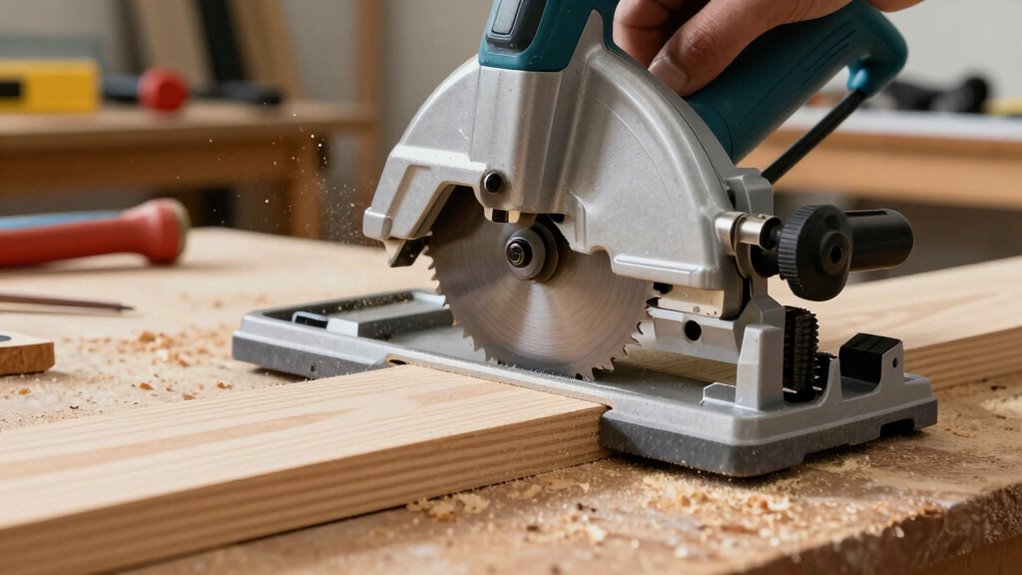
To make cleaner crosscuts with a miter saw, start by checking and aligning the blade properly using an alignment gauge or square, and make certain it’s perpendicular to the table. Keep your blade sharp and clean, and regularly maintain your saw’s components. Use an effective dust collection system to keep the workspace clear, which helps prevent splintering and improves visibility. If you want to learn more tips for achieving perfect cuts, keep going for detailed guidance.

Get tools and workshop supplies delivered free — and shop member deals
- Fast, free delivery on millions of items
- Access to Prime Big Deal Days deals on October 6–7
- Prime Video, Amazon Music and more included
Key Takeaways
- Regularly verify and adjust blade alignment using a square or alignment gauge for precise cuts.
- Maintain a clean, secure dust collection system to improve visibility and prevent debris interference.
- Use high-quality blades and clean them regularly to ensure smooth, splinter-free crosscuts.
- Calibrate miter and bevel angles before each project for consistent, accurate results.
- Prioritize safety by unplugging the saw during adjustments and inspecting components regularly.
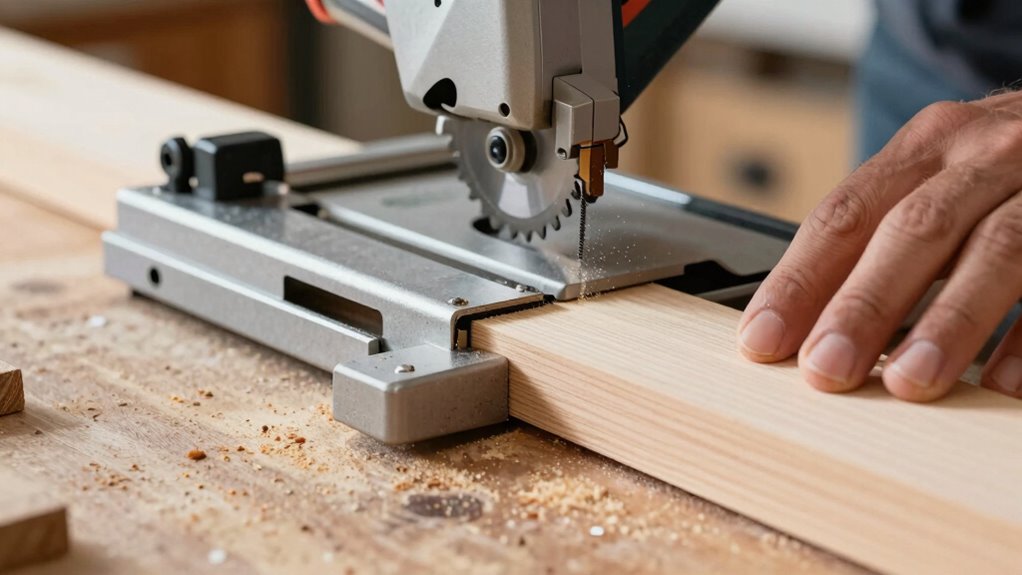
Achieving clean crosscuts with a miter saw is essential for professional-looking projects, and it all starts with proper setup and technique. The first step is verifying your saw’s blade alignment is precise. A misaligned blade can cause uneven cuts, splintering, or binding, which ruins the finish and wastes material. To check blade alignment, unplug your saw, then remove the blade guard and examine the blade’s position relative to the miter slot. Many saws have an alignment gauge or a simple square that helps you verify if the blade is perpendicular to the table. If it’s off, consult your saw’s manual for adjustment procedures, which often involve loosening a few bolts and realigning the blade. Taking the time to guarantee perfect blade alignment makes a significant difference in cut quality and safety. Regularly inspecting your saw’s alignment and ensuring it’s calibrated correctly is also a good practice to maintain consistent results.
Next, focus on dust collection. Proper dust management isn’t just about keeping your workspace tidy; it also influences cut quality. Excess dust and debris can cause the workpiece to shift or lead to small splinters that ruin the clean look of your crosscuts. Use a dust collection system compatible with your saw, whether it’s a built-in port or an external vacuum. Attach the hose securely, and turn it on before making your cut. This keeps the cutting area clear of dust, giving you a better view of your line and ensuring the saw’s components stay clean. Better dust collection also prevents buildup that could interfere with the saw’s mechanisms, maintaining consistent operation and cut accuracy over time. Proper dust extraction is an important safety and performance consideration for achieving optimal results. Additionally, using a quality blade can significantly improve the smoothness of your cuts. Regular maintenance, including checking for debris buildup, helps sustain the saw’s precision and prolongs its lifespan. Ensuring that your saw is well-maintained and free of obstructions can also prevent cutting errors and improve overall efficiency. Keeping your blades and components clean and well-adjusted is a vital part of tool maintenance.
As an affiliate, we earn on qualifying purchases.
Frequently Asked Questions
What Safety Gear Should I Wear When Using a Miter Saw?
When using a miter saw, you should wear personal protective equipment like safety glasses or goggles to protect your eyes from debris. Hearing protection is also important to prevent hearing loss. Wear a dust mask if cutting materials that produce dust. Follow saw safety tips by keeping your hands clear of the blade and wearing tight-fitting clothing. These precautions help keep you safe during every cut, reducing the risk of injury.
How Do I Maintain and Calibrate My Miter Saw?
To maintain and calibrate your miter saw, start by checking blade alignment regularly. Use calibration tools like a square and a level to make certain the blade is perpendicular to the table. Adjust the saw’s settings as needed, tightening or loosening screws to fine-tune. Regular calibration guarantees precise cuts and prolongs your saw’s lifespan, so make it part of your routine maintenance schedule.
Can I Cut Materials Other Than Wood With a Miter Saw?
Sure, you can cut materials other than wood with a miter saw—if you enjoy the thrill of experimenting with alternative materials and unconventional cutting techniques. Just remember, not all materials are created equal; some may require special blades or adjustments. Metal, plastic, and even certain composites can be sliced through, but always prioritize safety, check manufacturer guidelines, and use appropriate blades to avoid damaging your saw or risking injury.
What Is the Best Type of Blade for Clean Crosscuts?
The best blade type for clean crosscuts is a fine-tooth, high-quality carbide-tipped blade. These blades are designed for smooth cuts and minimal tear-out. Use proper cutting techniques by securing your material firmly and making slow, steady passes. Avoid forcing the saw, and make sure the blade is sharp and clean. This combination helps achieve cleaner, more precise crosscuts with less splintering and a professional finish.
How Do I Prevent Tear-Out on Delicate or Veneered Surfaces?
To prevent tear-out on delicate or veneered surfaces, you should start by applying protective tape along the cut line. This helps minimize splintering. Use a high-quality blade, which offers a cleaner, smoother cut. Additionally, backing the material with scrap wood can provide extra support. Take your time, make slow, steady cuts, and guarantee your saw is properly adjusted. These steps help you achieve a pristine finish.
dust collection system for miter saw
As an affiliate, we earn on qualifying purchases.
As an affiliate, we earn on qualifying purchases.
Conclusion
By following these tips, you’ll make cleaner crosscuts with your miter saw like a seasoned carpenter. Remember, patience and proper technique are your best allies—think of it as mastering the art of the perfect slice in a world where even a knight’s sword needs a steady hand. Keep your blade sharp and your workpiece steady, and you’ll be cutting with the precision of a master, even if you’re wielding a tool from the future!
high quality crosscut saw blades
As an affiliate, we earn on qualifying purchases.
As an affiliate, we earn on qualifying purchases.
As an affiliate, we earn on qualifying purchases.
Fall yard work Picks
leaf blowers
As an affiliate, we earn on qualifying purchases.