Your oscillating tool heats up quickly because its motor generates excess heat when it struggles to dissipate it effectively during use. Factors like blocked vents, dust buildup, or overworking the tool increase internal resistance, causing it to overheat faster. Using it under heavy load or for extended periods worsens the problem. If you want to understand how to keep your tool cooler and improve its lifespan, there’s more to take into account.

Get business pricing on tools and workshop supplies
- Business-only prices and quantity discounts
- Tax-exempt purchasing
- Multiple users, one account, clear invoices
Key Takeaways
- Poor heat dissipation due to blocked vents or debris buildup causes rapid overheating.
- Overworking the motor or using it under excessive load generates more heat quickly.
- Worn motor components and dust accumulation impair cooling, increasing temperature.
- High-speed operation or applying excessive pressure strains the motor, leading to faster heating.
- Lack of regular cleaning and maintenance prevents proper airflow and heat dissipation.
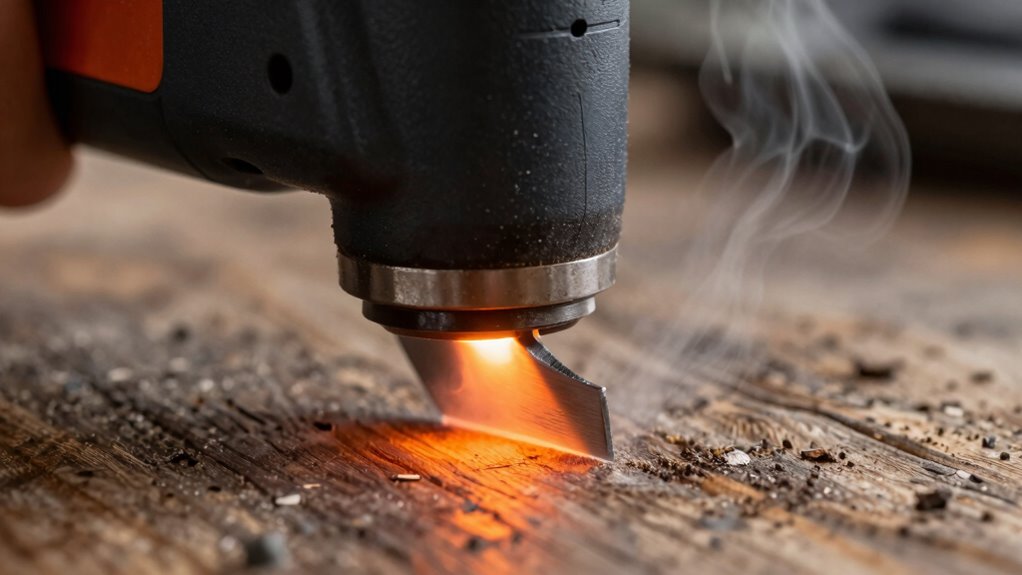
Have you ever noticed your oscillating tool getting unexpectedly hot after just a short period of use? This quick heating is common and can be frustrating, especially when you’re in the middle of a project. The main reason for this heat buildup is related to how heat dissipation works within the tool and the way its motor components operate under load. When you use your tool, the motor converts electrical energy into mechanical motion, but not all of that energy is perfectly efficient. Some of it turns into heat, which can cause the tool to warm up rapidly if not managed properly.
Effective heat dissipation is essential for preventing your oscillating tool from overheating. The design of the tool includes specific features aimed at dispersing heat away from the motor components, such as vents or cooling fins. If these features are blocked or clogged with dust and debris, heat can build up more quickly, reducing the tool’s lifespan and performance. That’s why regular cleaning and ensuring proper airflow around the ventilation openings are necessary. When heat isn’t properly dissipated, it accumulates in the motor components, causing them to become excessively hot. Proper ventilation and airflow are crucial components of heat management in power tools.
Proper cleaning and airflow maintenance prevent overheating and extend your oscillating tool’s lifespan.
Your motor components are at the core of the issue. They consist of small but critical parts like the armature, brushes, and bearings, all of which generate heat during operation. When you push your tool to cut through tough materials or run it for extended periods, these parts work harder, producing more heat. If the motor isn’t designed to handle prolonged stress or if it’s worn out, heat can quickly reach unsafe levels. Overworking the motor or using a model with inadequate cooling features can make it overheat faster. Additionally, the presence of dust and debris can further hinder heat dissipation, compounding the problem.
Another factor contributing to rapid heating is the electrical resistance within the motor. As resistance increases due to wear or dirt buildup, the motor has to work harder, generating more heat. Additionally, using the tool at a high speed or applying excessive pressure can strain the motor components, leading to quicker heat buildup. To combat this, it’s essential to follow manufacturer guidelines, avoid overloading the tool, and give it breaks during prolonged use. Doing so helps the motor cool down and prevents unnecessary stress on the components. Proper maintenance, including inspecting and cleaning electrical connections, can also help reduce electrical resistance. Recognizing signs of increased electrical resistance early can prevent overheating and extend the lifespan of your tool.
In the end, understanding how heat dissipation and motor components interact helps you keep your oscillating tool running smoothly longer. Regular maintenance and mindful usage are key to preventing it from getting too hot too quickly, ensuring your tool remains reliable and safe for all your projects.
oscillating tool vent cleaning kit
As an affiliate, we earn on qualifying purchases.
As an affiliate, we earn on qualifying purchases.
Frequently Asked Questions
Can Using a Lower Voltage Tool Reduce Overheating?
Using a lower voltage tool can help reduce overheating because it often features better voltage regulation, preventing excess current flow that causes heat. Additionally, lower voltage models tend to have enhanced thermal insulation, which helps dissipate heat more effectively. This combination allows the tool to operate longer without overheating, making it safer and more efficient. So, opting for a lower voltage tool can be a smart choice for prolonged, safer use.
Does Frequent Stopping and Starting Cause More Heat Buildup?
Yes, frequent stopping and starting can cause more heat buildup in your oscillating tool. Each time you stop, the tool’s motor and parts heat up, and starting again adds stress, reducing tool longevity. Proper heat dissipation is essential, so avoid unnecessary pauses and keep the tool cool during use. This helps maintain ideal performance and extends your tool’s lifespan by preventing overheating.
How Does Tool Maintenance Impact Overheating Risk?
Proper tool maintenance greatly reduces overheating risk. Regular lubrication practices keep internal parts moving smoothly, preventing excessive friction that causes heat. Additionally, you should clear dust accumulation from vents and moving components, as debris can block airflow and trap heat. By maintaining your oscillating tool well, you’ll guarantee it operates efficiently, stays cooler longer, and prolongs its lifespan. Neglecting maintenance can lead to faster overheating and potential damage.
Are Certain Attachments More Prone to Causing Heat?
In the age of steam-powered devices, some attachments are more prone to causing heat. You’ll find that those made from metal or with complex designs tend to generate more heat because they resist cooling and create more friction. Attachments with poor attachment material or inefficient design can overwork your tool, leading to rapid overheating. Always choose the right attachment material and design for your task to keep your tool cool and functioning efficiently.
Can Overheating Damage the Motor Permanently?
Yes, overheating can permanently damage your oscillating tool’s motor. When it gets too hot, it can weaken motor insulation, leading to short circuits and failure. Continuous overheating also strains cooling systems, reducing their effectiveness. To prevent this, avoid overworking your tool, guarantee proper ventilation, and let it cool down during extended use. Proper maintenance helps preserve the motor’s lifespan and keeps your tool functioning efficiently.
oscillating tool cooling fan attachment
As an affiliate, we earn on qualifying purchases.
As an affiliate, we earn on qualifying purchases.
Conclusion
So, now you know that your oscillating tool overheating is like a car engine running too hot—it’s warning you to give it a break. Regular maintenance, proper usage, and avoiding overloading are your best defenses. Think of your tool as a trusty steed; treat it well, and it’ll keep riding smoothly without burning out. Keep these tips in mind, and your tool will stay cool, ready to tackle whatever project you throw at it.
oscillating tool dust extraction attachment
As an affiliate, we earn on qualifying purchases.
As an affiliate, we earn on qualifying purchases.
oscillating tool maintenance kit
As an affiliate, we earn on qualifying purchases.
As an affiliate, we earn on qualifying purchases.
Fall yard work Picks
leaf blowers
As an affiliate, we earn on qualifying purchases.