To cut pressure-treated lumber safely, wear gloves, dust masks, goggles, and long sleeves to protect against harmful chemicals. Work in a well-ventilated area and support the wood properly to prevent binding or kickback. Use sharp, well-maintained saw blades and follow manufacturer guidelines for cutting speeds. Clean the workspace thoroughly afterward to remove dust and residue. If you want detailed safety tips and best practices, keep exploring how to handle pressure-treated wood effectively.

Get business pricing on tools and workshop supplies
- Business-only prices and quantity discounts
- Tax-exempt purchasing
- Multiple users, one account, clear invoices
Key Takeaways
- Always wear appropriate safety gear, including gloves, dust masks, goggles, and long sleeves, to protect against chemical exposure.
- Work in a well-ventilated area and keep the workspace clean to reduce dust and chemical fumes.
- Use sharp, well-maintained saw blades and support lumber securely to ensure precise, safe cuts.
- Follow manufacturer guidelines for saw settings, adjusting speed and depth for pressure-treated wood.
- Properly dispose of sawdust and offcuts to prevent inhalation of residual chemicals and maintain a safe environment.
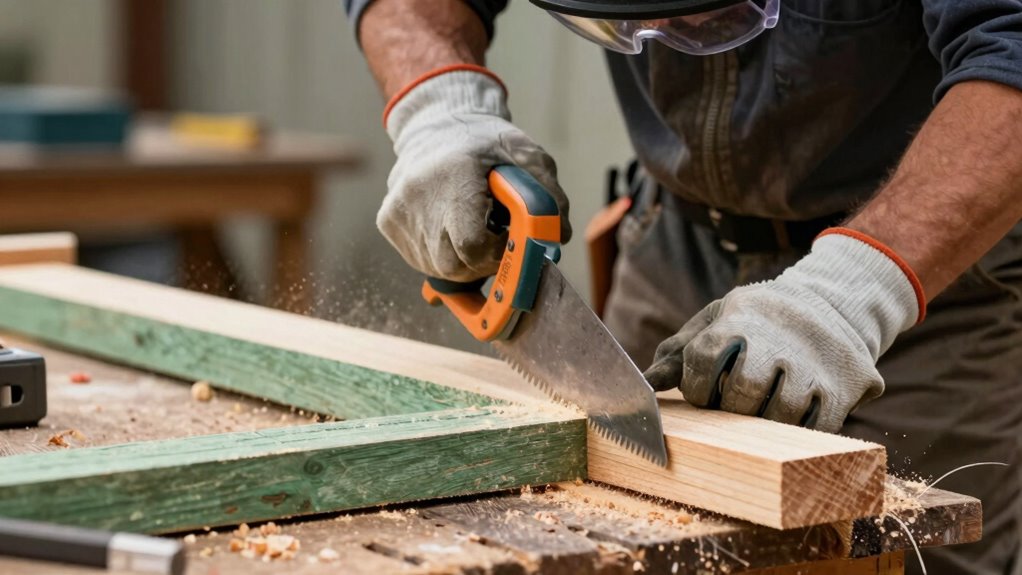
Cutting pressure-treated lumber safely is crucial to protect yourself from harmful chemicals and guarantee a smooth project. When working with this type of wood, you need to prioritize safety gear to shield your skin, eyes, and respiratory system. Gloves, a dust mask or respirator, safety goggles, and long sleeves are your best allies. Pressure-treated wood often contains chemicals like arsenic or copper compounds, which can be hazardous if inhaled or come into contact with your skin. Wearing proper safety gear isn’t just a precaution; it’s a necessity to avoid health risks and guarantee a safe working environment.
Always wear safety gear when cutting pressure-treated lumber to protect against hazardous chemicals and ensure a safe project.
Your cutting techniques also play a essential role in safety and efficiency. First, always work in a well-ventilated area to minimize dust accumulation and chemical fumes. Before starting, double-check that your saw is in good condition, with blades sharp enough to make clean cuts. Dull blades increase the risk of kickbacks and produce more dust, which can be dangerous if inhaled. When cutting, support the lumber properly to prevent binding or pinching, which can cause the saw to jerk unexpectedly. Use clamps or a stable work surface to keep the wood steady, allowing for precise cuts and reducing the chance of accidents. Additionally, understanding the chemical composition of pressure-treated lumber can help you better grasp the importance of safety precautions.
Another key aspect is adjusting your saw’s speed and depth settings appropriately for pressure-treated lumber. This type of wood tends to be denser, so you might need to slow down the saw or make multiple shallow cuts instead of trying to cut through in one pass. Always follow the manufacturer’s guidelines for your cutting tools, and never force the saw through the wood, as this can cause kickback or blade damage. Keep your hands clear of the blade at all times, and focus on smooth, controlled motions. Rushing increases the risk of slips and accidents, especially when working with tough, chemically treated wood. Proper handling also involves awareness of the hazardous materials present, so staying informed about the chemical makeup is essential for safety. It’s also advisable to consult the safety data sheets provided for the specific chemicals in your pressure-treated wood to stay fully informed.
After each cut, clean your workspace and remove any sawdust or chemical residue to prevent buildup that could become airborne later. Proper disposal of offcuts and dust is equally important, as these can contain residual chemicals. Maintaining a clean, organized workspace not only improves safety but also ensures cleaner cuts and better results. Remember, chemical exposure can occur if dust or residue is not properly managed, emphasizing the need for diligent cleanup. By combining the right safety gear with proper cutting techniques, you protect yourself while maintaining control over your project. Remember, patience and attention to detail are your best tools for handling pressure-treated lumber safely and effectively.
pressure-treated lumber saw blades
As an affiliate, we earn on qualifying purchases.
As an affiliate, we earn on qualifying purchases.
Frequently Asked Questions
Can I Cut Pressure-Treated Lumber Indoors Safely?
You shouldn’t cut pressure-treated lumber indoors because of chemical exposure. The fumes released contain arsenic and other harmful substances, which can be dangerous when inhaled. If you must, make certain to have excellent indoor ventilation by opening windows and using fans. Wearing a respirator mask and gloves is essential to protect yourself. However, it’s safest to do this work outside in a well-ventilated area to minimize health risks.
What Personal Protective Equipment Is Essential When Cutting Pressure-Treated Wood?
When you cut pressure-treated wood, you must armor yourself like a superhero facing a toxic storm! Wear protective clothing that shields your skin from harmful dust and splinters. Don’t forget a dust mask—think of it as your shield against dangerous particles floating in the air. These essentials keep you safe from exposure to chemicals, preventing irritation or injury, so you can work confidently without risking your health.
How Often Should I Replace Blades When Cutting Pressure-Treated Lumber?
You should replace blades when their lifespan diminishes, which often means after 10-15 cuts through pressure-treated lumber. Keep an eye on your cutting techniques—dull blades cause rough cuts and strain your tools, so replace them promptly. Using sharp blades guarantees cleaner cuts, reduces kickback, and prolongs blade life. Regularly inspect your blade for signs of dullness or damage, and replace as needed to maintain safety and efficiency.
Are There Specific Tools Best Suited for Cutting Pressure-Treated Wood?
Did you know pressure-treated lumber contains chemicals that can corrode standard blades? For cutting pressure-treated wood, you should use carbide-tipped blades or blades made specifically for wood preservation. These tools resist corrosion and handle tougher cuts with ease. Employing proper cutting techniques, like slow, steady pressure, guarantees safety and long blade life. Picking the right tools helps preserve your equipment and ensures clean, safe cuts every time.
How Do I Dispose of Scrap Pressure-Treated Lumber Safely?
You should dispose of scrap pressure-treated lumber at a local hazardous waste facility to prevent environmental hazards and minimize chemical exposure. Never burn or dump it in regular trash, as this releases toxic chemicals into the air and soil. Wrap any scraps securely in heavy-duty plastic before transporting, and always follow local regulations. Proper disposal helps protect your health and the environment from harmful chemical exposure.
safety gear for cutting pressure-treated wood
As an affiliate, we earn on qualifying purchases.
As an affiliate, we earn on qualifying purchases.
Conclusion
Remember, cutting pressure-treated lumber safely isn’t just about following steps — it’s about respecting the material’s power and potential hazards. By wearing proper gear and working in a well-ventilated area, you’re not just protecting yourself, but also honoring the craft. Think of safety as the keystone of your project; neglect it, and the whole structure could fall. Keep safety at the forefront, and your project will stand strong, just like your commitment to doing it right.
As an affiliate, we earn on qualifying purchases.
As an affiliate, we earn on qualifying purchases.
Fall Picks
fall essentials
As an affiliate, we earn on qualifying purchases.