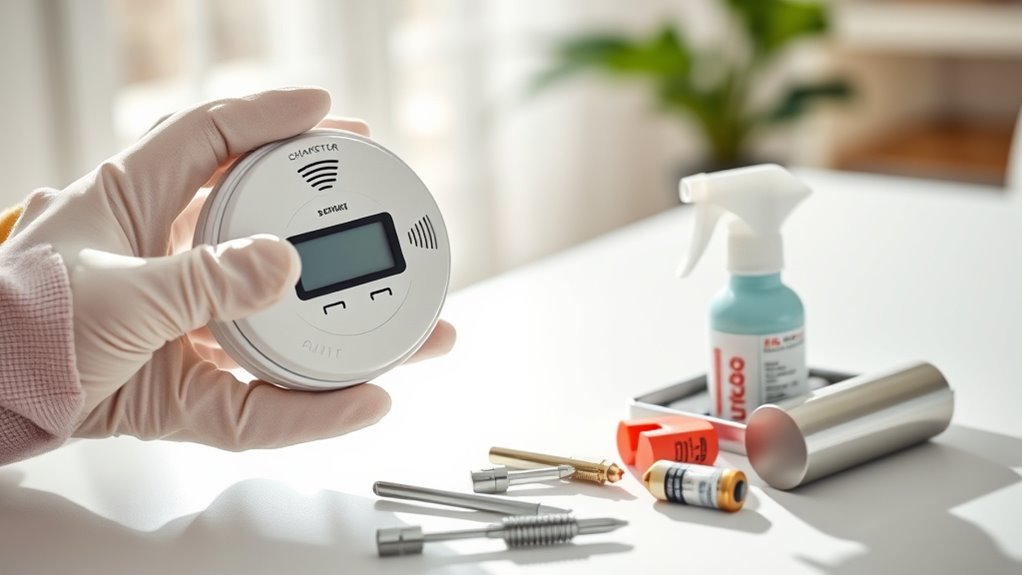

During the spring forward time change, it’s smart to test all your smoke detectors and alarms to guarantee they’re working properly. Grab a sturdy ladder if needed, fresh batteries—preferably twice a year—and a testing spray or match. Open the alarm’s compartment, insert new batteries, and press the test button to check responsiveness. Confirm interconnected alarms sound simultaneously. Keep your home safe by performing these quick checks—continue with the guide to learn more tips and safety practices.
Listen free for 30 days with Audible
Thousands of audiobooks and originals — cancel anytime.
As an affiliate, we earn on qualifying purchases.
Key Takeaways
- Use a test button or testing spray to verify each smoke and CO alarm’s functionality.
- Replace batteries twice a year with high-quality, properly aligned batteries for reliable operation.
- Ensure alarms are securely mounted after battery replacement and testing.
- Check all alarms throughout the house, ensuring interconnected units sound simultaneously when triggered.
- Perform routine safety checks, especially after time changes, to maintain effective home warning systems.
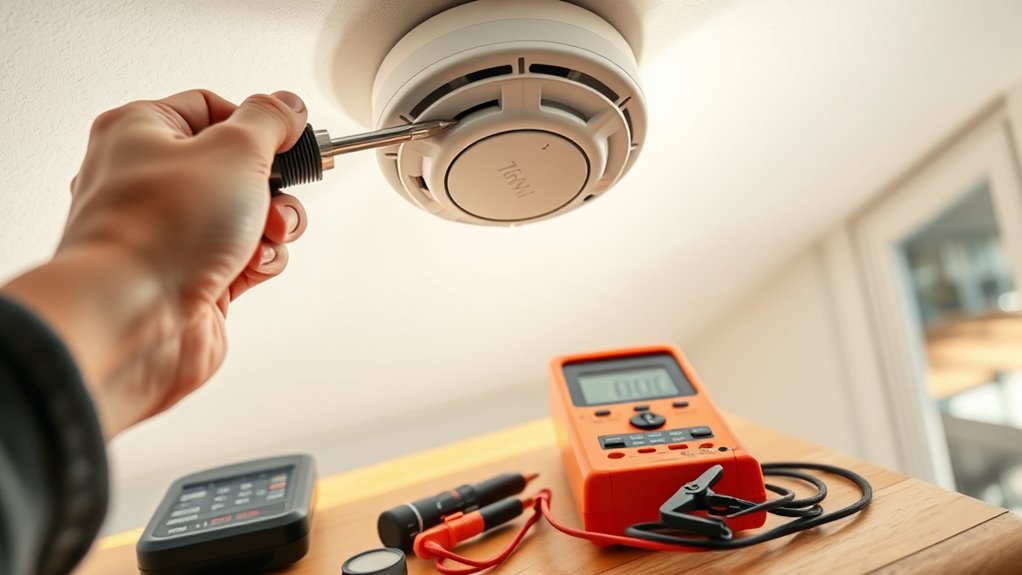
As Daylight Saving Time begins, it’s important to perform a spring forward check to make certain your home and belongings are prepared for the time change. One of the most critical steps is testing your smoke detectors and alarms to ensure they’ll function properly in an emergency. This quick routine can save lives, so don’t skip it. Start by gathering the necessary tools: a sturdy ladder if your alarms are mounted high, fresh batteries, and a testing tool like a smoke alarm tester spray or a simple match or candle. These supplies will help you perform a thorough check.
First, replace the batteries in all your smoke detectors and carbon monoxide alarms if they haven’t been changed recently. Many experts recommend swapping out batteries twice a year, especially when you change the clocks for daylight saving time. Fresh batteries guarantee your alarms will sound loudly when needed, rather than failing due to power issues. Remove the alarm from its mounting and open the battery compartment. Insert new, high-quality batteries, making sure they’re properly aligned with the positive and negative terminals. After replacing the batteries, reattach the alarm securely to its mounting plate.
Next, test each alarm to confirm they’re functioning correctly. Most smoke detectors have a dedicated test button—press and hold it for a few seconds. You should hear a loud beep or siren, indicating the alarm is working. If you don’t hear anything, double-check the batteries and try again. If it still doesn’t sound, replace the alarm if it’s old or malfunctioning. For added assurance, use an alarm testing spray or carefully ignite a match near the detector’s sensing chamber (keeping safety in mind). The alarm should go off immediately. If it doesn’t, it’s time to replace that detector.
Performing alarm testing throughout your home guarantees all units respond promptly in case of fire or carbon monoxide leaks. Remember, alarms are only effective if they’re in good working order. Don’t forget to also test interconnected alarms if you have them—when one goes off, all should sound off simultaneously. This interconnected feature is crucial for alerting everyone in the house quickly. Additionally, regularly checking your smoke detectors and alarms is a good practice to ensure compliance with safety standards and helps prevent potential scams or faulty units that could compromise your home safety.
As an affiliate, we earn on qualifying purchases.
Frequently Asked Questions
How Often Should I Replace My Smoke Detector Batteries?
You should replace your smoke detector batteries at least once a year to guarantee proper function. The battery lifespan typically lasts around 6 to 12 months, so setting a reminder helps you stay on track. If your alarm chirps or sounds off unexpectedly, it’s a sign to replace the batteries sooner. Regular replacement maintains safety and guarantees your smoke detectors work effectively during emergencies.
What Types of Smoke Alarms Are Most Reliable?
Did you know that photoelectric smoke alarms are responsible for 85% of residential fire deaths? You should choose alarms with wireless sensors and photoelectric technology for the highest reliability. These alarms are less prone to false alarms caused by cooking or steam, and wireless sensors make installation easier. They detect smoldering fires early, giving you more time to react and stay safe.
Can I Test My Smoke Detector Without a Ladder?
You can test your smoke detector without a ladder by pressing the test button, which calibrates the device and checks its alarm sensitivity. Make sure you’re at an appropriate distance so you can easily reach the button, or use a broomstick or similar object to press it if needed. Regular testing ensures your detector’s calibration stays accurate, keeping your home safe. Just remember to replace batteries annually for peak performance.
What Should I Do if a Smoke Alarm Malfunctions?
Think of your smoke alarm as a trusted guardian—if it malfunctions, it’s like a guard falling asleep. First, replace the battery and test the alarm again. If it still doesn’t work, perform alarm maintenance by cleaning it and checking for dust or debris. If it remains silent, replace the entire unit. Regular maintenance and timely battery replacements keep your safety system reliable and your home protected.
Are There Any Signs My Smoke Detector Needs Replacement?
You’ll know your smoke detector needs replacement if the battery life is consistently low or if it emits frequent false alarms. Replacement indicators also include a persistent chirping sound even after changing the batteries, or if the unit is more than 10 years old. Regular testing helps identify these signs early, ensuring your alarm functions properly and keeps you safe. Don’t ignore these cues to maintain a reliable fire safety system.
As an affiliate, we earn on qualifying purchases.
Conclusion
Don’t let a tiny malfunction turn into a catastrophe! A quick spring forward check of your smoke detectors and alarms could save your entire world—your loved ones, your memories, your future. Imagine the horror of missing that critical beep in a moment of emergency. Take just a few minutes now, and guarantee your safety isn’t left to chance. Because when it comes to fire safety, there’s no room for hesitation—trust me, it’s worth every second!
As an affiliate, we earn on qualifying purchases.
As an affiliate, we earn on qualifying purchases.
Flea & tick season Picks
flea and tick prevention
As an affiliate, we earn on qualifying purchases.