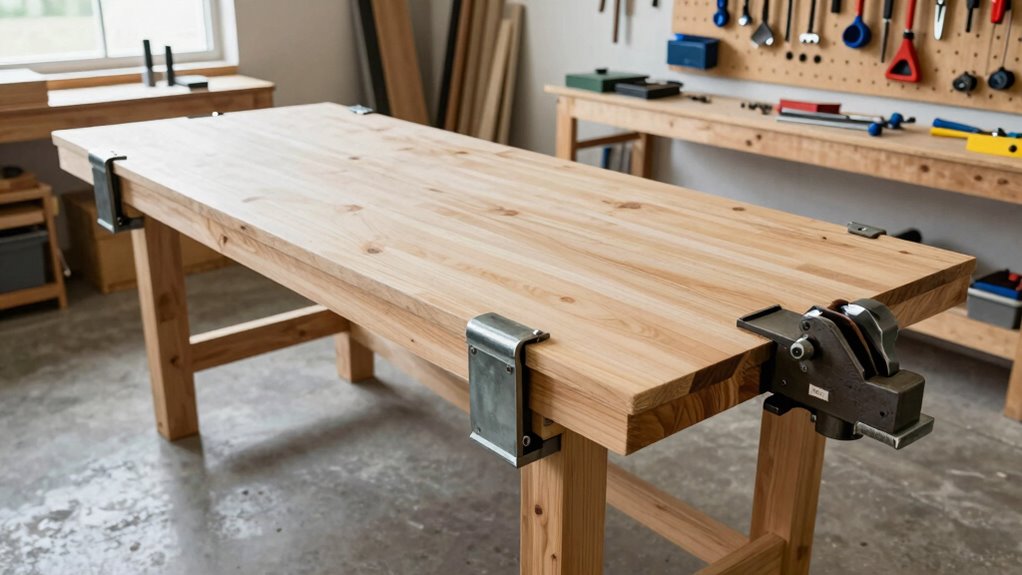
To prevent your workbench from rocking under load, guarantee it’s built with sturdy materials like hardwood or dense, high-strength materials. Properly level the frame and secure all joints with bolted fasteners, adding bracing or cross supports for extra stability. Make sure your workbench sits flat on an even floor, using shims or adjustable feet if needed. Reinforcing fasteners and anchoring the bench to the wall or floor can also keep it steady. If you want detailed tips, keep exploring more solutions.

Get business pricing on tools and workshop supplies
- Business-only prices and quantity discounts
- Tax-exempt purchasing
- Multiple users, one account, clear invoices
Key Takeaways
- Ensure the workbench is level by shimming legs or using adjustable feet on uneven floors.
- Use bolted joints and reinforce connections to maintain frame stability under load.
- Add diagonal braces or cross supports to evenly distribute weight and prevent wobbling.
- Anchor the workbench securely to the floor or wall for extra stability during heavy use.
- Select dense, hardwood materials and a thick top to minimize warping and vibration.
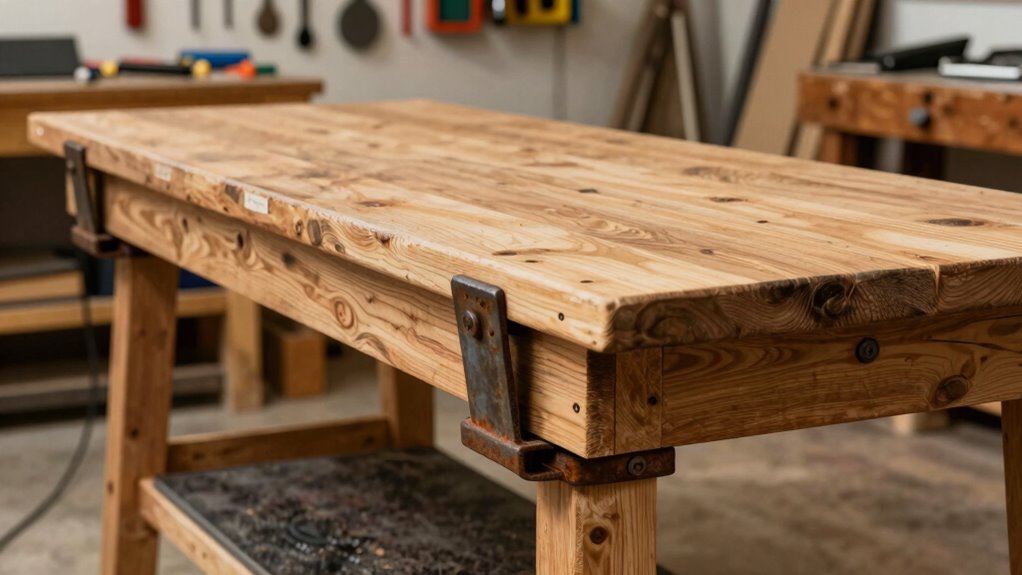
Have you ever struggled with a wobbly workbench that makes your projects frustrating? Nothing kills productivity faster than an unstable surface. The key to fixing this problem lies in improving workbench stability, which often comes down to smart material choices and proper setup. When your workbench isn’t solid, it shifts and rocks under load, making precise cuts and assembly nearly impossible. So, the first step is understanding how the materials you select influence stability. Softwood or lightweight materials tend to flex and wobble more easily, especially when you’re applying force or pressure. Hardwoods like maple or oak provide a sturdier foundation because they resist movement better. If you already have a workbench, adding additional bracing or replacing weaker parts with denser, more stable materials can greatly enhance stability. Additionally, choosing materials with high compressive strength can significantly reduce the likelihood of warping or shifting over time. Proper material selection is crucial for creating a durable and stable workspace.
You should also pay attention to how your workbench is constructed. For example, a thick top made from a dense material won’t just last longer; it also reduces vibrations and movement when you’re working. When choosing your workbench material, consider those with high compressive strength and minimal grain movement. The right material choices will give your bench a sturdy foundation, which is essential for precision tasks. Additionally, the thickness of the workbench top plays a role—thicker tops tend to be more stable and resistant to warping. Ensuring a solid foundation by leveling the frame and verifying even contact points can prevent uneven stress distribution that leads to wobbling. Using proper assembly techniques such as tight joints and reinforced fasteners also contributes to maintaining long-term stability. To further improve stability, you might also consider using anti-slip pads on the legs or feet to prevent slipping or shifting on smooth floors.
Beyond material choices, the way you assemble your workbench matters just as much. Secure joints and sturdy fasteners prevent the frame from shifting. Bolted joints are generally stronger than nails or screws alone, especially if you’re working with heavier loads. Make sure the legs are firmly anchored to the frame and that the entire structure sits evenly on the floor. If your floor isn’t perfectly level, consider shimming the legs or adding adjustable feet to keep the work surface level. Ensuring proper assembly techniques are followed can make a significant difference in overall stability. Additionally, anchoring the workbench to the wall or floor can provide extra support and eliminate lateral movement, especially during demanding tasks. Finally, adding a diagonal brace or cross supports can dramatically improve overall stability. These reinforcements distribute load more evenly across the frame, reducing any wobbling or shifting when you’re applying force.
As an affiliate, we earn on qualifying purchases.
Frequently Asked Questions
What Materials Are Best for a Stable Workbench Base?
For a stable workbench base, choose durable materials like hardwood or thick steel. These materials add significant workbench weight, which prevents rocking under load. Guarantee your workbench dimensions are balanced; a wider and thicker top enhances stability. Incorporate cross-bracing or leg reinforcements to distribute weight evenly. Ultimately, a heavy, well-constructed base made from sturdy materials keeps your workbench steady during demanding tasks.
How Can I Prevent Vibration During Heavy Work?
To prevent vibration during heavy work, focus on firm footing and finesse with workbench accessories. Use vibration damping mats or pads under your workbench to absorb shocks, and attach stabilizers or braces for added support. Incorporate anti-vibration mounts or isolators to diminish movement, ensuring stability. These simple steps stop shaking, soothe your work, and make every task more precise, peaceful, and productive.
Is Bolting the Workbench to the Floor Always Necessary?
Bolting your workbench to the floor isn’t always necessary, especially if you use the right workbench accessories and vibration dampers. These additions help stabilize the surface and absorb vibrations, reducing movement during heavy work. If your workbench isn’t anchored, consider installing vibration dampers or adding weight to the base. However, for maximum stability, bolting remains a reliable option, especially in high-impact or precision tasks.
How Do I Identify the Cause of Instability?
You notice your workbench rocking under load, and it’s no coincidence—your workbench weight and material density are key clues. Start by checking uneven legs or surface imperfections, which cause instability. Light or low-density materials tend to shift more easily. To identify the cause, test each leg’s contact with the floor, and observe if the wobble worsens when applying weight. This helps pinpoint whether the issue’s due to design, material, or installation.
Can Adjustable Feet Improve Workbench Stability?
Yes, adjustable feet can notably improve your workbench stability. They help with workbench leveling, ensuring an even surface, which promotes better load distribution. By fine-tuning the height with adjustable feet, you can eliminate rocking caused by uneven flooring or frame irregularities. This creates a more secure work platform, especially under heavy loads, reducing movement and potential damage, making your workspace safer and more efficient.
As an affiliate, we earn on qualifying purchases.
Conclusion
With your workbench now steady and firm, imagine it as a trusty ship anchored in still waters, ready to withstand any storm of tools and projects. No longer will it sway or wobble under pressure, giving you confidence to focus on your craft. As you work, feel the stability beneath your hands, like a solid mountain you can carve and shape without fear. Now, enjoy your projects with a rock-solid workspace that’s as dependable as the ground beneath your feet.
As an affiliate, we earn on qualifying purchases.
As an affiliate, we earn on qualifying purchases.
Fall Picks
fall essentials
As an affiliate, we earn on qualifying purchases.