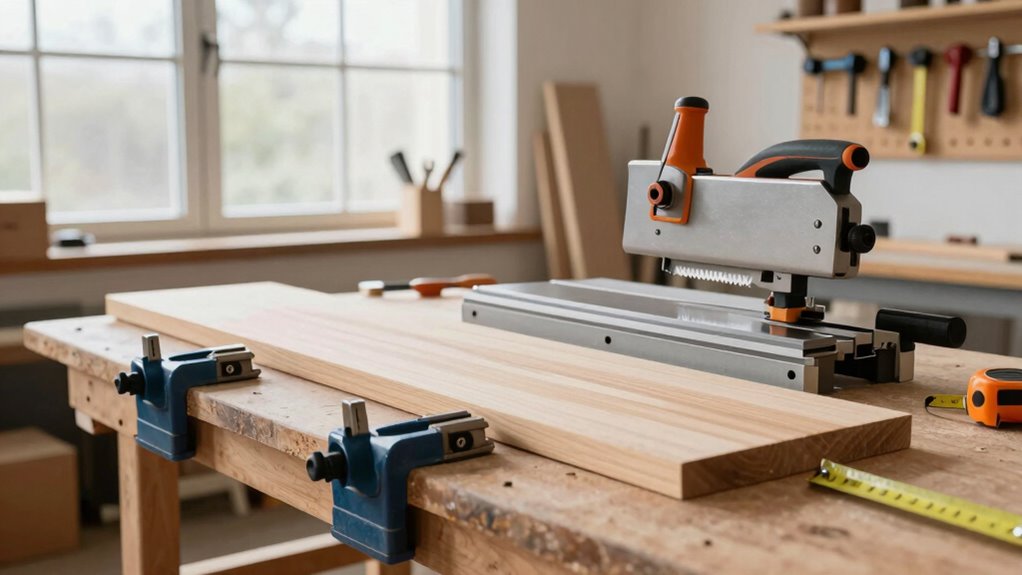

To create a better workflow between your bench and saw, organize your workspace by keeping essential tools close to minimize movement. Establish designated zones for measuring, cutting, and assembly, and always return tools to their spots after use. Secure workpieces properly and plan your cuts to avoid awkward positions. Regularly review and adjust your process to improve efficiency and safety. Staying disciplined in these steps helps prevent mistakes and keeps your workflow smooth—explore more tips to optimize your setup.

Get business pricing on tools and workshop supplies
- Business-only prices and quantity discounts
- Tax-exempt purchasing
- Multiple users, one account, clear invoices
Key Takeaways
- Designate specific zones for measuring, cutting, and assembly to streamline movement and reduce unnecessary steps.
- Keep frequently used tools near the workbench and saw for quick access during transitions.
- Plan each cut and measurement in advance to minimize re-positioning and errors.
- Secure workpieces properly before cutting to maintain stability and safety.
- Regularly review and adjust workflow to improve efficiency and adapt to project needs.
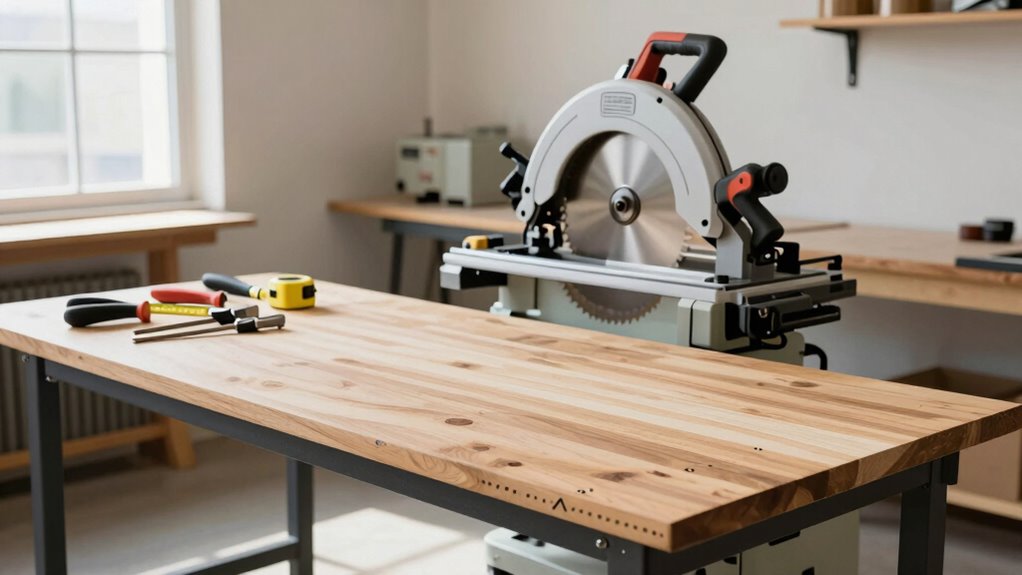
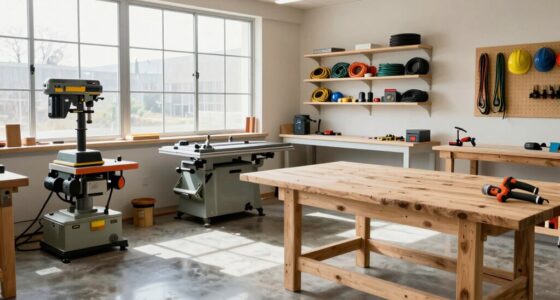
To improve your woodworking efficiency, establishing a seamless workflow between the bench and the saw is essential. When you have a well-organized workspace, your projects move faster, and you reduce the risk of mistakes or accidents. Start by focusing on tool organization. Keep your most-used tools close to your work area, so you don’t waste time searching for them. Use pegboards, shelves, or drawers to store clamps, measuring tapes, and marking tools within easy reach. A clutter-free workspace allows you to move smoothly from cut to assembly, minimizing interruptions and maintaining your rhythm. Proper tool organization also helps ensure that everything is in its place, which reduces the chances of accidents caused by misplaced or unstable tools. Additionally, understanding safe workspace practices can further enhance your safety and efficiency. Incorporating workflow planning can also help streamline your overall process, making each step more efficient and reducing unnecessary movement. Regularly reviewing and adjusting your workflow ensures continual improvement and adapts to different project needs.
Safety protocols are equally crucial when creating a better workflow. Before beginning any cut, check that your saw is in good working condition, with safety features like blade guards and anti-kickback pawls properly installed. Always wear appropriate personal protective equipment, such as safety glasses and hearing protection, to shield yourself from flying debris or loud noise. When making cuts, keep your hands a safe distance from the blade, and ensure your workpiece is securely clamped or held against the fence. Never rush through a cut; taking your time reduces errors and keeps you safe.
Integrating safety protocols into your workflow also means planning your moves. For example, before turning on the saw, double-check that your workpiece is properly positioned, and your measurements are accurate. Avoid awkward positions or overreaching, which can compromise your control and safety. When you finish using the saw, turn it off and wait for the blade to stop spinning before removing scrap or adjusting the workpiece. This discipline helps prevent accidents and keeps your workspace safe and efficient.
To make the transition between your bench and saw even smoother, consider establishing designated zones for different tasks. Have a specific area for measuring and marking, another for cutting, and a separate space for assembly. This spatial organization minimizes unnecessary movement and helps you maintain focus. Always return tools to their designated spots after use, reinforcing good tool organization habits that keep your workspace tidy and safe. Consistent tool storage is vital for maintaining an efficient and safe woodworking environment.
As an affiliate, we earn on qualifying purchases.
Frequently Asked Questions
What Are Common Safety Concerns When Integrating a Bench and Saw?
Your main safety concerns include managing dust collection to prevent inhalation hazards and ensuring safety barriers are in place to protect against accidental contact with the saw blade. You should always wear proper PPE, keep the workspace clear, and use dust extraction systems effectively. Installing safety barriers helps contain debris and keeps fingers away from blades, reducing injury risk. Staying alert and maintaining safety protocols is key to a safe, efficient workflow.
How Can I Optimize Space for Both Bench Work and Saw Operation?
You can optimize space by using smart storage solutions like wall-mounted shelves and tool racks to keep your workspace clear. Arrange your layout to position the saw and bench for easy access, ensuring enough clearance for safe operation. Consider multi-functional furniture and compact storage units to maximize every inch. This approach keeps your workspace organized, improves efficiency, and creates a safer, more comfortable environment for both bench work and saw use.
What Tools Can Improve Efficiency Between the Bench and Saw?
You might be surprised, but the real game-changers are tool calibration and dust extraction. Properly calibrated tools guarantee precision and save you time fixing mistakes. Dust extraction keeps your workspace clean, preventing hazards and improving efficiency. Invest in these tools, and you’ll find your workflow smoother, safer, and more productive. Ironically, these small upgrades make a huge difference, transforming chaos into clarity between your bench and saw.
How Do I Organize Materials for Quick Access Between Stations?
You should organize your materials for quick access by implementing efficient material storage and tool organization. Use labeled bins or shelves near each station to keep commonly used materials within reach. Keep frequently used tools and materials close to your workbench and saw, and develop a systematic layout that minimizes movement. Regularly tidy up your storage areas to prevent clutter, ensuring everything is easy to find, which streamlines your workflow and saves time.
What Are Ergonomic Tips for Working Comfortably With Both?
Think of your workspace as a well-choreographed dance. To stay in rhythm, maintain ergonomic posture by keeping your back straight and shoulders relaxed. Place tools within easy reach, like dancers cueing movements, to minimize unnecessary reaching. Adjust your saw and bench height for comfort, and switch positions regularly to avoid strain. These small tweaks help you work smoothly, safely, and comfortably, keeping your productivity in perfect harmony.
As an affiliate, we earn on qualifying purchases.
Conclusion
Remember, a chain is only as strong as its weakest link. By streamlining your workflow between the bench and saw, you’ll save time, reduce mistakes, and improve safety. Keep your workspace organized, plan your cuts ahead, and communicate clearly. When you work smoothly and efficiently, every project becomes more enjoyable. Don’t forget—great craftsmanship comes from paying attention to the details. With patience and practice, you’ll build not just better projects, but better habits.
As an affiliate, we earn on qualifying purchases.
As an affiliate, we earn on qualifying purchases.
Fall Picks
fall essentials
As an affiliate, we earn on qualifying purchases.