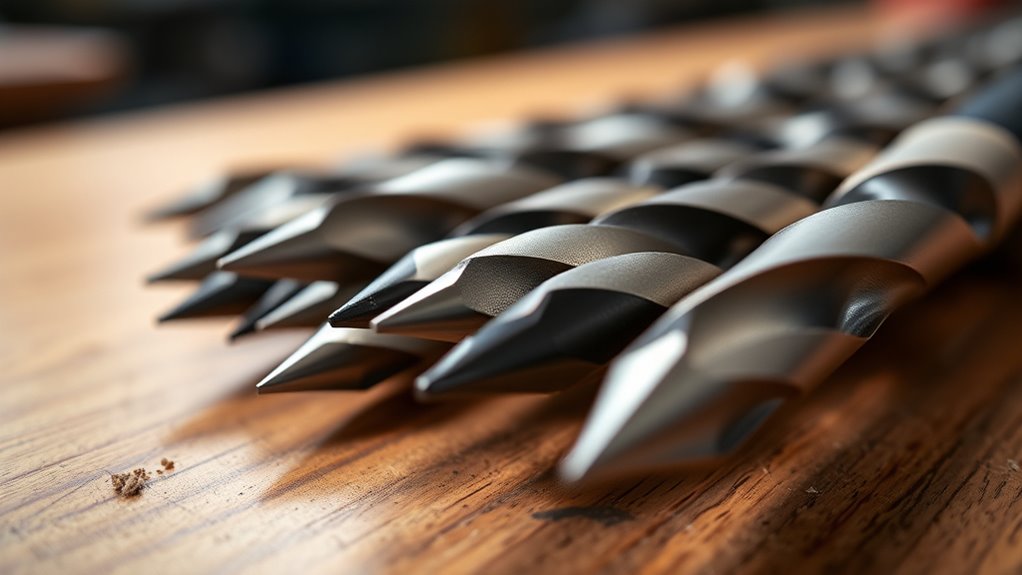

To choose the right drill bit, match its material and coating to your project’s needs. For softer materials like wood or plastics, high-speed steel (HSS) bits work well and are affordable. For tougher metals or abrasive surfaces, consider cobalt or carbide-tipped bits for extra durability. Coatings like titanium or diamond can boost lifespan and performance. Knowing these options helps you pick the best tool—keep exploring to find the perfect fit for your task.
Key Takeaways
- Match drill bit material (HSS, carbide, cobalt) to the hardness of the work material for optimal performance.
- Use coated bits (titanium, diamond) to enhance durability and reduce friction on abrasive or hard surfaces.
- Select carbide-tipped bits for tough materials like masonry, tile, or hardened steel.
- Opt for cobalt bits when drilling stainless steel or other heat-sensitive metals requiring high heat resistance.
- Consider project frequency and material type to prioritize durability and select the most suitable drill bit for longevity.

When selecting a drill bit, choosing the right one can make all the difference in completing your project efficiently and accurately. One of the most important factors to consider is the bit material, as it directly impacts both performance and drill bit longevity. Different materials are suited for various tasks, so understanding their properties helps you pick the best option. High-speed steel (HSS) bits are versatile and affordable, making them ideal for drilling through softer metals, wood, and plastics. They offer decent durability but tend to wear out faster when used on harder materials. Carbide-tipped bits, on the other hand, excel at cutting through tough materials like masonry, tile, and hardened steel. They are more brittle but last substantially longer, especially when used properly. For prolonged projects or frequent use, investing in carbide can pay off in the long run due to their superior drill bit longevity.
Choosing the right drill bit material ensures better performance and longer lifespan for your projects.
The choice of bit material also influences how well the bit holds up over time. For instance, cobalt bits, which are a variation of HSS with added cobalt, provide increased heat resistance and durability. They’re particularly useful for drilling into stainless steel and other hard metals, offering a good balance between cost and longevity. If you frequently work with abrasive materials, consider bits with a titanium or diamond coating, which can enhance performance and extend their lifespan. These coatings reduce friction and prevent overheating, which are common causes of wear and failure. As a result, your drill bits last longer, saving you money and reducing downtime.
Alongside material, coatings also play a crucial role in extending drill bit longevity. A coated bit can withstand higher temperatures, resist corrosion, and cut more efficiently, especially in demanding applications. For example, titanium coatings are popular because they add strength and reduce friction, making bits last longer under heavy use. Diamond-coated bits are invaluable for drilling into extremely hard surfaces, such as glass or stone, providing exceptional durability and cutting precision. Additionally, choosing the right drill bit material and coating can help you achieve optimal performance for specific jobs.
Ultimately, selecting the right drill bit involves understanding how the material and coating will perform under specific conditions. Prioritize durability and longevity if you’ll be tackling tough or repetitive tasks, and choose a bit material suited for your primary material to ensure efficiency. The right combination of bit material and coating not only guarantees better results but also maximizes the lifespan of your drill bits, making your projects smoother, safer, and more cost-effective.
Frequently Asked Questions
How Do I Maintain and Sharpen My Drill Bits?
To maintain and sharpen your drill bits, regularly perform bit sharpening using a bench grinder or a sharpening stone to keep the edges clean and precise. Follow maintenance tips like cleaning bits after use and avoiding overheating during drilling. Keep bits properly stored to prevent dullness and damage. Proper maintenance ensures longer life and better performance, so make bit sharpening part of your routine for peak results.
What Safety Precautions Should I Take When Using Different Drill Bits?
You must prioritize safety every time you operate a drill; neglecting it can lead to disaster! Always wear personal protective equipment like goggles and gloves, and set up a safe workspace free of clutter and distractions. Keep your hands clear of the drill bit’s path, and make sure the drill is properly secured. These precautions protect you from flying debris, burns, or worse, and help you work confidently and safely.
Can Drill Bits Be Used for Both Drilling and Screwing?
Yes, some drill bits offer versatility for both drilling and screwing, but not all are suitable for both tasks. For example, Phillips or flat-head bits work well for screwing, while twist or spade bits excel at drilling. You should choose the right bit based on the task, as using a drill bit for screwing or vice versa can reduce effectiveness and damage the bit. Always select the proper type for ideal results.
How Do I Identify the Quality and Brand of a Drill Bit?
Like a trusty sidekick in your toolbox, you can spot quality drill bits by checking the brand reputation and material markings. Look for well-known brands with good reviews, and examine the shank or shank markings for clear indicators of material, like high-speed steel or cobalt. A solid, sharp tip and consistent manufacturing details also hint at durability. Don’t forget, a reliable brand guarantees your projects stay on track, no matter if you’re in 1999 or today.
Are There Eco-Friendly or Biodegradable Drill Bits Available?
Yes, eco-friendly drill bits are available. You can find options made from eco-friendly materials like bamboo or recycled steel, which reduce environmental impact. Some drill bits also feature biodegradable coatings that break down naturally, minimizing pollution. When shopping, look for brands that prioritize sustainability, and check product descriptions for eco-friendly materials and biodegradable coatings. These options help you drill responsibly while maintaining performance.
Conclusion
Choosing the right drill bit isn’t just about the material or coating; it’s about revealing your project’s potential. Think of your drill bit as a key—each one fitting a different lock—turning your ideas into reality. When you select wisely, you’re not just drilling holes; you’re paving the way for success. So, pick the right bit, and watch how your craftsmanship transforms mere materials into masterpieces. After all, the key to greatness is in your hands.