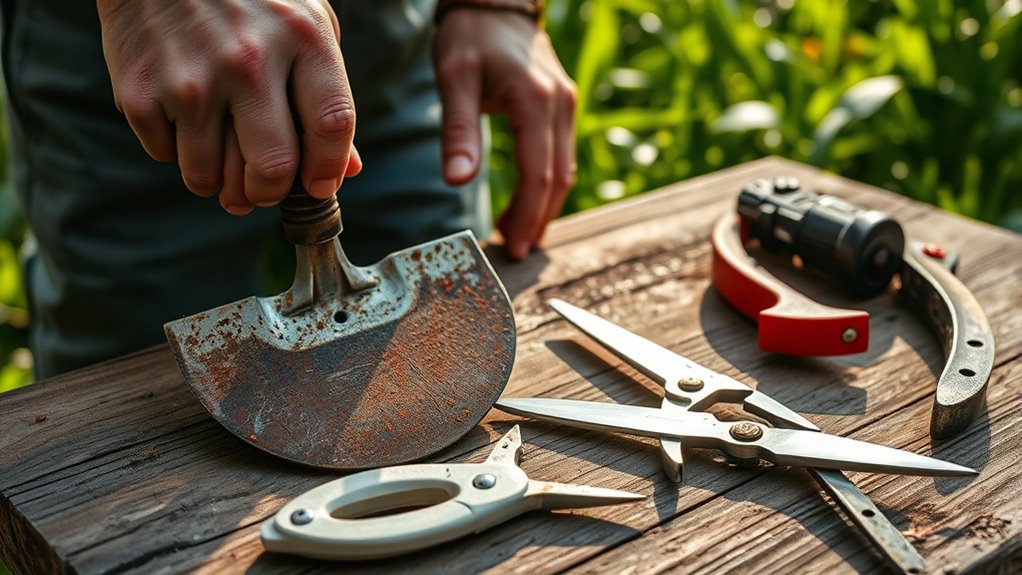

To keep your shovel, shears, and mower blades in top shape, regularly sharpen them with a file or sharpening stone suited to each tool. Maintain the correct bevel angle and work slowly to remove dull or nicked edges. After sharpening, clean off any debris, wipe the blades, and apply light oil to prevent rust. Proper storage and routine care extend their lifespan and boost performance, so stay tuned for more tips to make your tools last even longer.
Key Takeaways
- Use appropriate sharpening tools such as files and sharpening stones for each tool type.
- Maintain the original bevel angle to ensure effective, precise cuts and digging.
- Work slowly and evenly, removing dull or damaged metal for a clean, sharp edge.
- Clean blades thoroughly after sharpening and apply light oil to prevent rust.
- Regularly inspect and sharpen tools to prolong lifespan and ensure optimal gardening performance.
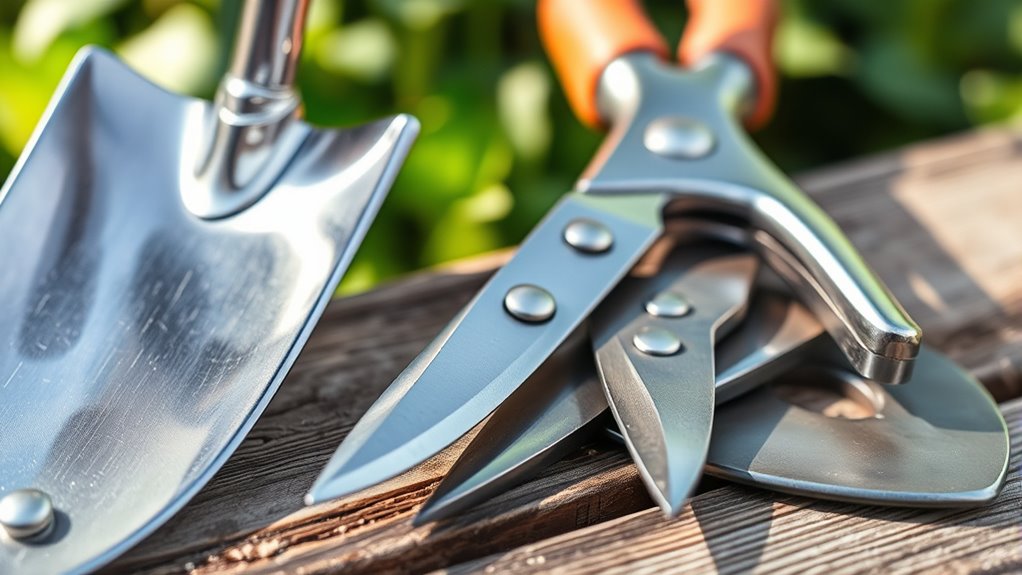
Maintaining your garden tools is essential for keeping your outdoor equipment in top shape and ensuring your gardening projects go smoothly. Proper care not only extends the lifespan of your tools but also makes your work more efficient. One of the key aspects of tool maintenance is sharpening your shovel, shears, and mower blades regularly. Sharp tools cut more cleanly, require less effort, and reduce plant damage. To keep your tools in prime condition, it’s important to implement good storage solutions. Storing your tools correctly prevents unnecessary wear and tear, keeps them organized, and minimizes the risk of accidents. Hang tools on wall hooks or store them in a dedicated toolbox to avoid clutter. When tools are stored properly, they’re less likely to bang into each other and become dull or damaged. Proper storage techniques also help prevent metal corrosion, which can significantly reduce a tool’s lifespan.
Proper storage and regular maintenance keep garden tools sharp, rust-free, and ready for successful gardening.
Rust prevention is another critical element in maintaining your garden tools. After each use, wipe your tools clean to remove dirt, sap, and moisture. Applying a light coat of oil or a rust inhibitor can help protect metal surfaces from corrosion. This is especially important if you live in a humid climate or store your tools outside. For long-term storage, consider using a protective coating or keeping your tools in a dry, sheltered area. If you notice any early signs of rust, address it immediately with a rust remover or a gentle abrasive pad before it spreads. Preventing rust not only preserves the appearance of your tools but also maintains their functionality.
Sharpening your tools is straightforward but requires the right approach. Use a file or a sharpening stone suited for the specific blade type—shovels, shears, and mower blades each have their own needs. When sharpening, maintain the original bevel angle to ensure effective cutting. Work slowly and evenly along the edge, removing any dull or nicked metal. Once sharpened, wipe the blade clean and apply a thin layer of oil to protect it from moisture and rust. Regular sharpening reduces strain on your muscles and makes gardening tasks more manageable. Remember, dull tools can damage plants and increase the risk of injury.
Incorporating good storage solutions and rust prevention practices into your routine will keep your garden tools performing well for years. Take time after each gardening session to clean, sharpen, and store your tools properly. With consistent care, your shovels, shears, and mower blades will stay sharp, rust-free, and ready for whatever gardening challenges come your way. Proper maintenance not only saves you money but also makes gardening more enjoyable and less frustrating.

Corona Tools Handheld Garden Tool Sharpener– Blade Sharpener for Pruning Shears, Loppers, Hedge Clippers & More
- Blade Material: Tungsten Carbide for Fast Sharpening
- Compatible Tools: Pruning Shears, Loppers, Hedge Clippers & More
- Design & Portability: Compact, Lightweight, and Portable
As an affiliate, we earn on qualifying purchases.
As an affiliate, we earn on qualifying purchases.
Frequently Asked Questions
How Often Should I Sharpen My Garden Tools?
You should sharpen your garden tools every few uses or whenever they start to cut less effectively. Regular tool maintenance, including sharpening frequency, keeps your tools in top shape and makes gardening easier. For high-use tools like shovels and shears, sharpen them at least once a season or when you notice dullness. Proper maintenance prevents damage and guarantees clean cuts, saving you time and effort.
What Safety Precautions Are Necessary During Sharpening?
Did you know that nearly 60% of injuries during tool sharpening occur from improper handling? To stay safe, always wear protective gear like gloves and goggles. Guarantee safe handling by keeping tools stable and away from your body. Use proper techniques, avoid rushing, and keep blades away from your skin. Taking these precautions minimizes risks and ensures a safe, effective sharpening process every time.
Can I Sharpen Tools With a Dull Blade Without Specialized Equipment?
You can attempt manual sharpening with a file or sharpening stone if your blades are dull, but it’s often less effective, especially for tougher or heavily worn blades. Avoid using power tools like grinders unless you’re experienced, as they can damage the blade or create safety hazards. For best results, consider specialized equipment or professional sharpening services, ensuring your tools stay sharp and safe to use.
How Do I Prevent Rust After Sharpening My Tools?
Did you know that untreated steel can rust in just 48 hours? To prevent rust after sharpening, dry your tools thoroughly and apply a thin layer of protective coating, like mineral oil or specialized rust inhibitor. Regularly inspecting and reapplying these coatings helps keep your tools rust-free. Store them in a dry place, and avoid leaving them exposed to moisture, ensuring they stay sharp and functional for years to come.
What Are the Signs My Tools Need Replacing Instead of Sharpening?
If your tools show excessive tool deterioration, like bent blades, cracks, or rust that won’t come off, it’s time for replacement. Sharpness alone isn’t enough if the metal is weakened or damaged. Replacement indicators also include handles that are loose or broken. When these issues arise, investing in new tools guarantees safety and efficiency, preventing further damage and making your gardening tasks easier.

SHARPAL 121N Dual-Grit Diamond Sharpening Stone Garden Tool File
- Durable Monocrystalline Diamond Coating: High hardness for long-lasting sharpening
- Dual Grit Surfaces: Coarse 325 grit and fine 1200 grit
- No Oil Needed: Sharpen dry without preparation or cleanup
As an affiliate, we earn on qualifying purchases.
As an affiliate, we earn on qualifying purchases.
Conclusion
By sharpening your shovel, shears, and mower blades, you’re giving your tools a fresh breath of life, turning them into sharp-edged warriors ready for any garden task. Proper care is the secret to a thriving, beautiful garden and tools that last for years. Think of your tools as your garden’s best friends—treat them well, and they’ll return the favor with lush, healthy plants. Keep them sharp, and watch your garden flourish!

VEVOR Lawn Mower Blade Sharpener, 1HP Lawnmower Blades Grinder with 9" Ceramic Grinding Wheel, Grit Collector & Balancer, 30°/40° Blade Sharpening Machine for High Lift, Low Lift, Gator & Flat Blades
- Blade Balancing: Ensures proper balance for smooth operation
As an affiliate, we earn on qualifying purchases.
As an affiliate, we earn on qualifying purchases.

WD-40 Specialist Corrosion Inhibitor, Long-Lasting Anti-Rust Spray, 6.5 OZ
- Rust and corrosion protection: Lubricates and shields metal parts
- Long-lasting indoor protection: Protects up to 2 years indoors
- Effective outdoor defense: Protects up to 1 year outdoors
As an affiliate, we earn on qualifying purchases.
As an affiliate, we earn on qualifying purchases.