

To create a green workshop, you can start by implementing eco-friendly practices like waste sorting with designated recycling bins, using biodegradable materials, and sourcing locally. Integrating solar-powered tools and equipment helps reduce reliance on fossil fuels, lowers energy bills, and decreases greenhouse emissions. Maintaining your tools properly and educating your team on sustainable routines can further boost your eco-efforts. Staying committed to these measures will help you run a greener, more sustainable workspace—you’ll find it easier to adopt more ideas as you continue.
Key Takeaways
- Implement designated recycling bins for paper, plastics, and metals to promote waste sorting and sustainability.
- Use biodegradable materials like glues and tapes to reduce long-term environmental impact.
- Incorporate solar-powered lighting, ventilation, and tools to decrease reliance on fossil fuels.
- Practice eco-friendly routines such as using hand tools and maintaining equipment to extend lifespan.
- Source eco-conscious products locally to minimize transportation emissions and support sustainable supply chains.
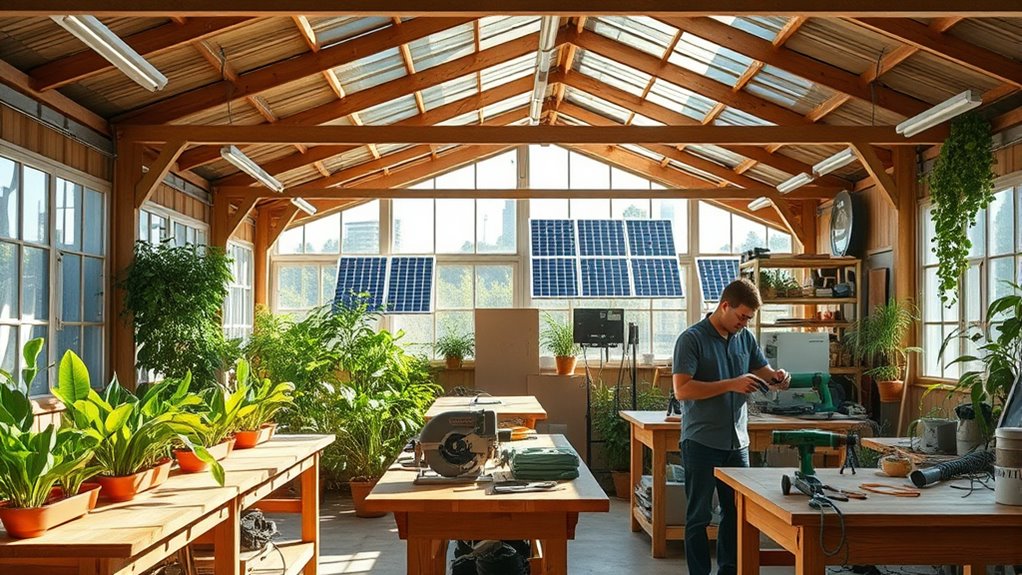
As more people seek sustainable solutions, eco-friendly practices and solar-powered tools are becoming essential for reducing environmental impact. In a workshop setting, adopting these practices not only helps protect the planet but also sets a positive example for others. One effective way to start is by implementing recycling initiatives. You can create designated bins for different materials like paper, plastics, and metals, making it easy to sort waste properly. Encouraging everyone to participate in recycling efforts minimizes landfill contributions and promotes a culture of sustainability. Along with recycling initiatives, choosing biodegradable materials for workshop supplies can considerably reduce your ecological footprint. Opt for biodegradable glues, tapes, and packaging that break down naturally, avoiding the long-lasting waste associated with traditional plastics. This shift not only reduces waste but also aligns with eco-conscious values, making your workshop more sustainable overall.
Implement recycling and biodegradable materials to make your workshop more sustainable and environmentally friendly.
Switching to solar-powered tools is another impactful step. Solar panels can power lighting, ventilation, and even certain power tools, decreasing reliance on electricity generated from fossil fuels. Not only does this lower your energy bills, but it also cuts down on greenhouse gas emissions. When installing solar-powered equipment, assess your workshop’s energy needs and select appropriately sized panels to maximize efficiency. Portable solar chargers can also power smaller devices, ensuring you stay productive even in off-grid locations. Using solar energy demonstrates an active commitment to renewable resources and reduces your carbon footprint, which resonates strongly with environmentally minded clients and colleagues. Additionally, considering natural floating pool options can enhance your backyard’s eco-friendly appeal by reducing chemical use and blending seamlessly with your landscape.
Furthermore, integrating eco-friendly practices into your daily routine enhances overall sustainability. For example, using hand tools instead of electric ones when possible reduces energy consumption. Maintaining equipment properly ensures it operates efficiently, extending its lifespan and decreasing the need for replacements. Educating your team about sustainable practices fosters a shared responsibility and encourages everyone to contribute to greener operations. Additionally, sourcing eco-friendly products and materials from local suppliers minimizes transportation emissions, further reducing your workshop’s environmental impact.
Incorporating these eco-conscious strategies not only benefits the environment but also boosts your workshop’s reputation. Clients increasingly prefer businesses that prioritize sustainability, and your efforts can set you apart in a competitive market. By embracing recycling initiatives, biodegradable materials, and solar-powered tools, you actively participate in a greener future. These practices are practical, cost-effective over time, and demonstrate a clear commitment to reducing your ecological footprint. In the end, making sustainability a core part of your workshop’s operation leads to a healthier planet and a more responsible, forward-thinking business.
Frequently Asked Questions
How Do Solar Tools Perform in Low Sunlight Conditions?
Solar tools may struggle in low sunlight conditions because their solar panel efficiency drops when sunlight intensity is weak. You’ll notice reduced power output, making tasks take longer or become less effective. To get the most out of your solar tools, use them during peak sunlight hours and make sure the panels are clean and properly angled. Keep in mind that performance decreases as sunlight diminishes, so plan your work accordingly.
Are Eco-Friendly Workshop Materials Cost-Effective Long-Term?
You’ll find eco-friendly workshop materials are surprisingly budget-friendly over time. By embracing recycling programs and biodegradable supplies, you create a sustainable environment that minimizes waste and reduces costs. These choices may seem like gentle ripples at first, but they build into a steady current of savings. Investing in eco-conscious options not only benefits the planet but also fosters a reputation for responsible craftsmanship that pays dividends long-term.
What Safety Precautions Are Necessary for Solar-Powered Equipment?
You should always wear personal protective equipment like gloves and goggles when handling solar-powered equipment to prevent injuries. Make sure electrical safety by inspecting cords and connections for damage before use. Keep the workspace dry to avoid shocks, and follow manufacturer instructions carefully. Turn off the system before maintenance, and never touch exposed wires. These precautions help protect you from electrical hazards and ensure safe operation of your solar-powered tools.
Can Traditional Workshop Tools Be Easily Converted to Solar Power?
You can convert traditional workshop tools to solar power, but it requires some adjustments. You’ll need a solar battery to store energy and a power inverter to convert DC to AC power, making your tools operational. While it’s not always straightforward, with proper setup and safety precautions, many tools can run efficiently on solar energy. This way, you reduce reliance on grid power and make your workshop more eco-friendly.
What Maintenance Is Required for Solar-Powered Tools?
You need to regularly check your solar-powered tools to maintain battery longevity and performance. Keep the batteries charged and avoid deep discharges to extend their lifespan. Follow cleaning protocols by wiping down solar panels and removing dust or debris that could reduce efficiency. Also, inspect connections and moving parts for wear or damage. Proper maintenance guarantees your tools stay efficient, eco-friendly, and ready for use whenever you need them.
Conclusion
Just as Robin Hood championed the cause of the common people, you can lead the charge for a greener planet. Embrace eco-friendly habits and harness solar power to make a real difference. Every small step you take echoes the legacy of those who fought for a better world. By choosing sustainable practices today, you become part of a story that future generations will thank you for—proof that even one person’s actions can inspire global change.