Having a home plumbing toolkit with essentials like adjustable wrenches, pipe wrenches, and slips-joint pliers lets you handle most repairs confidently. Add plumber’s tape for leak-proof seals and pipe cutters for clean cuts, and you’re prepared for quick fixes. Don’t forget fixture tools like a basin wrench or replacement washers to prevent or fix leaks. Keep these tools handy, and you’ll save time and money on common plumbing problems—start building your toolkit today to discover how easy repairs can be.
Key Takeaways
- Essential wrenches include adjustable, pipe, and slip-joint pliers for versatile plumbing repairs.
- Plumber’s tape (Teflon) ensures leak-proof threaded pipe connections.
- Pipe cutters or hacksaws allow precise pipe modifications and replacements.
- Fixture installation tools like basin wrenches and sealants prevent leaks and secure fixtures.
- A well-stocked toolkit with these essentials saves time, reduces costs, and simplifies home plumbing maintenance.
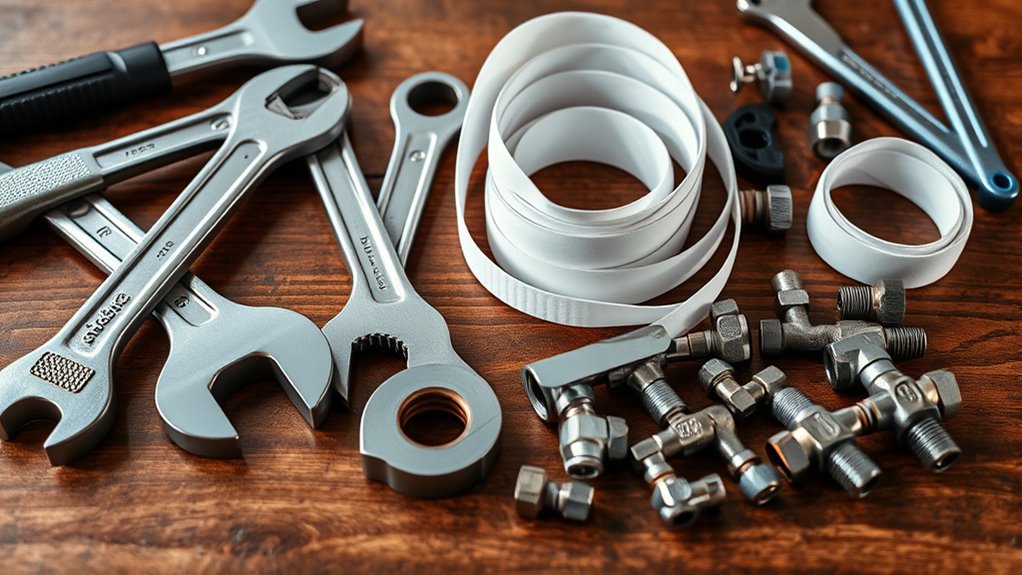
Have you ever faced a leaky faucet or clogged drain and wished you had the right tools on hand? When it comes to home plumbing, having a well-stocked toolkit makes all the difference. Whether you’re tackling a simple leak or planning a more involved project like pipe repair or fixture installation, knowing which tools to keep nearby can save you time, money, and frustration. Your plumbing toolkit should include a variety of essential items that enable you to handle most common issues confidently.
A well-stocked plumbing toolkit saves time, money, and frustration on common home repairs.
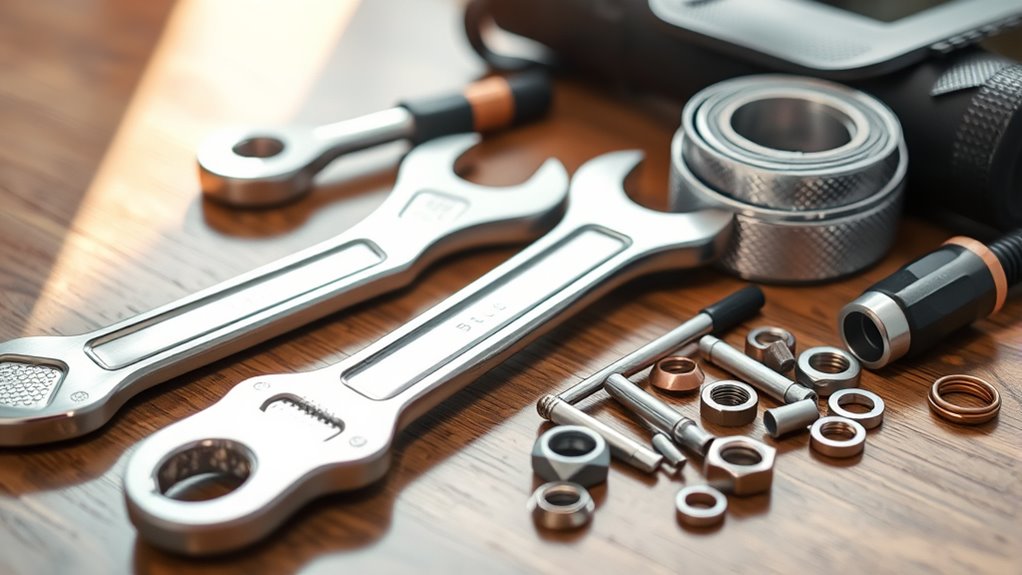
At the core of your toolkit, a set of quality wrenches is indispensable. Adjustable wrenches are versatile and ideal for gripping nuts and fittings of various sizes, making them perfect for tasks like tightening or loosening pipe connections. Pipe wrenches, with their strong grip and leverage, are especially useful for larger pipe repair jobs or when working with stubborn fittings. Pair these with slip-joint pliers for general gripping, twisting, and turning tasks, especially when working in tight spaces. With these tools, you can easily disassemble or tighten plumbing components without damaging them.
Another essential item is plumber’s tape, also known as Teflon tape. It might seem small, but it’s critical for creating watertight seals on threaded pipe connections. When you’re doing pipe repair or installing new fixtures, wrapping plumber’s tape around threads prevents leaks and ensures a secure fit. It’s quick to apply and effective, making it a must-have for any plumbing job. Alongside this, a durable pipe cutter or a hacksaw can help you make clean cuts in pipes when modifications are necessary. Having the right cutting tools on hand allows you to customize pipe lengths or replace damaged sections with ease.
For fixture installation projects, you’ll want a basin wrench—an often overlooked but invaluable tool. This wrench helps you reach nuts and bolts in tight spaces behind sinks or under cabinets. It simplifies installing or replacing fixtures like faucets or water supply lines. Having a variety of replacement washers, O-rings, and sealants nearby ensures you can address minor leaks or ensure tight, leak-free connections during fixture installation.
Finally, don’t forget to include a flashlight or headlamp, especially for working in dark, cramped spaces. A small, reliable plunger is also handy for clearing minor clogs without calling a plumber. Additionally, incorporating AI technology in your maintenance approach can help you diagnose issues more efficiently and plan repairs with greater precision. With these tools in your home plumbing toolkit, you’ll be prepared to handle most issues that come up, from fixing a leaky pipe to installing a new sink fixture. Being ready with the right tools means you can confidently take on plumbing tasks and keep your home running smoothly.
Frequently Asked Questions
How Often Should I Replace My Plumbing Tools?
You should replace your plumbing tools when they show signs of wear or damage, as this affects tool maintenance and lifespan. Regularly inspect your wrenches, tape, and other essentials for rust, cracks, or worn-out parts. If they’re no longer functioning efficiently or are unsafe to use, it’s time to substitute them. Proper care extends their life, but prioritizing safety and effectiveness ensures your plumbing projects stay smooth and successful.
Can I Use Regular Wrenches Instead of Plumbing-Specific Ones?
You can use regular wrenches instead of plumbing-specific ones, but it’s not ideal. Plumbing wrenches are designed for tool compatibility with pipes and fittings, which helps prevent damage. They also offer better tool durability in wet conditions and tight spaces. Using the right wrench guarantees you avoid stripping or damaging fittings, making repairs safer and more effective. Investing in plumbing-specific tools ultimately saves you time and hassle.
Is Plumber’s Tape Safe for All Types of Pipes?
Plumber’s tape is generally safe for most pipe types, but you should check pipe compatibility and material considerations first. Some plastics and specialized pipes may require different sealing methods. Don’t worry—using the right tape guarantees a tight seal without damage. Always read manufacturer instructions, and if unsure about your pipe material, consult a professional. Proper application keeps your plumbing leak-free and functioning smoothly.
What’s the Best Way to Store My Plumbing Toolkit?
To keep your plumbing toolkit organized, choose a sturdy toolbox or portable storage options like a tackle box or tool bag. Use compartments or small containers for wrenches, plumber’s tape, and fittings so everything stays neat and easy to find. Regularly clean and check your tools, and store them in a dry, cool place to prevent rust. Proper organization guarantees you’re prepared for any plumbing task quickly.
Are There Any Safety Precautions for DIY Plumbing Repairs?
When doing DIY plumbing repairs, always prioritize safety. Wear personal protective equipment like gloves and safety goggles to prevent injuries. Guarantee electrical safety by turning off power in nearby outlets if working near electrical components. Keep your workspace clean and dry to avoid slips. Follow instructions carefully, and don’t force fittings or tools. If unsure, consult a professional—safety always comes first to prevent accidents and damage.
Conclusion
With these essential tools in your home plumbing arsenal, you’re practically a superhero ready to tackle any leak or clog that comes your way. Wrenches, plumber’s tape, and other essentials aren’t just gadgets—they’re your secret weapons against plumbing disasters. Keep them handy, and you’ll be able to fix most issues faster than you can say “drip, drip.” Remember, with the right toolkit, you hold the power to keep your plumbing running smoothly—no crisis is too big!