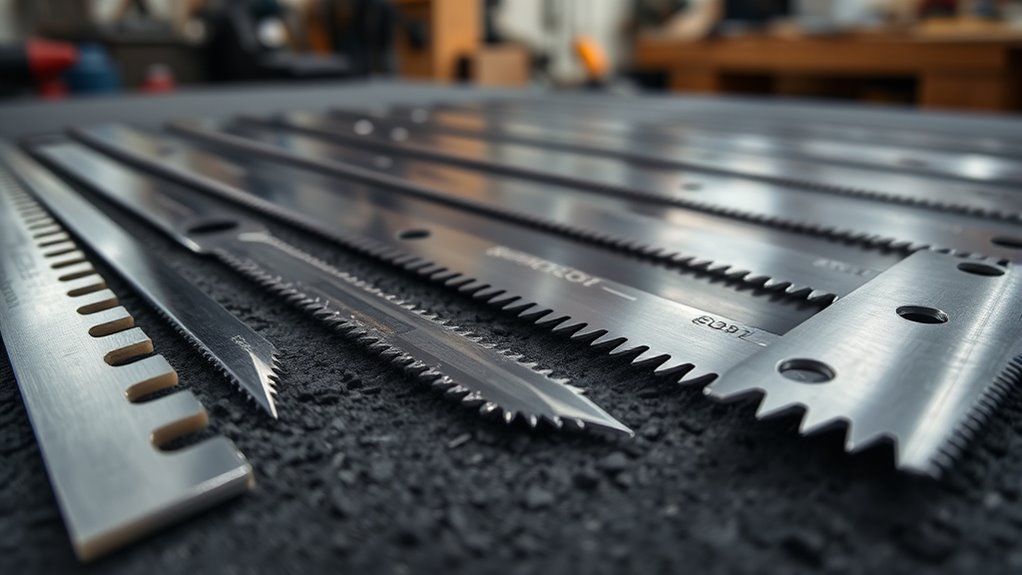

When choosing blades for your circular, miter, and table saws, consider the material you’ll cut—wood, plywood, or metal—as different blades are designed for specific tasks. Look at blade diameter, tooth count, and the type of tooth design to match your project’s needs. Properly maintained blades guarantee clean cuts and safety. For detailed advice on selecting the best blades for each saw type, you’ll find valuable tips as you explore further.
Key Takeaways
- Match blade type to saw: circular blades for general cuts, miter blades for angled cuts, and table saw blades for heavy-duty tasks.
- Choose blade diameter and arbor size compatible with your saw to ensure proper fit and safe operation.
- Select the appropriate tooth count: fewer teeth for faster cuts, more teeth for smoother finishes.
- Consider blade material and coating based on the material being cut, such as carbide-tipped blades for hardwoods.
- Always verify blade safety features and manufacturer recommendations before installation and use.
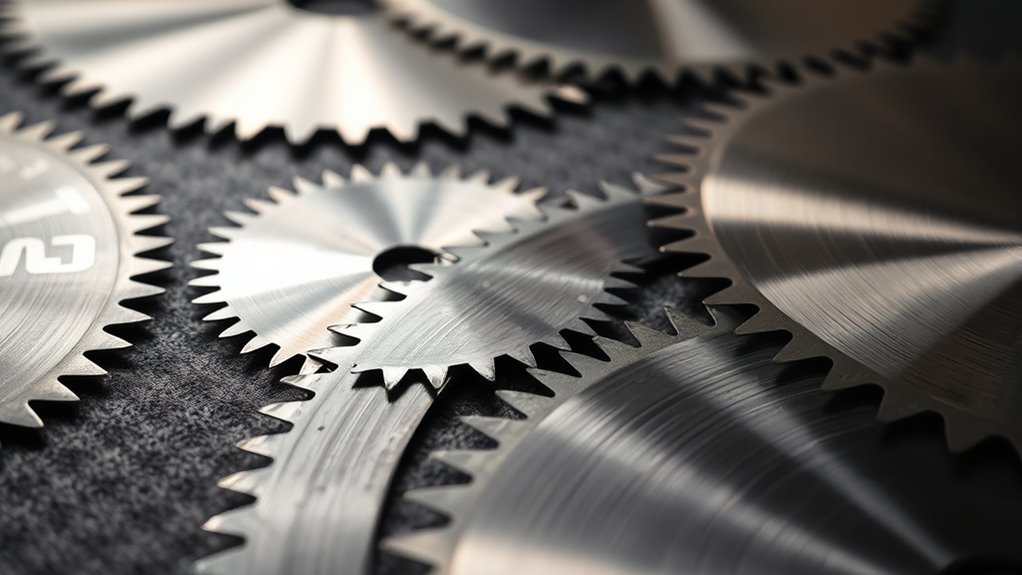
A saw blade is a critical tool for cutting through wood, metal, or other materials efficiently and accurately. To keep it performing at its best, you need to focus on proper blade maintenance. Regularly inspecting your blades helps identify signs of wear, such as dullness, chipped teeth, or warping. Dull blades require more effort and can lead to rough cuts, so sharpening or replacing them promptly is essential. Clean your blades after each use to remove resin, pitch, and debris that can accumulate and reduce cutting efficiency. Use appropriate cleaning methods, like gentle brushing or specialized solvents, to avoid damaging the blade’s teeth or coating. Additionally, ensure that your blades are properly stored in a dry, organized environment to prevent rust and corrosion. Proper storage not only prolongs the life of your blades but also makes it easier to select the right one for each project. proper blade maintenance is vital for ensuring safety, precision, and the longevity of your tools.
When working with different types of saw blades, safety precautions should always be your top priority. Always wear safety gear such as goggles, ear protection, and dust masks to shield yourself from flying debris, loud noise, and harmful dust particles. Before starting any cut, double-check that the blade is securely mounted and properly aligned. Loose or misaligned blades can cause dangerous kickbacks or uneven cuts. Keep your hands away from the blade’s cutting path and use push sticks or guides when needed to maintain control. Never force a blade through material; let the saw do the work at a steady, controlled pace. Before making adjustments or changing blades, unplug your saw to prevent accidental startup. Additionally, ensure that the saw’s safety guards are in place and functioning correctly—these are designed to protect you from the blade’s contact. Following these safety measures reduces the risk of injury and ensures accurate, efficient cuts.
Frequently Asked Questions
How Do I Determine the Right Blade Size for My Saw?
To determine the right blade size for your saw, you need to measure the blade compatibility by checking the diameter, arbor size, and thickness of your current blade. Use a measuring tape or caliper to accurately measure the blade diameter, ensuring it matches your saw’s specifications. Always verify the saw’s manual or existing blade to confirm compatibility before purchasing a new one for safe and efficient operation.
What Safety Precautions Should I Follow When Changing Blades?
Don’t take any chances; safety comes first. Before blade removal, unplug your saw and wear safety gear like gloves and eye protection. Wait for the blade to cool down if recently used. Use the right tools to loosen the blade bolt carefully. Keep your hands clear of moving parts, and always double-check that the saw is unplugged before proceeding. It’s better to be safe than sorry.
Can I Use the Same Blade for Different Materials?
You shouldn’t use the same blade for different materials because blade materials and cutting versatility vary. For example, a carbide-tipped blade offers better durability and clean cuts on hardwoods, while a steel or abrasive blade might work better for softer materials or specific tasks. Switching blades guarantees safety and peak performance, preventing damage to your saw and achieving the best results for each material. Always match your blade to the material you’re cutting.
How Often Should I Replace a Worn-Out Saw Blade?
A stitch in time saves nine, so replace your worn-out saw blade before it compromises your work. You should replace a blade when you notice decreased cutting accuracy, increased vibration, or visible damage. Regular blade maintenance guarantees peak performance and safety. Don’t wait until the blade is completely dull—timely replacement keeps your cuts precise and prevents accidents, saving you frustration and effort in the long run.
Are There Specific Blades for Cutting Metal or Plastic?
Yes, there are specific blades for cutting metal or plastic. You should use metal cutting blades designed with tougher teeth and materials to handle metals without dulling quickly. For plastics, plastic cutting blades have fine, smooth teeth to prevent melting or chipping. Using the right blade guarantees cleaner cuts, longer blade life, and safety. Always select the appropriate metal cutting blades or plastic cutting blades based on the material you’re working with.
Conclusion
Remember, choosing the right saw blade can make all the difference in your project’s success. With the right blade, you’ll cut smoothly and efficiently, saving time and frustration. As the saying goes, “A stitch in time saves nine,” so take the time to pick the right blade now, and you’ll enjoy cleaner cuts and better results every time. Happy sawing!