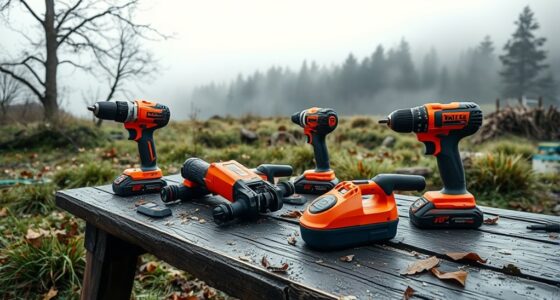
To extend your cordless tool batteries’ life and performance, follow proper charging practices by avoiding full discharges and using the right chargers. Store batteries in cool, dry places and inspect them regularly for signs of damage. Keep them cool during use and recharge when they reach about 20-30% capacity. Proper maintenance and responsible handling can make a big difference, and you’ll discover more helpful tips if you continue exploring.

Get tools and workshop supplies delivered free — and shop member deals
- Fast, free delivery on millions of items
- Access to Prime Big Deal Days deals on October 6–7
- Prime Video, Amazon Music and more included
Key Takeaways
- Use the manufacturer’s recommended charger to prevent overheating and ensure proper charging.
- Avoid deep discharges; recharge batteries when they reach 20-30% capacity for optimal lifespan.
- Store batteries in a cool, dry place and keep them away from extreme temperatures to reduce wear.
- Regularly inspect batteries for swelling, corrosion, or damage, and replace them when performance declines.
- Recycle old batteries responsibly through designated collection programs or manufacturer take-back initiatives.
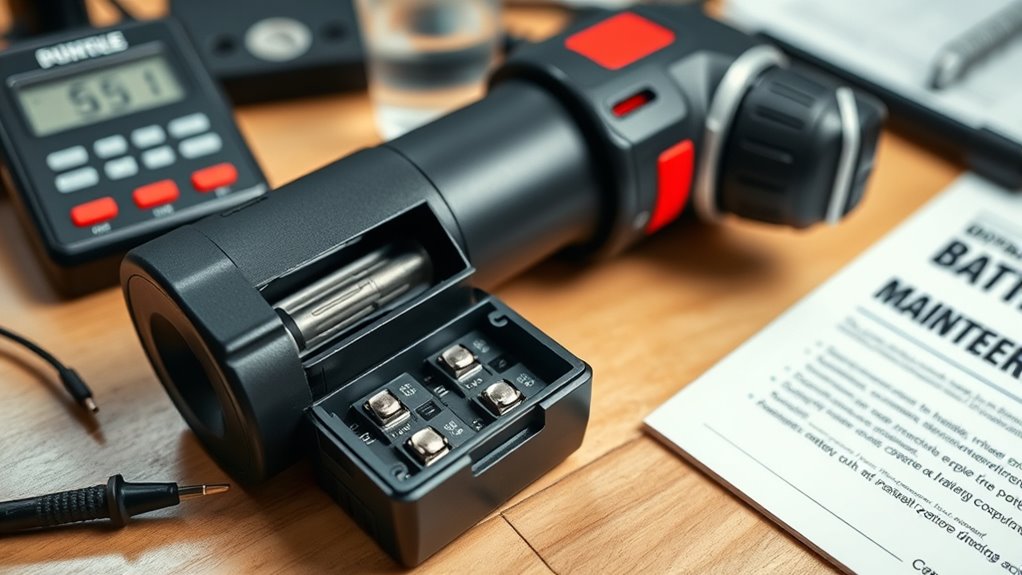
Ever wondered what keeps your cordless tools running smoothly? It all comes down to how well you care for your batteries. Proper battery recycling and good charging practices are essential to maintain peak performance and extend the lifespan of your tool batteries. When your batteries reach the end of their life, recycling them responsibly prevents environmental harm and guarantees valuable materials are recovered. Many communities have designated recycling centers or collection programs specifically for rechargeable batteries. Taking advantage of these programs not only helps the environment but also supports the proper disposal of potentially hazardous materials. Avoid tossing used batteries in the trash, as this can lead to pollution and safety hazards. Instead, seek out local recycling options or return them to the manufacturer if they offer take-back programs.
Charging practices are equally vital in maintaining battery health. It’s tempting to leave your cordless tools plugged in for convenience, but overcharging can strain the battery and reduce its capacity over time. To get the most out of your batteries, follow the manufacturer’s recommended charging guidelines. Typically, it’s best to avoid letting batteries completely discharge before recharging, as deep discharges can diminish their overall lifespan. Instead, try to recharge them when they reach around 20-30% capacity. Using the right charger designed for your specific battery type is also important; incompatible chargers can deliver incorrect voltage or current, damaging the cells. Never use a damaged or unofficial charger, as this can cause overheating or even pose safety risks. Proper charging habits help prevent internal faults that can lead to capacity loss. Keep batteries cool while charging, as excessive heat accelerates degradation. Store batteries in a cool, dry place when not in use, and avoid exposing them to extreme temperatures. Additionally, understanding piercing care and hygiene can be useful for maintaining overall body health. If you notice your battery isn’t holding a charge like it used to, it might be time to replace it rather than trying to squeeze more life out of a failing cell. Regularly inspecting your batteries for signs of swelling, corrosion, or damage can prevent accidents and ensure safe operation. Remember, a well-maintained battery not only performs better but also lasts longer, saving you money and hassle in the long run.
As an affiliate, we earn on qualifying purchases.
Frequently Asked Questions
How Do Temperature Fluctuations Affect Battery Longevity?
Temperature fluctuations cause thermal cycling, which stresses your battery and shortens its lifespan. When exposed to extreme heat or cold, the battery’s chemical reactions become less efficient, reducing performance. High humidity adds to the humidity impact, accelerating corrosion and damage. To maximize battery longevity, avoid rapid temperature changes and store your batteries in a cool, dry place, protecting them from thermal cycling and humidity damage.
Can Storing Batteries in a Refrigerator Improve Lifespan?
Storing batteries in a refrigerator can help with battery cooling, which may temporarily preserve their performance. However, you should take precautions like warming the battery to room temperature before use to prevent moisture buildup. Keep them in an airtight container to avoid condensation. While refrigerator storage isn’t a long-term solution, it can be beneficial for short-term cooling, ultimately helping extend your battery’s lifespan when combined with proper storage practices.
What Are Signs of a Failing Cordless Tool Battery?
Think of your battery as a ticking clock—when it falters, signs emerge. You’ll notice reduced run time, inconsistent power, or difficulty holding a charge. These symptoms hint that your battery chemistry is breaking down, often after too many charging cycles. If your cordless tool’s battery no longer delivers reliable performance or drains quickly, it’s a clear sign it’s failing. Don’t ignore these signals; act before total failure strikes.
Are There Compatible Third-Party Batteries for My Tools?
Yes, there are third-party options available for your tools, but you need to verify battery compatibility first. Make sure the third-party batteries match your tool’s voltage, size, and connector type to guarantee proper fit and performance. Research reputable brands and read reviews to avoid low-quality options. Using compatible third-party batteries can save you money and offer reliable performance, but always confirm compatibility to prevent potential damage.
How Often Should I Recalibrate My Battery Gauge?
Think of your battery gauge as a faithful compass—sometimes it needs recalibration to stay accurate. You should recalibrate your battery gauge every 10 to 20 charge cycles or if you notice inconsistent readings. This process improves battery calibration and gauge accuracy, ensuring you don’t run out of juice unexpectedly. Regular recalibration keeps your tools reliable, so you always know how much power you have left to finish your project smoothly.
rechargeable power tool batteries
As an affiliate, we earn on qualifying purchases.
As an affiliate, we earn on qualifying purchases.
Conclusion
Think of your cordless tool battery as a delicate garden plant. With regular care—avoiding overuse, keeping it charged, and storing it properly—you’ll help it thrive and grow stronger over time. Just like a well-tended garden yields vibrant blooms, your battery will perform at its best when you nurture it with patience and attention. Treat it like a treasured friend, and it’ll reward you with reliable power whenever you need it most.
battery inspection tools for cordless tools
As an affiliate, we earn on qualifying purchases.
As an affiliate, we earn on qualifying purchases.
battery recycling collection programs
As an affiliate, we earn on qualifying purchases.
As an affiliate, we earn on qualifying purchases.
Halloween Picks
halloween
As an affiliate, we earn on qualifying purchases.