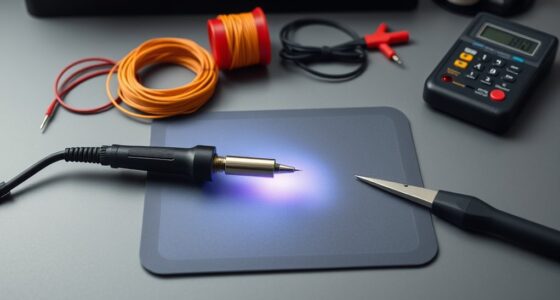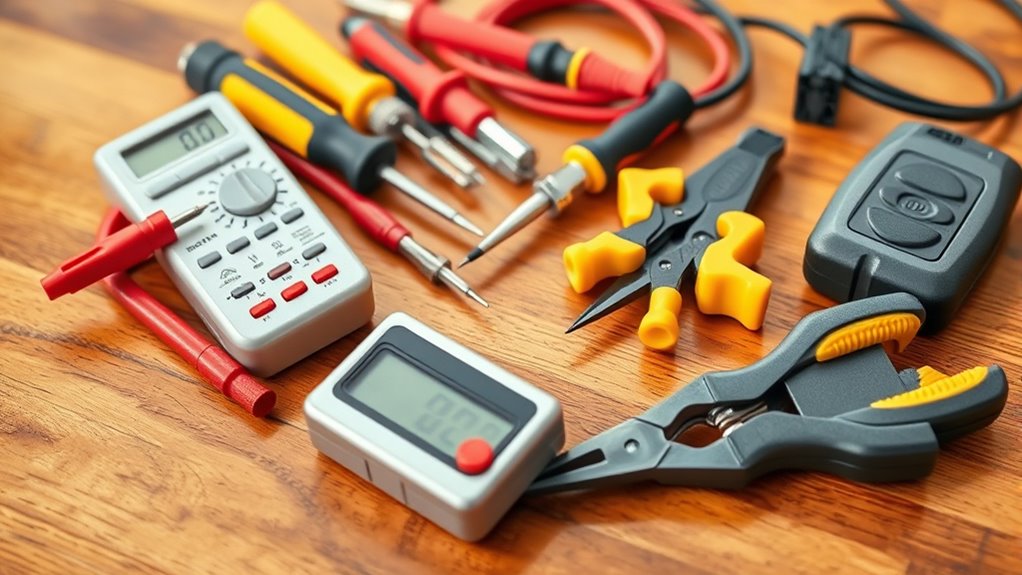

To handle basic electrical repairs safely and effectively, you’ll need a well-stocked toolkit. Essential tools include a voltage tester or multimeter to check circuits, wire strippers to prepare wires, needle-nose pliers for manipulating wires, and a set of screwdrivers for fasteners. Don’t forget electrical tape for insulation. Ensuring your tools are in good condition and used properly keeps you safe and efficient. Keep exploring to discover tips that make your repairs even easier.

Get business pricing on tools and workshop supplies
- Business-only prices and quantity discounts
- Tax-exempt purchasing
- Multiple users, one account, clear invoices
Key Takeaways
- Essential tools include a voltage tester, wire strippers, needle-nose pliers, screwdrivers, and electrical tape.
- Always turn off power and verify circuit de-energization before starting repairs.
- Use insulated tools and wear gloves to enhance safety during electrical work.
- Keep tools clean, sharp, and well-maintained to ensure safety and efficiency.
- Organize your toolkit regularly to ensure you have the right tools readily available for basic repairs.

Have you ever wondered what tools you need to handle basic electrical repairs around your home? Building a reliable electrical toolkit isn’t just about having the right tools—it’s about knowing how to use them safely and keep them in good condition. Safety precautions should always come first. Before you start any electrical work, turn off the power at the circuit breaker. Confirm the circuit is dead by testing with a voltage tester or multimeter. Wearing insulated gloves and using tools with insulated handles further minimizes the risk of shock. Never work on live wires unless absolutely necessary, and even then, proceed with extreme caution. Remember, adhering to safety precautions isn’t just about avoiding injury; it’s about ensuring your repairs are safe and effective.
Once safety is addressed, focus on maintaining your tools properly. Tool maintenance is essential for longevity and reliable performance. After each use, wipe down your tools to remove dirt, grime, and any moisture that can cause rust or corrosion. Keep your screwdrivers, pliers, and other metal tools in a dry, organized toolbox. Regularly inspect tools for signs of damage—cracked handles, worn tips, or loose parts—and replace or repair them as needed. Sharp, well-maintained tools make your work easier and safer, reducing the risk of slips or mistakes. Proper storage also prevents damage; store insulated tools separately from other household items to keep their protective coatings intact. Proper tool maintenance is vital for ensuring your tools perform optimally and last longer.
A basic electrical toolkit should include essential tools like a voltage tester or multimeter, wire strippers, needle-nose pliers, a screwdriver set (both flathead and Phillips), and electrical tape. Having these tools ready means you’re prepared to handle common tasks such as replacing outlets, fixing switches, or troubleshooting circuit issues. Every tool in your kit should be kept in good condition, which ties back to regular tool maintenance. For instance, keep your wire strippers sharp and ensure your screwdrivers fit their screws snugly, so you don’t strip the screw heads or slip during work.
Lastly, always follow the manufacturer’s instructions for your tools and never force a tool to do a job it’s not designed for. Proper tool maintenance and safe work practices are the backbone of effective electrical repairs. When you prioritize safety precautions and keep your tools in top shape, you not only protect yourself but also ensure your repairs are durable and reliable. Building a well-stocked, well-maintained electrical toolkit is an investment that pays off in safety, efficiency, and peace of mind every time you tackle a home electrical task.
As an affiliate, we earn on qualifying purchases.
Frequently Asked Questions
Can I Perform Electrical Repairs Without Professional Training?
You shouldn’t perform electrical repairs without professional training because DIY safety is vital. Without proper knowledge, you risk electric shock, fire hazards, and violating the electrical code. It’s best to leave complex tasks to licensed electricians who understand safety protocols and local regulations. If you’re determined to try simple repairs, thoroughly research the electrical code and always turn off power before starting. When in doubt, consult a professional for safety and compliance.
What Safety Gear Should I Use When Working on Electrical Projects?
When working on electrical projects, you should always wear personal protective equipment, including electrical gloves that insulate against shocks. Safety goggles are essential to protect your eyes from sparks or debris, and a non-conductive helmet can shield your head. Always make certain your workspace is dry, and use insulated tools to minimize risks. Prioritize safety gear to prevent injuries and stay safe while handling electrical repairs.
How Often Should I Update or Replace My Electrical Toolkit?
You should update or replace your electrical toolkit every 1-2 years, especially if you notice signs of wear or damage. Regular tool maintenance guarantees safety and efficiency, so inspect your tools regularly. Coincidentally, just as a worn screwdriver can slip, a worn-out toolkit can cause accidents. Following a consistent replacement schedule keeps your tools reliable, helping you handle electrical repairs safely and effectively.
Are There Any Legal Restrictions on DIY Electrical Repairs?
There are legal restrictions on DIY electrical repairs, mainly to guarantee safety and compliance with electrical codes. You shouldn’t attempt major electrical work if it violates local regulations or safety standards. Always prioritize DIY safety by understanding your limits and consulting a licensed electrician for complex tasks. Ignoring electrical codes can lead to hazards, fines, or failed inspections, so it’s best to follow regulations and know when to seek professional help.
What Are the Signs Indicating I Need Professional Electrical Assistance?
If you notice warning signs like frequent circuit breaker trips, flickering lights, or outlets that spark or smell burnt, it’s time to call a professional. Emergency indicators such as exposed wiring, burning odors, or sparks are serious and require immediate expert attention. Don’t ignore these signs, as they could signal dangerous electrical issues that pose fire risks or electrical shocks. Always prioritize safety and seek professional help when needed.
multimeter for electrical repairs
As an affiliate, we earn on qualifying purchases.
As an affiliate, we earn on qualifying purchases.
Conclusion
Having the right tools makes electrical repairs safer and easier, so don’t skip building your toolkit. Notably, some experts believe that a well-equipped homeowner can prevent many accidents by handling minor fixes themselves. While professional help is essential for complex issues, being prepared with essentials like a voltage tester and screwdrivers boosts your confidence and safety. Remember, a small investment in tools today can save you time, money, and trouble down the road.
As an affiliate, we earn on qualifying purchases.
As an affiliate, we earn on qualifying purchases.
Halloween Picks
halloween
As an affiliate, we earn on qualifying purchases.