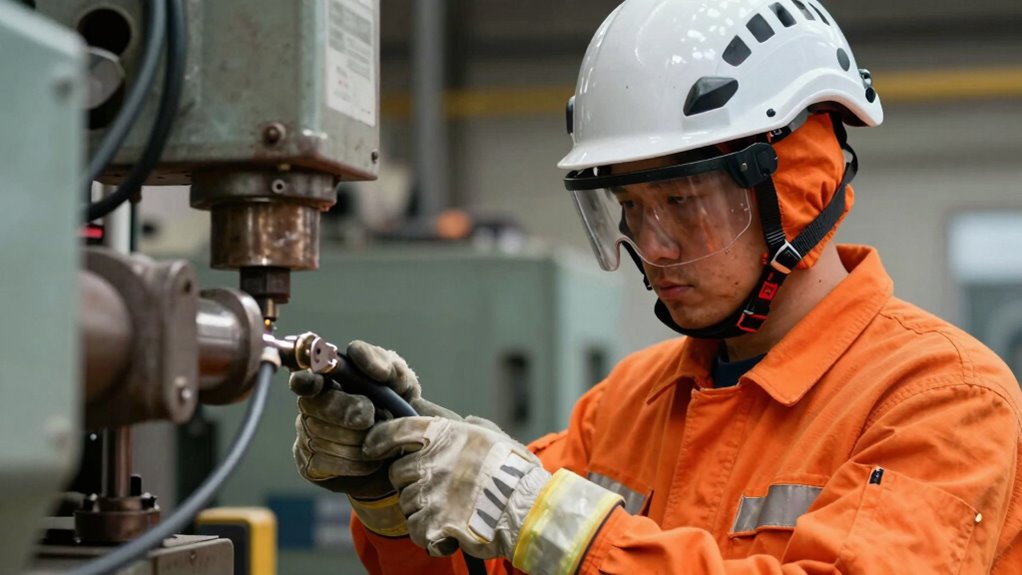
You need PPE that matches the task because each hazard requires specific protection to keep you safe. Wearing generic or incorrect PPE can leave you exposed to risks like chemical splashes, falling objects, or electrical shocks. Properly tailored gear ensures better fit, durability, and effectiveness, helping you avoid injuries. By understanding the hazards through thorough assessment, you can select the right PPE for each job. Keep exploring to learn how proper gear can make all the difference in your safety.

Get business pricing on tools and workshop supplies
- Business-only prices and quantity discounts
- Tax-exempt purchasing
- Multiple users, one account, clear invoices
Key Takeaways
- PPE must be tailored to specific hazards to provide effective protection and prevent injuries or exposures.
- Proper matching ensures PPE fits correctly, maximizing comfort and safety during task performance.
- Different tasks pose unique risks; specialized PPE addresses these hazards more effectively than generic gear.
- Using the right PPE for a task enhances durability and maintains protective integrity under specific environmental conditions.
- Aligning PPE with task requirements supports comprehensive risk mitigation and safety compliance.

Personal protective equipment (PPE) is essential for safeguarding yourself against workplace hazards, but choosing the right gear depends on the specific task at hand. To guarantee maximum protection, you need to conduct a proper hazard assessment before selecting your PPE. This process involves identifying potential risks associated with the task, such as chemical exposure, falling objects, or electrical hazards. Once you understand these risks, you can determine which PPE elements are necessary and how they should be customized to fit the specific situation. PPE customization isn’t about just grabbing a pair of gloves or goggles; it’s about tailoring your gear to effectively address the unique hazards of each task.
When you perform a hazard assessment, you gain a clear understanding of the environment and the specific dangers you face. This knowledge guides you in choosing PPE that provides adequate coverage, proper fit, and sufficient durability. For example, if you’re working with chemicals, you’ll need gloves resistant to the specific substances, along with eye protection designed to prevent splashes. If your work involves high noise levels, hearing protection becomes essential. By customizing PPE based on these assessments, you reduce the risk of injury or exposure, making your safety measures more effective. Recognizing the importance of hazard assessment ensures that your PPE choices are rooted in a thorough understanding of the risks involved. Incorporating risk mitigation strategies can further enhance your safety protocols, especially in complex environments. Additionally, considering proper PPE fit is critical, as ill-fitting equipment can compromise safety and comfort during work. Properly assessing hazards also helps in selecting PPE with the right material properties, which is essential for durability and effectiveness in different scenarios.
chemical resistant gloves for chemical handling
As an affiliate, we earn on qualifying purchases.
As an affiliate, we earn on qualifying purchases.
Frequently Asked Questions
How Often Should PPE Be Inspected for Damage?
You should inspect your PPE for damage before each use to guarantee safety. Regular inspections help identify issues that could compromise PPE durability or ergonomic design, which are vital for effective protection. Additionally, conduct more thorough inspections periodically, such as weekly or monthly, depending on usage. Promptly replace or repair damaged PPE to maintain its protective qualities and assure it remains comfortable and functional during work.
Can PPE Be Reused Safely After Cleaning?
You can often reuse PPE after cleaning, but it depends on the material and contamination control. Carefully inspect PPE for any signs of damage or residue, as some materials may degrade or harbor hidden contaminants. Proper cleaning methods guarantee safety and effectiveness, but always follow manufacturer guidelines. If in doubt, replace PPE to maintain protection, since contaminated or compromised gear can lead to exposure risks. Prioritize safety with diligent inspection and cleaning routines.
What Training Is Required to Select Proper PPE?
You need training on selecting proper PPE by understanding how to guarantee proper fit and material selection. You’ll learn to assess the specific hazards of each task and choose gear that offers adequate protection without sacrificing comfort or mobility. Proper fit prevents accidents, while material selection ensures durability and resistance to hazards. This training helps you make informed decisions, reducing risks and keeping you safe in various work environments.
How Does PPE Compatibility Affect Safety?
PPE compatibility directly impacts your safety by ensuring personal comfort and effective protection. When PPE fits well and is compatible with other gear, you’re more likely to wear it consistently, reducing risk. Conducting a thorough risk assessment helps you choose PPE that suits the task, preventing discomfort or gaps in protection. Proper compatibility minimizes hazards, keeps you comfortable, and promotes safer work practices overall.
Are There Regulations for PPE Standards?
Yes, there are regulations for PPE standards. You must prioritize personal fit and material durability, ensuring PPE provides proper protection. Regulatory bodies like OSHA and ANSI set strict safety standards, so you can be confident your gear meets essential criteria. These regulations help you avoid risks, ensuring your PPE is both effective and compliant. Staying informed about standards keeps you safe and compliant on every job.
hearing protection earmuffs for loud environments
As an affiliate, we earn on qualifying purchases.
As an affiliate, we earn on qualifying purchases.
Conclusion
Remember, PPE isn’t just a costume you throw on—it’s your armor, tailored to the battle at hand. When you match your gear to the task, you’re planting seeds of safety in the fertile ground of awareness. Think of it as donning a suit of shining armor, perfectly fitted to protect you from the arrows of danger. Stay vigilant, choose wisely, and wear your PPE like a knight ready to face any challenge that comes your way.
adjustable safety goggles for chemical splashes
As an affiliate, we earn on qualifying purchases.
As an affiliate, we earn on qualifying purchases.
fall protection harness for construction
As an affiliate, we earn on qualifying purchases.
As an affiliate, we earn on qualifying purchases.
Fall yard work Picks
leaf blowers
As an affiliate, we earn on qualifying purchases.