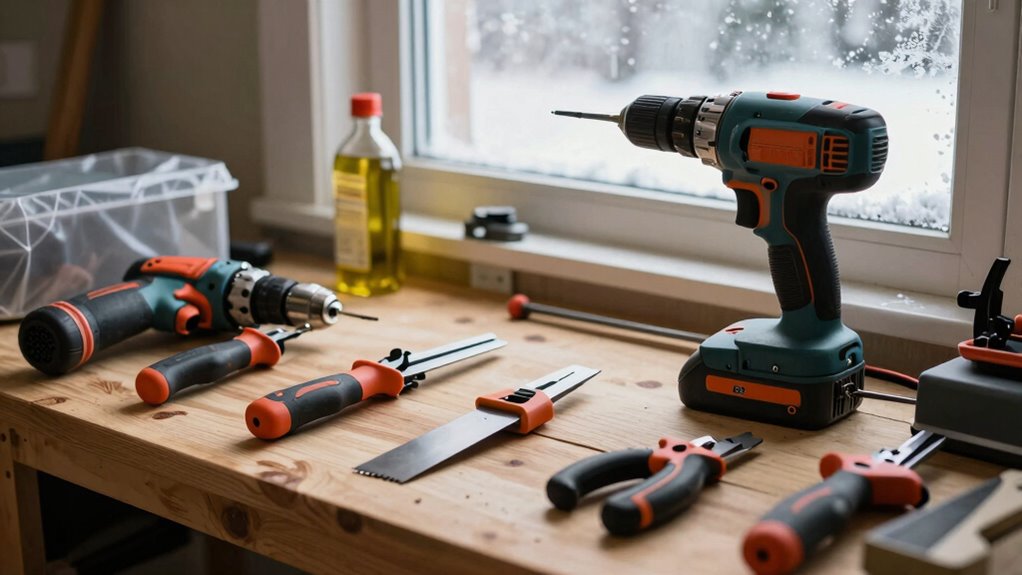

Before the first freeze, inspect and clean your power tools thoroughly, removing dirt, debris, and moisture, and dry them completely to prevent rust. Remove batteries from cordless tools and store them indoors in a warm, dry place, fully charged and following manufacturer guidelines. Store tools in a secure, moisture-proof area, covering blades and cords to prevent damage. Regularly check for signs of deterioration, and keep tools organized for easy spring access. Keep exploring for more tips on protecting your tools year-round.

Get tools and workshop supplies delivered free — and shop member deals
- Fast, free delivery on millions of items
- Access to Prime Big Deal Days deals on October 6–7
- Prime Video, Amazon Music and more included
Key Takeaways
- Fully clean and dry tools, removing dirt, debris, and moisture to prevent rust during freezing temperatures.
- Remove and store batteries in a warm, dry environment to maintain capacity and prevent damage.
- Store tools in a secure, dry location away from outdoor elements and extreme cold.
- Cover blades and cutting edges to prevent rust and damage during storage.
- Inspect tools for damage or wear and organize them for easy access after winter.
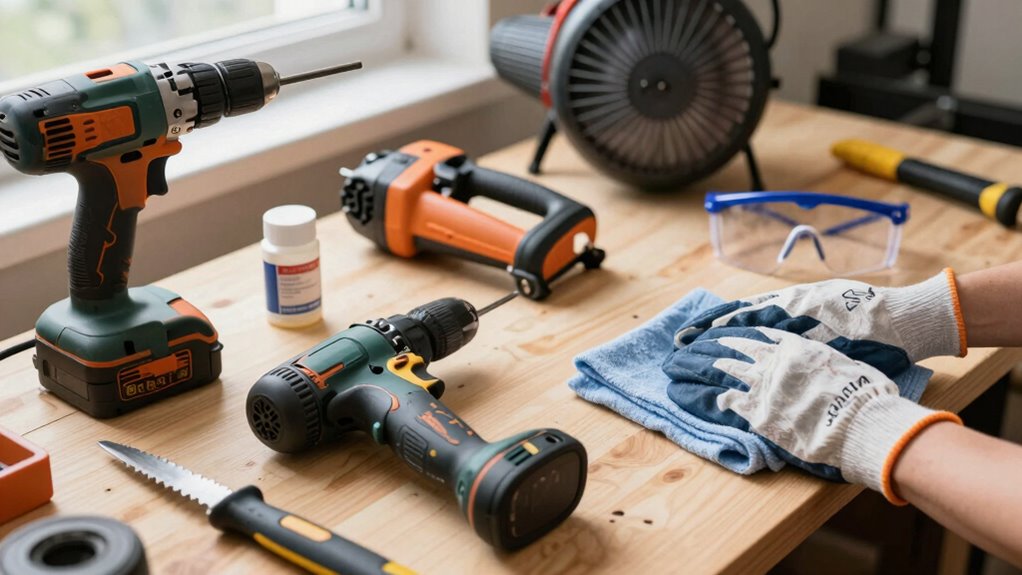
Are you prepared to protect your power tools from the upcoming first freeze? If not, it’s time to take action. Freezing temperatures can damage your tools, especially those with batteries or sensitive components. Proper preparation guarantees they remain in good condition and ready for use when spring arrives. Start by inspecting each tool thoroughly. Look for signs of wear or damage, and address any issues now to prevent more significant problems later.
Battery maintenance is essential before the cold weather hits. Remove batteries from cordless tools and store them separately in a warm, dry place. Cold temperatures can cause batteries to lose charge quickly or even become damaged if left in the tools. Fully charge each battery before storage to prevent capacity loss. Consider storing batteries in a slightly warmer environment, such as inside your house, rather than in a garage or shed exposed to freezing temps. This helps maintain their longevity and performance. If your batteries have a storage mode or recommended temperature range, follow those guidelines carefully. Additionally, proper storage practices help extend the lifespan of your power tools and batteries. Ensuring your tools are stored in a way that minimizes exposure to moisture and extreme temperatures is a key part of biodiversity conservation, by preventing environmental degradation caused by rust and corrosion. Taking steps to prevent moisture buildup can also help avoid tool corrosion, which is a common issue in winter storage.
Storage safety also plays a critical role in protecting your tools during winter. Clean all tools thoroughly to remove dirt, debris, and moisture, which can cause rust or corrosion over time. Once clean, dry them completely to prevent any moisture from freezing inside moving parts. Store your power tools in a secure, dry location that’s protected from the elements. Avoid leaving them outside or in unheated sheds where moisture and cold can cause damage. Use sturdy storage containers or cabinets to keep tools organized and prevent accidental drops or injuries. Regularly inspecting your storage area for signs of moisture or pests can further safeguard your tools from environmental damage. Additionally, choosing appropriate storage containers can help create a more controlled environment for your tools, reducing the risk of winter-related damage.
For tools that will remain in storage over the winter, consider applying a light coat of oil or corrosion inhibitor on metal parts. This extra layer helps prevent rust, especially in humid or damp environments. When storing, ensure that power cords are neatly coiled and placed out of the way to avoid damage. If your tools have blades or cutting edges, cover or shield them to keep them sharp and protected from dust and moisture.
Finally, take a moment to check your tool inventory and make sure everything is accounted for and in good shape. Prepare a checklist so you can quickly verify your tools when spring comes. Proper storage safety and diligent battery maintenance now will save you time and money later, ensuring your power tools stay in prime condition and ready to work when the weather warms up.
As an affiliate, we earn on qualifying purchases.
Frequently Asked Questions
Can Power Tools Be Stored Outside During Winter?
You shouldn’t store power tools outside during winter. Cold, moisture, and temperature fluctuations can damage their internal components and batteries. To guarantee longevity, perform proper tool maintenance—clean and dry them thoroughly—and follow storage tips like keeping tools in a dry, sheltered place. Using a toolbox or storage shed protects your tools from harsh weather, preventing rust and damage. Proper winter storage helps your power tools stay in good condition for years to come.
How Often Should I Check Tool Batteries Before Winter?
You should check your tool batteries at least once a month before winter. Did you know that improper battery calibration can reduce capacity by up to 50%? To keep them in top shape, establish a consistent charging schedule, ensuring batteries are fully charged and stored correctly. Regular checks help prevent capacity loss and extend lifespan, so make it a habit to assess your batteries to stay ready for winter projects.
Is It Necessary to Replace Oil Before Winter Storage?
Yes, it’s necessary to replace the oil before winter storage. An oil change guarantees your power tools are well-lubricated and protected against corrosion during the cold months. Follow storage tips like cleaning your tools thoroughly, draining any fuel or oil residues, and keeping them in a dry, sheltered place. Proper maintenance now helps prevent damage, so your tools stay in good shape and are ready to use when spring arrives.
What Safety Precautions Should I Take During Prepping?
Before you start prepping your power tools, take safety seriously—don’t skip it. Wear personal protective equipment like gloves, safety goggles, and ear protection to shield yourself from hazards. Always handle tools with care, making sure they’re unplugged or powered down during maintenance. Stay alert and focused; rushing increases risks. By prioritizing safe handling and protective gear, you prevent accidents and ensure your prepping process is efficient and secure.
How Do I Prevent Rust on Metal Parts?
To prevent rust on metal parts, you should regularly clean and dry your power tools after use, removing any moisture or debris. Apply a thin layer of rust prevention oil or lubricant to metal surfaces to provide metal protection. Store tools in a dry, sheltered area, and consider using silica gel packs or desiccants to reduce humidity. These steps help guarantee your tools stay in good condition through the cold, damp months.
As an affiliate, we earn on qualifying purchases.
Conclusion
By prepping your power tools before the first freeze, you guarantee they’ll last through winter and be ready when spring arrives. Proper maintenance can extend their lifespan considerably—studies show that well-maintained tools last up to 30% longer. So, take a little time now to clean, drain, and store them correctly. You’ll save money and avoid frustration when the weather warms up again. Keep your tools in top shape, and they’ll be ready whenever you need them.
As an affiliate, we earn on qualifying purchases.
moisture-proof power tool storage box
As an affiliate, we earn on qualifying purchases.
As an affiliate, we earn on qualifying purchases.
Fall yard work Picks
leaf blowers
As an affiliate, we earn on qualifying purchases.