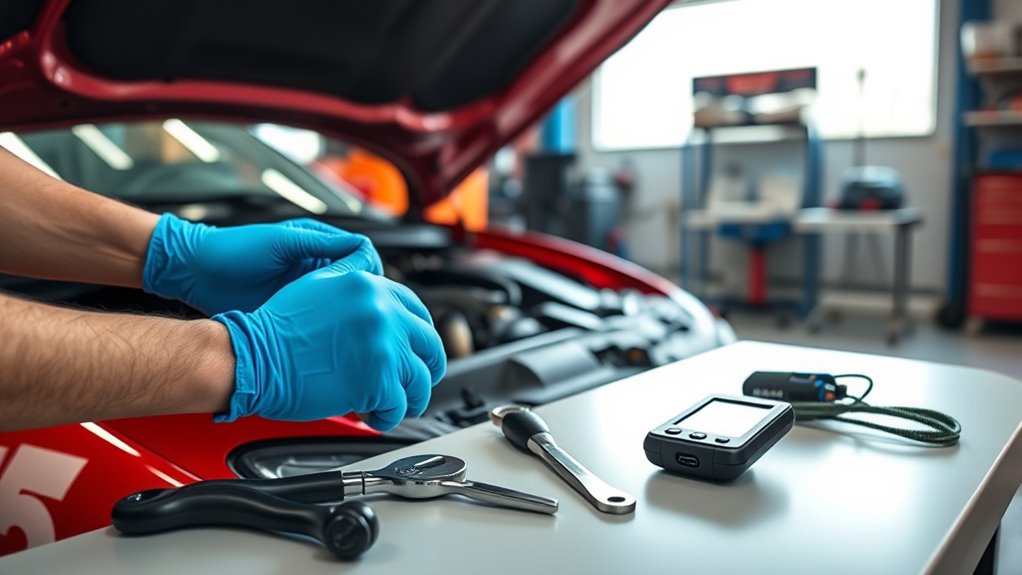
You can easily handle basic car maintenance yourself with essential tools like a jack, lug wrench, and oil filter wrench. Tasks such as rotating your tires, changing the oil, or replacing filters are straightforward and help keep your vehicle running smoothly. Following manufacturer guidelines guarantees safety and proper performance. Staying on top of routine maintenance saves money and extends your car’s life. Continue exploring to discover step-by-step tips to get started confidently.
Key Takeaways
- Perform tire rotations regularly using a jack, lug wrench, and torque wrench to promote even tire wear.
- Change engine oil yourself by draining old oil, replacing the filter, and refilling with the correct type.
- Check and top off fluids like coolant, brake fluid, and windshield washer fluid to ensure optimal vehicle performance.
- Replace wiper blades or air filters with basic tools for better visibility and air quality inside the vehicle.
- Inspect brake pads, belts, and hoses periodically to identify potential issues before costly repairs.

Ever wondered how to keep your car running smoothly without frequent trips to the mechanic? The good news is, many basic maintenance tasks are straightforward and can be done yourself if you have the right tools and a little know-how. One of the most important routines is managing your tire health through regular tire rotation. This process involves moving your tires from one position to another to ensure even wear, which extends their lifespan and improves your vehicle’s handling. Check your owner’s manual for the recommended rotation pattern and frequency—typically every 5,000 to 7,000 miles. All you need is a jack, a lug wrench, and a torque wrench. Loosen the lug nuts slightly before lifting the car, then lift it off the ground, remove the wheels, and switch their positions according to the pattern. Tighten the lug nuts in a crisscross pattern to guarantee even pressure, and don’t forget to torque them to the manufacturer’s specifications. Doing this yourself saves money and keeps your tires in optimal condition.
Another vital maintenance task is performing an oil change. Fresh oil keeps your engine lubricated, prevents overheating, and reduces wear on engine components. To do this yourself, gather a drain pan, a wrench, a new oil filter, and the correct type and amount of oil for your car. Warm up your engine for a few minutes, then turn it off and safely lift the vehicle if needed. Unscrew the drain plug and let the used oil drain into the pan. Replace the drain plug once the oil has fully drained. Remove the old oil filter using an oil filter wrench, then install the new filter, making sure it’s snug but not overly tight. Fill the engine with the recommended amount of new oil, checking the level with the dipstick and adding more if necessary. Start your engine and let it run for a minute, then turn it off and recheck the oil level, topping off if needed. Properly disposing of the used oil at a recycling center is vital for environmental health.
These tasks may seem intimidating at first, but with patience and the right tools, you can handle them confidently. Regularly performing tire rotation and oil changes guarantees your vehicle runs efficiently, saves you money, and gives you a sense of accomplishment. Keep a maintenance log, stay consistent, and you’ll enjoy a smoother, safer driving experience. Remember, staying on top of these basic tasks prevents bigger issues down the road, keeping your car dependable and prolonging its life.
Frequently Asked Questions
How Often Should I Check My Tire Pressure?
You should check your tire pressure at least once a month to guarantee peak performance. Regularly inspecting your tires also allows you to notice uneven wear, which might indicate the need for a tire rotation or alignment. Proper tire pressure extends tire life, improves safety, and fuel efficiency. Don’t forget to check when tires are cold for an accurate reading, and always follow your vehicle’s recommended pressure levels.
Can I Change My Oil Without Professional Help?
The answer is yes—you can change your oil without professional help. Think of it as giving your car a spa day; with a DIY oil change, you save money and learn more about your vehicle. Just make certain you have the right tools, perform an oil filter replacement, and follow safety precautions. It’s a manageable task that boosts your confidence and keeps your engine running smoothly.
What’s the Best Way to Jump-Start a Car?
To jump-start your car, first guarantee battery safety by wearing gloves and eye protection. Connect the jumper cables correctly: attach the red clamp to the dead battery’s positive terminal and the other end to the good battery’s positive terminal. Then connect the black clamp to the good battery’s negative terminal and the other end to an unpainted metal surface on your car’s engine. Start the working car, wait a few minutes, then try your car.
How Do I Identify a Leaking Coolant?
A leaking coolant is like a slowly deflating balloon. You’ll notice the coolant level drops in the reservoir or radiator, signaling a leak. Look for puddles of coolant—usually bright green, pink, or orange—under your car. Use leak detection dye if needed, and inspect hoses, clamps, and the radiator for cracks or holes. Catching leaks early keeps your engine cool and prevents costly repairs.
When Should I Replace My Car’s Air Filter?
You should replace your car’s air filter when it reaches its lifespan or shows signs of a dirty air filter, like reduced acceleration, decreased fuel efficiency, or unusual engine sounds. Typically, air filters last 12,000 to 15,000 miles, but check your owner’s manual for specific recommendations. If you notice visible dirt or debris, it’s time to swap it out to keep your engine running smoothly.
Conclusion
By mastering these simple maintenance tasks, you can save time and money while keeping your car running smoothly. Did you know that regular DIY checks can extend your vehicle’s lifespan by up to 30%? Taking a little time now can prevent costly repairs later. So grab your tools, stay proactive, and enjoy the confidence that comes with maintaining your car yourself. It’s easier than you think—and your wallet will thank you!