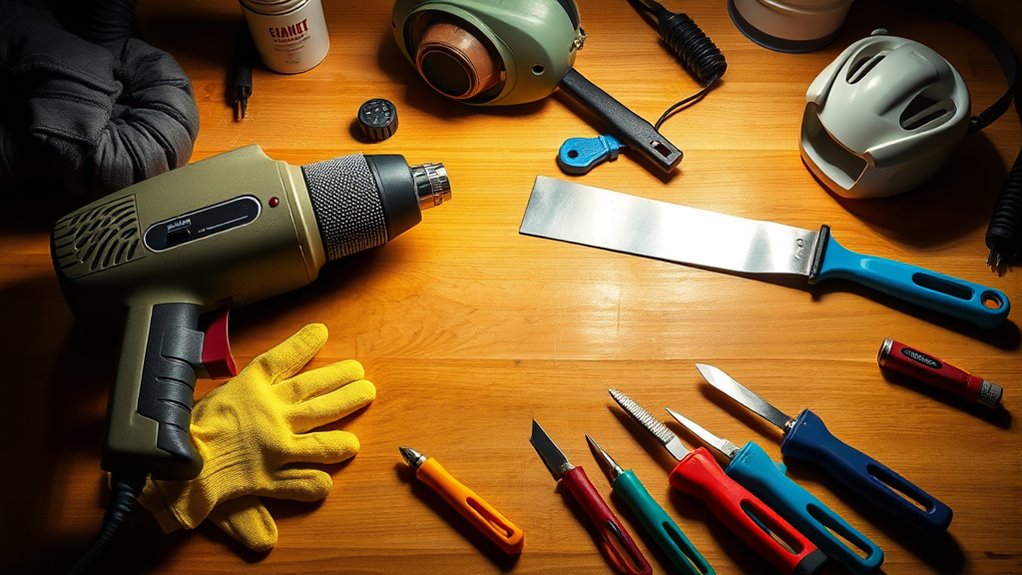

To strip paint and varnish safely like a pro, guarantee you have the right tools and gear. Use quality sanding blocks with firm, flexible backing for control and precision, and consider power sanders for larger areas—just remember to wear safety goggles, gloves, and dust masks to protect yourself. Handle chemical strippers carefully, following instructions, and always work in well-ventilated spaces. Staying organized and cautious makes your project safer and results smoother—learn more about the essential tools and techniques ahead.
Key Takeaways
- Use appropriate safety gear such as gloves, goggles, and dust masks to protect against chemical splashes, debris, and dust inhalation.
- Choose the right sanding tools, like sanding blocks with firm backing, for control and a smooth finish after paint removal.
- Opt for power sanders for large areas, but always wear safety gear and select correct grit to prevent damage.
- Handle chemical paint strippers with proper ventilation, gloves, and by following manufacturer instructions to ensure safe application.
- Keep your workspace organized and debris-free, using proper disposal methods to maintain safety during the stripping process.
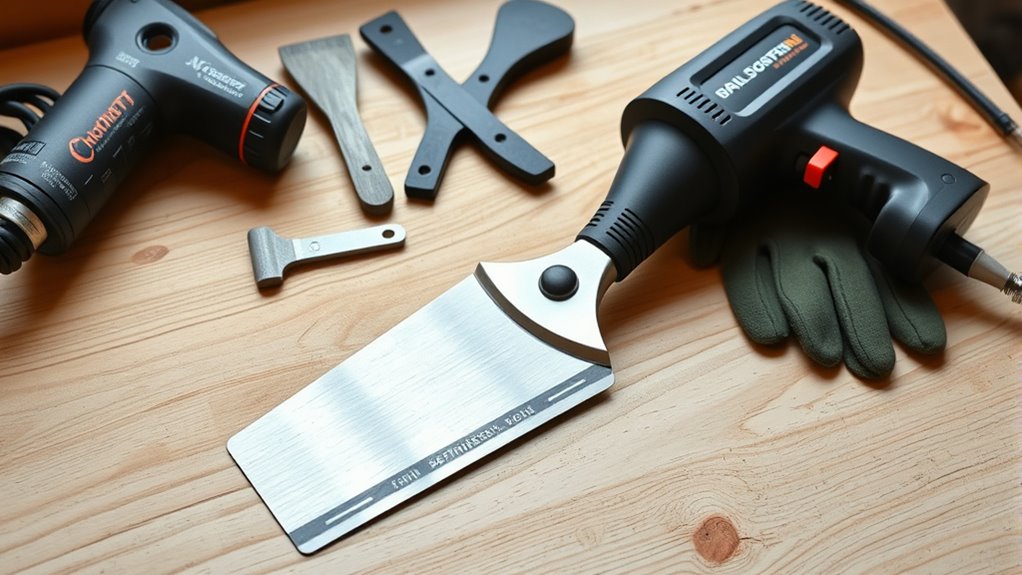
Refinishing tools are indispensable for restoring and improving the appearance of wood, metal, and other surfaces. When you’re stripping paint or varnish, safety should always be your top priority. Before you start, equip yourself with the proper safety gear—gloves, goggles, and a dust mask. These items protect your skin, eyes, and lungs from harmful dust, fumes, and chemicals that can be released during the stripping process. Safety gear isn’t just an extra step; it’s a crucial part of working efficiently and avoiding injury or health issues down the line.
Once you’re suited up, you’ll want to choose the right tools to get the job done smoothly. Sanding blocks are indispensable for preparing surfaces once the bulk of paint or varnish has been removed. These simple tools give you control and precision, allowing you to sand evenly and avoid gouging or uneven patches. When selecting sanding blocks, opt for ones with firm but flexible foam or rubber backing—this ensures they conform to the surface you’re working on, whether it’s flat or contoured. Using high-quality sanding blocks can make a significant difference in achieving a smooth, professional finish without damaging the underlying material.
In addition to sanding blocks, you might consider power sanders for larger projects, but always keep safety gear in mind. Power tools generate more dust and vibrations, so wearing your dust mask and goggles becomes even more critical. For delicate spots or detailed work, hand sanding with sanding blocks offers better control and reduces the risk of accidental gouges. Remember to choose the appropriate grit for your sanding tasks: coarse grits for removing old paint quickly, and finer grits for smoothing the surface before finishing.
When working with paint strippers or chemical removers, always read the manufacturer’s instructions carefully. Use your safety gear diligently, including gloves, to prevent skin contact with harsh chemicals. Ventilate the area well, especially if you’re working indoors, to avoid inhaling fumes. After applying a chemical stripper, use your sanding blocks to remove residual paint or varnish, working gently to avoid damaging the surface beneath. Keep your workspace organized and clean, disposing of debris and used materials properly to maintain a safe environment.
Frequently Asked Questions
How Do I Choose the Right Safety Gear for Stripping Paint?
To select the appropriate safety gear for stripping paint, you need personal protective equipment like respirators or masks to guard against fumes and dust. Make sure to wear gloves and eye protection as well. Additionally, consider ventilation because good airflow reduces inhalation risks. Always read product labels for specific safety recommendations and verify that your gear fits well, keeping you safe while working efficiently.
Are There Eco-Friendly Options for Paint Stripping Tools?
Yes, eco-friendly options exist for paint stripping tools. You can use biodegradable solvents that break down naturally, reducing environmental impact. Reusable stripping pads are another great choice—they clean easily and last longer, minimizing waste. These tools help you strip paint effectively while being kinder to the planet. Switching to biodegradable solvents and reusable pads makes your project safer, greener, and more sustainable.
Can I Reuse Stripping Tools for Different Projects Safely?
Yes, you can reuse stripping tools for different projects safely if you properly sterilize them between uses. After each project, clean your tools thoroughly with appropriate sterilization methods to eliminate residues and prevent cross-contamination. Store your equipment in a clean, dry space to maintain their condition. Regular tool sterilization and proper equipment storage ensure safety, prolong tool life, and keep your projects contaminant-free.
What Maintenance Is Needed for Stripping Tools After Use?
Your stripping tools are more precious than gold, so give them the care they warrant! After use, clean them thoroughly with a solvent or soapy water, then dry completely to prevent rust. Sterilize tools if necessary, especially if sharing between projects. Store them in a dry, organized space, keeping blades and brushes protected from damage. Proper maintenance ensures your tools stay sharp, safe, and ready for your next masterpiece.
How Do I Prevent Damage to Underlying Surfaces During Stripping?
To prevent damage to underlying surfaces during stripping, you should prioritize surface protection by using painter’s tape or plastic sheeting around edges. Additionally, choose tools and chemicals with appropriate chemical resistance for the material you’re working on, and apply them carefully to avoid spills or splatters. Regularly check your work, and promptly clean any accidental contact to maintain surface integrity and make certain of a smooth stripping process.
Conclusion
Now that you’ve got the right tools in hand, you’re ready to transform your surfaces with confidence. Imagine gently peeling away layers of old paint, revealing the smooth, fresh wood beneath. As you work carefully and safely, each stroke brings you closer to that polished, professional finish. With patience and the right tools, you’ll turn your project into a beautiful canvas, showcasing your skill and dedication. Your refinishing journey is just beginning—make it a success.