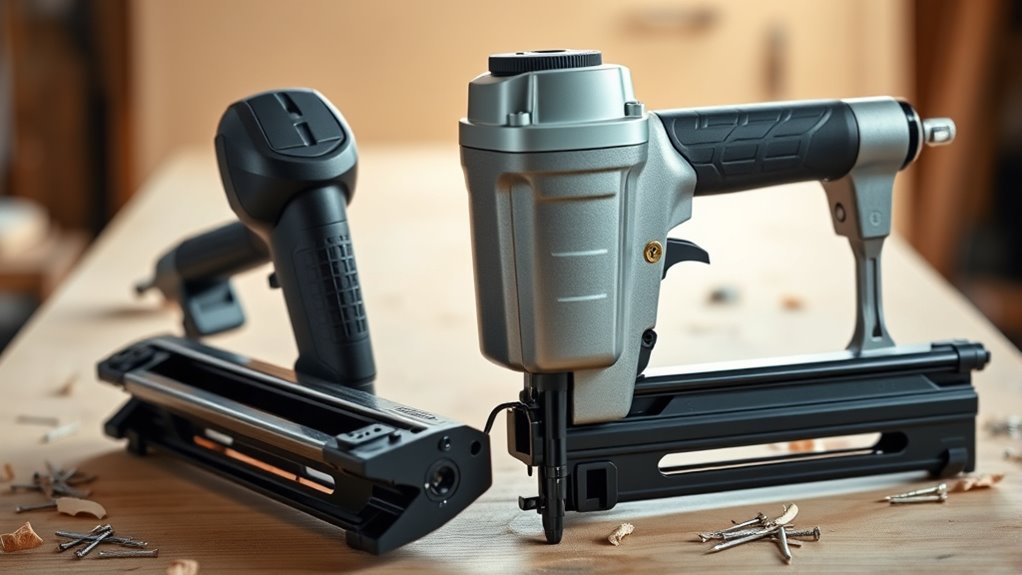
Choosing between a brad nailer and a finish nailer depends on your project needs. For delicate trim, cabinetry, and decorative work, a brad nailer with 18-gauge nails provides minimal visible holes and gentle holding power. For larger, heavier tasks like door casings or baseboards, a finish nailer with 15- or 16-gauge nails offers stronger hold and durability. Understanding these differences helps you pick the right tool for each task—keep exploring to find out more.
Key Takeaways
- Brad nailers use 18-gauge nails ideal for delicate trim and cabinetry, while finish nailers fire thicker 15- or 16-gauge nails for heavier tasks.
- Choose a brad nailer for minimal visible holes and detailed work; opt for a finish nailer for door casings and baseboards requiring more holding power.
- Brad nailers are better suited for light, precise projects; finish nailers are designed for larger, more robust carpentry tasks.
- Consider project scope: small DIY or finishing work favors brad nailers; larger, professional projects benefit from finish nailers.
- Match nail gauge to task durability and visibility needs, ensuring the right tool for the specific carpentry or trim application.

When choosing between a brad nailer and a finish nailer, understanding their differences is essential for your project’s success. One of the first things to consider is nail gun safety, which applies to both pneumatic and electric models. Pneumatic nailers are powered by compressed air, offering consistent force and generally being more powerful, but they require an air compressor. Electric nailers, on the other hand, are more portable and easier to set up, as they don’t need an air compressor, but they might generate more heat and require regular maintenance. Regardless of the power source, always follow safety guidelines—wear eye protection, keep your hands clear of the firing mechanism, and ensure your work area is clean and stable to prevent accidents.
Knowing the differences between pneumatic vs electric nailers helps you decide which type suits your needs best. Pneumatic models tend to be more durable and deliver more consistent power, making them ideal for larger projects or professional use. Electric nailers are lighter, more portable, and often more convenient for smaller jobs or DIY projects. They’re also quieter and produce less noise pollution, which can be a significant advantage if you’re working indoors or in shared spaces. The choice often boils down to the scope of your project and your comfort with handling air hoses or dealing with the extra setup of a pneumatic system.
Pneumatic nailers are durable and powerful; electric models are lighter, quieter, and more portable for smaller projects.
Additionally, project scope plays a crucial role in determining the most suitable nailer, as some tasks require different levels of power and precision. When it comes to selecting a nailer, think about the specific tasks you’ll be tackling. Brad nailers shoot smaller 18-gauge nails, making them perfect for delicate trim, cabinetry, or decorative moldings where minimal visible nail holes are desired. Finish nailers, typically firing 15- or 16-gauge nails, are better suited for thicker, heavier tasks like door casings, baseboards, or furniture assembly, where holding power and durability matter most. The size and strength of the nails determine the kind of work you can do, so match your tool to the project for the best results.
In addition to safety and power source, think about your comfort and frequency of use. Pneumatic nailers, while powerful, can be bulkier and require more setup, but they often last longer and handle tougher materials better. Electric models are more convenient for quick, smaller jobs but may lack the power needed for heavy-duty tasks. Ultimately, understanding these differences helps you pick the right tool for each task, ensuring safety, efficiency, and a professional finish.
Frequently Asked Questions
Can I Use a Finish Nailer for Framing Projects?
You shouldn’t use a finish nailer for framing projects because of its limitations. Finish nailers are designed for delicate trim work, so they use smaller, lighter nails that aren’t strong enough to hold framing components securely. For framing projects, you need a framing nailer, which handles larger nails and provides the strength needed for structural stability. Using a finish nailer here could compromise the integrity of your construction.
What Safety Gear Is Recommended When Operating Nail Guns?
When operating nail guns, you should always wear safety glasses to protect your eyes from flying debris and hearing protection to guard against loud noise. Keep your hands clear of the firing area and make certain the tool is properly maintained. Never aim the nailer at yourself or others, and follow all manufacturer instructions. These precautions help prevent injuries and keep you safe during your projects.
How Long Does a Typical Battery Last on Cordless Nailers?
Battery life varies, but on average, cordless nailers last about 200 to 600 shots per charge, highlighting the convenience of cordless operation. You’ll find that high-capacity batteries extend your work time, while smaller ones keep your tool lightweight. Keep in mind, frequent use or heavy-duty projects drain batteries faster, so investing in extra batteries guarantees continuous work without interruptions. Ultimately, your battery life depends on usage, battery capacity, and the nailer model.
Are Pneumatic Nailers Suitable for Outdoor Use?
Yes, pneumatic nailers are suitable for outdoor use if they feature weather resistance. Look for outdoor nailers designed with corrosion-proof components and sealed triggers to prevent moisture damage. Using an outdoor nailer guarantees durability in various weather conditions, making your projects easier and more efficient. Just remember to store and maintain your tool properly to keep it in top shape for outdoor tasks.
What Maintenance Tips Extend the Lifespan of a Nail Gun?
To extend your nail gun’s lifespan, regularly perform tool lubrication to keep parts moving smoothly and prevent rust. Make sure to clean the air filter frequently to maintain ideal airflow and prevent dust buildup. Always disconnect the tool before maintenance, and follow the manufacturer’s instructions for cleaning and lubrication. Proper care reduces wear and tear, ensuring your nail gun stays reliable and efficient for years to come.
Conclusion
Remember, choosing the right nailer depends on your project. A brad nailer offers finesse for delicate work, while a finish nailer provides strength for more substantial tasks. As the saying goes, “Pick the right tool for the job,” and you’ll achieve professional results with less hassle. So, consider your project’s needs carefully, and you’ll find the perfect nailer to get the job done right the first time.