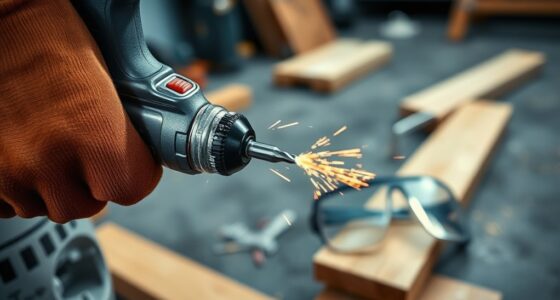
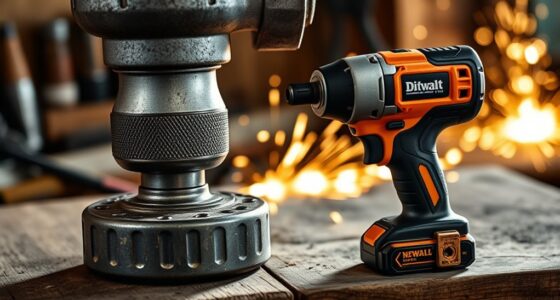
Choosing between cordless and corded power tools depends on your needs. If you prioritize portability, maneuverability, and working in remote or tight spaces, cordless tools are ideal, though they may have limited runtime. For demanding tasks that require consistent power and longer operation, corded tools are better, especially in workshops. Understanding your project type and preferences will help you pick the right tool—keep exploring to find out which fits you best.
Key Takeaways
- Corded tools offer consistent, higher power suitable for heavy-duty tasks; cordless tools provide portability for outdoor or on-the-go projects.
- Choose corded for continuous operation and demanding jobs; opt for cordless for quick, tight-space, or remote work.
- Cordless tools tend to have higher initial costs due to batteries but excel in convenience; corded tools are generally cheaper and require less maintenance.
- Cordless tools are lighter and more maneuverable, reducing fatigue, while corded tools are often more durable for prolonged heavy use.
- Consider your project environment, power needs, and budget to determine whether the flexibility of cordless or the reliability of corded tools best fit your tasks.
Comparing Power Sources: Battery vs. Mains Power
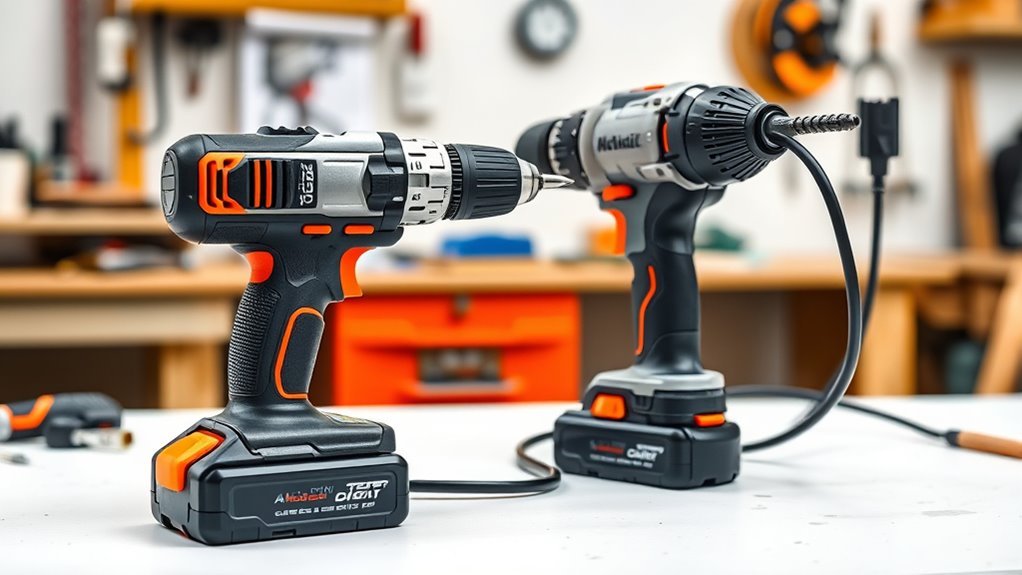
When choosing between cordless and corded power tools, understanding their power sources is essential. Corded tools draw power directly from mains electricity, offering consistent performance but limiting mobility. Cordless tools, on the other hand, depend on batteries, making portability easier. However, consider the battery lifespan—over time, batteries lose their ability to hold charge, reducing runtime and efficiency. This degradation can lead to frequent recharging or replacing batteries, impacting your workflow. Additionally, cord management is a key factor; cordless tools eliminate the hassle of tangled cords, making them ideal for tight spaces or outdoor projects. It’s also important to consider the battery lifespan, as it directly affects long-term performance and maintenance costs. Moreover, advancements in battery technology continue to improve the reliability and efficiency of cordless tools. Ultimately, your choice depends on whether you prioritize continuous power or convenience, but knowing how battery lifespan and power source types influence performance helps you make an informed decision.
Portability and Convenience for On-the-Go Projects
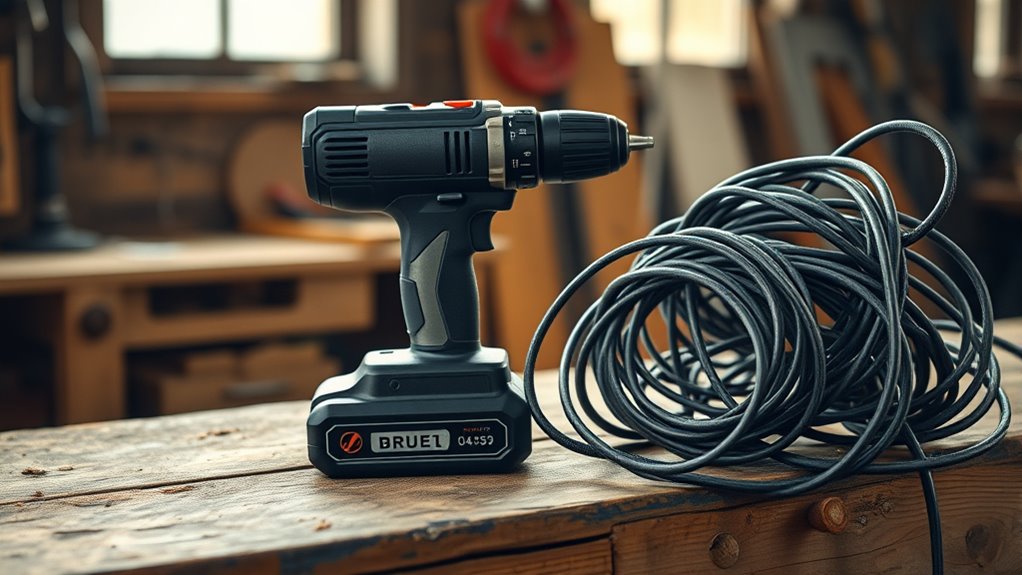
Cordless power tools excel in providing portability and convenience, especially when you’re working outside the confines of a workshop or on remote sites. With no cords to restrict movement, you can easily maneuver in tight spaces or uneven terrain. Battery life is key—longer-lasting batteries mean fewer interruptions, so you can complete tasks without frequent recharging. Their lightweight design and compact size make them easy to carry and handle for extended periods, reducing fatigue. Plus, you don’t need to worry about extension cords or power outlets, giving you greater freedom to work anywhere. This makes cordless tools ideal for on-the-go projects, whether you’re at a construction site, camping, or doing repairs around the house. Incorporating battery technology advancements further enhances their performance and reliability for outdoor projects. Additionally, power source flexibility allows users to choose the most suitable energy option based on project needs, further increasing versatility. For optimal performance, many cordless tools now feature smart battery management systems that monitor and optimize power usage, extending battery life and ensuring consistent operation. As outdoor environments become more demanding, ongoing innovations in battery chemistry continue to improve durability and charging efficiency for extended use.
Power and Performance Capabilities
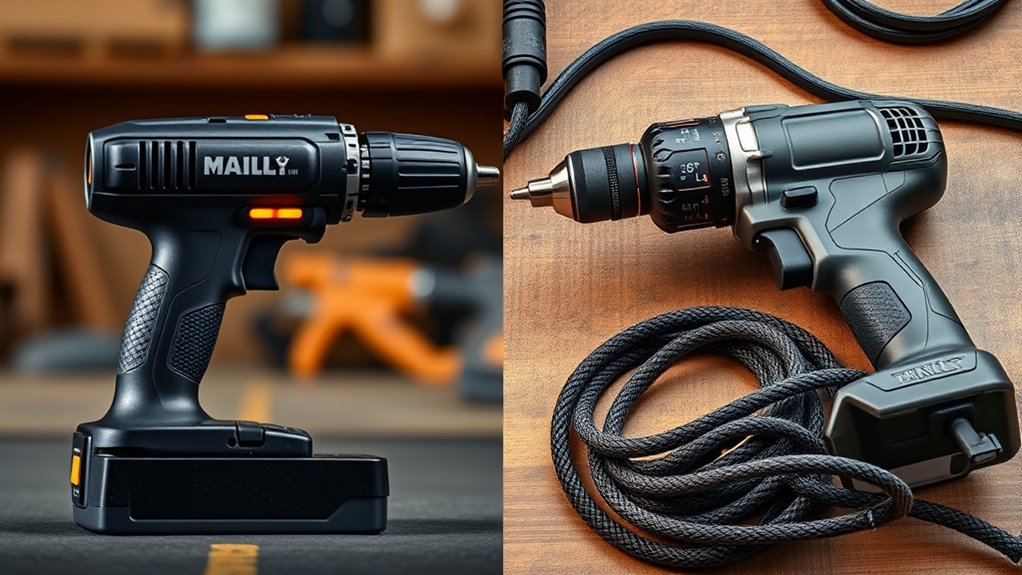
While cordless tools have improved markedly, their power and performance can still vary compared to corded models. Battery life plays a vital role, as shorter-lasting batteries may limit your work sessions and reduce efficiency. When considering power output, corded tools typically provide consistent, higher performance since they’re plugged directly into a power source. Cordless options, however, have advanced with better motors and batteries, offering impressive torque and speed for many tasks. Still, for heavy-duty jobs requiring maximum power, corded tools often outperform cordless models. Your choice depends on your project demands—if you need sustained, high power without interruptions, a corded tool might be your best bet. For portability and convenience, cordless tools offer decent performance, but with some trade-offs. Additionally, modern heat pump technology has made these systems more powerful and efficient, providing a reliable alternative to traditional heating and cooling methods. Advances in battery technology continue to close the performance gap, making cordless tools increasingly suitable for demanding applications.
Cost Considerations and Long-Term Investment

When comparing cordless and corded tools, your initial purchase price can vary considerably, affecting your budget upfront. However, it’s important to take into account ongoing costs like maintenance and replacement parts that can add up over time. These long-term expenses influence whether a tool truly offers a good investment for your needs. Additionally, considering factors like wave and wind can help determine the durability and suitability of power tools in various environments. Moreover, understanding the impact of cookies on your online experience can help you make informed decisions about privacy and personalization when browsing tools and accessories online. Incorporating holistic SEO strategies into your research can also improve the quality of information you access, leading to more informed choices. Regular practice and visual and auditory cues are essential for mastering complex techniques, ensuring you maximize the value of your investment in power tools. Furthermore, evaluating the long-term security of your investment can help you choose tools that will serve you well over time.
Initial Purchase Price
The initial purchase price of power tools varies markedly between cordless and corded options, impacting your budget upfront. Cordless tools typically cost more initially due to battery technology and portability features. When comparing prices, consider these factors:
- Brand reputation, which influences quality and reliability
- Warranty coverage, offering peace of mind for repairs and replacements
- Battery compatibility, especially for cordless models, affecting future investment
- Long-term savings, as cheaper tools may incur higher maintenance costs over time
Additionally, understanding the cost considerations involved can help you make a more informed decision, especially when evaluating the overall value versus the initial expenditure. While cordless tools may have higher upfront costs, their portability benefits can justify the expense for many users. The initial investment in cordless models can be offset by their convenience and versatility, making them suitable for various tasks. Moreover, advances in battery technology continue to improve performance and lifespan, further enhancing their value. Regularly assessing cost-benefit analysis ensures you choose a tool that aligns with your needs and budget. Conversely, corded tools often come at a lower initial price but may lack the same flexibility. Balancing cost with your intended use is key.
Maintenance and Replacement
Maintenance and replacement costs considerably influence the long-term value of your power tools. With cordless tools, battery longevity is a key factor; batteries will eventually wear out and need substituting, which can be costly. Regular maintenance helps extend battery life, saving you money over time. Proper battery care and storage can significantly impact how long your batteries last before needing replacement. Additionally, understanding thermal behavior can help optimize tool use and prolong component lifespan. Being aware of power consumption can also assist in managing operational costs and efficiency over the lifespan of your tools. Considering cost-effective maintenance strategies can further reduce long-term expenses and improve overall tool performance. For corded tools, cord replacement is a common maintenance task, especially if cords get damaged or frayed. Replacing a cord is generally less expensive than battery replacement, but it still adds to ongoing costs. It’s also important to consider the availability of replacement parts, which can influence repair costs and downtime. Consider how often you’ll need to service or replace parts when choosing between cordless and corded options.
Maintenance and Durability Factors
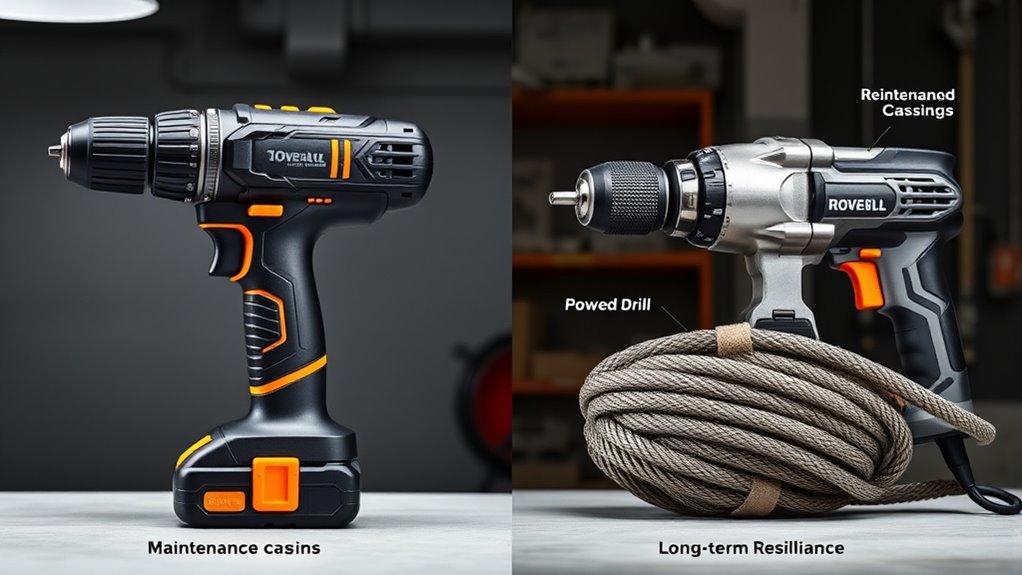
While cordless tools offer portability and convenience, they require regular maintenance to stay in top shape. Proper care extends battery lifespan and enhances durability. To keep your tools performing well, focus on:
Regular maintenance keeps cordless tools reliable and prolongs their lifespan.
- Regularly cleaning contacts and moving parts to prevent corrosion.
- Ensuring batteries are stored in a cool, dry place to boost corrosion resistance.
- Checking for any signs of wear or damage that could affect performance.
- Replacing worn brushes or parts as needed to maintain efficiency.
- Following safety & setup guidelines to prevent damage and ensure optimal operation.
Maintaining battery health is vital, as degraded batteries reduce runtime and power. Investing time in upkeep guarantees your cordless tools remain reliable over time, while proper maintenance also helps prevent costly repairs or replacements.
Safety and User Comfort
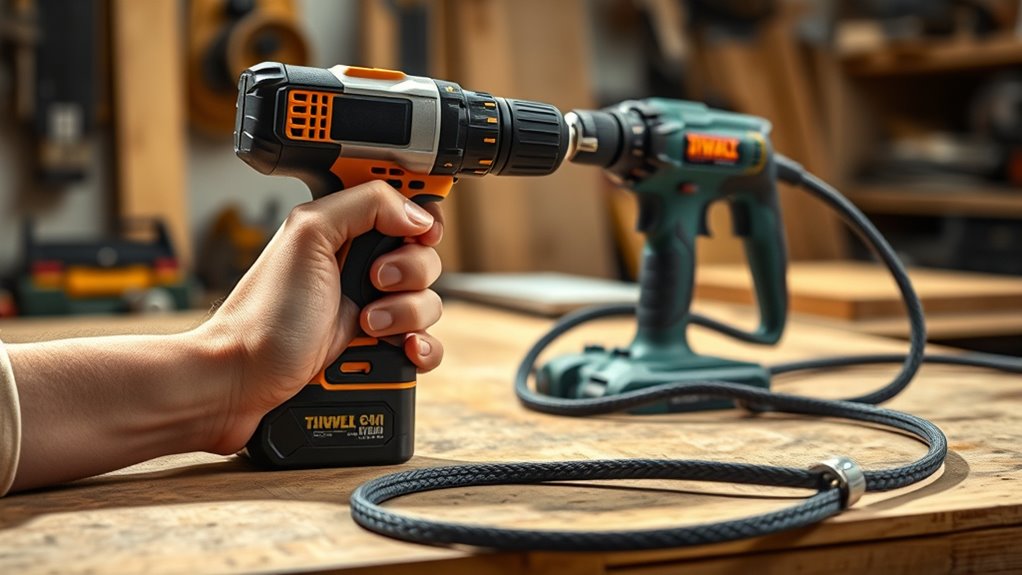
Proper maintenance keeps your power tools running smoothly, but safety and user comfort are equally important to guarantee a positive work experience. An ergonomic design helps reduce strain during prolonged use, making tools more comfortable and less tiring. When choosing between cordless and corded options, consider noise levels, as lower noise can prevent fatigue and protect your hearing. Cordless tools often have quieter motors, improving comfort in confined or shared spaces. Additionally, look for features like anti-vibration handles and balanced weight distribution to minimize fatigue and enhance control. Prioritizing safety also means wearing proper protective gear and ensuring your workspace is well-ventilated. For optimal performance, understanding power supply considerations can help you select the best tools for your needs. By focusing on ergonomic design and noise management, you create a safer, more comfortable environment that boosts productivity and reduces injury risk.
Ideal Use Cases for Each Type of Tool
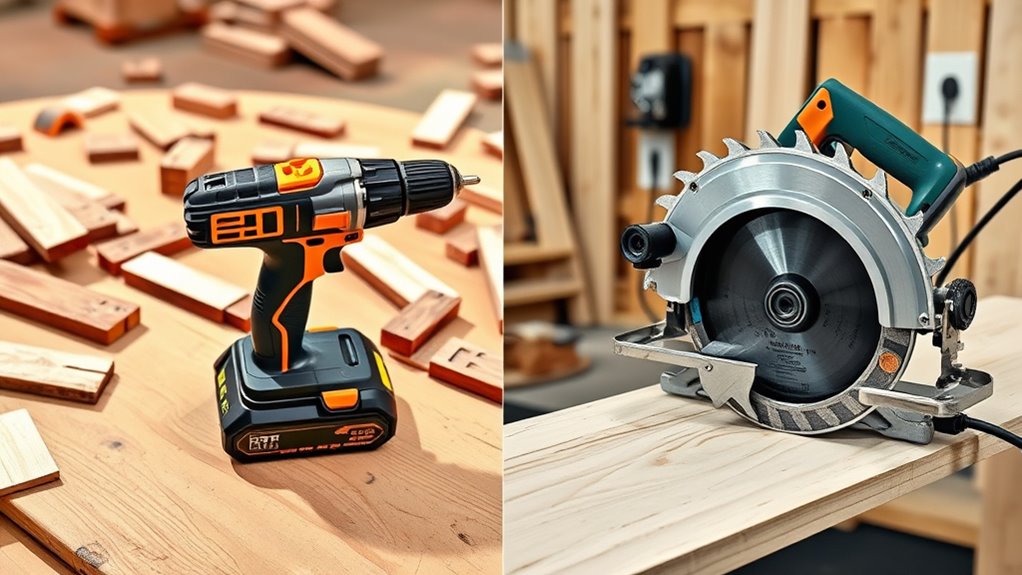
Cordless and corded power tools each excel in different situations, making it essential to choose the right type based on your specific needs. For tasks requiring mobility and convenience, cordless tools are ideal, especially when you need to move around without worrying about power outlets. Consider the battery life and ergonomic design for prolonged use; cordless tools with longer battery life reduce interruptions. On the other hand, corded tools are perfect for heavy-duty projects or continuous use, offering unlimited power supply and consistent performance. They’re well-suited for workshops or tasks that require sustained effort.
- Light, quick jobs in tight spaces
- Long sessions demanding consistent power
- Tasks needing portability and flexibility
- Projects requiring minimal downtime
Frequently Asked Questions
How Does Battery Life Impact Overall Tool Performance?
Battery life directly impacts your tool’s performance by influencing its power capacity and power longevity. With higher battery capacity, you get longer use without interruptions, making your work more efficient. Shorter battery life means frequent recharges, which can slow down your project. To maximize performance, choose tools with batteries designed for durability and extended power longevity, ensuring you stay productive without constantly worrying about running out of juice.
Are Cordless Tools Suitable for Heavy-Duty Tasks?
You might think cordless tools are out of their depth for heavy-duty jobs, but with high battery capacity and advanced motor technology, they can handle tough tasks. However, keep in mind that increased battery size adds to the tool weight, which could tire you out faster. If you need power and portability, go for models designed for heavy-duty work, but be prepared for a bit more heft.
What Are the Environmental Impacts of Battery Disposal?
You should consider the environmental impacts of battery disposal, especially since improper disposal can harm ecosystems. By recycling batteries, you help reduce hazardous waste and recover valuable materials. Opt for eco-friendly batteries whenever possible, as they’re designed to minimize environmental harm. Proper battery recycling guarantees toxic substances don’t leach into soil and water, making your use of cordless tools more sustainable and environmentally responsible.
Can Cordless Tools Be as Durable as Corded Ones?
Cordless tools can be as durable as corded ones, but it depends on your usage and the quality of the battery. With good battery longevity, these tools become reliable companions on your projects. Modern technology has improved their build, making them sturdy enough for heavy-duty tasks. While they may not match corded tools in constant power supply, their portability and innovation make them a dependable choice for many jobs.
How Do Charging Times Affect Project Workflow?
Charging times can impact your project workflow considerably. When your battery needs a recharge, you might face delays unless you have multiple batteries or quick-charging stations nearby. Efficient charging stations allow you to swap batteries quickly, minimizing downtime. Keep an eye on your tool’s battery life, plan ahead for recharges, and consider tools with fast recharge features to stay productive and avoid project hold-ups.
Conclusion
Choosing between cordless and corded tools depends on your needs. Imagine you’re renovating a cabin in the woods—you’ll appreciate the freedom of cordless tools, letting you work anywhere without cords. But for heavy-duty projects in your workshop, a corded drill with steady power may be better. Consider your typical tasks and environment, and you’ll select the right tool for a smoother, safer experience. Your perfect match awaits—just pick what fits your projects best.