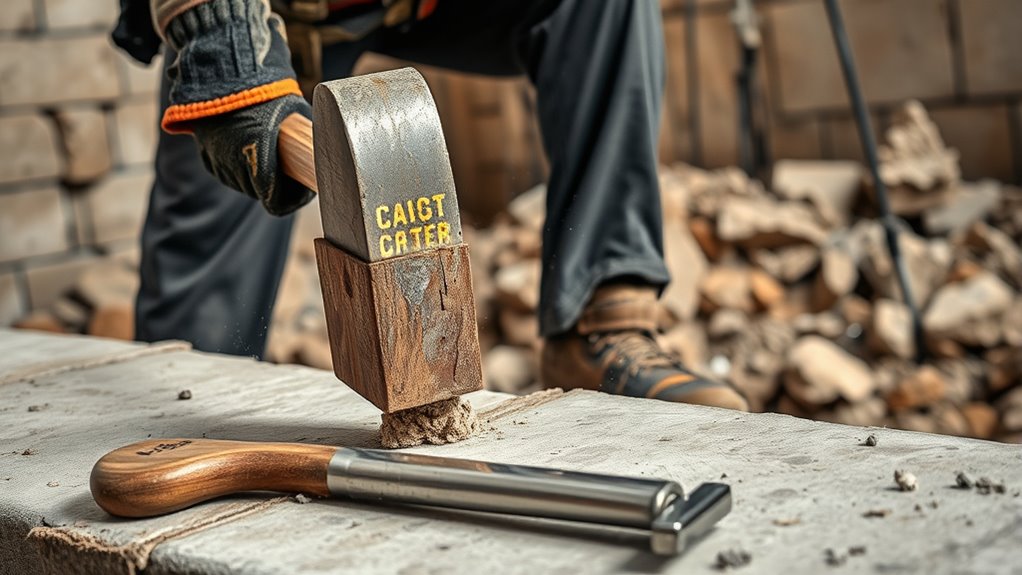

To use sledgehammers, pry bars, and crowbars safely, always wear appropriate safety gear like gloves, goggles, helmets, and steel-toed boots. Inspect tools for damage before use, ensuring handles and tips are intact. Use controlled swings with the sledgehammer and leverage your body when operating pry and crowbars to prevent strain or accidents. Keep your work area clear of debris and bystanders. Continuing with proper techniques can help you avoid injuries and work efficiently.
Key Takeaways
- Always wear appropriate safety gear such as gloves, goggles, helmets, and steel-toed boots during demolition work.
- Inspect tools for damage and secure attachments before use to prevent accidents.
- Use proper technique: swing with controlled force and leverage body weight for efficiency and safety.
- Choose the right tool for each task to avoid unnecessary force and reduce damage risks.
- Keep the work area clear of debris and bystanders to minimize hazards and ensure safe operation.
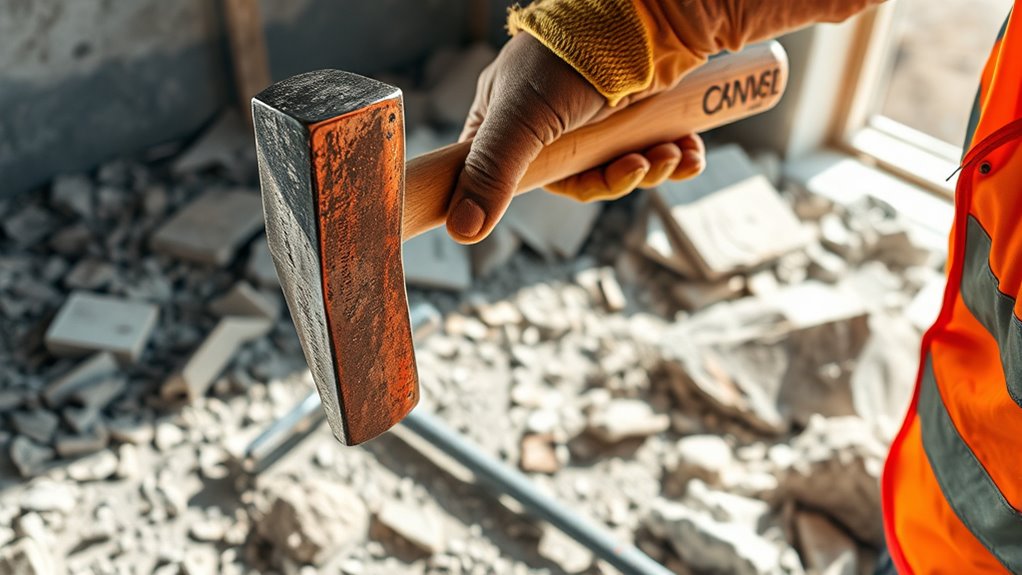
Have you ever wondered what tools are essential for tearing down structures efficiently and safely? When it comes to demolition, using the right equipment with proper safety gear is crucial. Sledgehammers, pry bars, and crowbars are fundamental tools, but their effectiveness depends on your approach to safety and maintenance. Before you swing a sledgehammer or pry something loose, you need to gear up with the right safety gear. This includes sturdy gloves to protect your hands from splinters and impacts, safety goggles or glasses to shield your eyes from flying debris, and a helmet to guard against falling objects. Steel-toed boots are also vital to protect your feet from heavy falling debris or accidental drops. Wearing appropriate safety gear isn’t just about compliance; it’s about preventing injuries that could halt your work or cause serious harm.
Once you’ve put on your safety gear, focus on tool maintenance. Well-maintained tools are safer and more effective, reducing the risk of accidents caused by equipment failure. For sledgehammers, check the handle for cracks or splinters and ensure the head is securely attached. If the handle shows signs of wear or damage, replace it before use. For pry bars and crowbars, inspect the tips for chips or cracks, as damaged tips can slip or break during use, leading to injury. Keep your tools clean and free from rust, oil, or debris, which can compromise grip and control. Regularly sharpening or honing the edges of pry bars can make prying easier and safer, reducing the force needed and minimizing slips. Proper tool storage is also essential to prevent accidental damage and maintain tool integrity. When storing your tools, keep them in a dry place and avoid leaving them exposed to the elements, which can accelerate deterioration.
Using these tools safely also involves proper technique. With a sledgehammer, swing with controlled force, aiming at the target with precision to avoid missing and hitting unintended surfaces or yourself. For pry bars and crowbars, leverage your body weight rather than brute strength, and always position yourself to maintain balance and control. Never use excessive force or work in awkward positions, as this can lead to accidents or fatigue. Remember to clear your work area of debris and bystanders to minimize hazards. Taking these precautions ensures your demolition work is not only efficient but also safe. Proper safety gear and diligent tool maintenance form the foundation of responsible demolition, helping you get the job done while avoiding injuries. By respecting these fundamental principles, you’ll work confidently and effectively, turning demolition tasks into safe, productive endeavors.
Frequently Asked Questions
What Are the Best Safety Gear Essentials for Demolition Work?
You should always wear personal protective equipment like safety goggles, gloves, and steel-toed boots to shield yourself during demolition. Hearing protection is essential, too. Regularly inspect and maintain your tools to prevent accidents. Hard hats protect your head from falling debris, and respirators keep dust out of your lungs. Prioritize safety gear to stay safe and guarantee your tools stay in top condition for effective, secure demolition work.
How Do I Select the Right Tool for Specific Demolition Tasks?
To select the appropriate tool for particular demolition tasks, start with a comprehensive demolition task analysis to understand the scope and materials involved. Use clear criteria like tool strength, purpose, and safety features to guide your selection. Consider the tool’s size, weight, and design, guaranteeing it matches the task’s demands. Properly matching tools to tasks boosts efficiency, minimizes risk, and ensures your work is safe and successful.
Are There Environmentally Friendly Disposal Methods for Demolition Debris?
You can dispose of demolition debris environmentally friendly by exploring recycling options like reusing concrete, metals, and wood. Separate hazardous waste, such as asbestos or chemicals, and handle it according to local regulations to prevent environmental harm. Consider partnering with recycling centers that accept construction debris, reducing landfill waste and promoting sustainability. Always follow safety guidelines and local laws to make certain of proper disposal, protecting both the environment and public health.
What Are Common Mistakes to Avoid When Using Demolition Tools?
You can’t afford to overlook tool inspection or fall into improper technique, or you’ll risk turning your demolition into chaos. Common mistakes include ignoring safety checks, using tools for unintended purposes, and rushing without proper planning. Remember, a quick strike with a sledgehammer or improper pry bar angle can cause accidents or damage. Stay vigilant, inspect your tools regularly, and use proper techniques to keep your demolition safe and efficient.
How Can I Prevent Damage to Surrounding Structures During Demolition?
To prevent damage to surrounding structures, you should first assess the structural support before starting demolition. Use proper debris containment measures like tarps and barriers to control falling debris. Keep a close eye on your work area, and avoid applying excessive force near load-bearing walls or supports. Carefully plan your demolition steps, ensuring neighboring structures remain stable and protected throughout the process.
Conclusion
Now that you know how to use sledgehammers, pry bars, and crowbars safely, are you ready to tackle your demolition project with confidence? Remember, safety should always come first—wear your gear, stay aware of your surroundings, and use the right tool for each task. With the proper precautions, you’ll get the job done efficiently and safely. So, are you prepared to break down barriers and make your project a success?