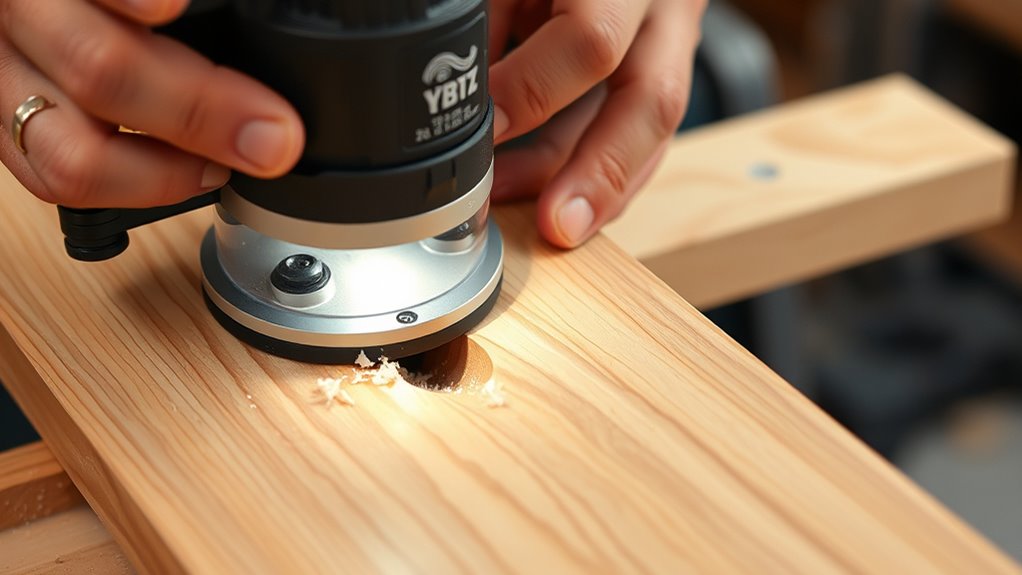

To use a plunge router, first secure your workpiece and attach the proper bit. Turn on the router and slowly lower the bit into the material using the plunge lock for control. Keep your hands away from the bit and guide the router steadily along your template or marked edge, maintaining consistent pressure and speed. Make multiple shallow passes if needed for deep cuts. For detailed techniques, continue exploring the step-by-step tips and safety advice.
Key Takeaways
- Securely attach the router bit and set the desired depth before starting your project.
- Firmly clamp the workpiece and align the router’s plunge base with your marking or template.
- Unlock the plunge lock, then smoothly lower the router bit to the set depth, maintaining control throughout.
- Guide the router along your intended cut line or template, applying steady pressure and consistent speed.
- Always unplug the router before making adjustments or changing bits to ensure safety.

A plunge router is a versatile tool that allows you to make precise cuts and grooves in wood, but mastering its use is vital for safe and effective results. When starting out, one of the key steps is understanding how to use a template. Templates serve as guides that help you achieve consistent, accurate cuts, especially when creating complex patterns or repetitive designs. To begin, secure your template firmly to your workpiece using clamps, ensuring it won’t shift during routing. Then, position your router with the bit aligned to the starting point of your template. Keep a steady hand and guide the router smoothly along the template’s edge, maintaining consistent pressure and speed. Using a template not only increases precision but also minimizes the risk of mistakes or accidents, so it’s worth investing time in setting it up correctly. Familiarizing yourself with the router’s depth adjustment mechanisms can also improve control and safety during your projects.
Safety tips are vital to keep in mind when operating a plunge router. Always wear eye and ear protection to shield yourself from flying debris and loud noise. Before plugging in the tool, double-check that the bit is securely tightened and that the router is set to the correct depth. When adjusting the depth, make small incremental changes and lock the setting firmly to prevent unexpected movement during routing. Keep your hands away from the bit at all times, and never force the router through the material; let the bit do the work at a steady pace. Make sure your workpiece is properly supported on a stable surface to avoid slipping or kickback. Using a plunge lock can help you control the depth precisely, especially when starting a cut or making plunge cuts. Always keep your focus on the task, avoiding distractions, and never operate the router if you’re tired or under the influence of substances.
Additionally, be aware of your surroundings. Clear the work area of clutter and ensure no loose items could interfere with your operation. When routing near edges or corners, take extra care to maintain control and avoid overextending. If you’re making multiple passes to achieve the desired depth, do so gradually, raising the bit slightly each time rather than forcing a deep cut in one go. After completing your cut, unplug the router before making any adjustments or changing bits. Properly clean and maintain your tool to keep it in good working condition, which also enhances safety. By following these safety tips and using a template effectively, you’ll improve your routing accuracy while minimizing the risk of accidents, setting a solid foundation for more advanced woodworking projects.
Frequently Asked Questions
Can I Use a Plunge Router Without a Guide or Template?
Yes, you can use a plunge router without a guide or template, but it’s riskier and less precise. To improve accuracy, set up a router table, which provides better control and stability. Make sure to use dust collection to keep your workspace clean and visibility high. Without a guide or template, take slow, careful passes, and focus on maintaining steady motion to avoid mistakes.
What Safety Gear Should I Wear When Operating a Plunge Router?
When operating a plunge router, you should wear protective eyewear to shield your eyes from debris and dust. Hearing protection is also essential to prevent hearing damage from the loud noise generated during routing. Additionally, consider wearing a dust mask and snug-fitting clothing to avoid loose items getting caught. Always guarantee your workspace is well-ventilated and keep your hands clear of the cutting area for maximum safety.
How Do I Change Bits on a Plunge Router Safely?
To change bits on your plunge router safely, first unplug the tool to prevent accidental starts. Then, loosen the collet nut using the correct size wrench, ensuring you’re using compatible tools for your router model. Carefully remove the old bit by pulling it straight out, avoiding excessive force. Insert the new bit, making sure it’s compatible and seated properly, then tighten the collet nut securely. Always double-check your work before plugging in again.
What Is the Ideal RPM Setting for Different Materials?
You should set your router speed based on the material you’re working with. For soft woods, use a higher RPM to guarantee clean cuts, while harder materials need a lower RPM to prevent burning or damage. Always check your router’s manual for recommended settings, and adjust your router speed for ideal material compatibility. This approach helps you achieve smooth, precise results and prolongs your tool’s lifespan.
How Do I Maintain and Clean My Plunge Router?
Think of your plunge router as a trusted instrument that needs regular care to perform its best. To maintain it, regularly wipe down dust collection ports and vents, preventing dust buildup that clogs its breath. Keep the blade alignment precise, ensuring smooth cuts, by checking and adjusting before each use. Clean the collet and bit shank with a brush to prevent rust, and lubricate moving parts with manufacturer-approved oil for seamless operation.
Conclusion
Mastering your plunge router opens up endless woodworking possibilities. Remember, with proper technique, you can achieve professional-looking cuts and intricate designs. Did you know that the woodworking industry is projected to grow by 8% over the next decade? This growth highlights how essential tools like plunge routers are becoming for both hobbyists and professionals. So, keep practicing, stay safe, and enjoy creating beautiful projects with confidence!