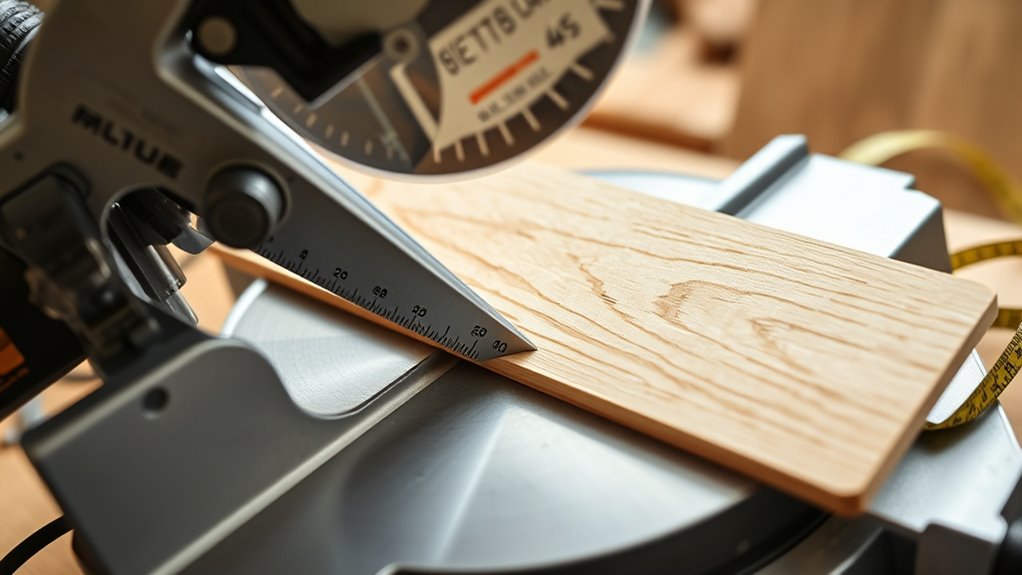

To make precise angles and repeat cuts on your miter saw, guarantee your workpiece is securely clamped to prevent shifting. Double-check your angle settings with a square or protractor, and verify the fence is aligned parallel to the blade. Regularly calibrate the saw and use accurate measuring tools for consistency. Modern tools and proper maintenance can further improve your accuracy. Keep exploring for more tips to master your miter saw skills.
Key Takeaways
- Always double-check and calibrate the miter saw’s angle settings with a square or protractor before making cuts.
- Secure your workpiece firmly with clamps, positioning them over the material to prevent shifting during cuts.
- Verify fence alignment with the blade using a measuring tape and square for consistent, accurate repeat cuts.
- Use digital tools or modern measurement solutions to enhance precision and ensure angles are set correctly.
- Regularly maintain and calibrate the saw, ensuring the blade is true and the fence is parallel for optimal accuracy.
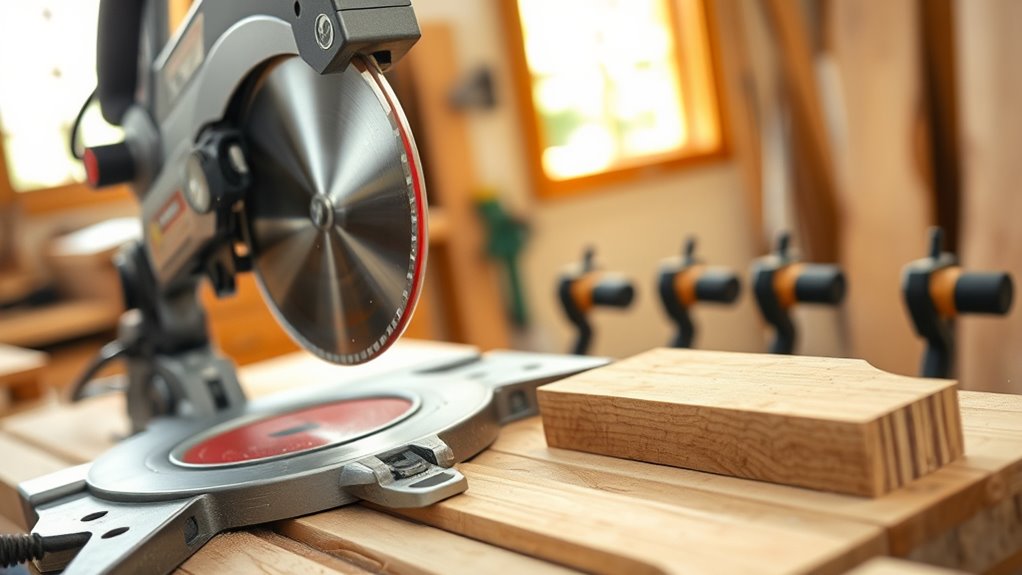
A miter saw is a versatile tool that can help you achieve precise cuts with ease, but mastering some key tricks can take your skills to the next level. One of the most important aspects of accurate cutting is proper clamp positioning. When you secure your workpiece with the right clamps, you prevent movement that could throw off your angles or cause uneven cuts. Make sure your clamps are positioned firmly and directly over the material, not just on the edges, to hold it securely without tilting or shifting. Adjust the clamps so they don’t interfere with your cut line or the rotation of the saw blade. Consistent clamp placement ensures each cut is repeatable and precise, especially when you’re working on multiple pieces or making repetitive cuts.
Blade calibration is another critical factor in achieving clean, accurate cuts. Over time, the blade can become misaligned due to impacts, wear, or improper storage. Regularly checking and calibrating your blade ensures it’s square to the fence and the table. To do this, first unplug your saw for safety. Then, use a square or a dedicated calibration tool to check the blade’s alignment against the fence at multiple points around the blade’s circumference. If you notice any deviation, follow your saw’s manual to make the necessary adjustments. Proper blade calibration guarantees that your cuts are true to the angles you set, whether it’s a simple crosscut or a complex miter joint.
Regularly check and calibrate your saw blade to ensure precise, true cuts every time.
When setting your miter angle, always double-check with a square or protractor to confirm accuracy. This small step prevents errors that can compound when cutting multiple pieces. Additionally, take the time to ensure your saw’s fence is aligned correctly with the blade. A misaligned fence can throw off your measurements and result in sloppy joints or wasted material. Use a reliable measuring tape and a square to verify that your fence is parallel to the blade, adjusting it as needed. These small but crucial adjustments make a significant difference in your overall precision.
Finally, considering European cloud solutions and modern tools can help you streamline your woodworking projects by integrating digital measurements and adjustments, enhancing accuracy even further. With proper clamp positioning to hold your work securely and consistent blade calibration, you’ll find making perfect angles and repeat cuts becomes second nature. These foundational tips help you produce professional-looking projects with minimal frustration and maximum accuracy. Keep your tools well-maintained and your setup methodical, and you’ll consistently hit your mark with every cut.
Frequently Asked Questions
How Do I Calibrate My Miter Saw for Accurate Cuts?
To calibrate your miter saw for accurate cuts, start with calibration procedures by checking the blade alignment with the miter and bevel gauges. Perform alignment checks regularly—use a square to verify the blade’s 90-degree position and ensure the laser or cut line aligns correctly. If it’s off, adjust the saw’s settings according to the manufacturer’s instructions, then recheck the alignment to confirm precision.
What Safety Gear Should I Wear When Using a Miter Saw?
When using a miter saw, you should wear essential personal protective equipment like safety glasses to protect your eyes and hearing protection to guard against noise. Consider wearing a dust mask if cutting materials that create fine dust. Always follow safety precautions by keeping hands away from the blade, ensuring the saw is unplugged during adjustments, and wearing appropriate clothing. These steps help keep you safe while making precise cuts.
Can I Cut Materials Other Than Wood With a Miter Saw?
Yes, you can cut materials other than wood with a miter saw, but you need to be careful. For metal cutting, use a blade designed specifically for metal, and make certain the saw is properly cooled to prevent overheating. When working with plastic materials, choose a blade suitable for plastics to avoid melting or chipping. Always wear safety gear and follow manufacturer instructions to ensure safe and effective cuts.
How Do I Prevent Splintering on Delicate Cuts?
To prevent splintering on delicate cuts, make certain your blade is sharp and clean, as a dull blade causes rough edges. Support your workpiece properly with clamps or a sturdy fence to reduce vibrations, which can lead to splintering. Make slow, controlled cuts, especially near the end, and consider using masking tape along the cut line to minimize splinters and get a cleaner finish.
What Maintenance Is Required to Keep My Miter Saw in Top Condition?
Did you know regular maintenance extends your miter saw’s lifespan by up to 30%? To keep it in top shape, replace the blade when dull and guarantee proper dust collection, which prevents buildup. Clean the saw’s moving parts and check alignment frequently. Lubricate the pivot points and tighten bolts as needed. These simple steps help maintain accuracy and safety, so your saw performs like new every time you use it.
Conclusion
Mastering miter saw tricks isn’t just about cutting angles; it’s about trust in your tools and techniques. When you verify your measurements and practice consistent setups, you’ll see how precision becomes second nature. Some say using a speed square or clamping pieces helps accuracy, and research supports that. So, experiment, stay patient, and trust your skills—your perfect cuts will follow. With practice, you’ll turn complex angles into simple, repeatable tasks.