Choosing between a miter saw and a table saw depends on your project needs. A miter saw excels at precise crosscuts and angled cuts for decorative projects, while a table saw is better for ripping large sheets and making straight, long cuts. Both tools are essential in woodworking, but each has unique features tailored for specific tasks. To optimize your workspace and projects, understanding their differences can help you decide the best tool for your needs. More details await if you keep exploring.
Key Takeaways
- Miter saws excel at precise crosscuts and angled cuts for trim, molding, and framing projects.
- Table saws are designed for ripping large sheets, making long, straight cuts, and handling heavy-duty woodworking tasks.
- Miter saws are more compact, portable, and ideal for detailed, accurate cuts in small to medium materials.
- Table saws offer greater versatility, supporting rip cuts, bevels, and handling larger, thicker lumber.
- Both tools require proper safety measures and regular maintenance to ensure optimal performance and safety.
Key Features and Design Differences
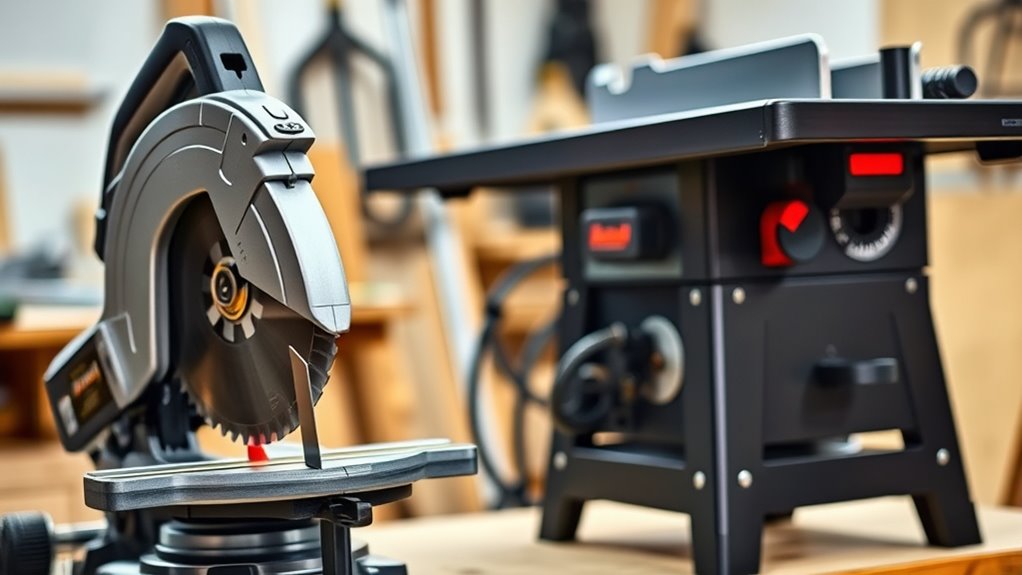
While both miter saws and table saws are essential woodworking tools, their key features and designs set them apart profoundly. Miter saws typically have smaller blade diameters, usually ranging from 8 to 12 inches, which are ideal for precise crosscuts and angled cuts. In contrast, table saws feature larger blades, often 10 to 12 inches, designed for ripping and cutting large sheets of wood. Motor power also varies considerably: miter saws generally have motors between 15 to 15 amps, providing enough torque for accurate cuts, while table saws often boast more powerful motors, sometimes exceeding 1.5 horsepower, to handle heavier, more demanding cuts. These differences highlight each tool’s specialized design focus, influencing their performance and best-use scenarios.
Primary Functions and Cutting Capabilities
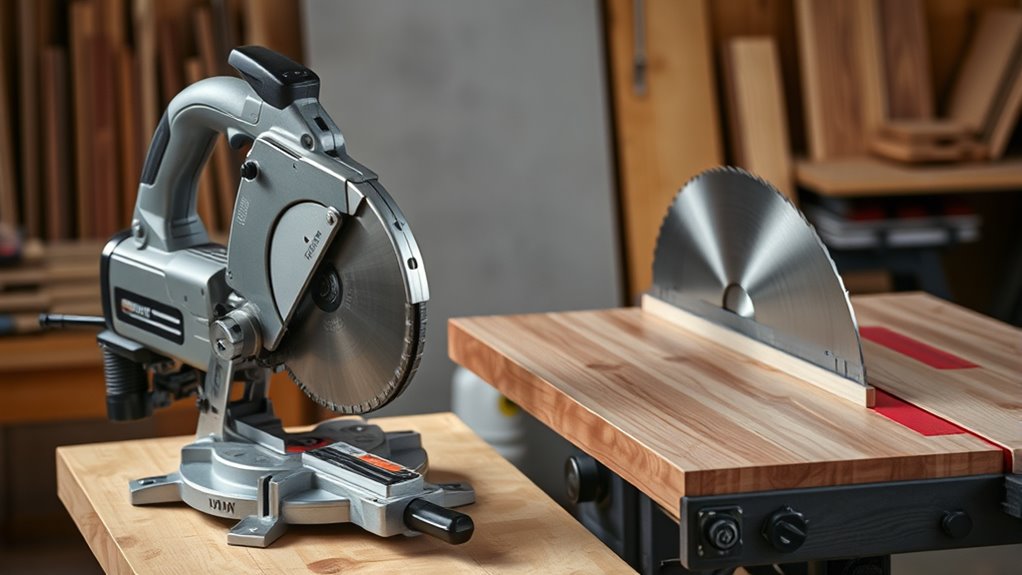
Understanding the primary functions of a miter saw and a table saw helps you choose the right tool for your projects. You’ll find that each tool excels at different cut types and material ranges, affecting your work’s accuracy and efficiency. Let’s compare their capabilities regarding cut variety, material limits, and how quickly and precisely they can perform.
Cut Types and Range
Miter saws and table saws each excel at different types of cuts, offering distinct ranges and primary functions. Miter saws are ideal for crosscuts and angled cuts, with blade diameters typically ranging from 8 to 12 inches, allowing precise control over cutting angles. They excel at making accurate, repeatable cuts at specific angles, perfect for framing and molding. Their versatility extends to various woodworking projects, making them essential for detailed work. Table saws, on the other hand, provide greater versatility with rip cuts and bevel cuts, featuring larger blades usually between 10 and 30 inches in diameter. They can handle wider materials and offer adjustable cutting angles, often up to 45 degrees or more. Your choice depends on whether you need precise crosscuts or more all-encompassing range for ripping and beveling. Safety considerations are important to keep in mind when choosing and operating these power tools.
Material Compatibility Limits
Miter saws are primarily designed for precise crosscuts and angled cuts in smaller to medium-sized materials, such as trim, molding, and framing components. However, their material limitations mean they can struggle with thicker or denser woods, which may cause binding or reduce cut quality. Compatibility concerns also arise when cutting wider or longer pieces, as the saw’s capacity restricts the size you can handle comfortably. Heavier or exotic woods might require a more robust saw or different blade types to prevent damage or uneven cuts. While they excel at accuracy, miter saws are not suitable for ripping large sheets or thick lumber. Always verify your material’s thickness and density against your saw’s specifications to avoid damage and ensure clean, safe cuts. Additionally, Free Floating components in some saws can influence the overall stability and precision during operation. Considering material compatibility is crucial to prevent potential safety hazards and maintain cutting quality. Being aware of the cutting capacity of your saw helps prevent overloading the tool, which could lead to accidents or premature wear. Moreover, understanding the wood grain direction can help in achieving cleaner cuts and reducing splintering during your projects. Recognizing the importance of craftsmanship standards can further improve your results and ensure that your projects meet professional expectations.
Precision and Speed
Both miter saws and table saws are designed to deliver high precision and speed, but they excel in different aspects. A miter saw offers superior measuring accuracy for crosscuts and angled cuts, ensuring clean, precise results with minimal effort. Its ergonomic design allows you to make quick, repeatable cuts comfortably. Additionally, many modern saws incorporate advanced cutting technology features that enhance performance and versatility. Modern safety features also contribute to safer operation during intricate cuts. Furthermore, the adjustable fence on a table saw provides greater flexibility for various project sizes, making it a versatile tool for different cuts. Conversely, a table saw emphasizes rapid, straight cuts and handles larger materials efficiently. Its adjustable fence and powerful motor boost cutting speed, while the flat surface aids stability and consistent measurements. While the miter saw is ideal for detailed, accurate crosscuts, the table saw speeds up rip cuts and large-scale projects. Both tools balance precision and speed, but your choice depends on specific woodworking needs and the level of measuring accuracy required. Furthermore, understanding the energy consumption of each tool can help optimize workshop efficiency and reduce operating costs.
Ideal Projects for Miter Saws

If you’re looking to create precise angled cuts, miter saws excel at a variety of projects. They’re perfect for adding decorative accents like crown molding, picture frames, or custom trim. You can also use them for furniture assembly, ensuring clean, accurate joints. Their ability to make precise crosscuts and angled cuts makes them ideal for these tasks. Additionally, understanding seasonal maintenance can help maintain your tools for optimal performance.
Best Uses for Table Saws
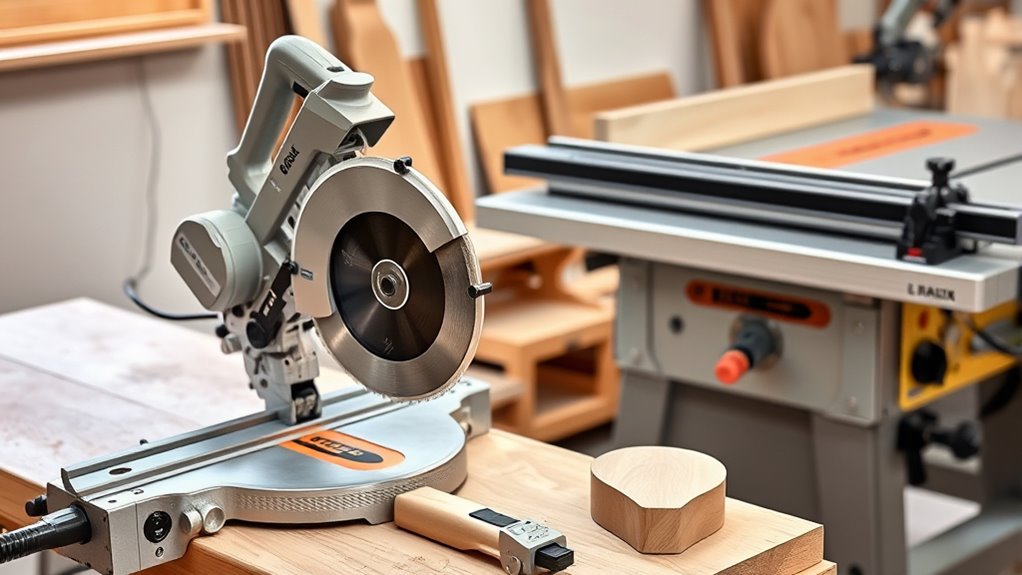
Table saws excel at making precise crosscuts and rip cuts, especially when working on larger pieces of wood. They’re also ideal for cutting big sheets of material like plywood or MDF with accuracy. If you need clean, straight cuts on sizable projects, a table saw is your go-to tool. Additionally, some models incorporate safety features that help prevent accidents during operation. Studies show that using proper safety measures significantly reduces the risk of injury, making them safer for both professional and hobbyist woodworkers. Proper maintenance routines also prolong the lifespan of the saw and ensure consistent performance over time. Moreover, their versatility allows for various cutting techniques, enhancing efficiency in woodworking tasks. Incorporating quality control practices ensures the consistency and precision of cuts, which is essential for professional results.
Crosscut and Rip Cuts
A table saw is an essential tool for making precise crosscuts and rip cuts in woodworking projects. Its accuracy depends on your setup and technique, especially for crosscut accuracy. The rip capacity determines how wide a board you can cut in a single pass, making it ideal for ripping sheets or wide stock. To maximize efficiency, consider this comparison:
| Feature | Importance |
|---|---|
| Crosscut Accuracy | Ensures clean, precise cuts for fitting pieces |
| Rip Capacity | Defines maximum width for ripping operations |
Large Sheet Material Cuts
Large sheet materials like plywood, MDF, and veneer panels are among the best projects to tackle with a table saw. While panel saws are specifically designed for cutting large sheets, a well-equipped table saw can handle these tasks efficiently. To improve your cuts, consider using dado blades; they allow you to make wide, precise grooves or rabbets in sheet stock. This versatility makes the table saw a valuable tool for cutting large panels down to size or creating joinery. Using a rip fence ensures straight, accurate cuts across the sheet’s length, while dado blades help add detailed features. Additionally, understanding water quality and proper maintenance can extend the lifespan of your equipment, ensuring consistent results. Overall, a table saw with the right accessories can handle large sheet material cuts effectively, making it a versatile choice for woodworking projects involving big panels.
Precision and Accuracy in Cuts
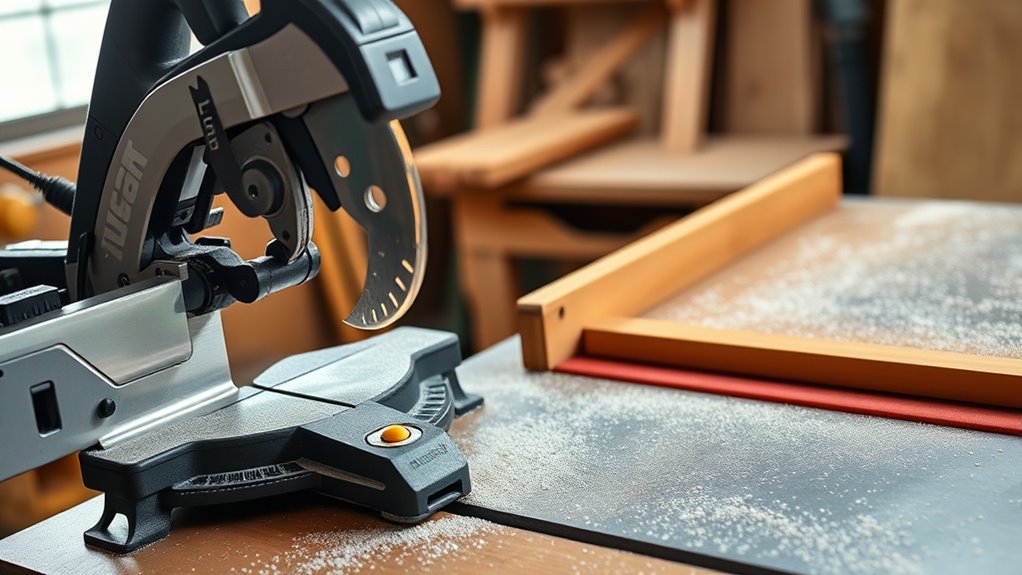
When it comes to achieving precise and accurate cuts, understanding the differences between a miter saw and a table saw is vital. A miter saw excels in making accurate crosscuts and angles, especially with proper clamp techniques that stabilize your workpiece. Its fixed blade ensures consistent, clean cuts, reducing errors. On the other hand, a table saw offers greater versatility for rip cuts and longer pieces but requires careful setup and fence adjustments for precision. Dust collection is also essential; a well-designed system keeps your workspace clear, improving visibility and accuracy. While both tools can produce precise cuts, your choice depends on the project’s specific needs. Mastering clamp techniques and optimizing dust collection will help you achieve the best results with either saw. Proper understanding of saw types and their capabilities is crucial for woodworking success, especially as advancements in AI-powered tools continue to enhance precision and efficiency. Additionally, incorporating visual and auditory cues can help improve your technique and accuracy during operation. Being aware of workpiece stabilization methods will further enhance your cut quality and safety. Furthermore, selecting the appropriate cutting blades can significantly impact the quality and precision of your work.
Portability and Space Considerations
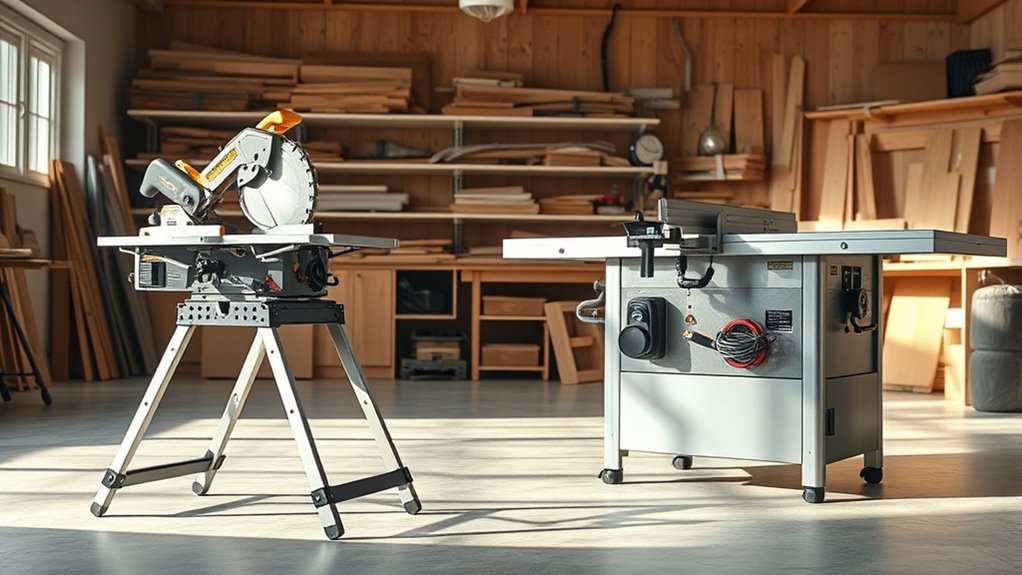
You need to consider how much space each saw requires in your workshop, as a table saw typically takes up more room than a miter saw. Portability also plays a role if you plan to move your equipment between job sites or storage areas. Think about how easily you can store and transport each tool to match your workspace and project needs. Additionally, the net worth of individuals involved in related fields can influence the quality and features of the tools you choose.
Space Requirements Differences
While both miter saws and table saws serve essential roles in woodworking, their space requirements vary considerably. Miter saws are generally more compact, making them ideal for setups with limited space and offering greater workspace flexibility. They can often be stored easily when not in use. Table saws, however, tend to require larger, dedicated areas due to their size and the need for stable, flat surfaces. Here’s a quick comparison:
| Feature | Miter Saw | Table Saw |
|---|---|---|
| Space Needed | Compact storage, minimal | Larger footprint, fixed |
| Portability | High | Moderate to low |
| Workspace Flexibility | High for small areas | Limited, fixed position |
Choosing depends on your available space and flexibility needs. Additionally, sound vibrations from these tools can influence your work environment, so considering a setup that minimizes noise and vibration may be beneficial. Being aware of space requirements is crucial for an efficient and safe woodworking workspace.
Portability of Equipment
Portability plays a significant role in choosing between a miter saw and a table saw, especially if you need to move your equipment frequently or work in different locations. A miter saw offers greater portable convenience due to its compact size and lighter weight, making it easier to transport and set up on various job sites. Its mobility options include foldable or easily removable stands, enhancing flexibility. In contrast, table saws tend to be bulkier and heavier, often requiring dedicated space and more effort to relocate. If your projects demand moving equipment from place to place or working in tight spaces, a miter saw provides better portability. Ultimately, your choice depends on your need for mobility versus stationary woodworking setup.
Storage and Mobility
Considering storage and space considerations is essential when choosing between a miter saw and a table saw. A table saw often requires dedicated space, as it’s bulkier and less portable, leading to mobility challenges if you need to move it frequently or store it in a tight area. Its tool storage options are limited, so you’ll need additional space for accessories and safety gear. Conversely, a miter saw is more compact, making it easier to store and transport, especially if you have limited workshop space. Its mobility challenges are minimal, allowing you to set it up or pack it away quickly. Think about your workspace size and how often you’ll need to move your equipment when making your decision.
Safety Features and Precautions
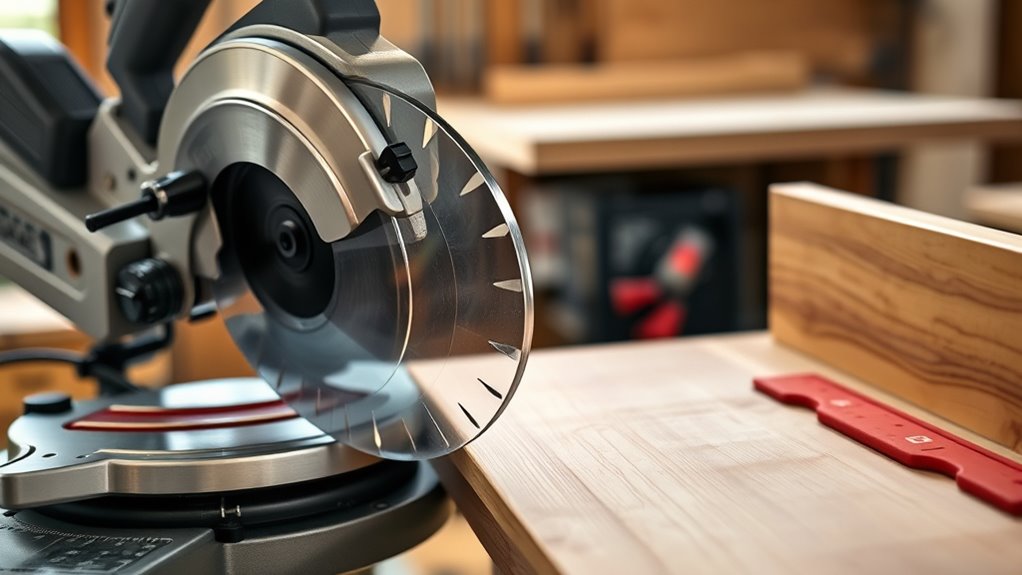
Safety features and precautions are essential for preventing accidents and injuries when operating either a miter saw or a table saw. Always wear proper safety gear, such as safety glasses, hearing protection, and dust masks, to minimize risks. Before starting, familiarize yourself with emergency procedures, including how to quickly shut off the saw and disconnect power if needed. Keep your hands clear of the blade path and use push sticks or guides for precise cuts. Guarantee the saw is properly maintained and blades are sharp. Never bypass safety guards or disable safety features, as they’re designed to protect you. Staying alert and following these precautions helps you operate your saw safely and prevents potentially serious injuries.
Choosing the Right Tool for Your Workshop
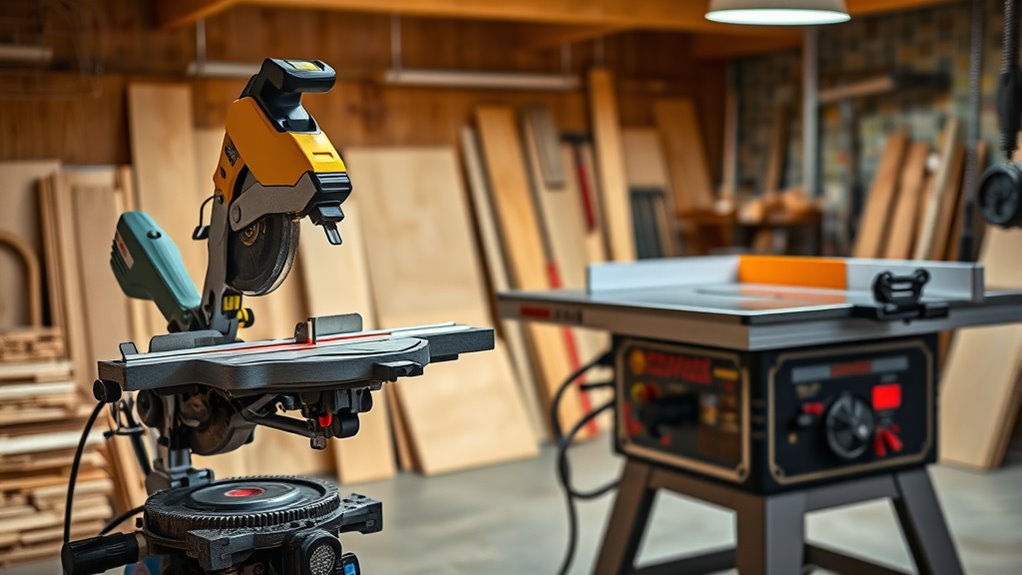
Choosing the right saw for your workshop depends on the types of projects you plan to undertake and the space available. If you often make precise crosscuts and bevels, a miter saw’s dust collection system can keep your workspace cleaner. For larger rip cuts and sheet material, a table saw provides more power, often with higher motor horsepower, enabling smoother cuts through thick wood. Consider your dust collection needs; a saw with efficient dust extraction helps maintain visibility and reduces cleanup. Also, evaluate the motor horsepower—more powerful motors handle demanding tasks better, but they may take up more space and energy. Matching these features to your projects ensures you select a saw that’s both effective and suited to your workshop environment.
Cost and Budget Factors
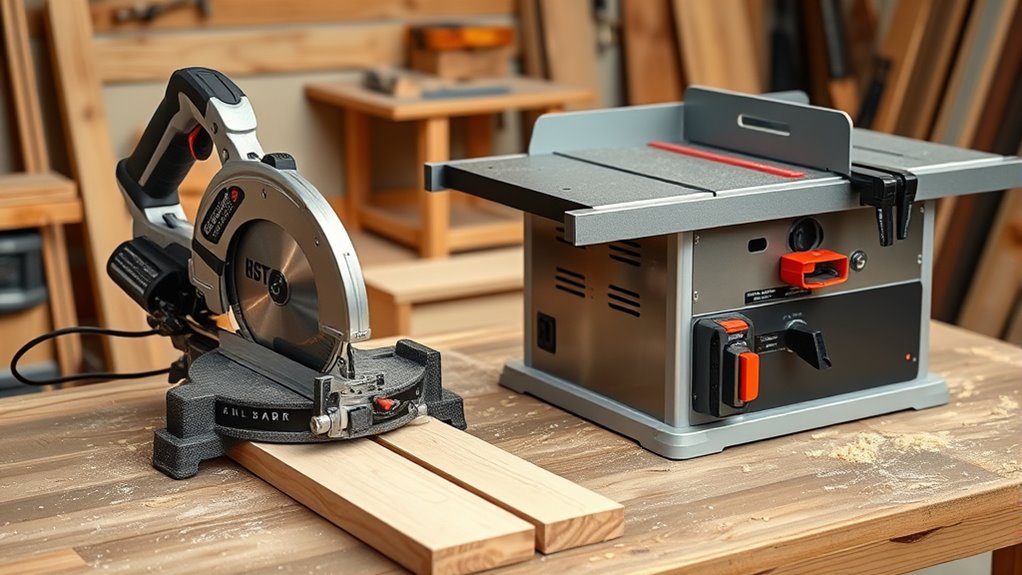
Budget plays a crucial role when selecting between a miter saw and a table saw, as prices can vary considerably. When doing a price comparison, consider these factors:
Budget considerations greatly influence choosing between a miter saw and a table saw.
- Entry-level models that fit tight budgets, ideal for hobbyists.
- Mid-range options offering better durability and features.
- Premium models with advanced safety and precision, suited for professional use.
- Brand options that influence cost—well-known brands tend to be pricier but often offer better reliability.
Your choice depends on how much you’re willing to invest upfront. A higher price usually means better quality and longevity, but you can find good options at lower prices if you shop smart. Always weigh brand reputation and features against your budget for the best decision.
Maintenance and Long-Term Use
Regular maintenance is vital to keep your miter saw or table saw performing at their best and extending their lifespan. Regularly check and sharpen your blades to guarantee clean cuts and prevent strain on the motor. Dull blades reduce efficiency and increase the risk of kickback, so blade sharpening should be a routine task. Additionally, maintaining an effective dust collection system is essential for safety and cleanliness. Clear out dust and debris from the saw’s vents, blades, and surrounding areas to prevent buildup that can impair performance or cause overheating. Proper maintenance minimizes wear and tear, ensures precise cuts, and prolongs your saw’s life. Keep a consistent schedule for blade sharpening and dust management to get the most out of your woodworking tools.
Frequently Asked Questions
Can a Miter Saw Replace a Table Saw for All Woodworking Tasks?
A miter saw can’t replace a table saw for all woodworking tasks due to its limitations. While it excels at crosscuts and angled cuts, it lacks the table saw’s versatility for ripping, dadoing, and cutting large sheets of wood. You need both tools because each serves different functions. Relying solely on a miter saw will restrict your projects, whereas a table saw offers broader capabilities essential for all-encompassing woodworking.
Which Saw Is Better for Cutting Large Sheets of Plywood?
For cutting large sheets of plywood, a table saw is your best bet, especially with panel saw capabilities. It handles massive panels with ease, making crosscutting techniques smoother and safer. A miter saw, even a sliding one, struggles with such big cuts. Think of the table saw as your powerhouse for sheet goods, transforming intimidating tasks into quick, effortless cuts, saving you time and frustration.
How Does Blade Size Influence Cutting Capabilities and Precision?
Blade size, or blade diameter, directly influences your cutting capabilities and cut accuracy. A larger blade permits you to cut thicker materials and provides more stability, leading to cleaner, more precise cuts. Smaller blades are better for detail work but may struggle with larger sheets. Choosing the right blade size guarantees you get the best balance of power, precision, and safety for your specific woodworking projects.
Are There Specific Safety Gear Recommendations for Each Saw Type?
You should wear protective eyewear and hearing protection when operating either a miter saw or a table saw. Safety goggles keep your eyes safe from flying debris, while earplugs or earmuffs protect your hearing from loud noise. Always make certain your protective gear fits properly and use it consistently. Additionally, follow the manufacturer’s safety instructions and keep your workspace clean to prevent accidents and injuries during woodworking.
What Are Common Maintenance Tasks to Extend Saw Lifespan?
To extend your saw’s lifespan, regularly sharpen the blades to guarantee clean cuts and reduce strain on the motor. Keep the blade guards and moving parts clean and well-lubricated. Also, maintain effective dust collection by cleaning or replacing filters often, which prevents buildup that can affect performance. Routine checks and timely replacements of worn parts will help your saw operate smoothly and last longer.
Conclusion
Choosing between a miter saw and a table saw depends on your projects and needs. Do you need precise crosscuts or versatile rip cuts? Understanding their differences helps you make an informed decision. Both tools have their strengths and limitations, so consider your workspace, budget, and safety. Ultimately, the right saw enhances your woodworking experience—so why settle for less? Invest wisely, and enjoy creating with confidence.