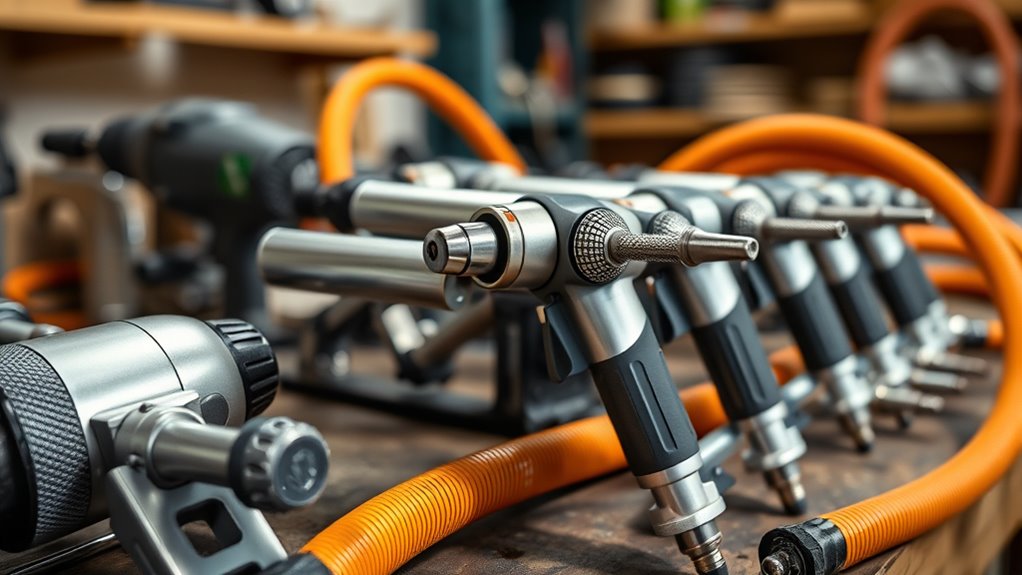
If you have a compressor, investing in must-have pneumatic tools can boost your efficiency and durability. Key tools include impact wrenches for heavy-duty tasks, nailers and staplers for quick fastening, and grinders for surface finishing. Make certain your tools match your compressor’s CFM and PSI ratings to guarantee proper performance and avoid damage. Choosing high-quality, durable tools helps you get long-lasting results. Keep exploring to learn how to optimize your compressor and tools for every project.
Key Takeaways
- Choose durable pneumatic tools made from reinforced materials for long-term performance and resistance to wear.
- Match tool requirements with your compressor’s CFM and PSI ratings to ensure optimal operation.
- Essential air tools include impact wrenches, nailers, blow guns, ratchets, and grinders for versatile tasks.
- Regular maintenance like lubrication and filter cleaning extends tool lifespan and maintains compatibility.
- Verify tool compatibility with your compressor specifications before purchase to prevent performance issues.
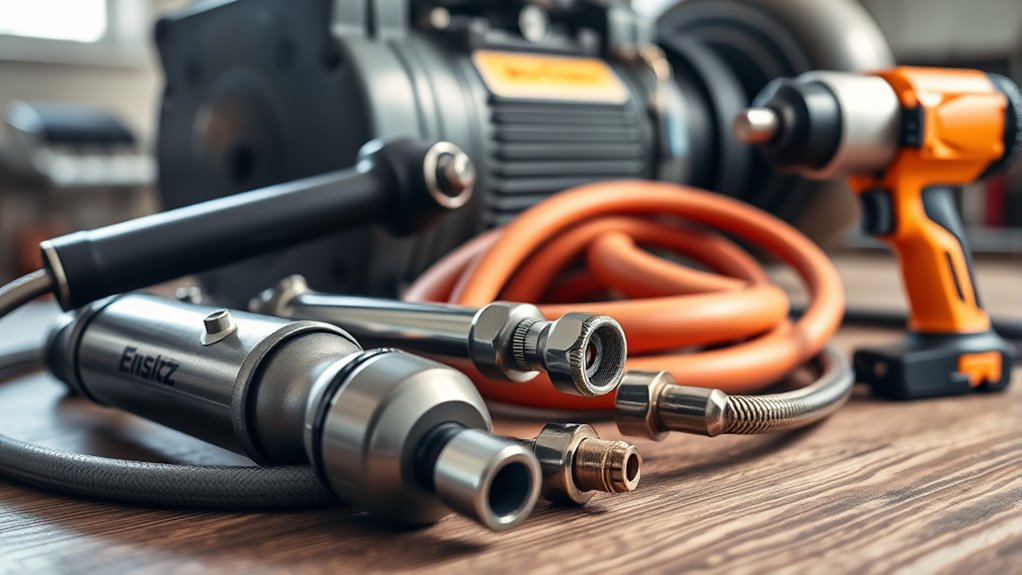
Pneumatic tools, powered by compressed air, are indispensable for many construction, automotive, and manufacturing tasks. They provide the power and efficiency needed to handle tough jobs quickly, making them a favorite among professionals and DIY enthusiasts alike. When choosing your air tools, one of the most important factors to consider is air tool durability. You want equipment that can withstand daily use without breaking down or losing performance. High-quality pneumatic tools are built with robust materials, such as hardened steel or reinforced composites, ensuring they resist wear and tear over time. Not only does this longevity save you money in the long run, but it also keeps your workflow smooth and uninterrupted. Look for tools with reinforced components and good manufacturer reputations for reliability, especially if you plan to use them frequently.
Equally important is compressor compatibility. Not all pneumatic tools work with every compressor, so understanding your compressor’s specifications is crucial. Your compressor needs to deliver the right volume of air (measured in CFM, or cubic feet per minute) and pressure (measured in PSI, or pounds per square inch) to match or exceed the requirements of your tools. If your compressor isn’t compatible, your tools won’t perform at their best, and you may experience issues like insufficient power or inconsistent operation. For example, a high-powered impact wrench requires a compressor with a higher CFM rating to operate smoothly, whereas a small brad nailer may only need a modest airflow. Before purchasing a new air tool, always check its specifications against your compressor’s capabilities. This guarantees you get ideal performance and avoid potential damage or inefficiency.
Proper maintenance also plays a significant role in maximizing both air tool durability and compressor compatibility. Regularly lubricate your tools, clean filters, and drain moisture from your compressor to prevent corrosion and internal damage. Doing so maintains the integrity of the components and keeps your equipment running reliably for years. If you upgrade your compressor or add new tools, double-check compatibility to prevent issues like underperformance or increased wear. Investing in a compressor with adjustable pressure regulators and sufficient airflow capacity can give you more flexibility in using different tools effectively. Additionally, developing a methodical approach to testing and maintenance ensures consistent performance and extends the lifespan of your equipment.
Frequently Asked Questions
What Safety Gear Is Recommended When Using Pneumatic Tools?
When using pneumatic tools, you should always wear proper personal protective equipment like safety goggles, hearing protection, and gloves to prevent injury. Before starting, conduct a thorough tool inspection to guarantee everything is in good working order and there are no leaks or damage. This way, you minimize risks, protect yourself from flying debris or loud noises, and ensure safe operation throughout your task.
How Do I Maintain and Troubleshoot My Air Compressor?
To maintain and troubleshoot your air compressor, start by checking and replacing the air filter regularly to guarantee clean airflow. Keep the compressor lubricated as per the manufacturer’s instructions to prevent wear and overheating. Listen for unusual noises, monitor pressure gauges, and inspect hoses for leaks or damage. Regularly drain moisture from the tank to avoid corrosion. Proper maintenance keeps your compressor running smoothly and extends its lifespan.
Which Pneumatic Tool Is Best for Automotive Repairs?
Imagine a versatile tool that handles everything from automotive painting to tire inflation— that’s your best bet. A pneumatic impact wrench is perfect for removing and tightening lug nuts quickly, saving you time and effort. For detailed work like automotive painting, an air spray gun provides smooth, professional results. Both tools are essential, dependable, and efficient, making your automotive repairs smoother and more precise.
Can Pneumatic Tools Be Used for Woodworking Projects?
Yes, pneumatic tools can be great for woodworking projects. You can use them for various woodworking techniques like carving, sanding, and finishing. Just make sure you have the right pneumatic tool accessories, such as air-powered sanders or nailers, to suit your task. They offer precision and efficiency, helping you achieve professional results faster. Always check compatibility with your compressor and follow safety guidelines for the best experience.
What Are the Energy Efficiency Tips for Operating Air Tools?
To maximize energy savings when operating air tools, you should regularly perform tool optimization by maintaining your compressor and tools. Use the right-sized tools for each task to prevent unnecessary energy waste. Additionally, avoid running tools at full pressure when unnecessary, and turn off your compressor when not in use. These practices help reduce energy consumption, extend your tools’ lifespan, and guarantee efficient operation.
Conclusion
Now that you know the essentials, incorporating pneumatic tools into your toolbox can boost your efficiency and precision. Did you know that pneumatic tools can deliver up to 30% more power than their electric counterparts? With the right air tools, you’ll tackle projects faster and with less fatigue. So, invest in quality pneumatic tools, and watch your DIY skills soar—your compressor is ready, are you?