When using powder-actuated tools to fasten to concrete, always follow strict safety procedures. Wear protective gear like safety glasses, hearing protection, and gloves. Verify the tool is in good condition, properly loaded with the correct fasteners, and aimed away from yourself and others. Proper maintenance and handling are key to safe operation. By paying attention to these safety steps, you’ll be prepared for safe, effective fastening—continue to explore how to keep your work safe and efficient.
Key Takeaways
- Always wear appropriate PPE, including safety glasses and hearing protection, when operating powder-actuated tools.
- Select and load the correct fasteners recommended by the manufacturer for concrete fastening.
- Ensure the tool is in proper working condition and free of damage before use.
- Follow all safety procedures, including keeping the work area clear and never pointing the tool at people.
- Regularly maintain and clean the tool to ensure safe, reliable operation and prevent malfunctions.
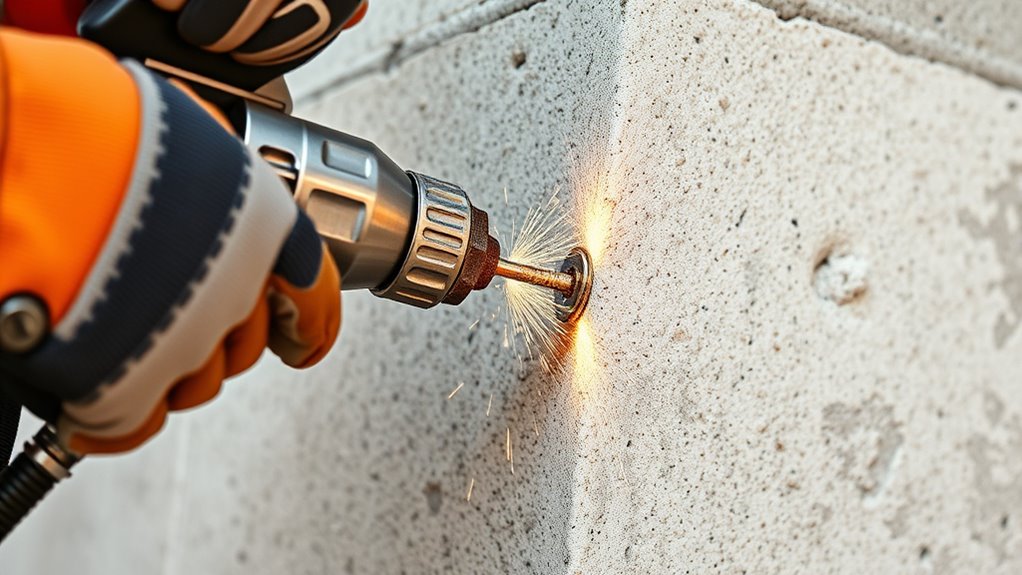
Powder-actuated tools are powerful devices commonly used in construction and industrial settings to fasten materials quickly and securely. These tools utilize explosive charges to drive nails, pins, or other fasteners into hard surfaces like concrete, steel, or masonry. Because of their high power, it’s essential that you follow strict safety precautions to prevent accidents and injuries. Before operating a powder-actuated tool, you should always wear appropriate personal protective equipment, including safety glasses, hearing protection, and gloves. Never point the tool at yourself or anyone else, and ensure the work area is clear of unnecessary personnel. Always inspect the tool before use, checking for any damage, loose parts, or misfiring components. Proper training on how to handle and operate the tool is also crucial to minimize risks and ensure you know how to respond to potential hazards.
Maintaining your powder-actuated tools is key to their safe and effective operation. Regular maintenance procedures should be part of your routine to keep the device in top condition. This includes cleaning the tool after each use to remove dust, debris, or residue that could interfere with its operation. Make sure to lubricate moving parts according to the manufacturer’s guidelines, and check that all safety mechanisms are functioning properly. If you notice any wear or damage, don’t attempt to repair the tool yourself; instead, follow the manufacturer’s instructions for repairs or replace the damaged parts. Proper storage is also vital—keep the tools in a dry, secure place away from moisture, which can cause corrosion or damage. Additionally, always use the correct type and size of fasteners recommended by the manufacturer to prevent jams or misfires.
Understanding the safety precautions and maintenance procedures of powder-actuated tools isn’t just about compliance; it’s about protecting yourself and others on the job site. When you follow these guidelines, you reduce the risk of accidents and ensure the tool operates efficiently. Remember, safety isn’t a one-time consideration; it’s an ongoing process that requires vigilance and discipline. Proper maintenance extends the lifespan of your tools, minimizes downtime, and helps you avoid costly repairs or replacements. By adhering to safety precautions and maintenance procedures, you’re not only safeguarding your well-being but also contributing to a safer, more productive work environment. Ultimately, mastering the safe operation of powder-actuated tools involves constant awareness, respect for their power, and diligent care—making your job safer and more efficient every step of the way. Proper handling also includes understanding tool operation safety and how to prevent potential hazards during use.
Frequently Asked Questions
What Are the Environmental Conditions Affecting Powder-Actuated Tool Use?
Environmental conditions like moisture effects and wind considerations substantially impact your use of powder-actuated tools. Moisture can weaken the adhesive bond or cause corrosion, so avoid using tools in wet or humid environments. Wind considerations matter when working outdoors; strong gusts can affect accuracy and safety, especially if debris is blown into your work area. Always assess weather conditions to ensure safe, effective fastening and minimize risks.
How Do I Select the Right Fastener for Specific Applications?
To select the right fastener for your specific application, consider the application criteria like load requirements, material type, and environmental conditions. Review fastener types such as nails, pins, or anchors, guaranteeing they meet strength and corrosion resistance needs. Match the fastener to the substrate and intended use, and always follow manufacturer guidelines to ensure safety and secure fastening when using powder-actuated tools.
What Are the Common Troubleshooting Steps for Tool Jams?
Think of troubleshooting tool jams like untangling a knot. First, check for common tool jam causes, like misfired cartridges or debris blocking the mechanism. Then, follow troubleshooting techniques such as safely removing the fastener, clearing debris, and inspecting parts for damage. Always disconnect the tool from the power source before troubleshooting. Regular maintenance prevents jams, ensuring smooth operation and safe fastening every time.
How Often Should Powder-Actuated Tools Be Inspected and Maintained?
You should inspect your powder-actuated tools daily before use and follow a regular inspection schedule, such as weekly or monthly, depending on usage. Perform proper maintenance procedures after each use, including cleaning and lubrication, to guarantee safety and efficiency. Regular inspections and maintenance help identify potential issues early, reduce malfunctions, and extend the tool’s lifespan, keeping you safe during fastening operations to concrete surfaces.
Are There Legal Restrictions on Using These Tools in Certain Areas?
Using powder-actuated tools is like steering a maze—there are legal restrictions and area regulations you must follow. You can’t just use them anywhere; some zones prohibit their use due to safety concerns or local laws. Always check with your site’s rules and legal restrictions before operating. Ignoring these can lead to fines or accidents, so stay informed and compliant to keep your work safe and legal.
Conclusion
By now, you understand the significance of using powder-actuated tools safely and correctly. Remember, these tools can deliver force equivalent to a car traveling at 60 mph, so proper handling is vital. Did you know that nearly 20% of construction injuries involve improper tool use? Staying informed and following safety guidelines helps prevent accidents and guarantees your projects are both successful and safe. Keep safety top of mind, and you’ll be a confident, responsible user of powder-actuated tools.